Started around real marking problems
The business took shape around a common South African problem: products had to leave the yard clearly marked, but not every operation needed to buy equipment outright. Some sites needed dates on cartons, others needed batch codes on bags, while timber yards and steel fabricators wanted a clean mark on rougher surfaces. Handheld Printers Rental was built to bridge that gap with hire equipment that could move between jobs and still give readable output.
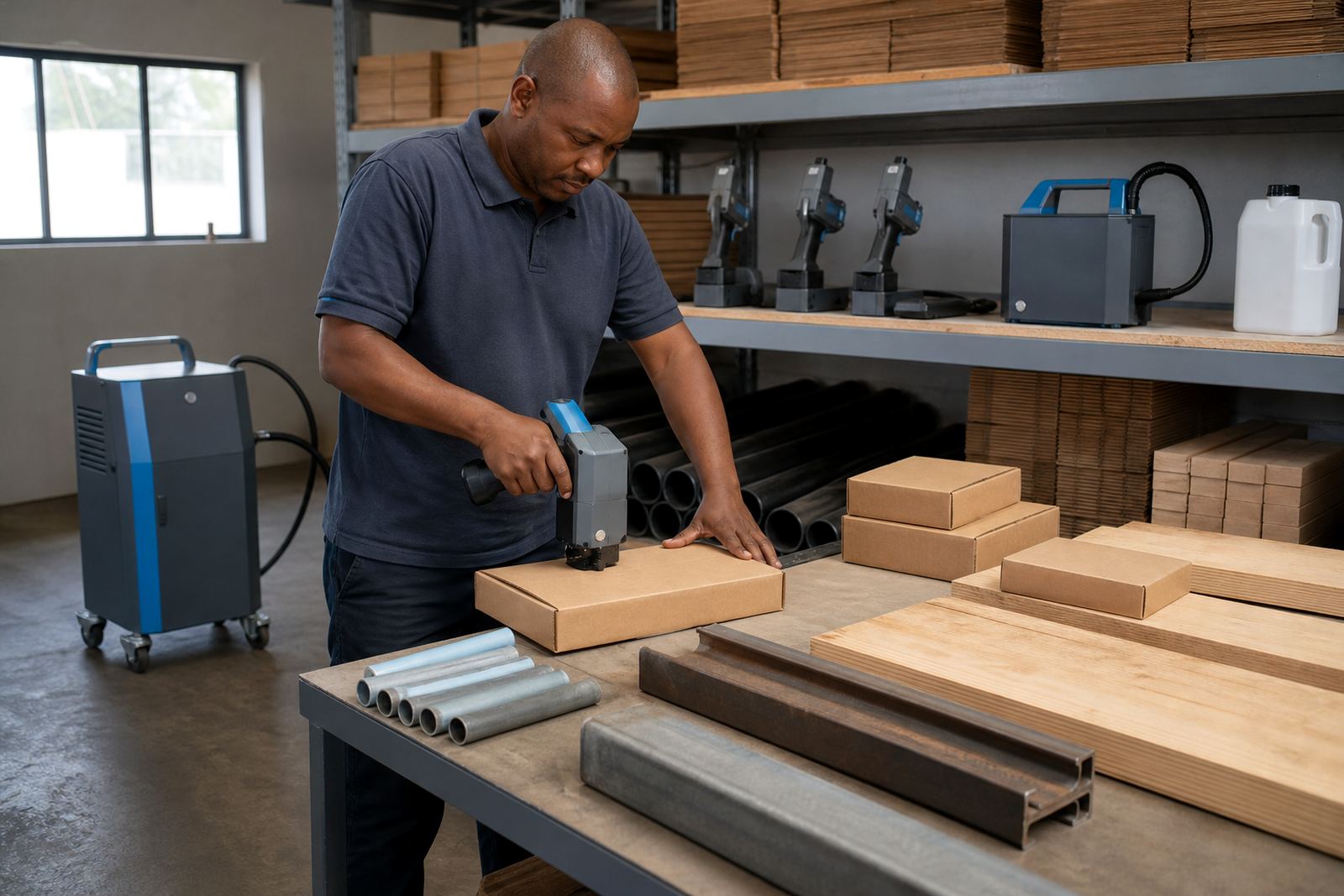
From the early days, the focus stayed on practical marking rather than showpieces. A handheld inkjet coder had to suit the product, the surface and the pace of the job. That meant understanding print height, ink type and how the operator would hold the unit on the day. It also meant knowing the difference between a crisp code on a carton and a mark that must cling to porous timber, dusty pipework or painted steel.
The hire model grew with the work
As more customers asked for short term access to coding equipment, the hire side of the business became more structured. Short weekly or longer monthly terms allowed smaller runs, seasonal packing and project work to be handled without a capital purchase. That approach suited factories, distributors, contractors and regional teams that needed the machine for a defined period, then preferred to hand it back once the job was done.
The range of services grew around that hire model. Delivery and collection made movement easier between sites, while on-site setup helped operators start with the right message and spacing. Remote setup help covers the practical parts too, and message loading, barcode setup and logo setup all sit close to the day to day needs of a coding job.
- Flexible weekly or monthly terms for short runs and longer projects
- Delivery and collection across South Africa
- Test printing before work starts on the line or in the yard
- Consumables supply for scheduled production needs
What the customers usually needed
The customer base widened in a steady, ordinary way. Some were packing food or household goods into cartons, others were handling bags, pipes, timber or fabricated steel. A few needed simple date coding, while others asked for batch numbers, traceable barcodes or a logo that stayed legible on a rough face. The job changed from client to client, but the pressure was familiar: clear marks, consistent placement and equipment that did not create extra drama on the floor.
That mix shaped the way the team worked. Ink selection help became a regular part of the service because solvent, water-based and quick-dry inks each suit different surfaces and drying needs. Print height matters too, especially when a small code has to remain readable on a narrow pack or when a larger logo must be seen from a short distance. Our aim has always been to match the coder to the surface, not push one setup onto every job.
- Cartons and corrugated packs that need dates or batch codes
- Bags where the surface can shift or crease during handling
- Pipes, timber and steel that call for steadier ink choice
- Barcodes and logos where legibility matters more than decoration
How the team carries the work now
Our small team now shares the work, with each person in a clear role. Sibusiso Moagi oversees the business direction, while Nokuthula Kotze handles hire coordination and Priya Pillay keeps the operations side in order. Jared Rademeyer leads technical support, Anele Vermaak handles operator training, and Morne Oosthuizen takes care of field setup work when equipment needs to be placed and tested at a site.
That structure matters because handheld coding is practical work. A machine may need message loading in the morning, test printing before a shift starts and a backup unit if a job has to carry on without interruption. The team also supports troubleshooting, consumables supply and remote setup help, which keeps the hire process grounded in the details that matter to production crews and site managers. The business stays close to the hands-on parts of the job, not just the paperwork.
Pinetown roots with work across the country
The base remains in Pinetown, Durban, with hire support reaching Durban, Pietermaritzburg, Johannesburg, Cape Town and Richards Bay. That spread reflects the kind of customer the business serves: companies that operate in one city, or across several sites, and need coding equipment delivered where the work is happening. Pinetown Hire, Durban Hire, Pietermaritzburg Hire, Johannesburg Hire, Cape Town Hire, Richards Bay Hire, Westmead Hire and New Germany Hire all sit within that same working pattern.
For coastal sites, ink choice and handling can matter more than people expect. Humidity, surface dust and storage conditions can influence how the code lands and how quickly it dries. Inland, the concern may be different, with timber yards, fabrication shops and transport depots needing equipment that can move between jobs without losing clarity. The business grew by paying attention to those small details and keeping the hire terms flexible enough for real work.
- Local support from a Pinetown, Durban base
- Hire coverage for coastal and inland operations
- Suitable for changing production runs and site conditions
- Practical support for operators, supervisors and stores teams
What stayed central in the craft
Even as the customer base widened, the core of the work stayed the same: help people mark products clearly, using equipment that fits the job instead of complicating it. Handheld inkjet printers are useful because they move with the product, whether it is stacked cartons, bundled timber, pipe stock or a batch of bags. The equipment has to be easy to learn, dependable in daily use and suited to the mark that the site needs to leave behind.
That is why setup help, training and test printing remain part of the service rather than extras on the side. Good coding is rarely about one part alone. It is the combination of the machine, the ink, the surface and the operator’s routine. Handheld Printers Rental built its reputation around that working mix, and the story of the business is really the story of keeping those parts aligned for the customer.