
Cartons, sleeves and outer packs
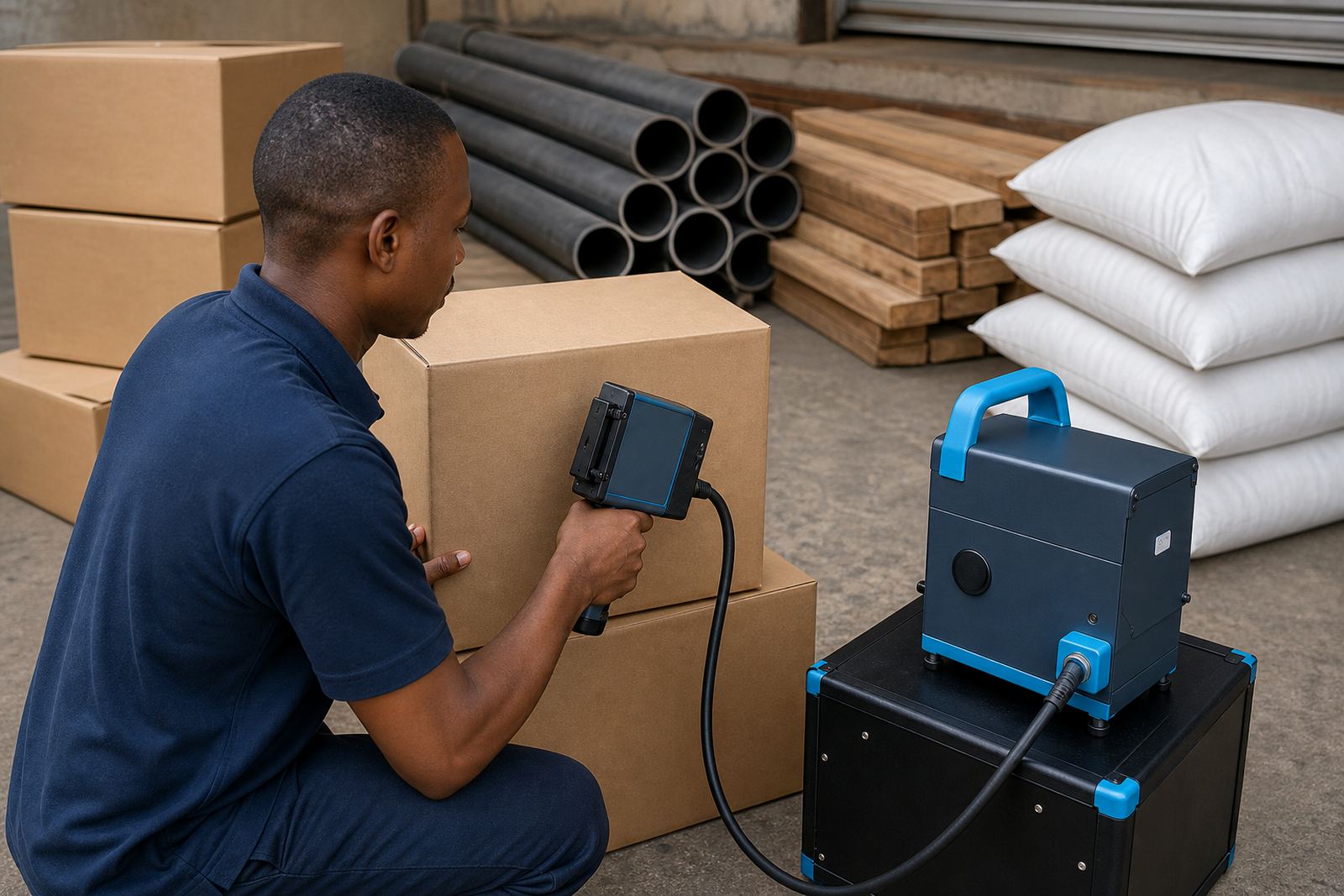
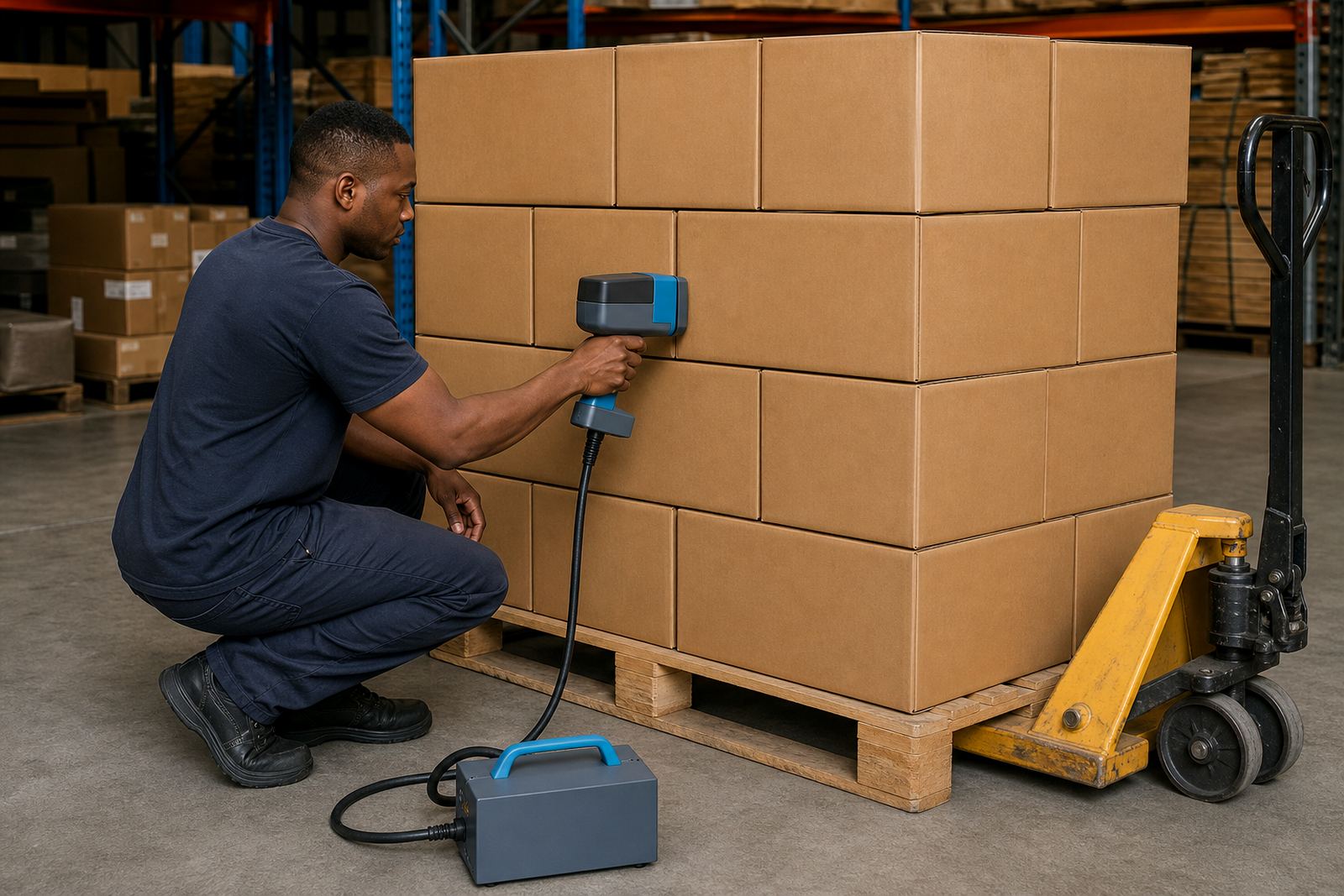
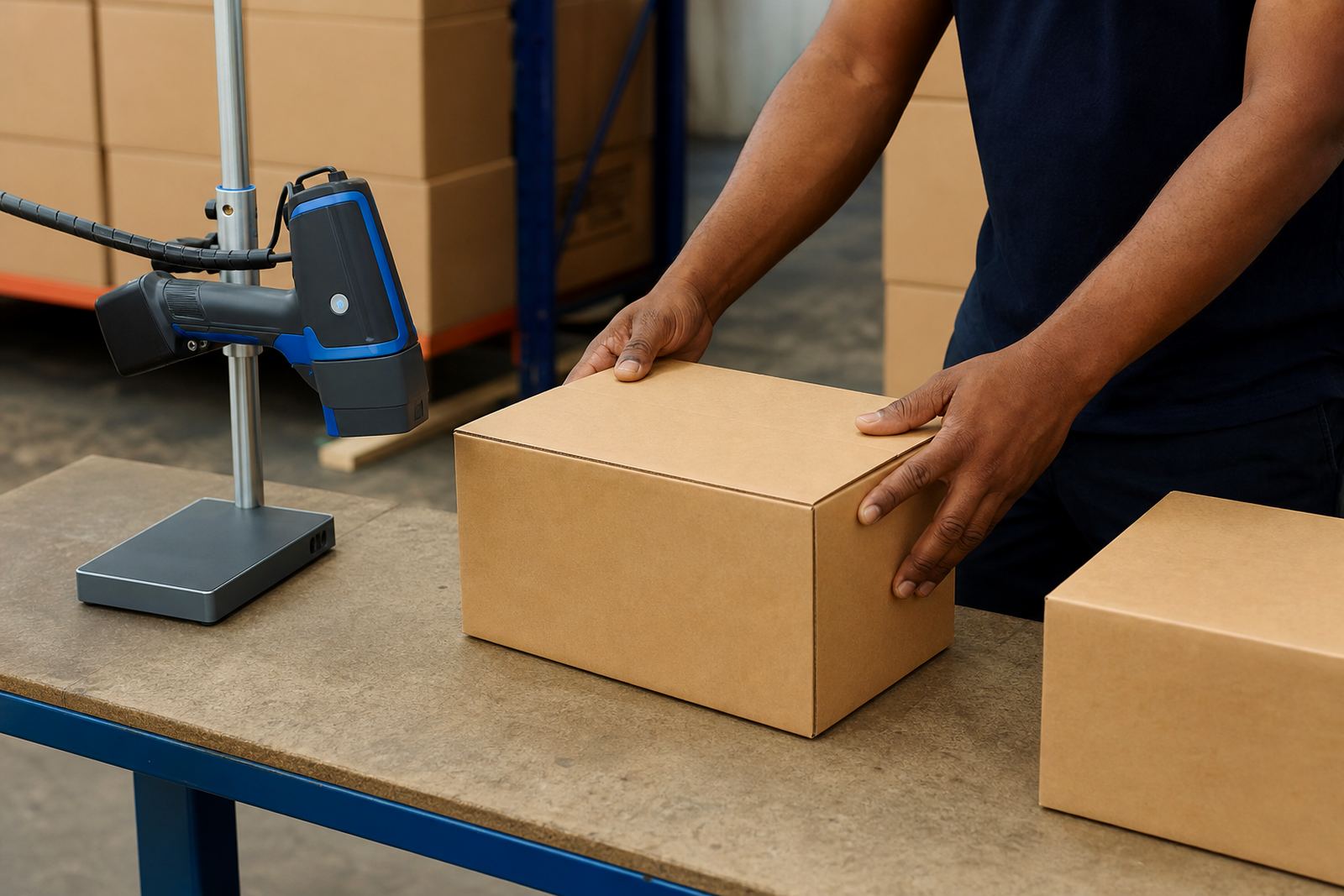
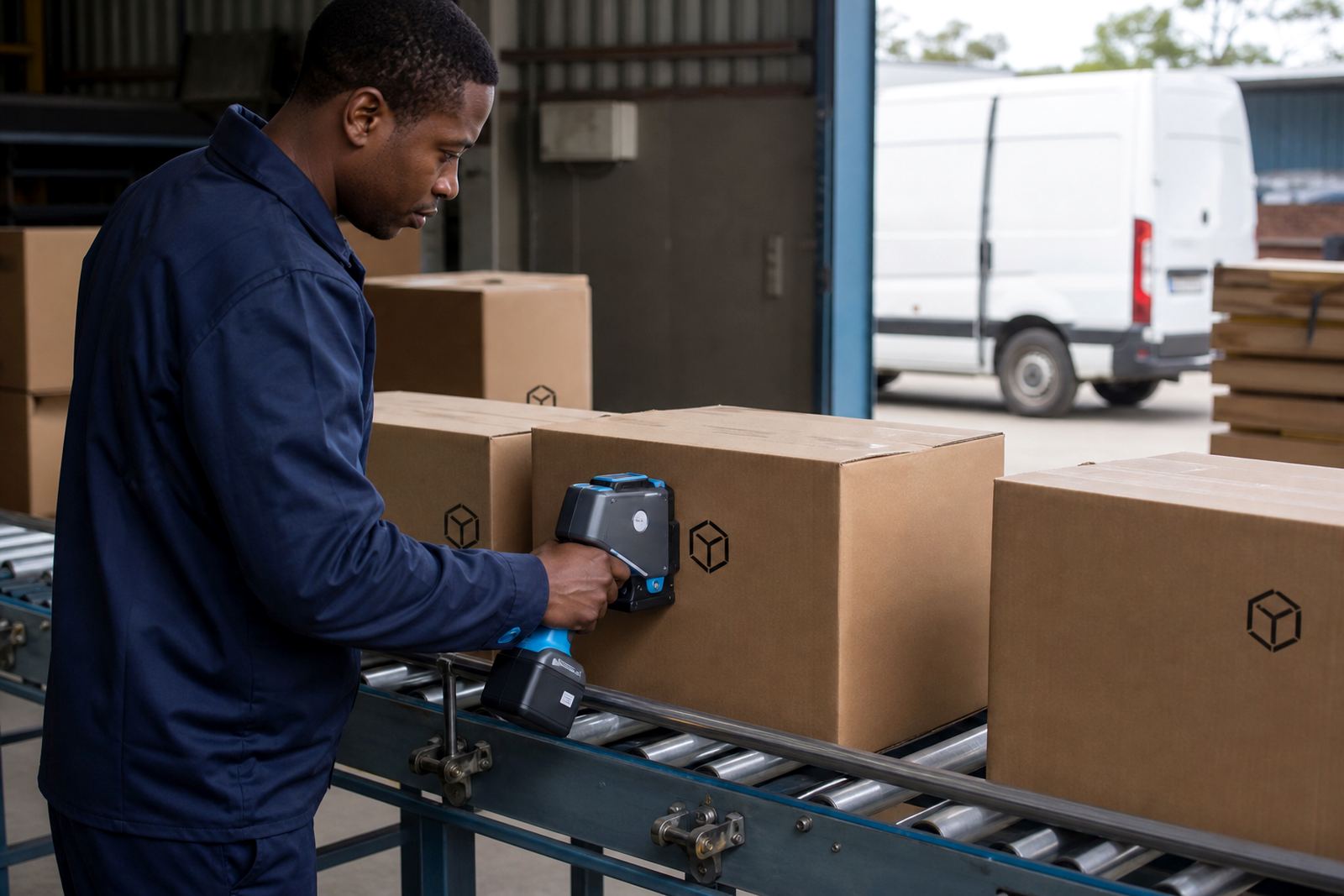
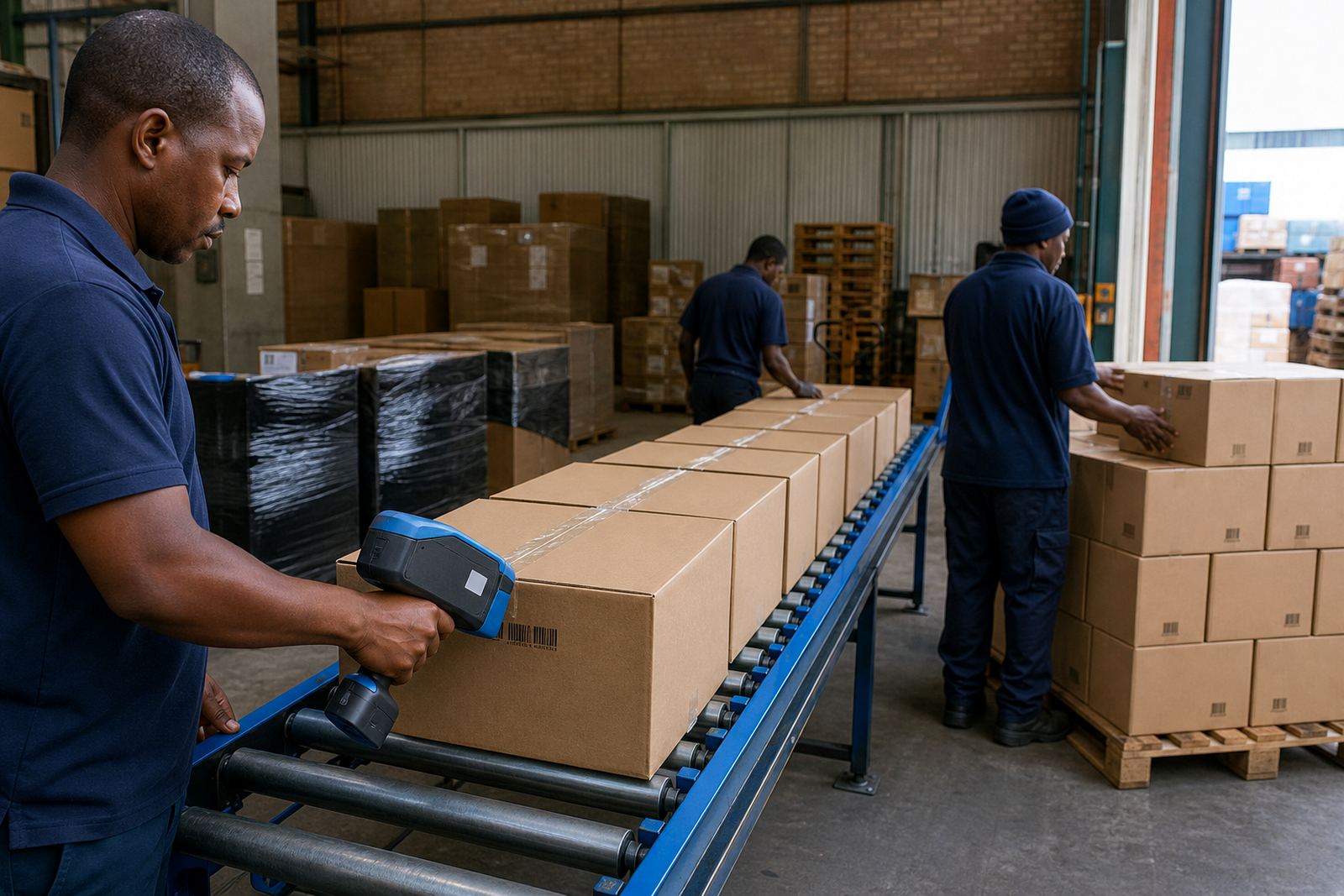
Printed cartons are one of the most common jobs for a handheld coder. Date marks, batch numbers, shift codes and short product names sit on board, kraft sleeves and wrapped packs, where the surface is usually smooth enough for a clean print. For porous board, a quick-dry or water-based ink is often chosen, while coated cartons may need a solvent ink for a firmer mark.
When packs move through a storeroom or dispatch area, the print height matters. Smaller text suits narrow spaces and packed label areas, while larger characters make the code easier to spot on fast-moving stock. We can also add logos for basic branding on outer packaging, as long as the surface is flat and the print area stays clear.
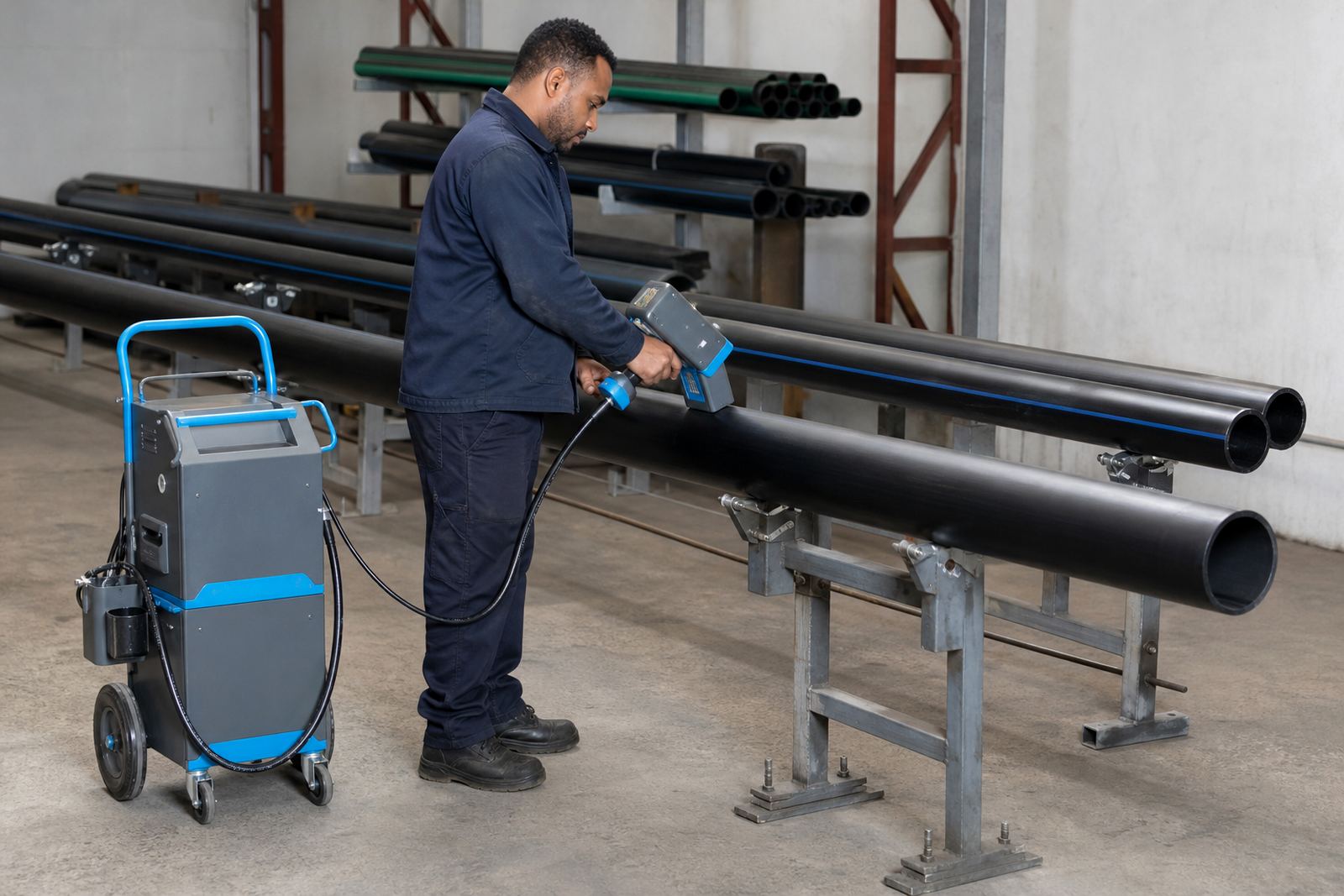
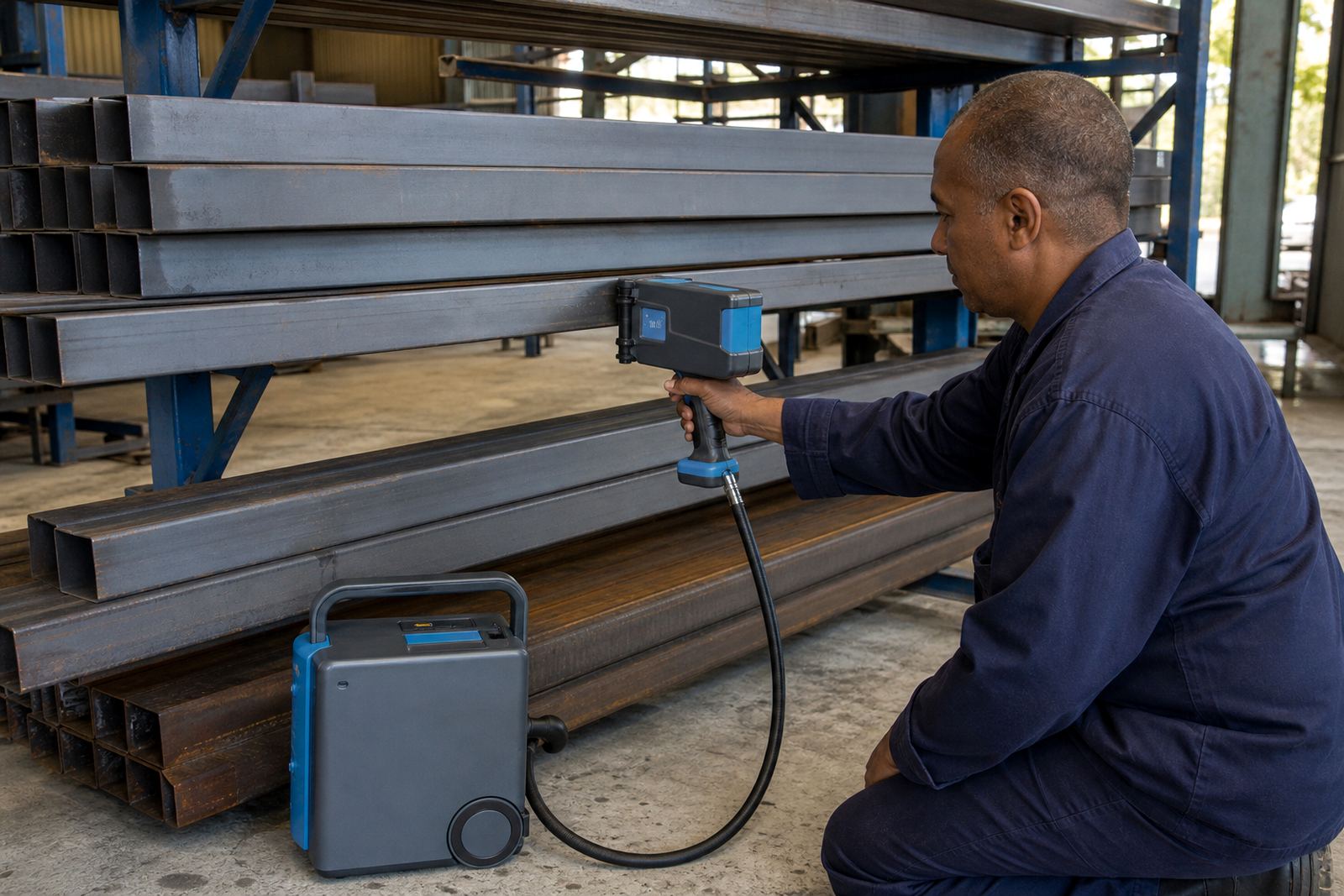
Pipes, tubes and round stock
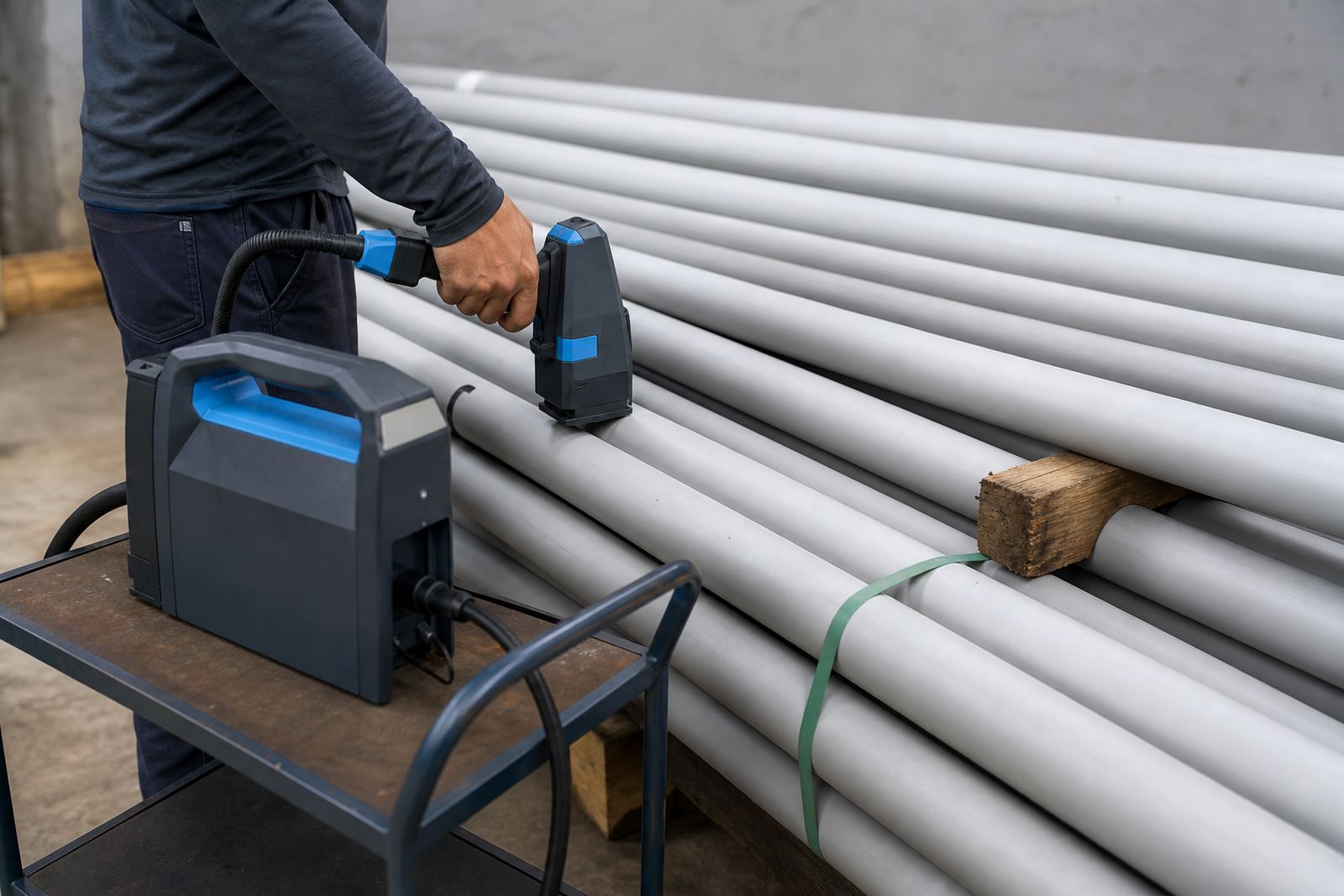
Pipes and tubing need a coder that can sit comfortably in the hand while the operator follows the curve of the material. Steel, plastic and coated tube all behave differently, so the ink choice and drying time need to match the job. A solvent ink is often used on non-porous tube, while quick-dry ink helps when parts are handled soon after marking.
- Batch codes on conduit and pipe lengths
- Cut-length marks on tubes and profiles
- Directional marks for warehouse handling
- Short logos on visible stock sections
Curved surfaces need a steady pass and a clean print head setting, otherwise the mark can feather or break up. That is especially important on shiny steel or powder-coated pipe, where surface tension changes the way the ink sits.
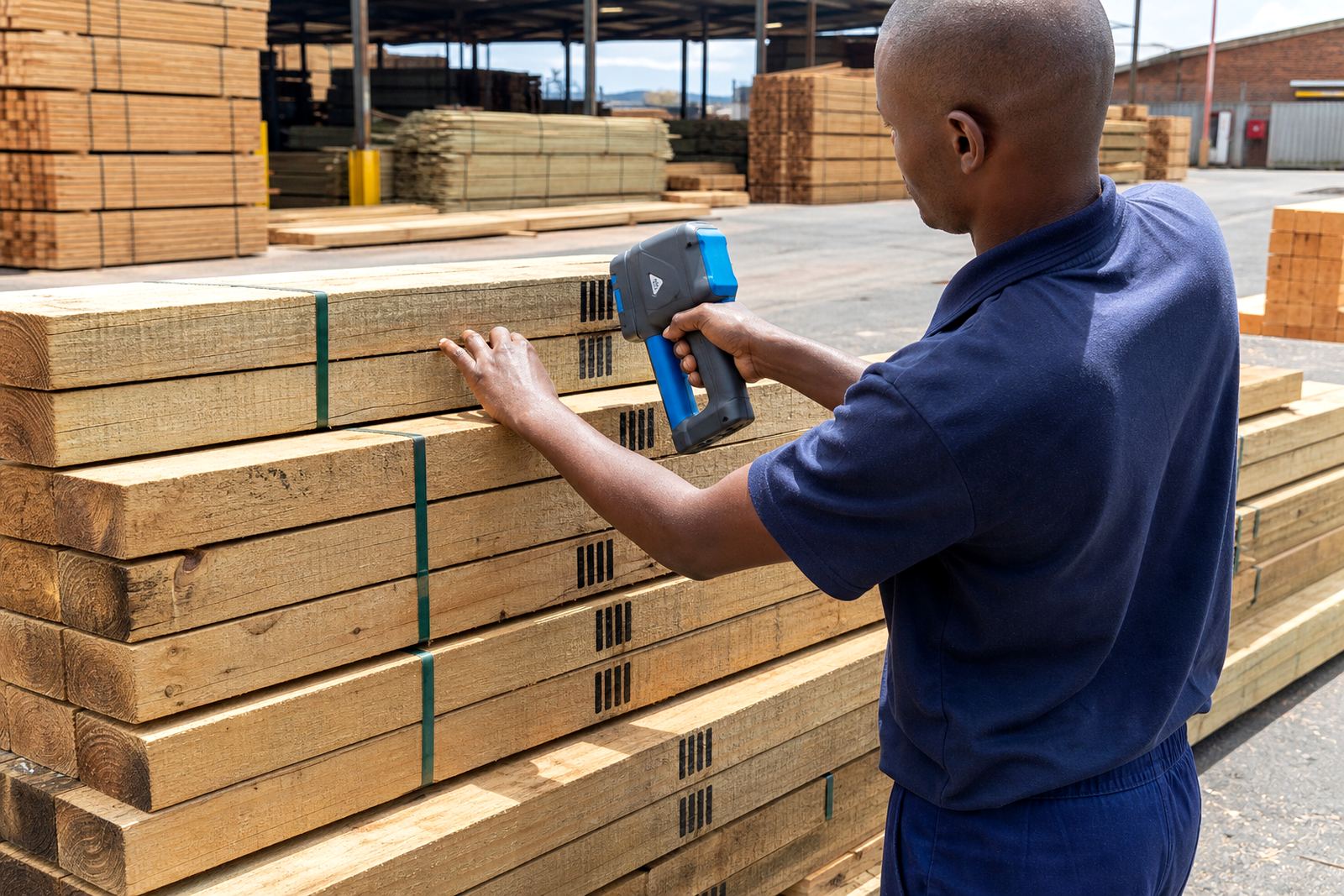
Timber, panels and construction stock
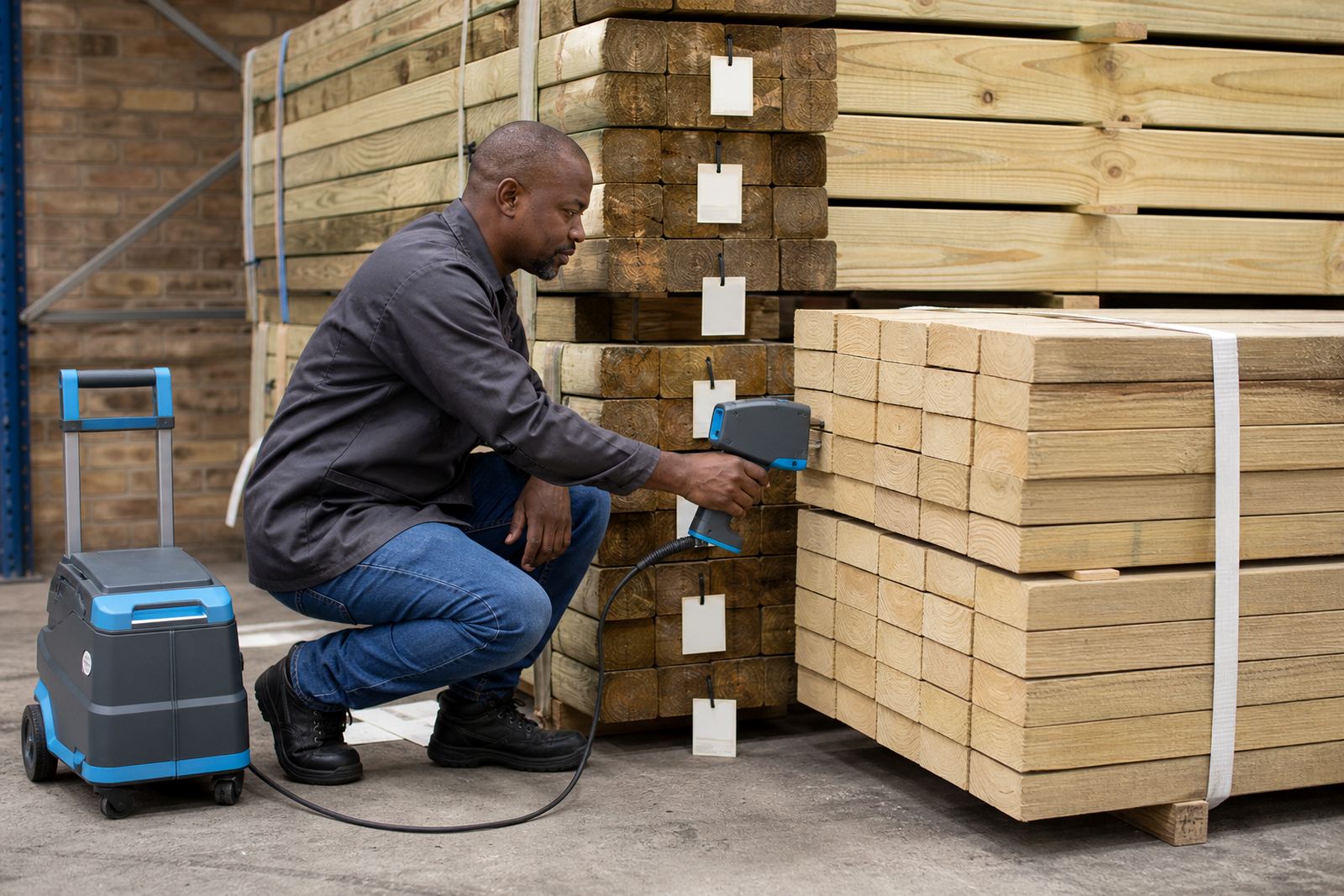
Timber yards and joinery shops often use handheld printers for grade marks, pack IDs and length notes. Rough timber takes a different approach from planed boards, because open grain can pull in liquid faster. Water-based ink can suit absorbent wood, while solvent ink is often used where the surface is sealed or damp from handling.
For pallets, beams and bundled boards, the coder can place repeated marks in the same spot so sorting stays consistent. Print height must be matched to the viewing distance, since a small code may disappear on dark timber or rough sawn stock. On treated material, a test print helps before a full run starts.
Bags, sacks and woven packaging
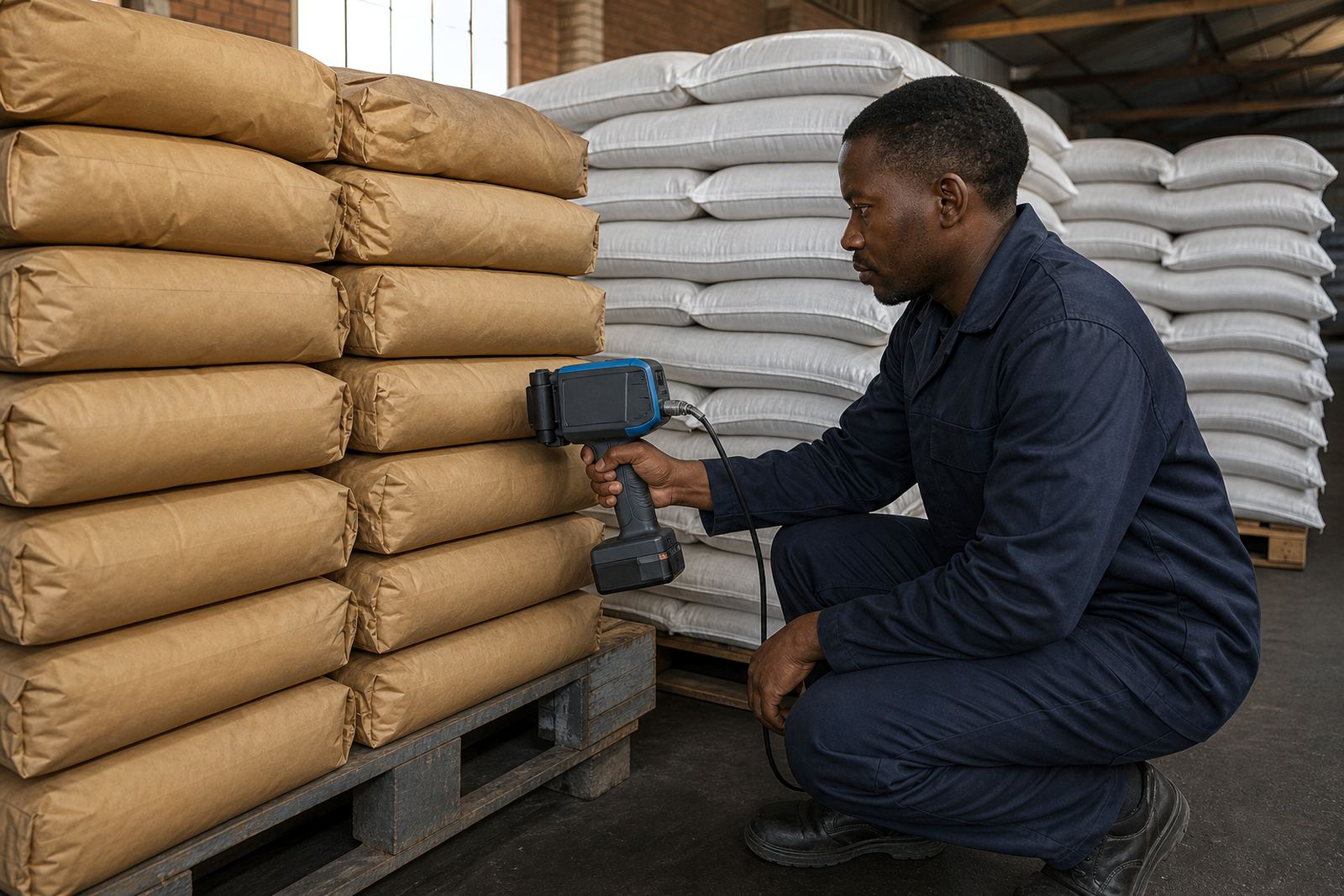
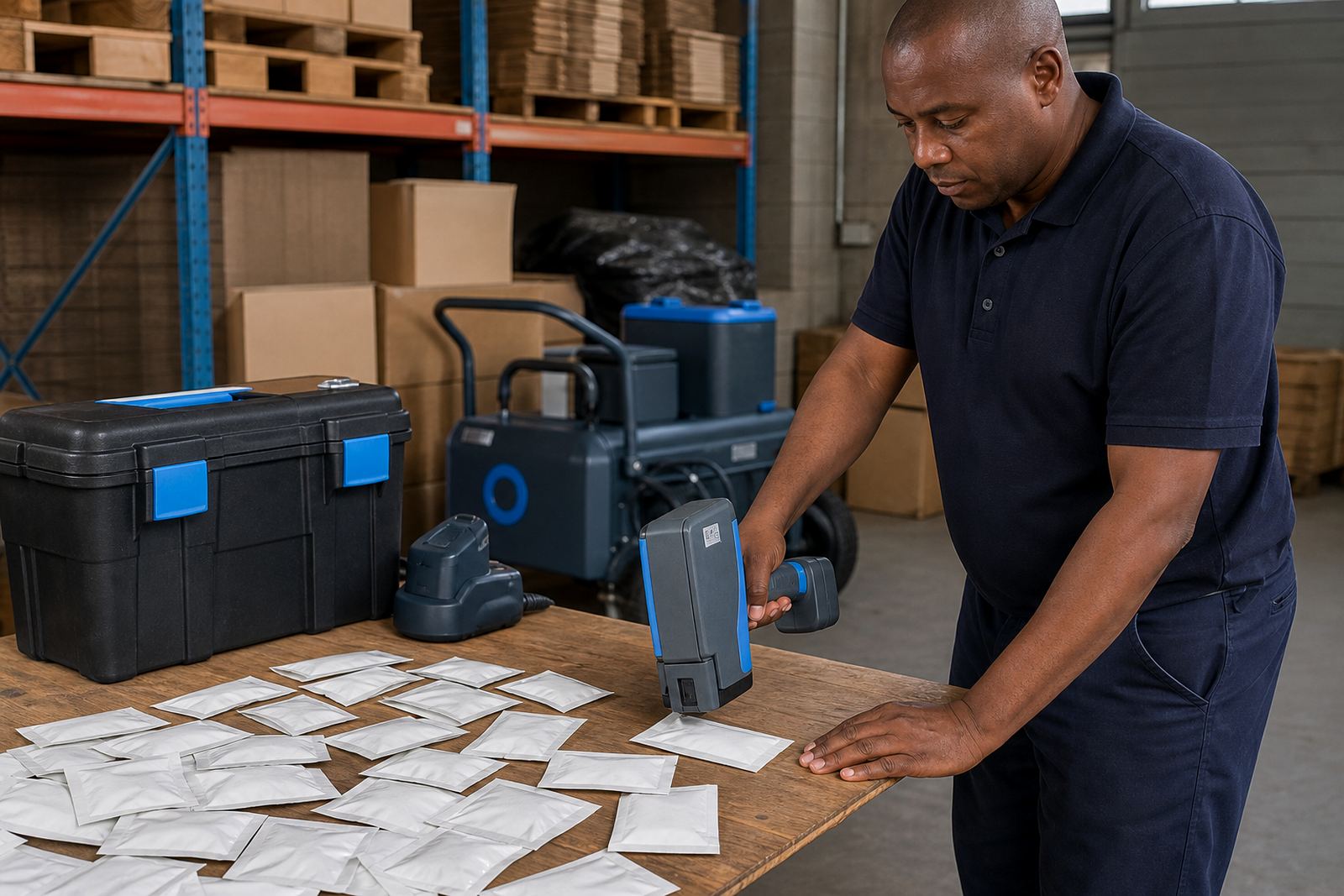
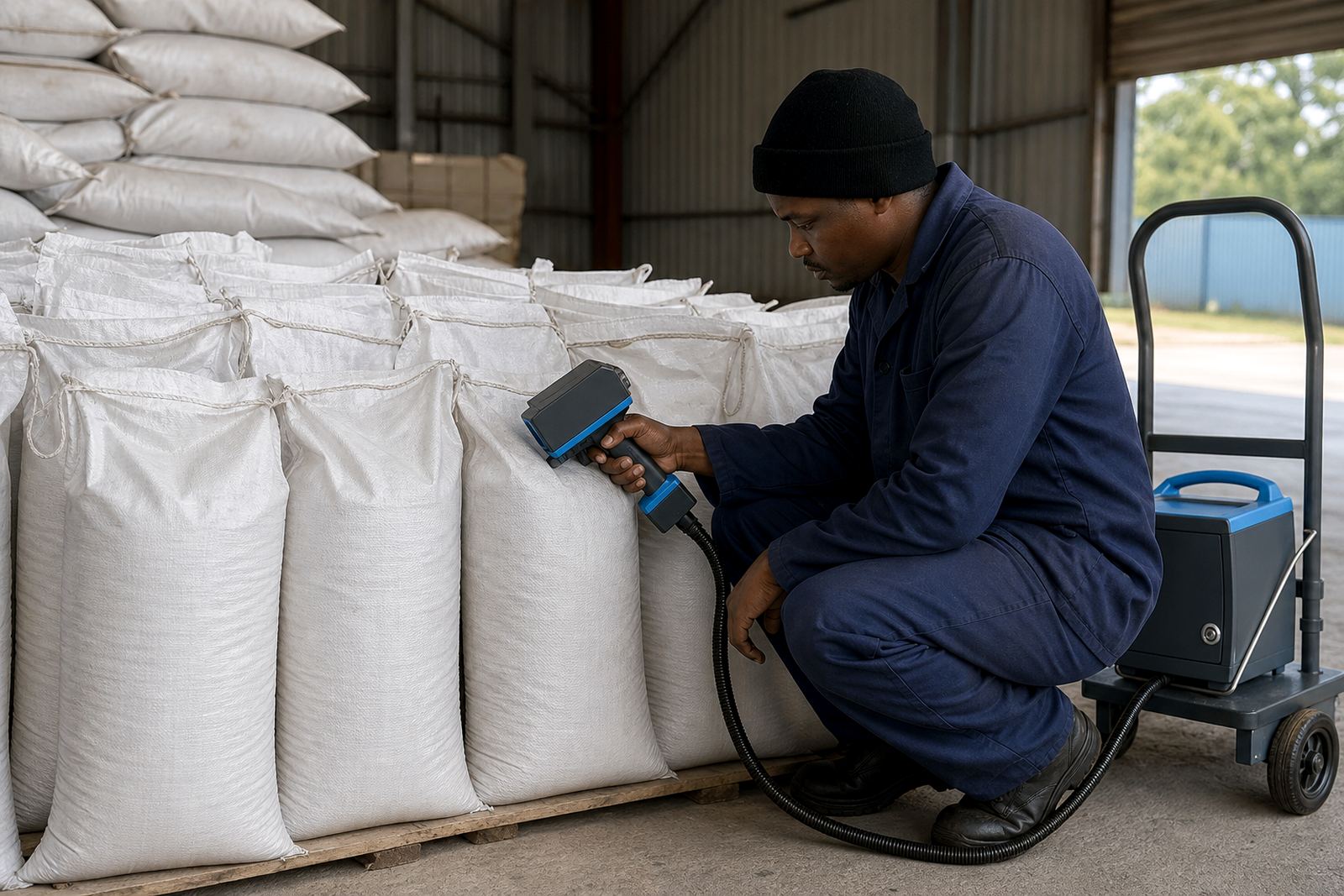
Woven bags, paper sacks and laminated pouches are common in food, feed and building supply work. These surfaces vary a lot, from dusty grain sacks to slick plastic laminate, so ink choice matters as much as the message. A quick-dry formula is useful where bags are stacked soon after coding, while a solvent ink gives better grip on harder surfaces.
Marks on sacks usually need to stay readable after handling and transport. That means the print should be sized for the bag face, not squeezed into a tiny corner. Codes can sit above seams, on flat panel areas or on the lower edge of a bag where the operator can keep a steady hand.
Barcodes, dates and trackable marks
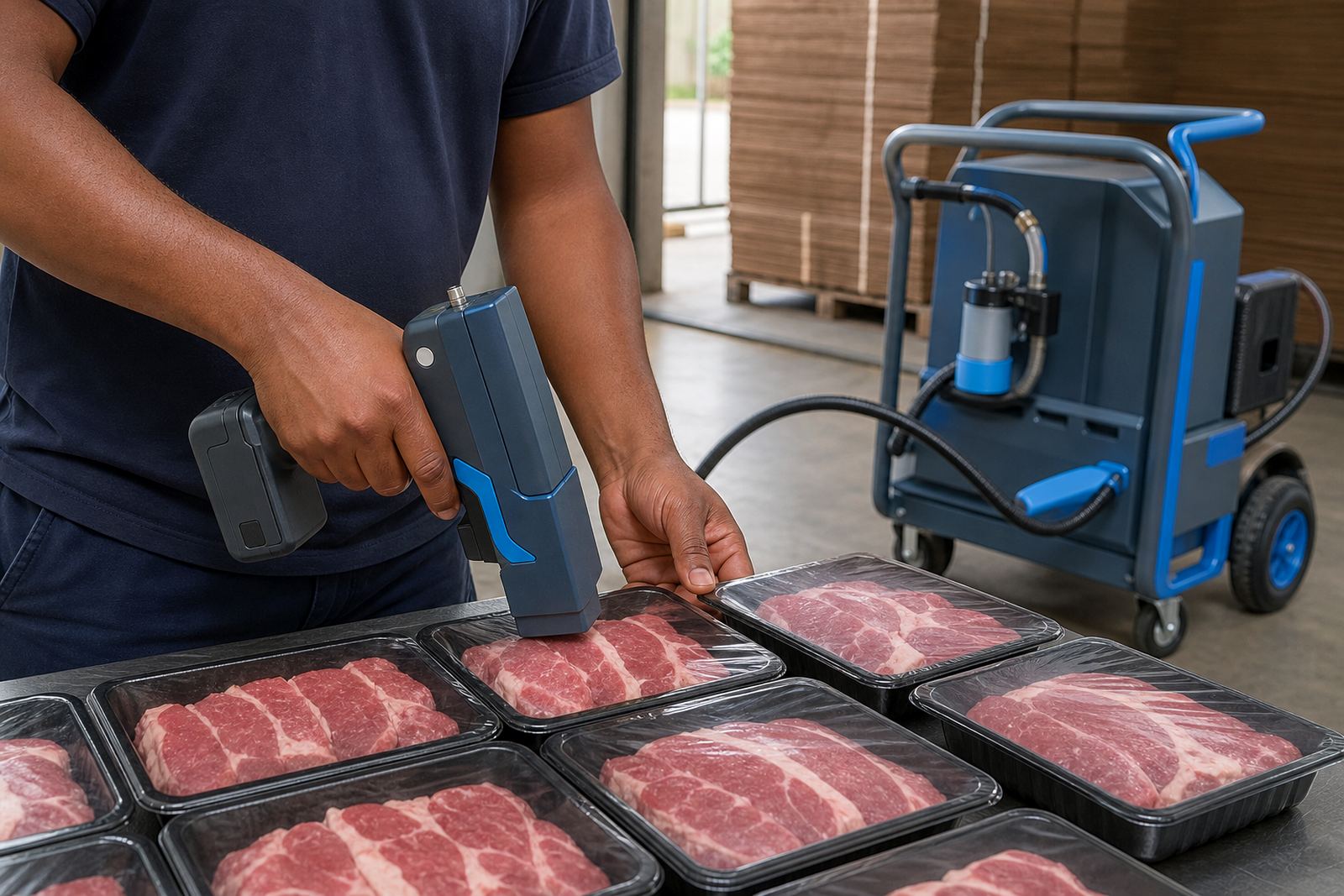
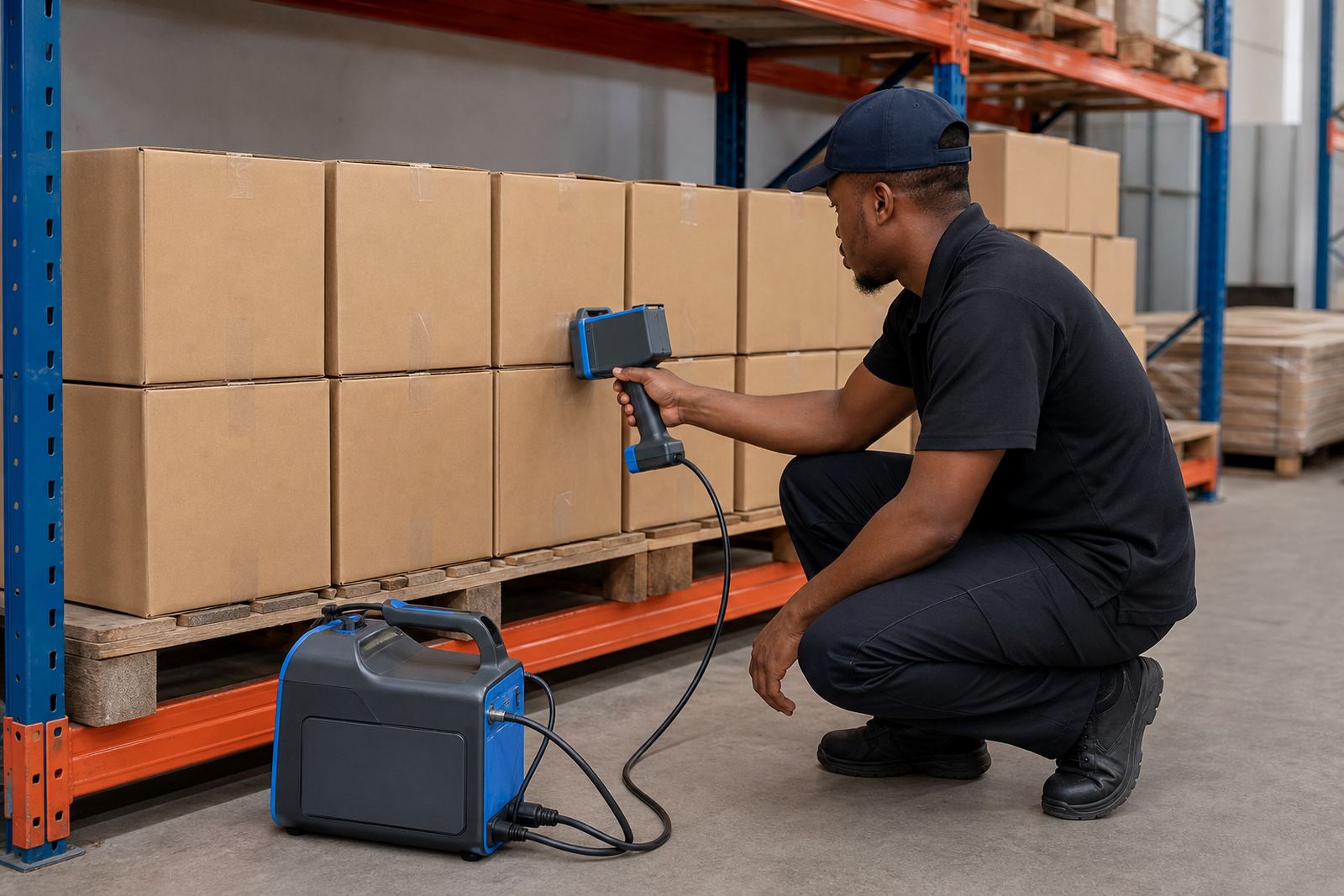
Not every handheld print job is only about a visible date. Some sites need barcodes, internal references and line identifiers that link stock to dispatch records. A handheld coder can put these marks straight onto cartons, labels, sleeves or product wraps, as long as the print area is flat and the scanner can read the contrast.
- Use clear spacing around barcode edges
- Keep the print head square to the surface
- Choose a code size that suits the scanner
- Test contrast on the actual pack material
Dates and batch numbers should stay legible under warehouse light and during transport. For that reason, ink colour and drying speed are part of the hire decision, not just a side note.
Hire terms and site support that fit the job
Short-term rental suits plants, warehouses and contract work where coding needs vary from one run to the next. Some jobs only need a unit for a short packing cycle, while others need it in place for a longer production stretch. The hire package can include inks, message loading, barcode setup, logo setup, test printing and consumables supply.
Support also matters when a team is learning a new mark layout or switching between surfaces. On-site setup, remote setup help, operator training and troubleshooting support keep the hand unit aligned with the work. Backup unit support is useful where the schedule is tight and a spare coder removes pressure from the line.
Handheld Printers Rental works from Pinetown in Durban and hires units across South Africa, including Durban, Pietermaritzburg, Johannesburg, Cape Town and Richards Bay. Branch coverage also includes Pinetown Hire, Durban Hire, Pietermaritzburg Hire, Johannesburg Hire, Cape Town Hire, Richards Bay Hire, Westmead Hire and New Germany Hire.