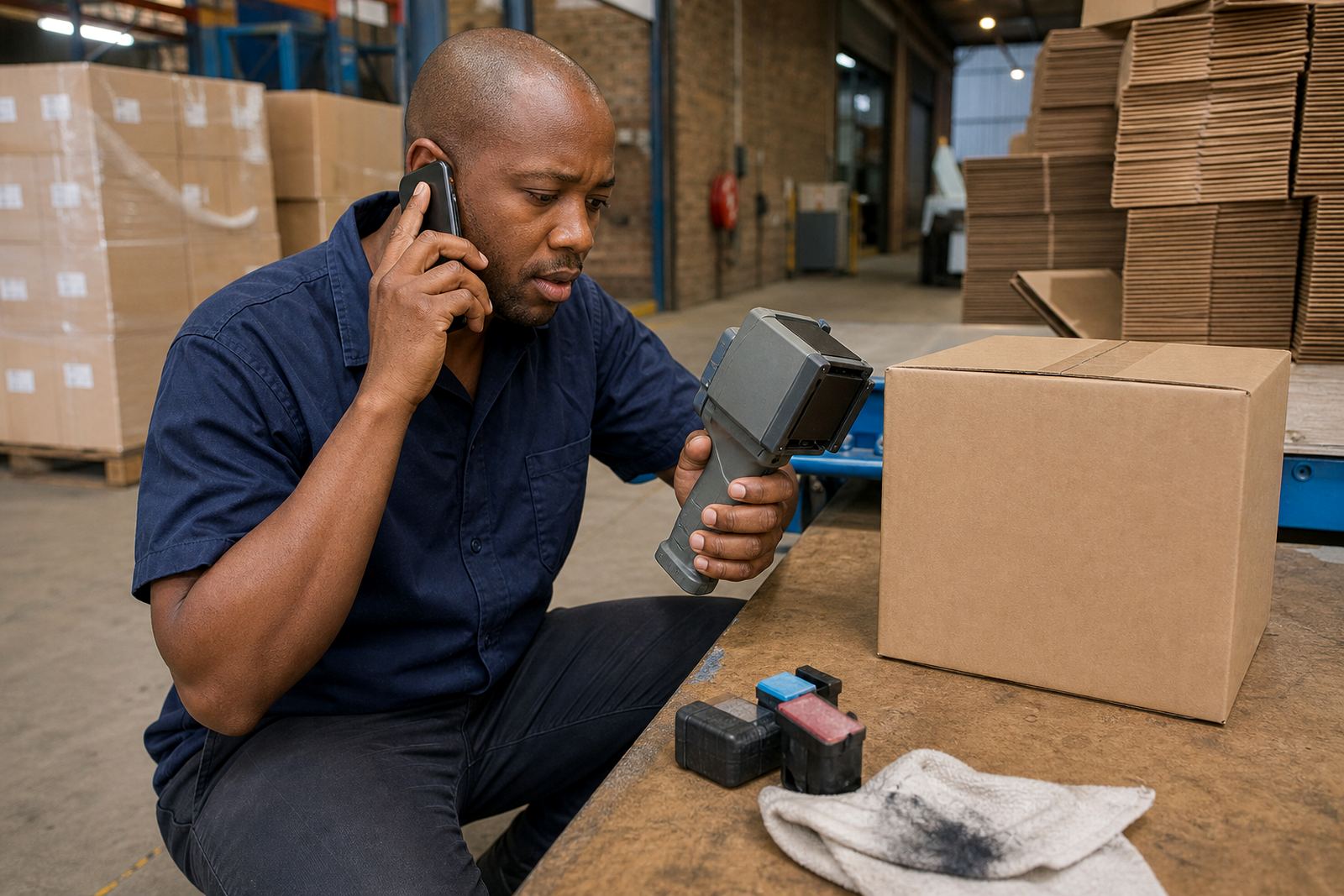
Inkjet coder help for marks that stay readable
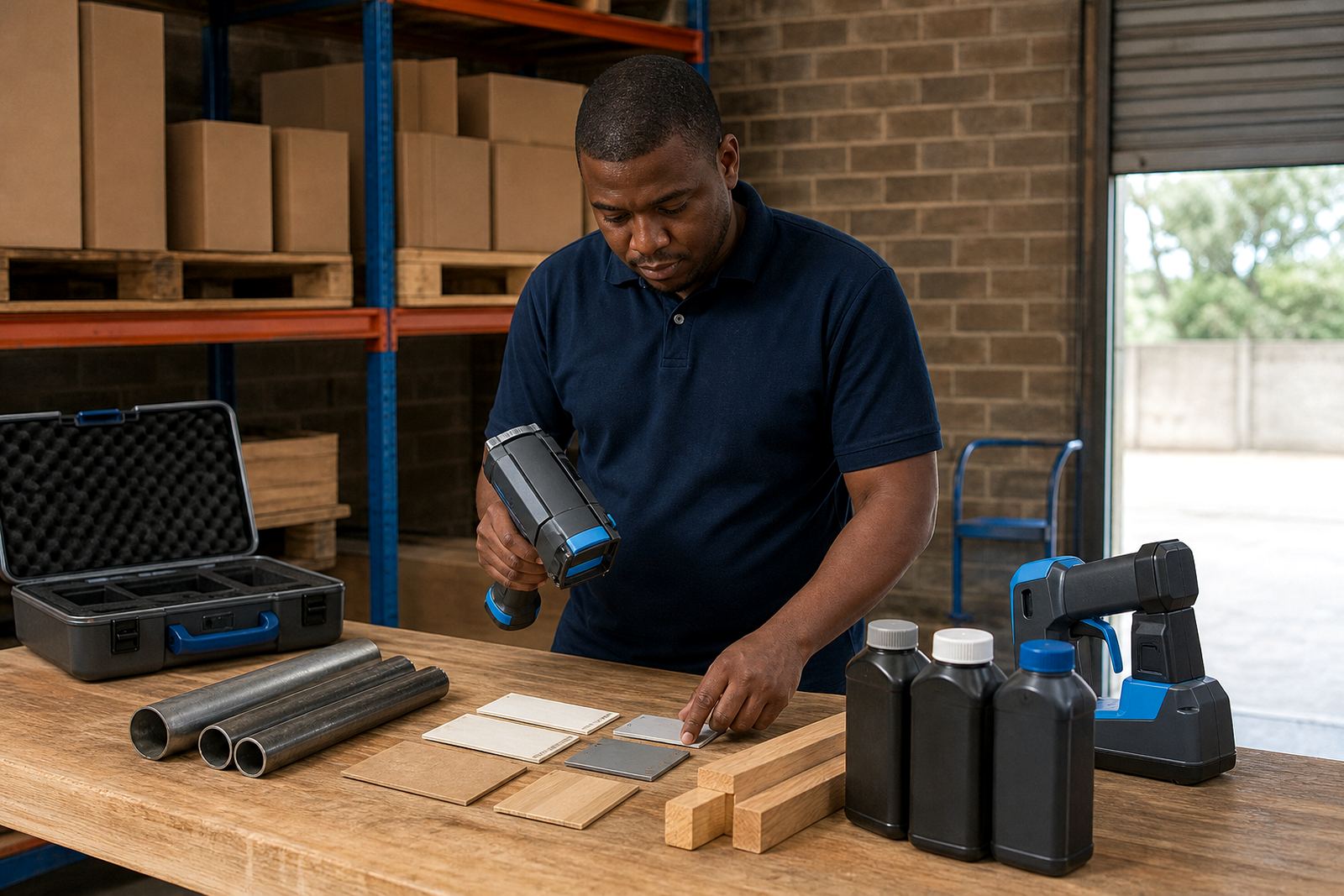
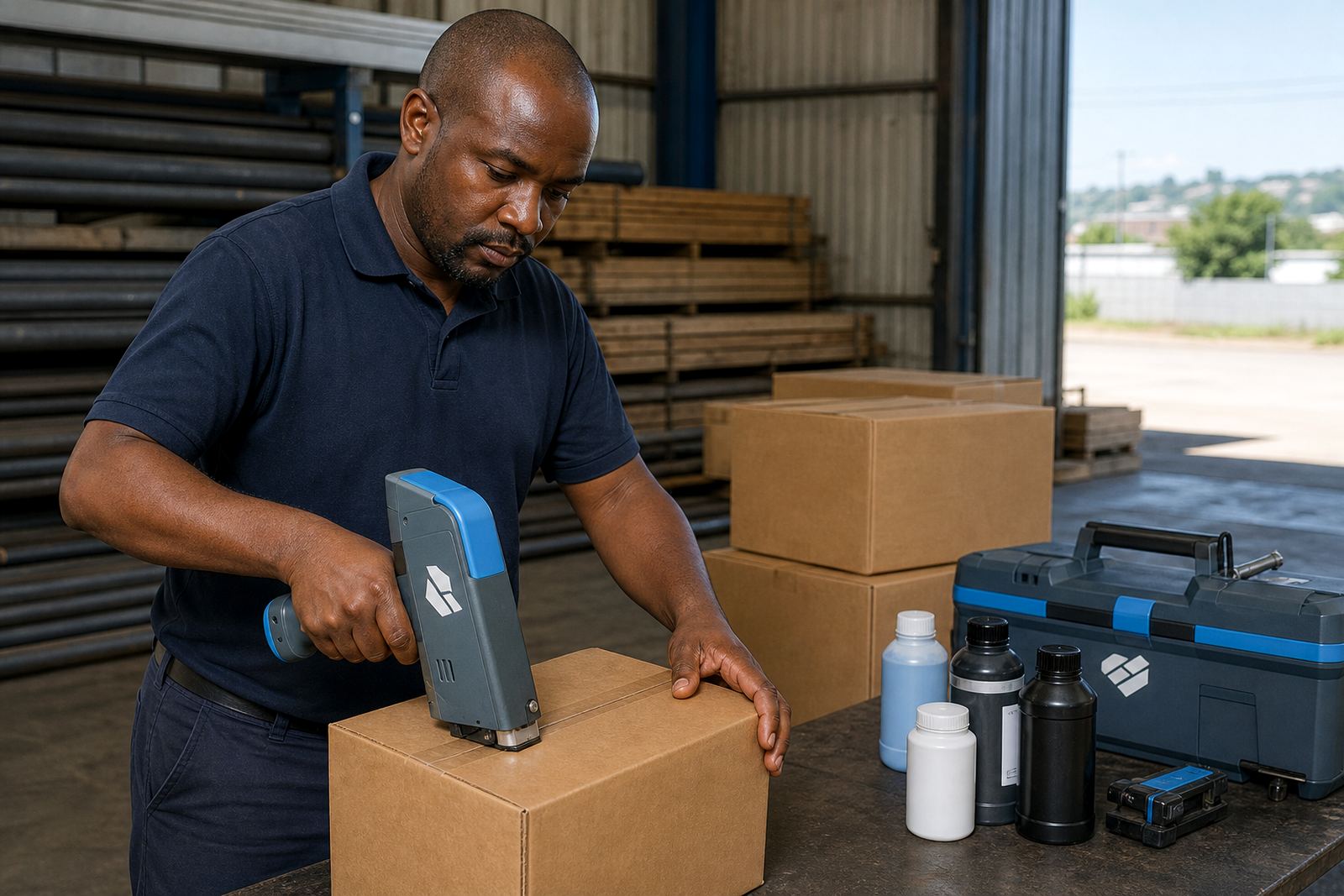
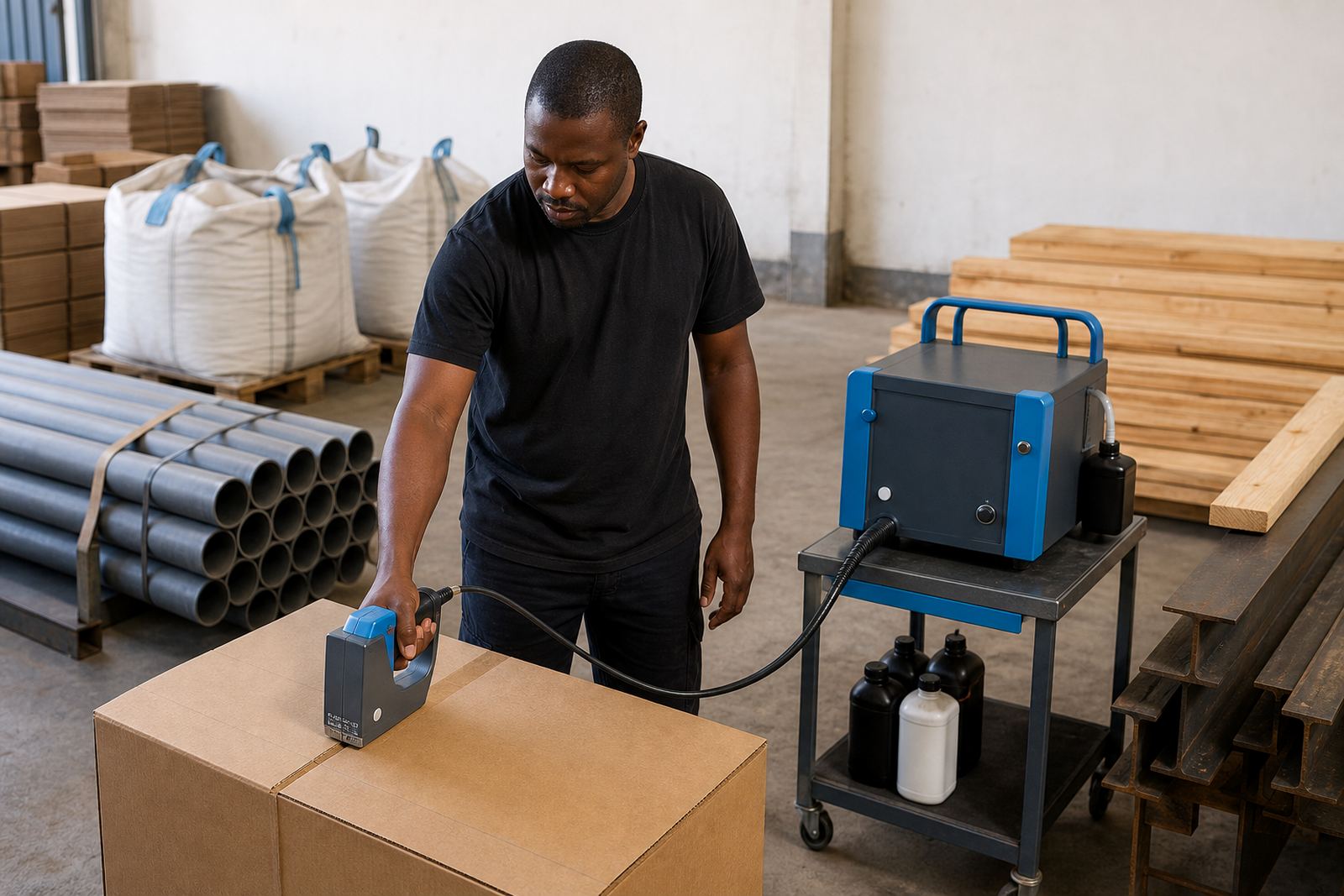
Handheld inkjet printers need the right match between the surface, the ink and the way the operator moves the unit. On porous cartons and timber, quick-dry or water-based inks are often the first place to start. For coated cartons, plastics, pipes and metal, solvent inks usually give a firmer mark and less smudging.
We support coding for dates, batch numbers, lot details, barcodes and short logos. Print height choices matter too, because a 2 mm mark behaves very differently from a 12.7 mm mark on rough steel or smooth film. If the message is too long for the surface, the print can drift and the edge will look untidy.
Setup work that helps the first print land properly
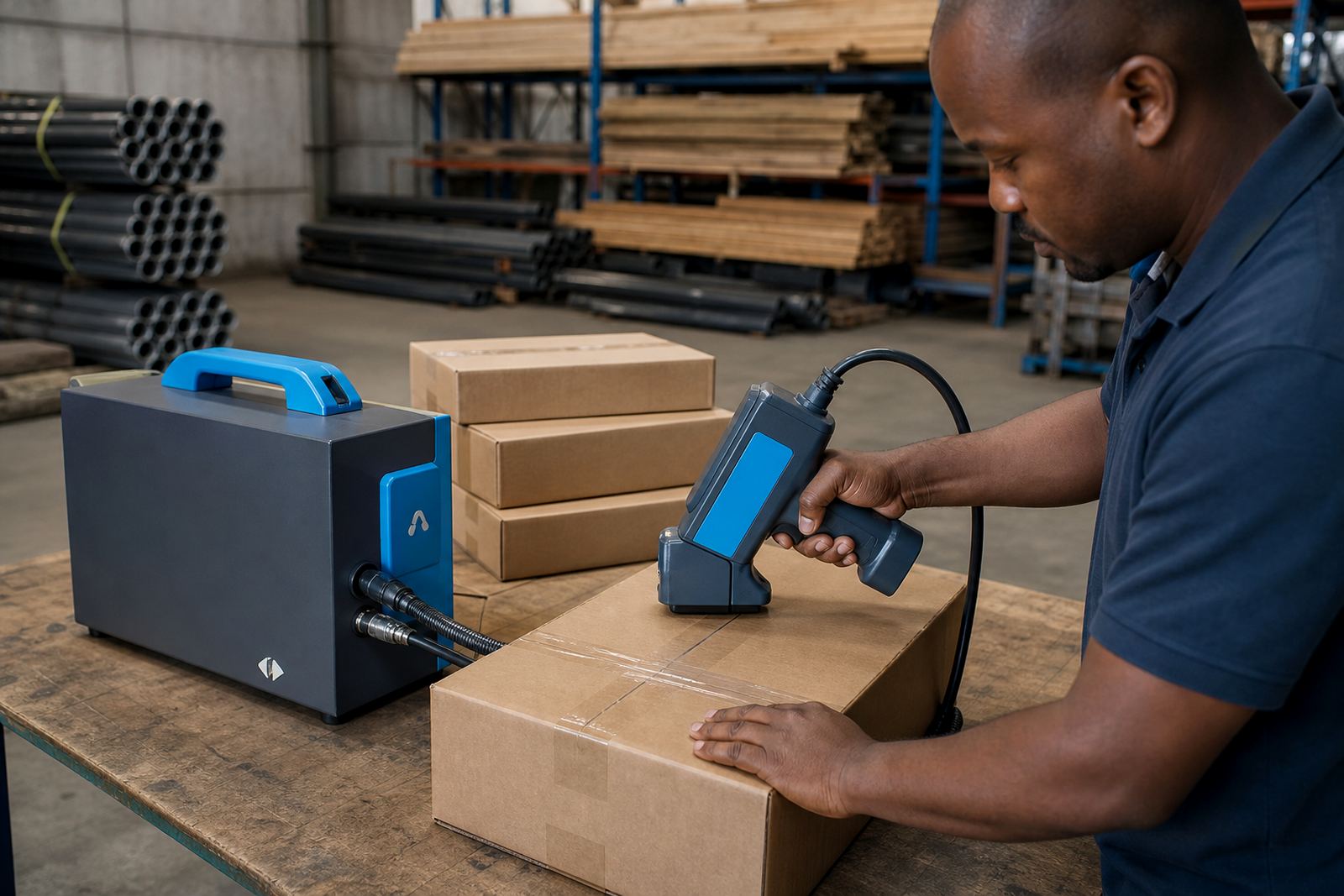
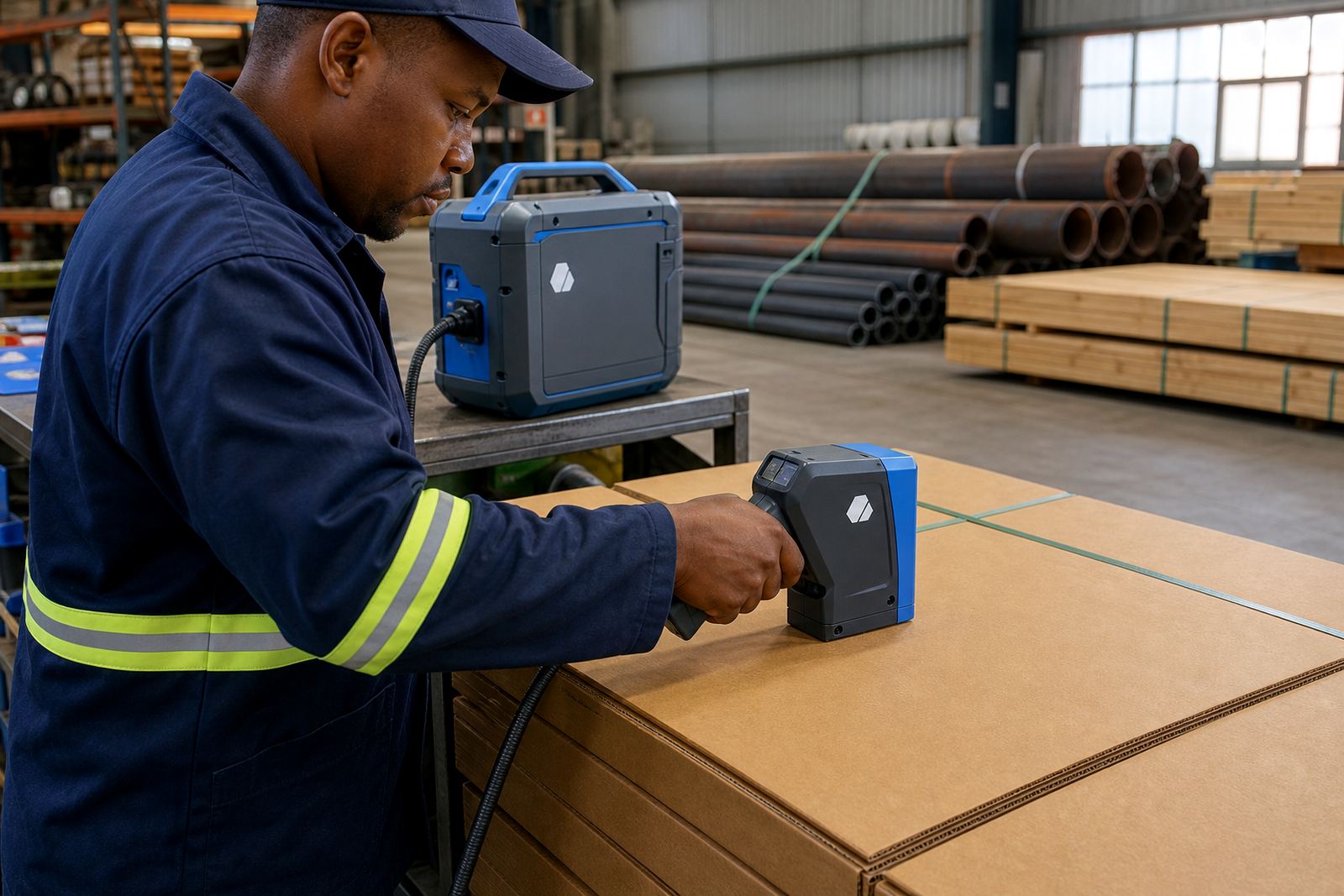
On hire jobs, the first task is usually message loading, print height setting and a test run on the actual packaging or component. That lets the operator see whether the code sits straight, reads clearly and holds up under handling. We also check barcode spacing where needed, because a barcode that looks fine at a glance can still fail a scanner.
- Message loading for dates, batch codes and short text
- Barcode setup for linear codes and fixed data fields
- Logo setup for simple one colour marks
- Test printing on the client surface before production starts
Training for operators who need steady hands and clear marks
Good handheld coding is part tool and part technique. The unit must stay close to the surface, move at a steady pace and keep the same angle from start to finish. If the operator speeds up at the end of a carton or pipe, the print can stretch and lose clarity.
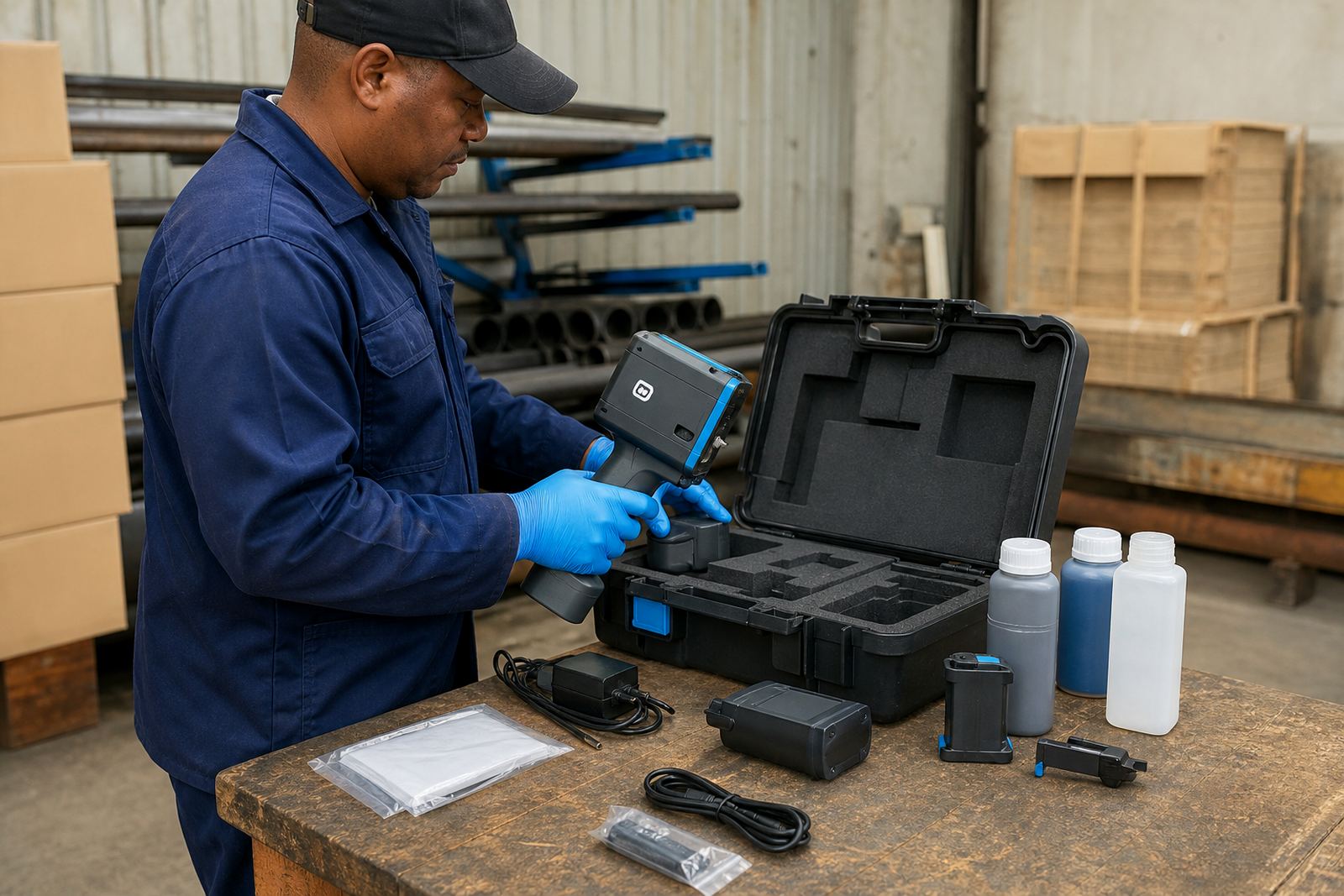
Anele Vermaak handles operator training, with practical guidance on pass speed, print distance, nozzle care and what to do when a mark starts to fade. The training also covers basic upkeep like cleaning the head, checking the battery pack and storing ink properly in hot or humid conditions, especially on coastal jobs around Durban and Richards Bay.
Hire terms for short runs and longer production stretches
A weekly or monthly rental suits clients who need a coder for a defined job, a seasonal run or a longer line change. Some sites need one unit for cartons while another needs backup support for pipes, bags or timber bundles. We keep the hire format practical so the equipment matches the volume and the surface, not the other way around.
- Weekly hire for short projects and pilot runs
- Monthly hire for ongoing coding work
- Delivery and collection across major centres
- Backup unit support for busy production periods
Consumables and support when the code starts slipping
Ink use depends on the surface and the mark size, so the wrong cartridge or bottle can waste time and leave patchy coding. We help with consumables supply, including solvent, water-based and quick-dry options where they suit the surface. The same applies to cleaning items and spare parts that keep the coder usable on site.
If a print starts to break up, the issue may be a dirty nozzle, a tired battery, the wrong ink type or a hand movement that is too fast. Jared Rademeyer leads technical support and Morne Oosthuizen handles field setup when the job needs a person on site. That mix keeps the machine working and the mark legible, even when the line is moving.
Where support reaches from Pinetown to the rest of the country
Our base is in Pinetown, Durban, with support arranged for Westmead, New Germany and the wider KwaZulu-Natal corridor as well as Johannesburg, Cape Town, Pietermaritzburg and Richards Bay. Many jobs involve cartons and timber, while others involve pipes, steel sections or wrapped bags with curved or uneven surfaces. Each one needs a slightly different setup.
Nokuthula Kotze handles hire coordination and Priya Pillay keeps the admin side in order, so the right unit, ink and accessories are lined up for the job. Support, setup help and hire extensions are arranged by contact form or phone.