
Handheld expiry coding for busy packing lines
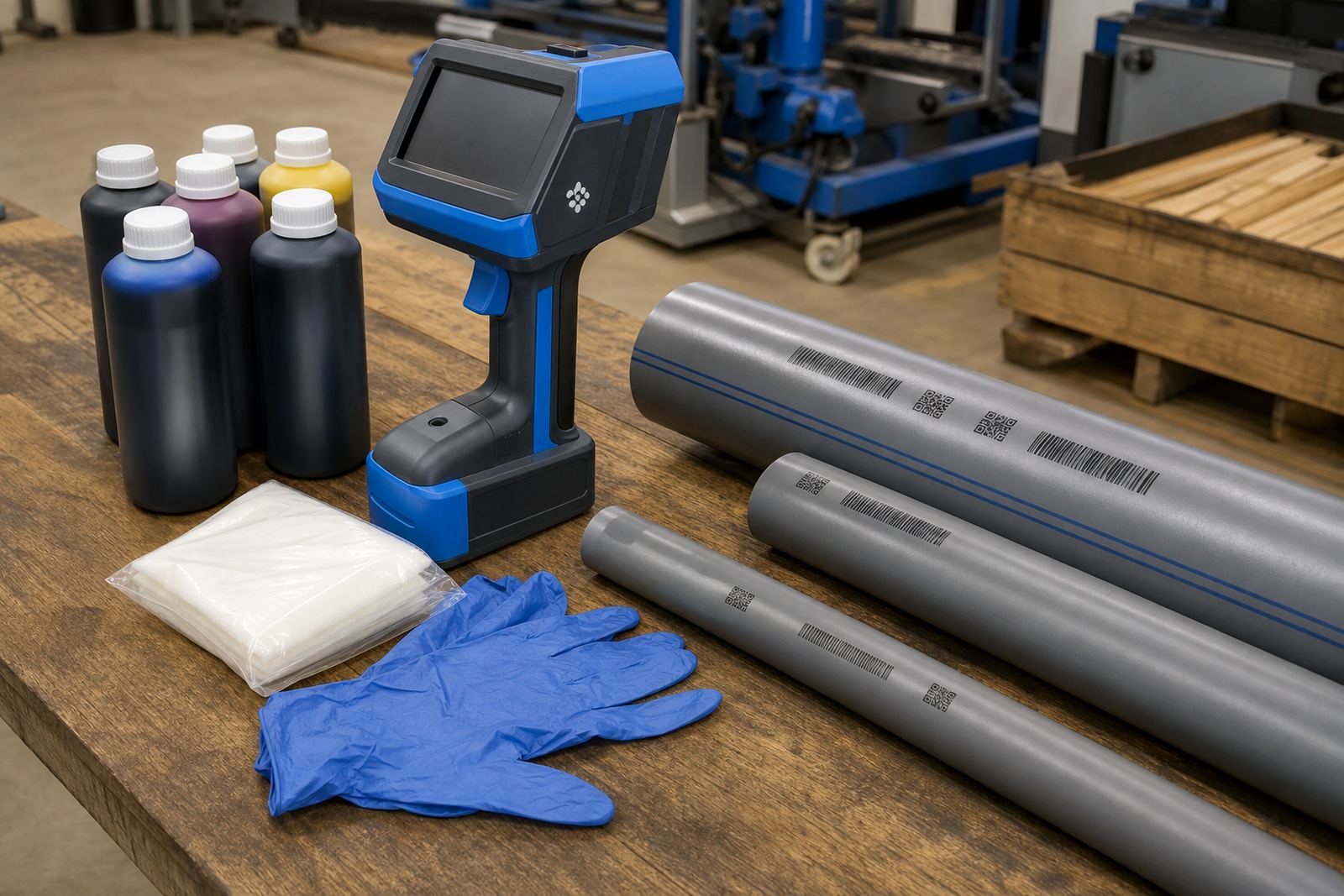
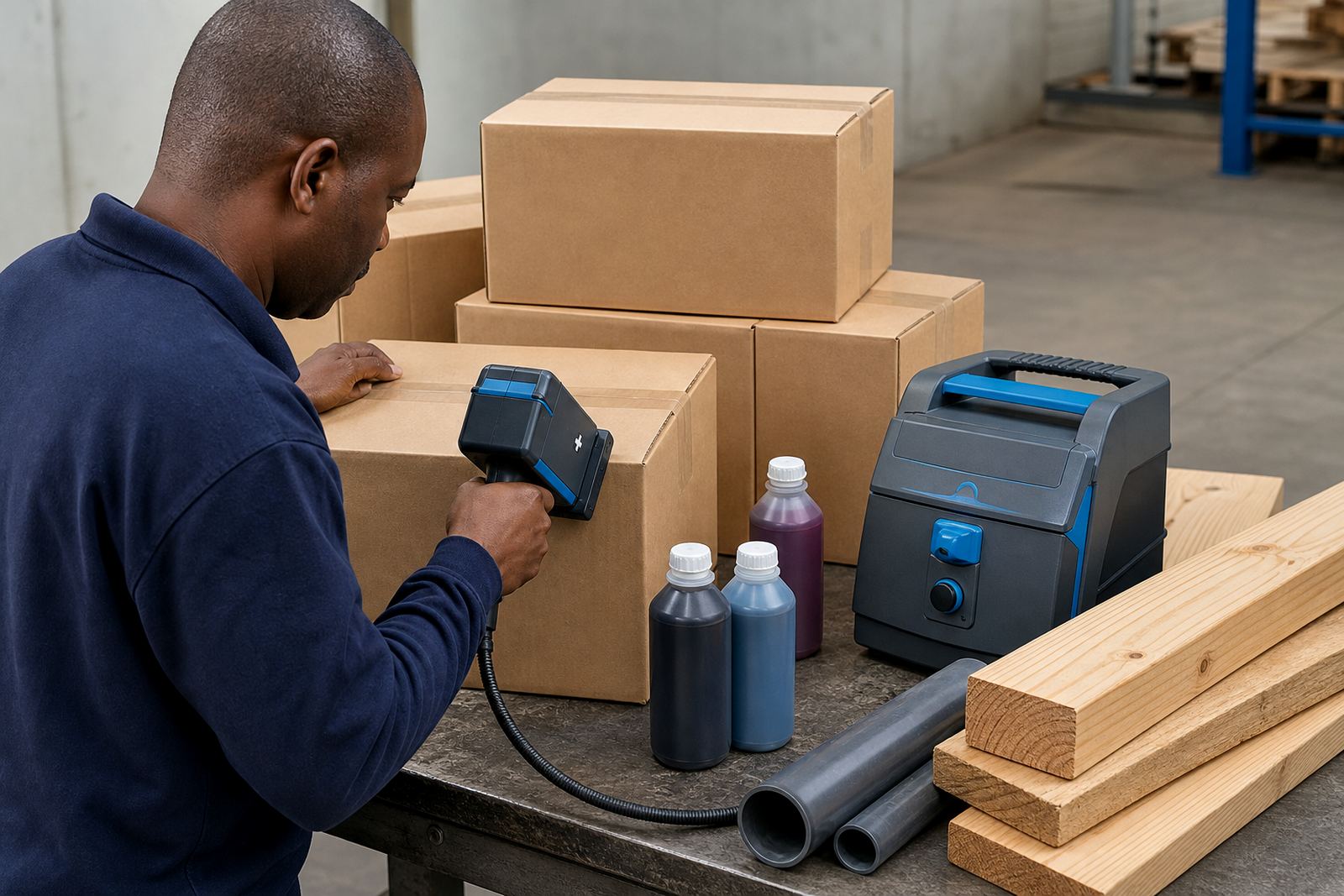
The expiry date printer on hire is a portable inkjet coder that places clear text and simple marks straight onto packed goods. It suits cartons, paper sacks, woven bags, sleeves, shrink wrap, timber, pipes and coated steel where a small printed message must stay legible through handling and transport.
Most hire jobs use a compact, battery powered unit with a print head built into the handheld body. The operator guides it by hand across the surface while the device prints the line, so the job is better suited to short runs, changeable batches and sites that do not want fixed-line coding gear. For expiry work, that usually means best-before wording, dates, batch numbers, lot codes and a small logo or simple barcode.
Our rental units are supplied for practical use in Durban, Pinetown, Pietermaritzburg, Johannesburg, Cape Town and Richards Bay, with hire terms that can run weekly or monthly. The print is set up to match the pack, the surface and the message length, because a neat code on a cardboard carton is not the same as a mark on a rough timber board.
Print heights, messages and coding options
Expiry coding usually needs small characters that stay readable without eating up pack space. Handheld printers are commonly set for print heights from 2 mm up to about 12.7 mm, depending on the model and the message layout. That range works well for date lines, short batch strings, product names and compact logos on retail packs or outer cases.
Line count matters as much as height. A simple two line mark might carry a best-before date on one line and a batch code on the other. A taller setting helps when the pack sits far from eye level, while a narrower setting is useful where space is tight on sleeves and small cartons.
- Expiry and best-before dates on cartons and sleeves
- Batch numbers and lot codes for traceability
- Short barcodes on smooth, suitable surfaces
- Simple logos or symbols for branding and handling marks
- Sequential numbering where a run needs changing codes
Ink choice follows the pack material. Solvent based ink suits many non-porous surfaces and dries quickly. Water based ink works better on absorbent cartons and some paper based packs. Quick-dry options are useful where the surface needs a shorter set time before stacking or bagging. The wrong ink can smudge, bead or fade, so the surface finish matters just as much as the message itself.
Where this unit fits into real packing work
This type of printer fits sites that move between pack sizes, product lines or different customer orders. Food packers use it for expiry and batch marking on corrugated cartons and sleeves. Timber yards use it for grade marks and date stamps on boards, crates and bundled material. Pipe and steel stockists use it for identification, batch traceability and simple logistics notes where the surface allows it.
It also works well for businesses that need portable coding across multiple points in one day. A unit can move from the filling area to dispatch, then over to a receiving bay or yard, so there is less need to shift product to a fixed coding station. That is handy where cartons are packed in one room and sealed in another, or where pallets are prepared in a different area from final loading.
We also help match the hire unit to the environment. A clean indoor pack line, a dusty yard and a damp coastal store room call for different ink choices and handling habits. In Durban and Richards Bay, moisture in the air can change how a code settles on a surface, so the ink and the drying window deserve attention before the first run starts.
Setup, loading and operator handover
These printers need a sensible setup before they are used on live stock. The message has to be loaded correctly, the date format checked, the print direction tested and the surface marked in the right spot. If the pack has a curve, a rough skin or a moving conveyor, the hand speed and trigger rhythm matter as much as the device settings.
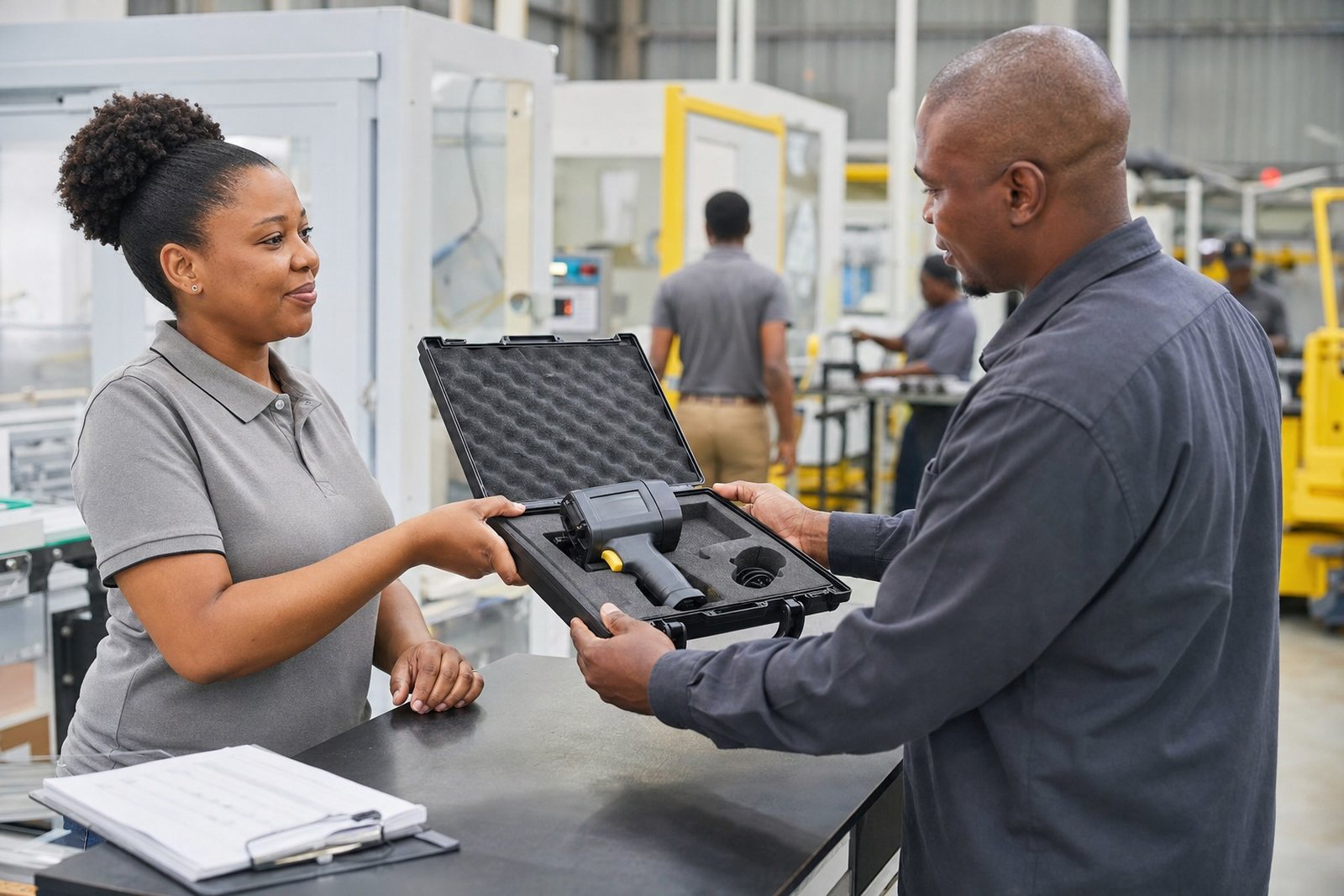
Our hire service can include on-site setup, remote setup help, message loading, barcode setup, logo setup and test printing. For teams that are new to handheld coding, operator training helps avoid crooked lines, faint marks and blurred characters. On busy sites, a backup unit can keep work moving if the first printer needs attention.
- Delivery and collection for hired units
- On-site setup for first use or changeovers
- Remote setup help for message and format checks
- Operator training for the team using the unit
- Test printing before stock goes into full production
The unit needs a charged battery, a fitted cartridge or ink system, and a clean path for the print head. Good handling keeps the nozzle area clear and helps the print stay sharp. If the print is too light, too wet or drifting on the pack, the settings or ink are usually the first place to inspect.
Care, cleaning and storage between runs
Handheld expiry printers stay more reliable when they are wiped down after use and kept in a clean case or shelf. Dust from timber, fibres from sacks and residue from cartons can build up around the print area, so cleaning the head and surrounding parts matters. Ink that is left to dry inside the wrong place can block the nozzle path and spoil the next run.
Cartridges and spare consumables need proper storage too. Solvent based inks should be kept sealed and out of direct heat. Water based inks need protection from dirt and from drying out. Quick-dry inks are helpful on some surfaces but they still need sensible handling, because a damp wipe or dirty roller can spoil the mark before it sets fully.
When the unit is returned after hire, a quick inspection of the battery, print head, cartridge and casing helps spot wear early. That is useful for weekly and monthly hire terms because a printer that is handled well in one job is easier to prepare for the next one.
Order details that help us match the right unit
When arranging an expiry date printer hire, the right details save time on setup and reduce the chance of the wrong ink landing on the wrong pack. Surface type, message length, print height, expected daily use and site location all affect the fit. A carton with a smooth clay coat needs different handling from a woven sack, and a timber board is not the same as a plastic sleeve.
- Surface material: carton, bag, sleeve, timber, pipe or steel
- Message content: expiry date, best-before date, batch code or logo
- Print height and line count needed for the pack
- Ink preference: solvent, water based or quick-dry
- Site location and whether the unit stays in one area or moves around
- Hire term: weekly or monthly
We hire from Pinetown, with service across Westmead, New Germany and greater Durban, plus Pietermaritzburg, Johannesburg, Cape Town and Richards Bay. The enquiry form on our contact page is used for hire requests and support details, and it helps us line up the right printer, ink and accessories for the job.
Key facts
| Product type | Handheld inkjet expiry date printer for hire |
|---|---|
| Typical print height | 2 mm to 12.7 mm depending on unit and layout |
| Common surfaces | Cartons, bags, sleeves, timber, pipes and steel |
| Ink options | Solvent based, water based and quick-dry |
| Hire terms | Weekly or monthly |
| Support included | Setup help, test printing, message loading and consumables supply |