
What the water-based kit covers on hire jobs
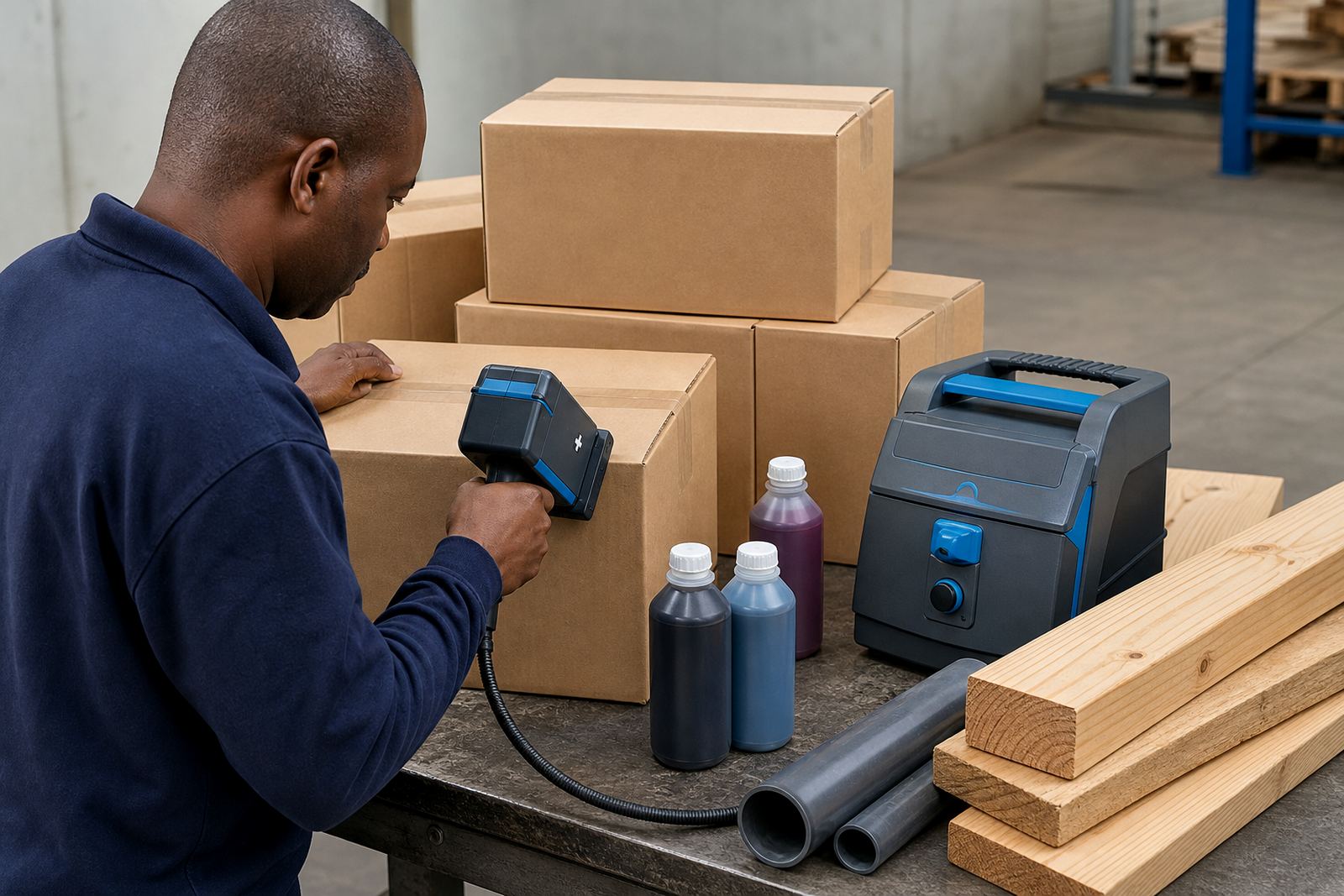
This kit is used with handheld inkjet coders that print directly onto absorbent material. The ink is carried in a sealed cartridge or refill bottle system, depending on the coder model, and is selected for porous surfaces that take a fast, even mark. On cartons in Durban, folded paper bags in Pietermaritzburg, and timber packs leaving Pinetown, it gives a clear trace without the heavy solvent smell that some sites want to avoid.
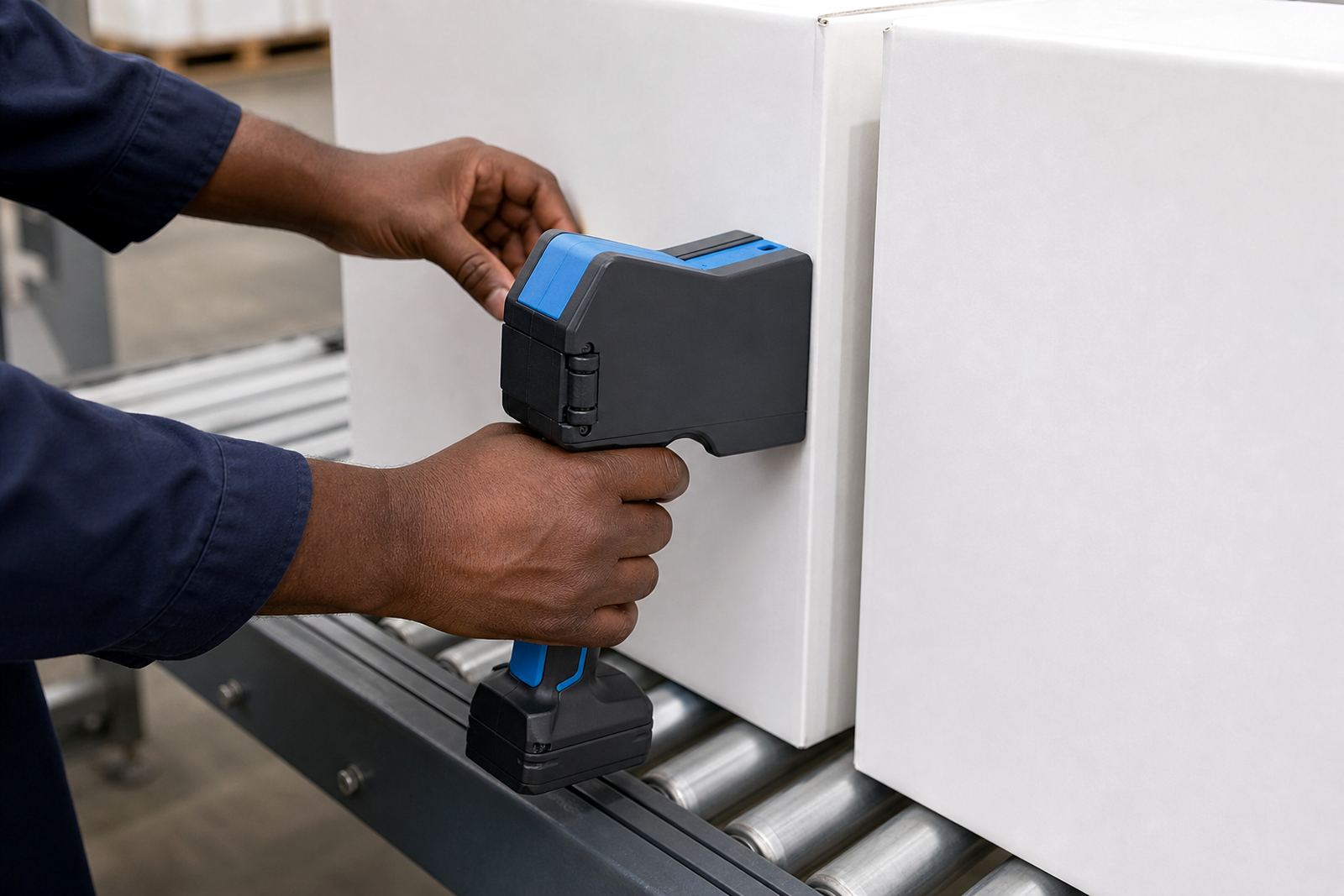
The working use is straightforward. You load the ink, confirm the message, then set the print height to suit the surface and the travel line of the operator. For hire customers this matters because the wrong ink on the wrong surface can soften edges, feather small text, or leave a mark that looks pale on brown board. A proper match keeps the date, code or logo legible through handling and transport.
- For porous materials such as cartons, paper sacks, fibreboard and untreated timber
- Suitable for dates, batch codes, short messages, barcodes and simple logos
- Works with handheld inkjet coders that support water-based formulation
- Best when the print face is dry, clean and free of loose dust
Ink sizes, print heights and format choices
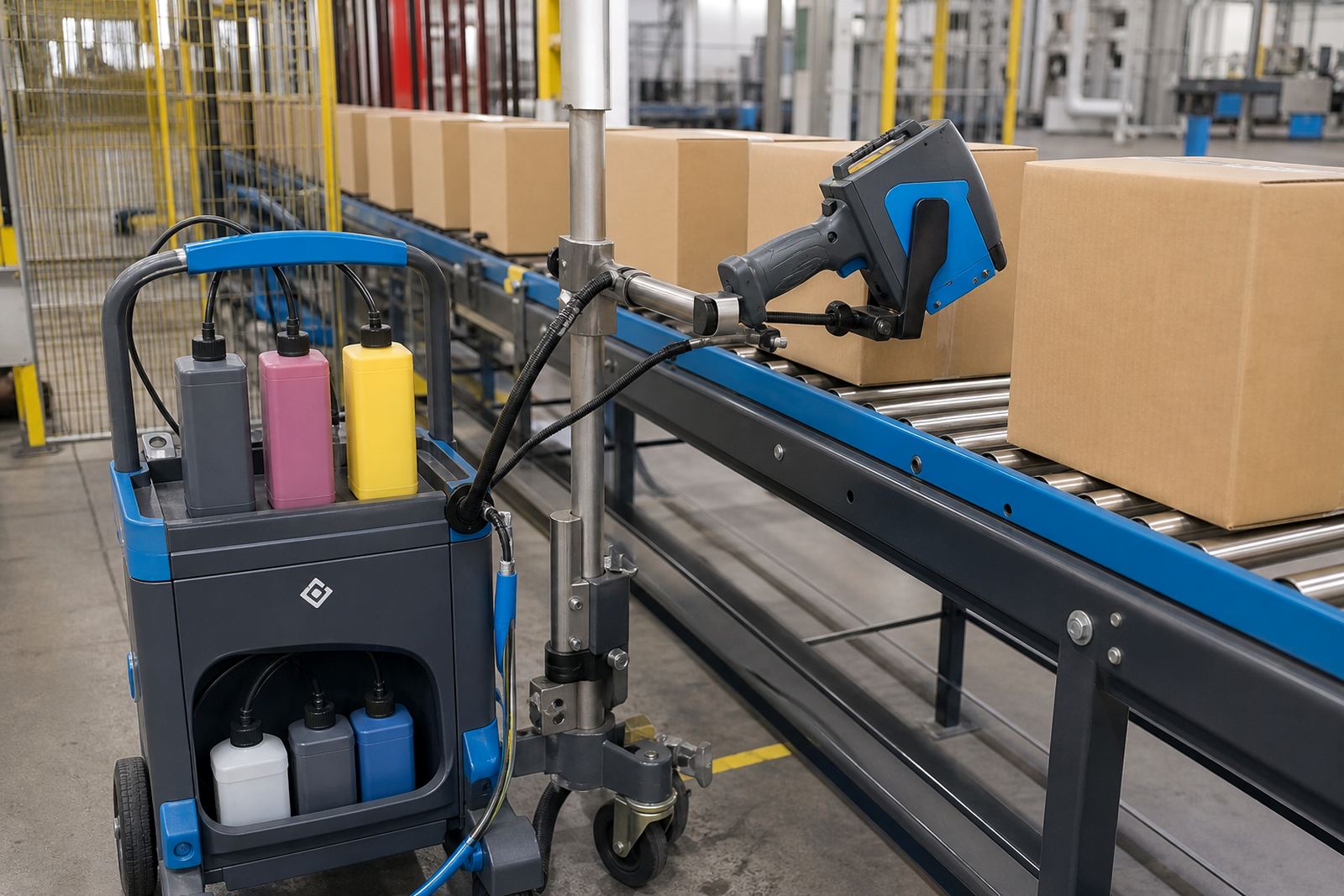
Water-based ink is usually supplied in compact cartridges or refill containers matched to the coder body. The exact format depends on the machine, but the common setup for hire work is a cartridge system that keeps filling clean and limits spillage on site. For teams working between Johannesburg and Cape Town, that matters when units move between different packing lines and storage rooms.
The print height must match the mark you need. Small date lines may sit in a narrow height band, while larger batch text, barcodes or logo blocks need more vertical space. A coder with adjustable nozzle rows can handle more than one layout, though the final result still depends on the surface texture and the distance between the print head and the material. Too much gap gives a broken image, too little can drag the head across the pack.
- Common print heights: 12.7 mm, 25.4 mm and larger multi-line layouts where the coder allows it
- Message length can include date, batch, shift code, carton count and short product notes
- Barcode size is set by the code type, label space and the scan standard in use
- Ink volume should match the hire period and the daily marking volume
Where water-based ink gives the cleanest mark
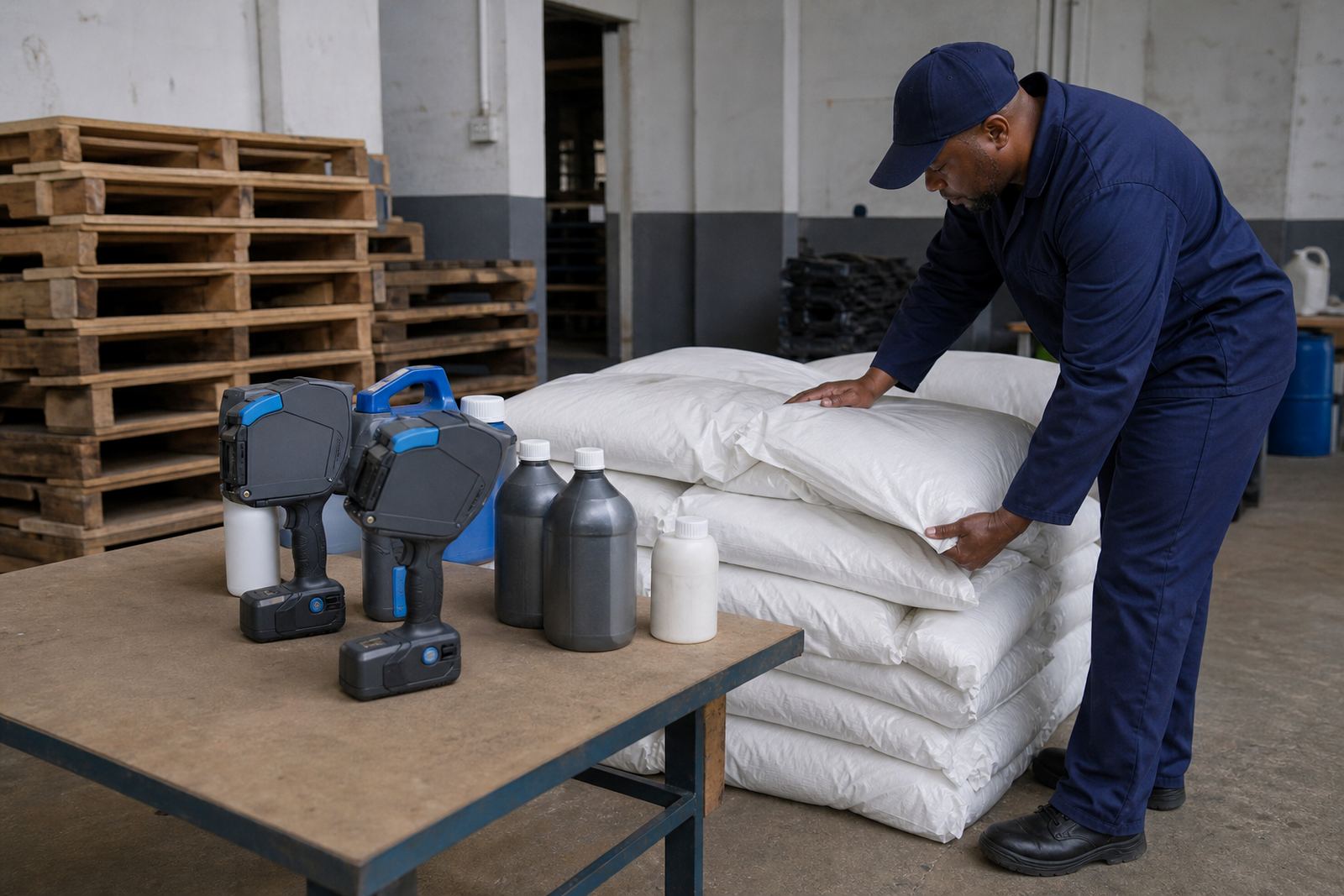
This ink is at home on absorbent packaging and untreated timber, where the fibres take the liquid and hold the image. Cartons used for retail goods, food packs, folded paper bags, timber lengths, veneer packs and some fibreboard products are typical examples. The finish is usually crisp enough for factory dates, dispatch codes and short logos when the surface is not glossy or sealed.
It is less suited to glossy plastic film, coated metal or oily pipe surfaces, where the ink can sit on top and wipe off too easily. For those jobs another formulation is usually needed, but for porous stock the water-based kit keeps the marking neat and readable. In coastal areas such as Durban and Richards Bay, storage conditions also matter because damp cartons can cause blotching if the stack has picked up moisture before coding.
- Best on absorbent cartons, paper sacks, timber and untreated board
- Works well for warehouse dispatch marks and retail pack identification
- Useful for short logo use where the logo is line based, not heavily shaded
- Less reliable on glossy, sealed or oily surfaces
Fitting, loading and first test print steps
The kit fits into the handheld coder body or external fill system supplied with the hire unit. Before loading, the print path should be checked for dust, old ink residue and lint from packaging. A clean nozzle area gives a sharper mark and reduces streaking on the first prints. If the unit has a coded message memory, that file should be checked before the job starts, especially where one carton line carries both a date and a barcode.
Operator training usually covers cartridge seating, message loading, print height setting and test printing on a spare carton. The test print is important because porous surfaces vary from pallet to pallet, and even timber from the same batch can take the ink differently. If the site is using remote setup help, the coder layout can be checked before the unit enters the line, which saves time when the line is already moving.
- Cartridge or refill bottle loading depends on the coder body supplied
- Message loading should include the exact spelling, code format and line breaks
- Test printing should be done on the same material being marked in production
- Barcode setup must be checked for scan width, quiet zones and legibility
Care that keeps the ink flowing neatly
Water-based ink needs a tidy nozzle area and a sealed container when not in use. If the coder stands unused between shifts, the print head should be capped or stored as instructed so the ink does not dry around the nozzles. In warm stores and on timber yards, this is a practical issue because heat and airflow can dry the exposed edge faster than expected.
Keep the cartridge upright where possible and wipe any stray ink from the casing before it builds up. On packed cartons, fibres and dust can cling to the print face, which affects line sharpness on the next run. If the message is changing often, a quick check of the text and barcode fields avoids a messy batch. For weekly or monthly hire, a spare unit or backup support can matter when one coder is tied up on a long run.
- Store sealed ink away from dust and direct heat
- Clean the print face with the method supplied for the coder
- Avoid mixing old ink with a fresh fill unless the system allows it
- Check the mark at the start of each shift and after long pauses
Order details that should be confirmed first
When asking for this ink kit on hire, the surface type comes first. Carton board, paper, timber and fibreboard do not all take the same setting. The next details are the print height, the message layout and whether the job needs text only, barcode coding or a simple logo block. That information lets the right formulation and fill size be matched to the coder in Pinetown or any delivery point across South Africa.
The hire term also matters. Week-long hire suits short dispatch runs or a trial batch, while monthly hire is better where the same coder stays on a line for a longer stretch. Mention the quantity of cartons or timber pieces to be marked, the surface finish, and whether the pack is dry, damp or freshly handled. If the job moves between towns, note the site changes too, because a unit set for one packing area may need a different print height or message length at the next stop.
- Surface type: carton, paper, timber or fibreboard
- Required print height and number of lines
- Text, barcode, logo or mixed message layout
- Hire term, site location and expected marking volume
Key facts
| Ink type | Water-based formulation for porous surfaces |
|---|---|
| Compatible use | Handheld inkjet coders with water-based support |
| Print height range | Commonly 12.7 mm and 25.4 mm, model dependent |
| Suitable surfaces | Cartons, paper sacks, timber and fibreboard |
| Mark content | Dates, batch codes, barcodes, short logos and product text |
| Hire terms | Weekly or monthly hire with delivery, setup and consumables support |