
Keep bottles upright and capped between shifts
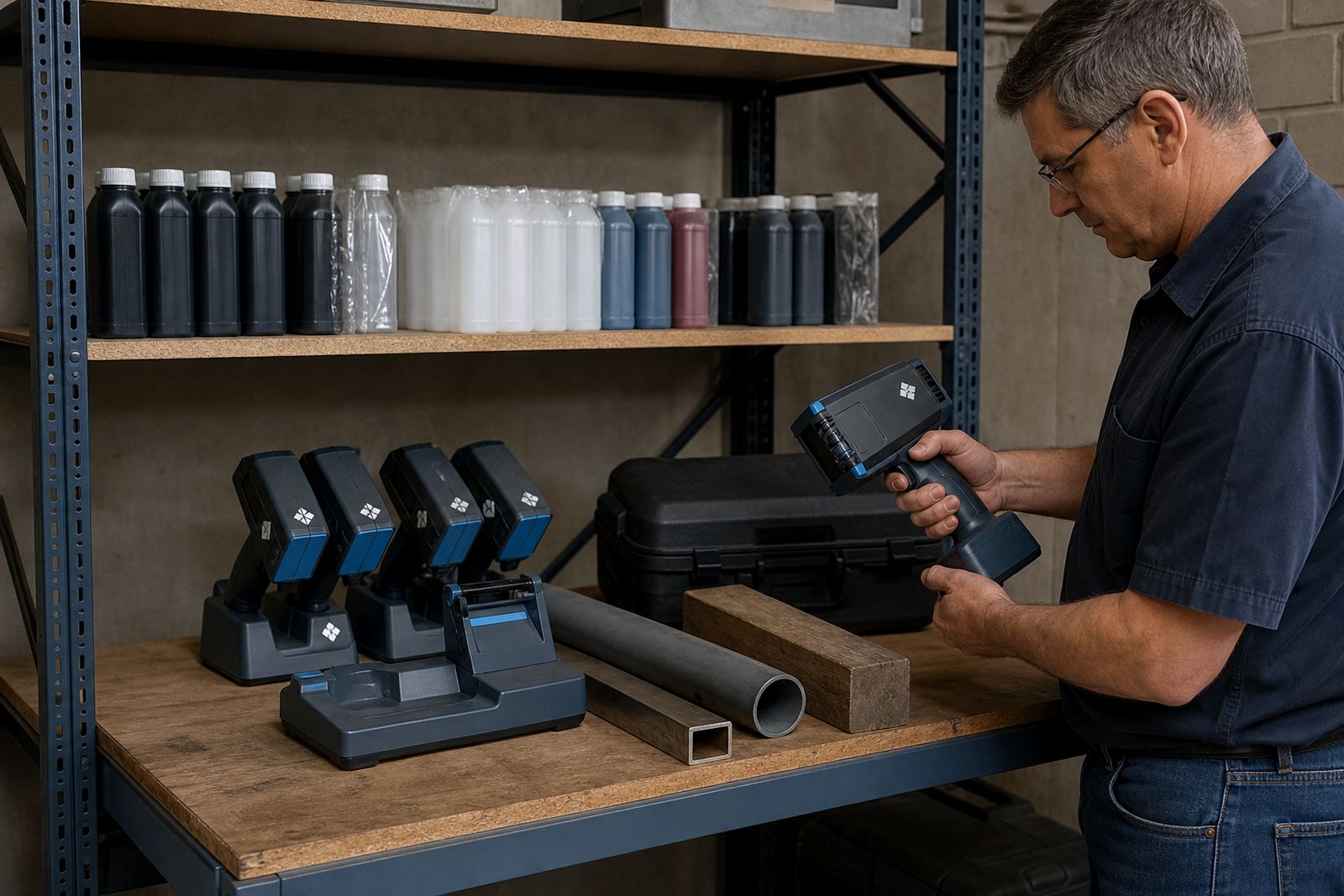
Ink bottles and cartridges should stay upright on a shelf, not rattling around in a toolbox or left on the back of a bakkie. Once a cap is loose, dust and moisture can work their way into the container and the nozzle path, which often shows up later as patchy dates or faint barcodes.
A tidy storage point near the packing line usually works best. Keep the containers off the floor, away from wash-down splash and away from direct sun through an open loading bay. In Durban’s humid air, even a small amount of moisture on the cap threads can create trouble if the bottle is opened and closed carelessly.
- Store each bottle upright so sediment does not settle oddly.
- Wipe the neck clean before recapping.
- Close the container firmly but do not force it.
- Keep cartridges in their original packaging until needed.
Temperature swings change how ink behaves on site
Ink does not like big changes from hot storerooms to cold office cupboards and then into a vehicle. If a solvent-based or quick-dry ink has been sitting in a hot room, it can thicken or flash off at the nozzle faster than expected. Water-based ink is less volatile, yet it still suffers when the temperature keeps moving about.
For most sites, a shaded cupboard or lockable cabinet inside the packing area is better than a shed that bakes in the afternoon. On timber yards around Pinetown and Westmead, this matters because the same store may also hold adhesives, cleaners and sawdust. Keep the ink apart from those materials so the container stays clean and the smell does not travel into the printer head.
Match the ink type to the surface and job
Storage only makes sense if the right ink is on hand for the right job. Handheld inkjet coders may need a solvent-based ink for non-porous surfaces such as coated cartons, pipes or steel. Water-based ink can work well on porous cartons and timber, while quick-dry formulas help when the print must be handled soon after marking.
If your site changes from bags in the morning to galvanised pipe later in the day, keep those inks clearly labelled and separated. A mixed shelf causes mistakes, and one wrong fill can leave a batch code soft, smudged or unreadable. That is a headache no packing floor needs.
- Label each bottle by surface type, not only by colour.
- Keep black separate from lighter inks used for special marks.
- Do not top up a bottle with a different formula.
- Use the same ink family the coder was set up for.
Seal the opening every time you pause printing
Most ink problems start during short interruptions rather than long shutdowns. A coder left open while staff fetch more cartons can dry at the tip or collect grime from the area around it. If the job pauses for tea or a pallet change, cap the unit properly and put the bottle back in its box or tray.
Training helps here because operators sometimes think a tiny pause will not matter. It often does. A nozzle that dries for even a little while may need extra cleaning before the next run, and that means wasted labels, wasted time and sometimes a crooked mark on the carton face.
- Cover the print head when the unit is not in use.
- Park cartridges in a clean tray, not on a dusty ledge.
- Keep spare wipes close, but away from the ink itself.
- Check that the cap seals properly after each stop.
Use a clean issuing point for stock and spare cartridges
A proper issuing point keeps the job organised. Put fresh bottles, opened bottles and used cartridges in different places so staff can see what is ready and what is not. On busy sites in Johannesburg or Cape Town, mixed storage often causes the wrong ink to be handed to the wrong line, and that slows the whole shift.
Small racks, labelled tubs or a drawer with dividers are usually enough. The aim is not a fancy store room, just a place where containers stay clean and the team knows what belongs where. If the site handles both carton coding and pipe marking, separate the consumables by application as well as by colour.
Signs the ink has been stored badly
Bad storage usually shows itself before the printer gives up completely. Thick ink, a strong solvent smell, sediment at the bottom of the bottle or tiny specks in the print all point to trouble. A barcode that looks dark at one edge and pale at the other can also mean the ink has not mixed properly or the nozzle has partly blocked.
On a Richards Bay site with salty coastal air, a metal shelf may even show rust spots near the ink stock if the room is poorly sealed. That does not help the containers, and it also invites dirty handling. When a bottle starts looking tired, cloudy or contaminated, take it out of circulation instead of forcing another shift out of it.
- Watch for clumps, haze or separation inside the bottle.
- Look for prints that lose sharp edges across the line.
- Check for residue around the cap and neck.
- Replace any container that has been contaminated.
A practical storage routine for Durban and inland sites
A simple routine works better than guesswork. At the start of the week, count the bottles, check the caps and move any opened container into the front row so it gets used first. At month end, inspect the stock cupboard, wipe the shelf surfaces and throw out any empty or contaminated packaging. That habit suits both small packing rooms and larger yards with more than one printer on the floor.
For a Pinetown example, imagine a timber supplier coding lengths in the morning and cartons in the afternoon. The ink for timber should stay in one marked tray, while the carton ink stays in another. If the operator can reach the right bottle quickly, the printer stays cleaner and the marks stay more consistent. It is a small habit, but it saves a lot of faffing around later.