
Hand speed leaves a trace on every mark
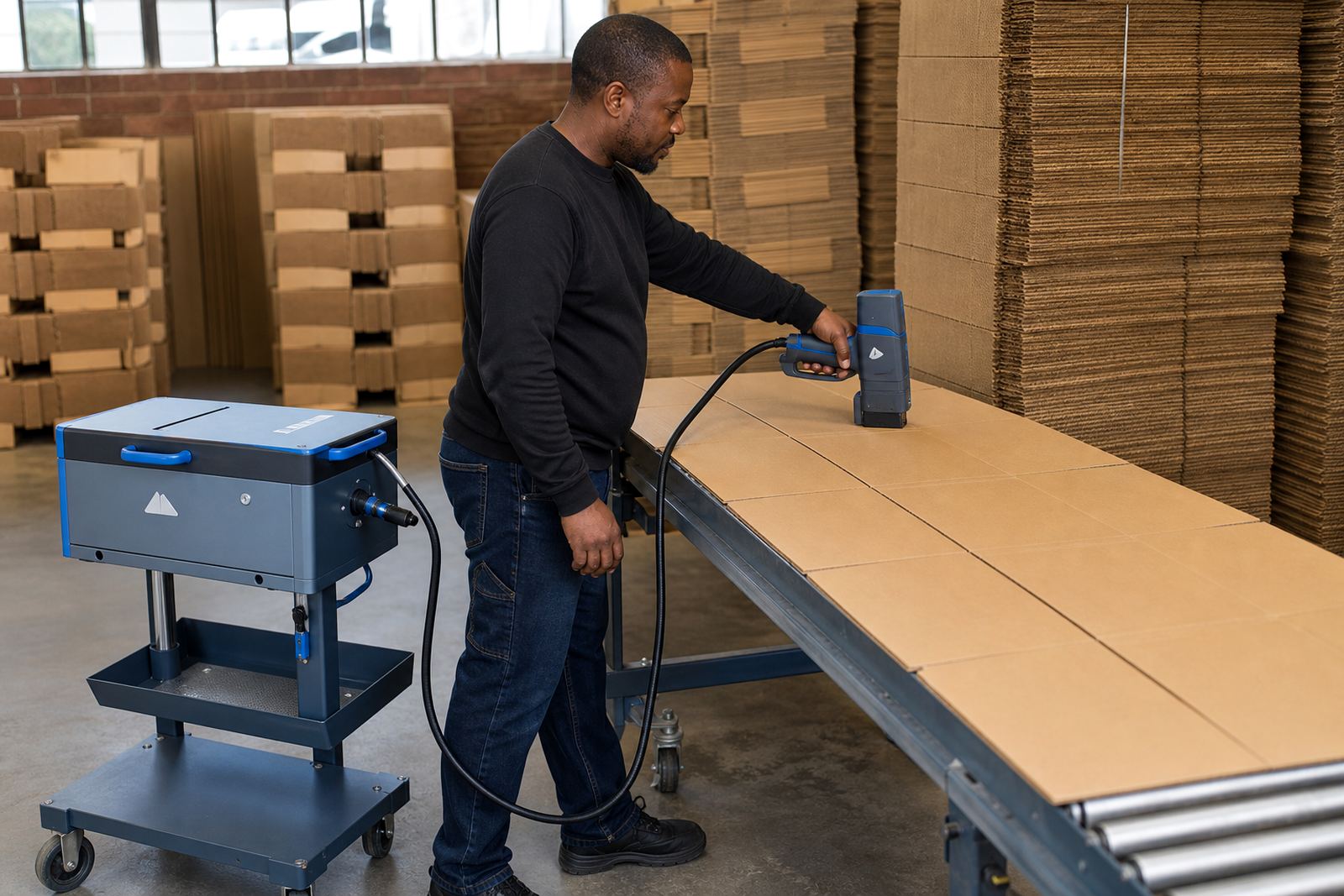
With handheld inkjet coders the operator becomes part of the print path. The printer can deliver a clean mark, but the hand movement, trigger timing and distance from the surface decide how even that mark looks. A rushed pass can stretch letters, while a hesitant pass can leave gaps or a light edge. On cartons, timber and coated pipe this shows up fast.
That is why manual coding rhythm matters. A steady sweep helps the printer lay down droplets at a consistent rate, so the message sits in one line and the barcode keeps its bars legible. It also helps on curved or uneven surfaces where the unit must stay square enough to hold the print height within range. A coder set for 10 mm will not forgive a wandering wrist.
In practice, the operator should work at a pace that matches the message length and the surface texture. Short codes on flat cartons can move faster than a larger logo on rough timber. Steel and coated pipe usually ask for a firmer hand and a little more control, especially where the surface reflects light or carries oil residue.
The surface decides how calm the motion must be
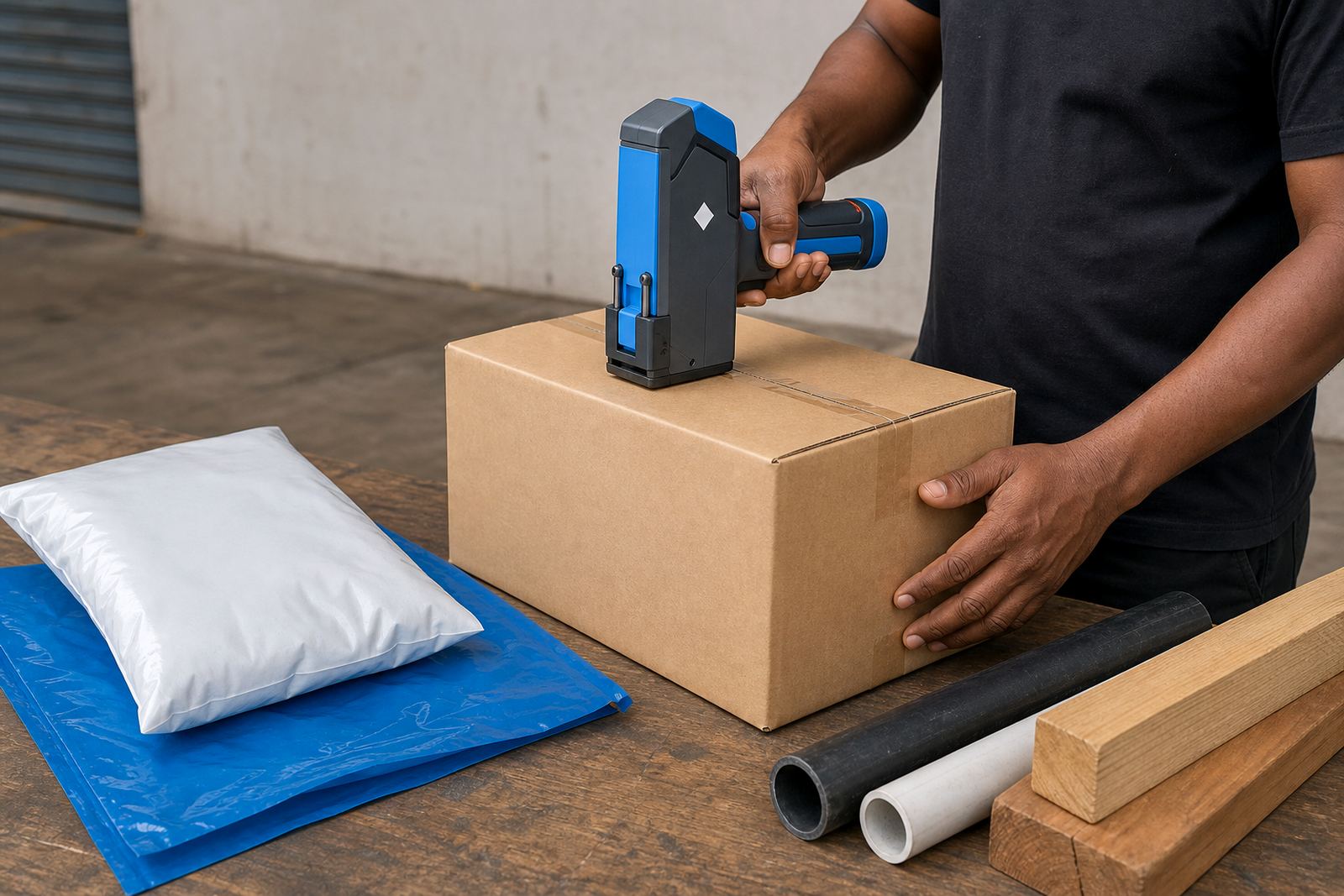
Different materials behave in different ways under a handheld print head. Porous cartons drink in ink at the edges. Timber can grain the message. Bags may flex under the hand, and pipes can roll or curve away from the nozzle. The rhythm has to suit that movement or the code will drift.
- Cartons need a smooth pass, with even pressure and a flat contact zone.
- Timber often needs slower motion, especially on rough sawn faces.
- Pipes call for a firm wrist and a clear start point.
- Bags work best when the surface is supported and held steady.
- Steel needs careful spacing so the print does not break on a reflective patch.
In Durban, where humidity can change how quickly some inks flash off, the pace of the hand matters even more. A quick-dry or solvent-based ink can help, but the motion still has to stay controlled. If the operator swings too fast, the print may look pale at the leading edge and heavy at the finish.
A decent rhythm keeps barcodes readable
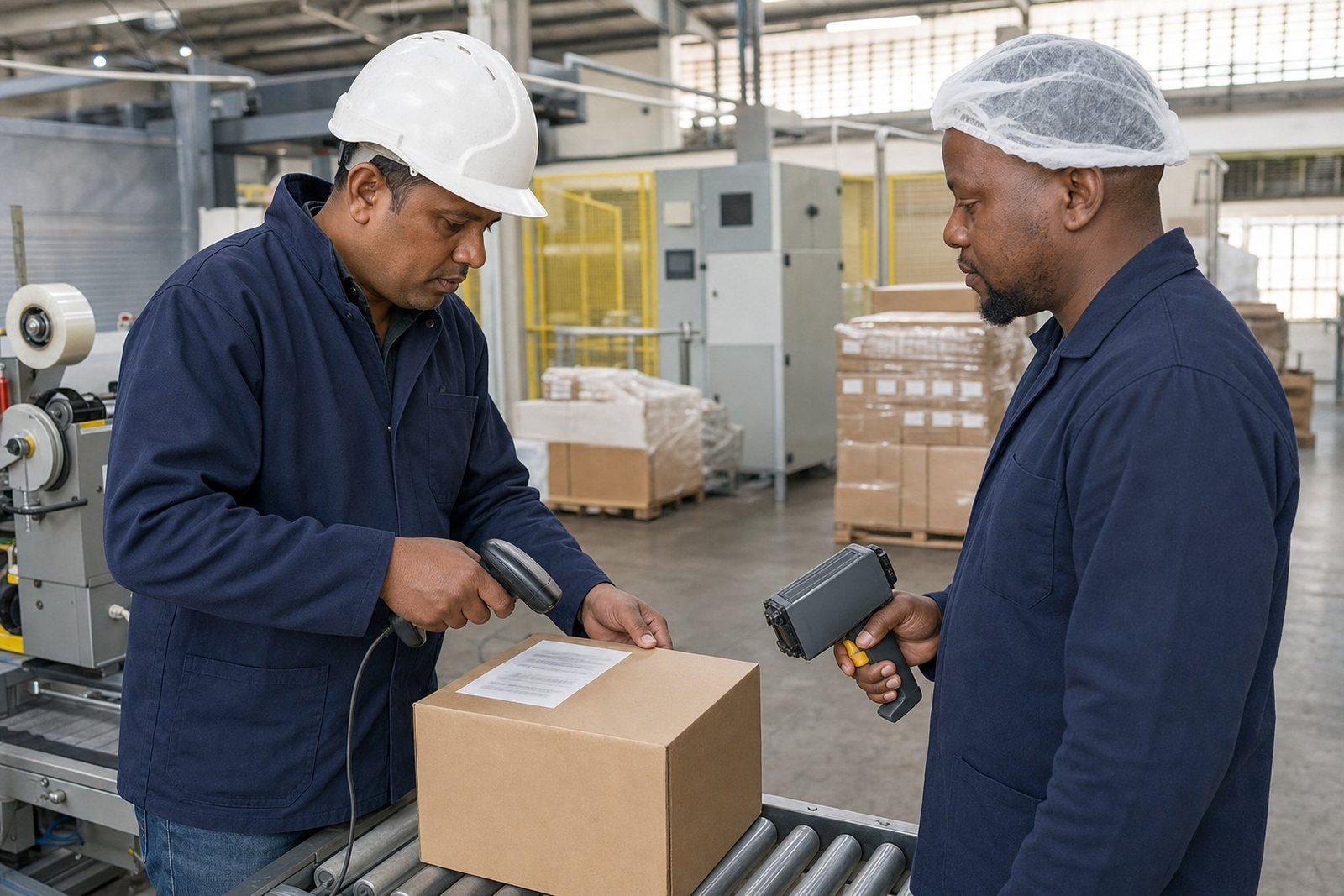
Barcodes do not forgive sloppy movement. The bars need consistent height, clean spacing and enough contrast for scanning. If the hand rocks, the barcode can become wavy or uneven across the width. That is fine for a rough note on a crate, but not for stock control.
Before a coding run, the operator should load the message, check the print height and test the barcode on the exact surface being used. A quick test on one carton is not enough if the next carton has a slightly softer board or a glossier wrap. The printer may still be in spec, yet the hand position can change the result.
- Keep the face of the coder level to the surface.
- Start the motion before the trigger pull when possible.
- Carry the printer through the full message without a pause.
- Finish beyond the print zone to avoid a heavy end mark.
- Check scan quality after the first few pieces, not only at setup.
Barcode setup is easier when the operator uses the same path every time. Small variations look harmless, but they can make one label scan neatly and the next one fail in the warehouse.
Ink choice changes the feel in the hand
Ink selection is not just about colour. Solvent inks, water-based inks and quick-dry inks each behave differently on the printer and on the surface. The hand movement should match that behaviour. A quick-dry ink on coated board can tolerate a brisker pass, while a water-based ink on absorbent timber may need a slower and more deliberate sweep.
In a coastal yard near Pinetown or Durban, the air can carry moisture that changes how an ink settles on the substrate. The operator should not fight the material with a fast wrist. Better to build one clean motion and keep it repeatable. That way the coder lays the message down at the same density from start to finish.
Logo work asks for the same discipline. A small logo with fine detail needs a calmer hand than a plain date stamp. If the motion jerks, the logo edges soften and the mark starts to look tired. On weekly hire jobs, that consistency matters because the unit may go from one site to another, but the hand movement has to stay familiar.
Training turns a shaky first pass into a usable habit
Most operators can get a legible mark after a little practice. The difference comes when the same motion can be repeated through a full shift or across several pallets. Training helps the team find that rhythm without wasting stock or ink. It also reduces the stops and resets that happen when a code lands crooked.
Our rental support covers setup help, message loading, test printing and operator training. That matters when a site is marking cartons in Pietermaritzburg one week and timber in Johannesburg the next. A different surface changes the touch, but the basic movement stays the same: level, steady, and matched to the print height in use.
Field setup also helps when a line is tight or a yard is busy. A technician can show the stroke length, the right angle and the best way to hold the unit while keeping the code centred. Once the operator gets that feel, the printer becomes easier to live with on daily work.
Weekly and monthly hire suit different coding rhythms
Some teams need a coder for a short production run. Others need it on site for a longer stretch because the work is spread across shifts or multiple stores. Weekly hire suits a burst of marking where the volume changes. Monthly hire works better where cartons, pipes or timber keep moving in and out and the same message has to stay live for longer.
Our hire terms also help when different sites need the unit in rotation. A branch in Cape Town may need logo work for export cartons, while Richards Bay may need batch numbers on timber. The unit can move between jobs, but the hand movement should still be practiced before the run starts. Consistency matters more than speed.
- Weekly hire supports short production windows and trial runs.
- Monthly hire suits steadier coding on repeat production runs.
- Backup unit support helps if a job needs continuity.
- Consumables supply keeps the right ink on hand for the surface.
That mix of hire, ink selection and training keeps the job practical. It also avoids the false idea that the printer alone controls the result. The machine prints, but the rhythm of the hand finishes the job.
A local example from a Durban packing yard
Picture a packing yard in Durban where cartons are being coded for dispatch and a few pipes are also being marked for a separate order. The same coder may be used on both, but the operator cannot move the same way on each surface. Cartons allow a smoother glide. Pipes ask for a tighter wrist and a clearer starting line.
In that setting, a steady hand saves time because there are fewer bad marks to rework. The barcode stays cleaner, the batch code sits in place, and the logo does not wander across the flap. If the operator hurries, the print becomes patchy and the test piece turns into scrap. That is avoidable with a calmer motion and a proper setup check.
For hire work across Pinetown, Westmead, New Germany and further out to Johannesburg or Cape Town, the lesson stays the same. The equipment matters, but the rhythm matters too. A handheld coder rewards a measured pace, especially when the same message has to look tidy on different materials.