Barcode setup that matches the surface
Barcode work starts with the surface, not the code file. A carton with a slightly rough face, a timber pack with grain, or a galvanised pipe with moisture on it will all need a different ink choice, print height and hand speed. We check the job first so the bars hold their shape and the scanner sees clean contrast.
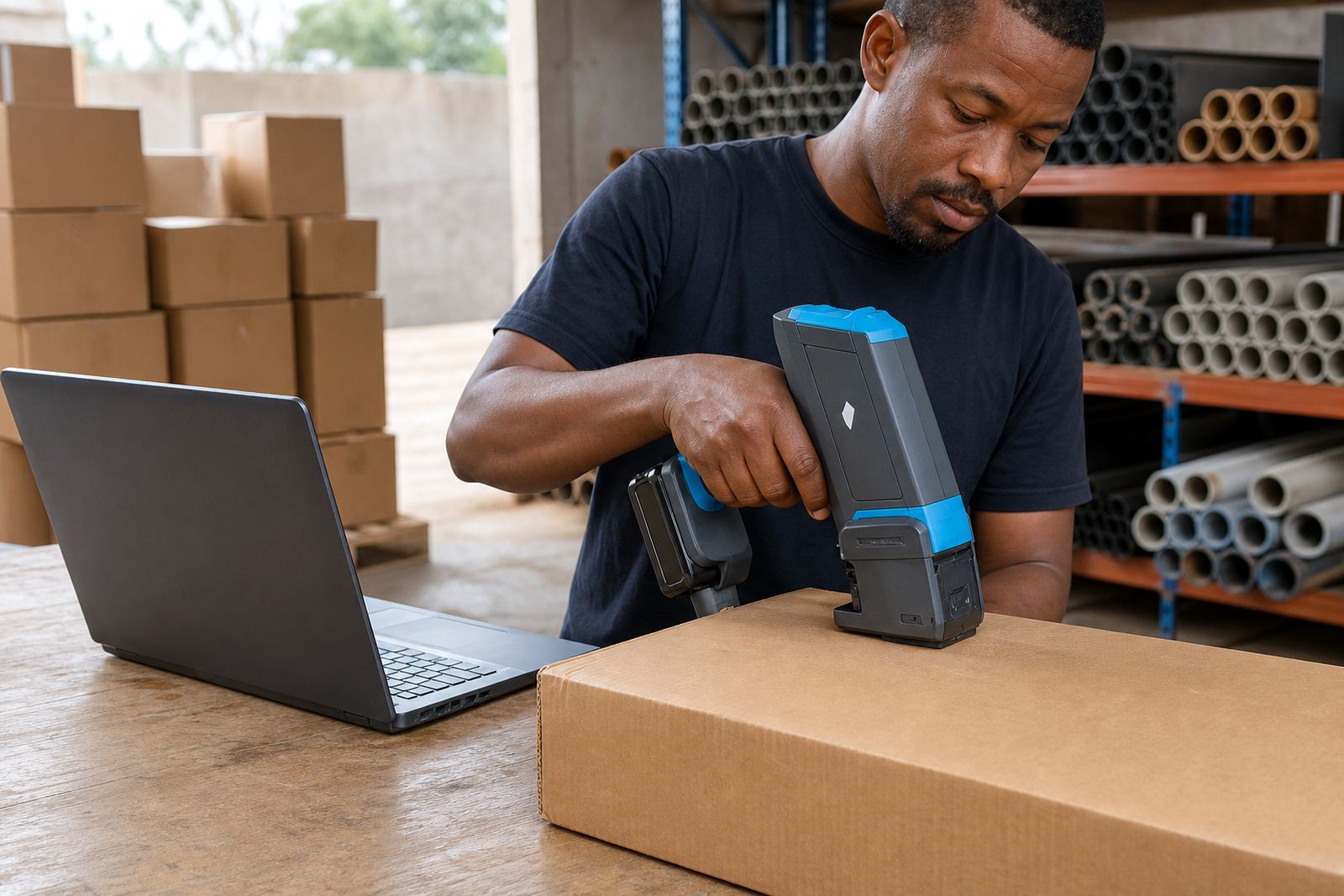
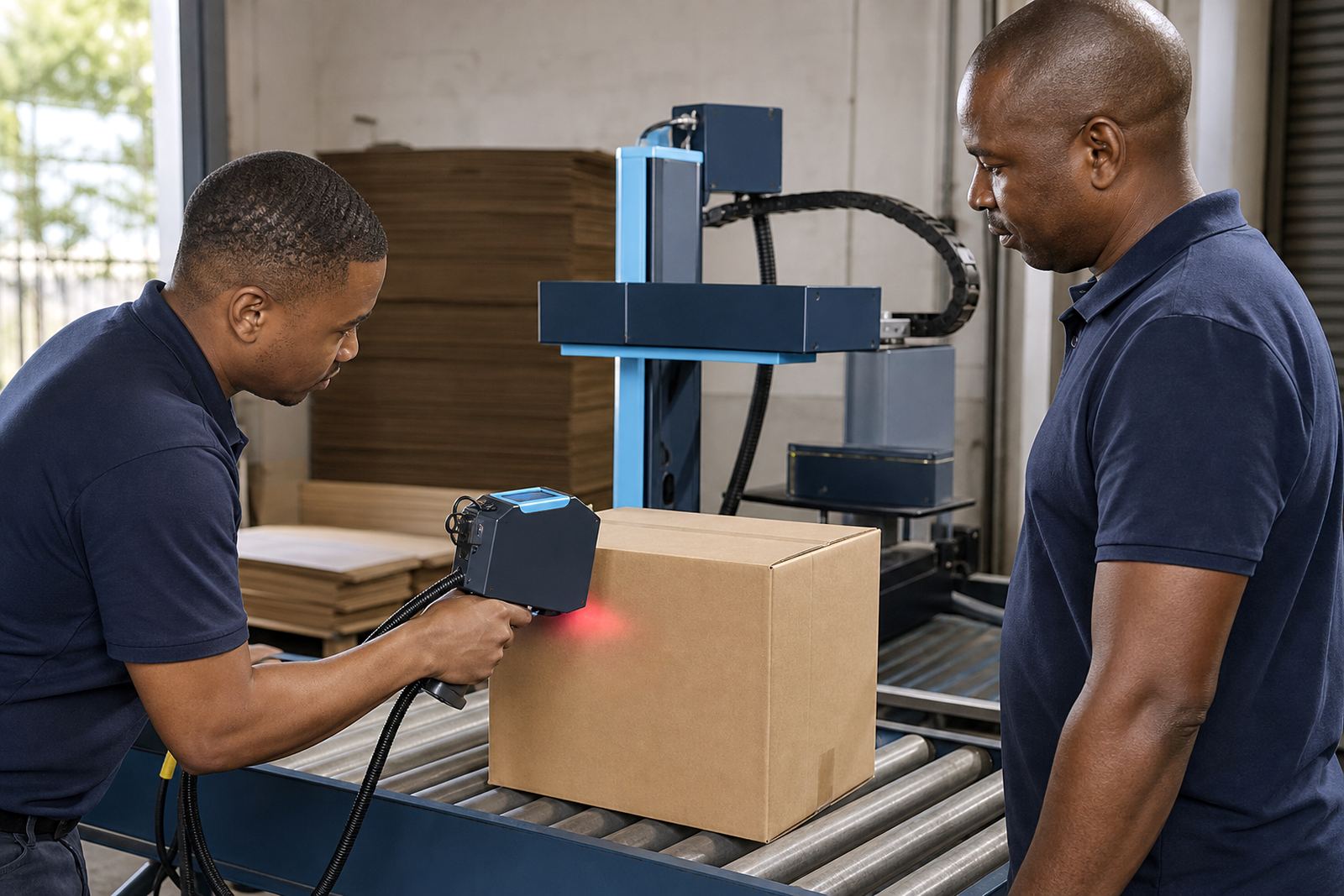
For coded marks, handheld inkjet printers can lay down human readable text and machine readable bars in one pass. Typical print heights range from 12 mm to 25 mm on these units, with the actual barcode height set to suit the label area and scanning distance. Smaller marks suit narrow boards and pipe sections, while wider fields help on carton panels and pallet sides.
- Barcode size matched to the available print area
- Quiet zones kept clear for scanner reading
- Placement planned for flat, visible sections
- Ink selected for the surface finish and drying time
What we set up on the printer
The setup covers message loading, barcode field spacing, print direction and test runs. We load the barcode data, check the start and stop edges, and make sure the code sits straight enough for scanning by hand or at a point of dispatch. If the surface is curved, we adjust the print height and position so the bars do not stretch or break apart.
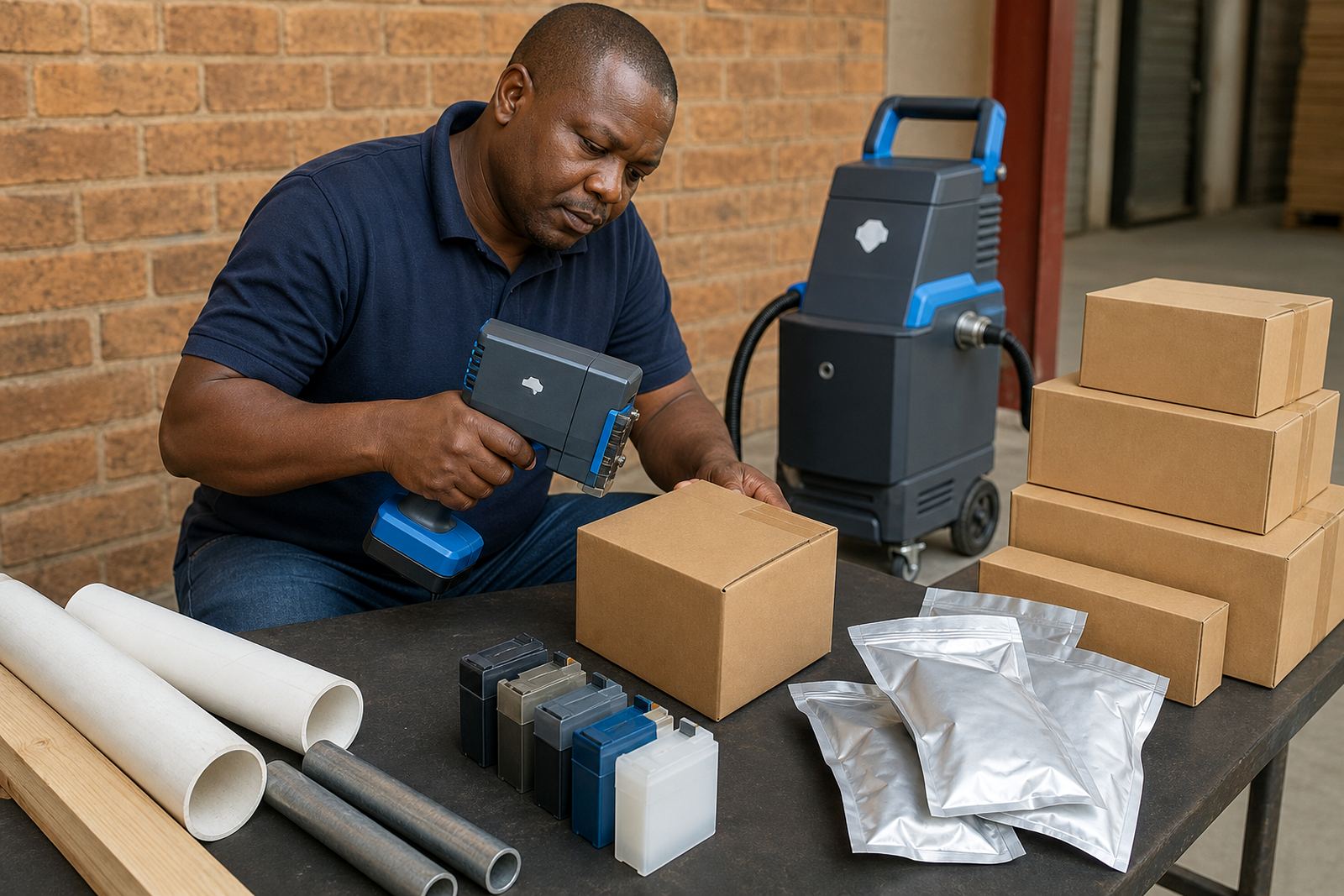
Handheld inkjet coders are used on cartons, bags, timber packs, pipes and steel sections where a label is not ideal. On smoother material, quick-dry inks help reduce smear. On porous surfaces, water-based inks can suit lighter duty marking. Solvent inks are often used where faster grip and better adhesion are needed on non-porous stock. The ink choice depends on the substrate and the way the item is handled after marking.
- Barcode data entered and checked on the unit
- Line spacing adjusted for scan legibility
- Human readable text added where required
- Test prints done before hire handover
From first sample to usable code
Barcode setup usually moves through a few clear steps. We look at the item, confirm the print field, load the message and run a sample on the actual surface. If the first mark is too light, too wide or sitting too high on the pack, we adjust it before the unit goes out for regular use. That saves time later when production or dispatch is already moving.
For teams working across Durban, Pietermaritzburg, Johannesburg, Cape Town and Richards Bay, the same setup principles still apply, but the surface and handling conditions change from site to site. Coastal humidity in Durban and Richards Bay can affect drying on some materials, while dusty timber yards may need a firmer ink and a cleaner print zone. We take those differences into account during setup and test printing.
- Surface check and code layout planning
- Barcode loaded with the correct text fields
- Sample print inspected for contrast and edge clarity
- Final handover with operating notes for the user
Hire terms that suit short and regular runs
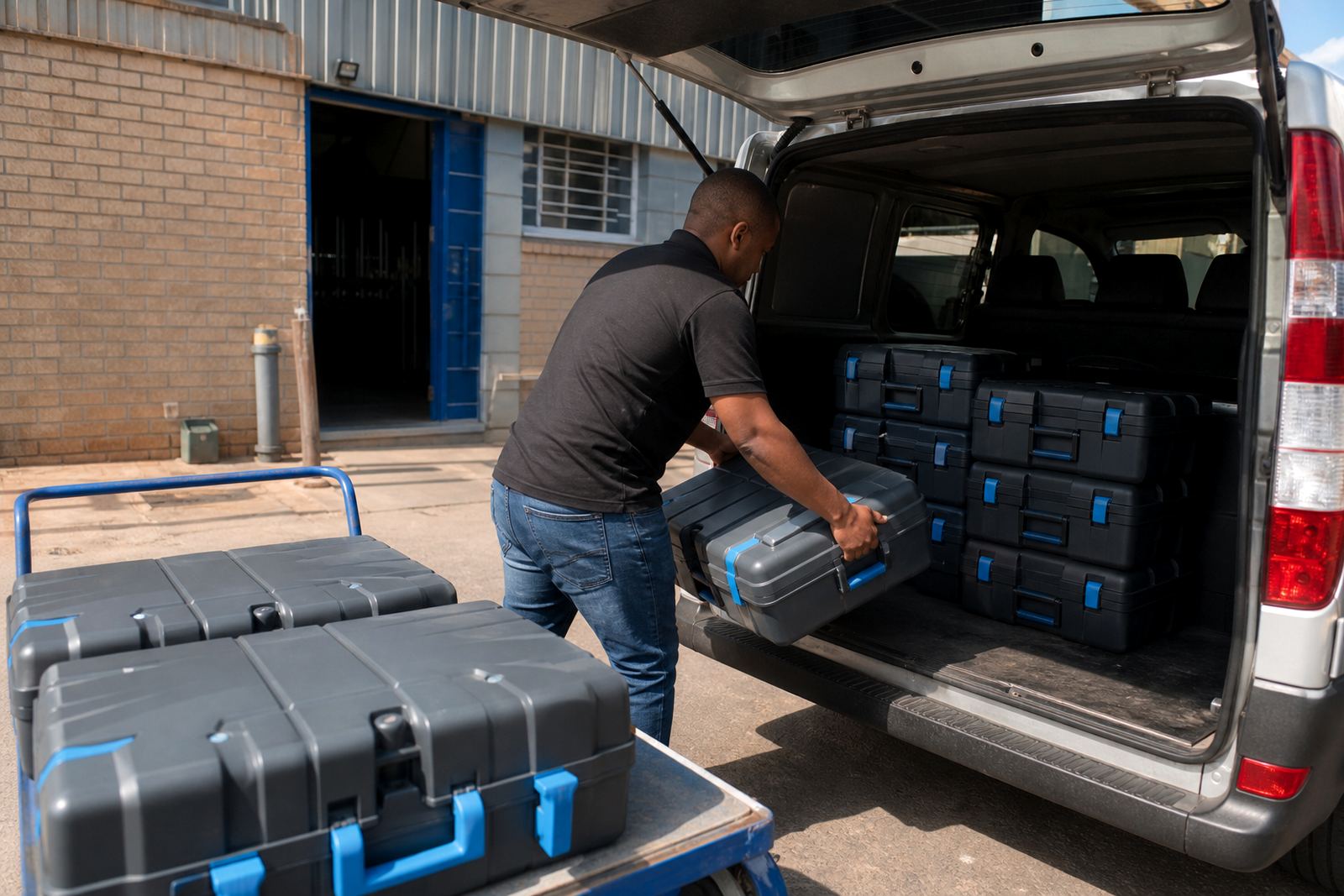
Barcode setup is available with weekly and monthly hire terms, which suits project work, seasonal stock and ongoing packaging runs. The hire can include delivery and collection, on-site setup, remote setup help, operator training, consumables supply and backup unit support where needed. That makes it easier to keep the barcode job moving without having to buy a unit for a short run.
Pricing is handled according to the printer type, hire term, ink choice and any extra setup work such as logo placement or message changes. Barcode setup itself is priced as part of the hire package or support scope, depending on the job. If the code needs a specific print height, a longer field or more than one barcode format, that is worked into the setup before the unit goes out.
- Weekly hire for short production runs
- Monthly hire for regular warehouse or packing work
- Setup support included where the job calls for it
- Consumables and spare support available on request
Legibility checks before the unit leaves
Legibility is the part that matters most. A barcode may print clearly to the eye but still scan badly if the bars are too close, the contrast is weak or the print sits on a shiny patch. We check the mark under ordinary working light and test the code where possible against the expected scanner distance. If the item is wrapped, curved or slightly uneven, we adjust the placement to improve the reading area.
That is especially useful on pipes, timber and steel, where marks can shift as the surface turns under the hand. We also make sure the barcode sits clear of seams, corners and handling edges. On cartons, the preferred area is usually a flat panel with enough space around the code. On bags, the printed area has to stay clear of stitching and folds, otherwise the bars can distort once the pack is lifted.
- Scan-friendly contrast checked on the actual material
- Placement kept clear of folds, seams and edges
- Print tested for smudge resistance where needed
- Barcode field sized to suit the scanner and surface
Aftercare for the hired printer
After the setup, we stay with the practical side of the job. That includes help with message changes, barcode re-entry, fresh ink selection and test printing if the surface or pack size changes. If the unit is moved between sites or handed to a different operator, we can talk through the settings and the handling points that matter for clean marks.
The aim is to keep the barcode readable on the day it is printed and after the item reaches packing, storage or dispatch. If a code needs to be repeated on a different line or on a new batch of stock, the setup can be adjusted without changing the entire hire arrangement. We provide barcode setup support, weekly or monthly hire and consumables for handheld inkjet coders.
- Help with changes to barcode text or fields
- Support for new pack sizes and new layouts
- Operator handover notes for day-to-day use
- Remote setup help available for existing hires
Key facts
| Print height range | 12 mm to 25 mm |
|---|---|
| Supported marks | Barcodes, dates, batch codes and logos |
| Suitable surfaces | Cartons, bags, pipes, timber and steel |
| Ink options | Solvent, water-based and quick-dry inks |
| Hire terms | Weekly and monthly |
| Service area | Pinetown, Durban and major South African centres |