Logo files prepared for handheld coding
Logo setup for handheld printers starts with a clean file that can hold up on corrugated cartons, coated bags, timber, pipe and mild steel. The aim is a mark that reads clearly at the printer height you need, whether that is a small brand mark on a carton flap or a wider mark across a timber face. We work with one-colour logos only, because handheld inkjet coders print in a single tone per pass and need the artwork kept plain for sharp edges.
For logo work, we check the amount of detail in the artwork, the line thickness, the spacing around letters and whether the image will stay readable at 10 mm, 12.7 mm, 25.4 mm or a larger print height where the printer allows it. Fine gradients, shading and tiny internal marks do not carry well on porous or uneven surfaces. A plain outline or solid block mark gives a cleaner result and less rework on site.
- One-colour logo conversion for handheld inkjet printers
- Size matched to the print height and the product face
- Suitable for cartons, bags, timber, pipes and steel
- Clean edges, open spacing and legible logo details
What comes with the logo setup service
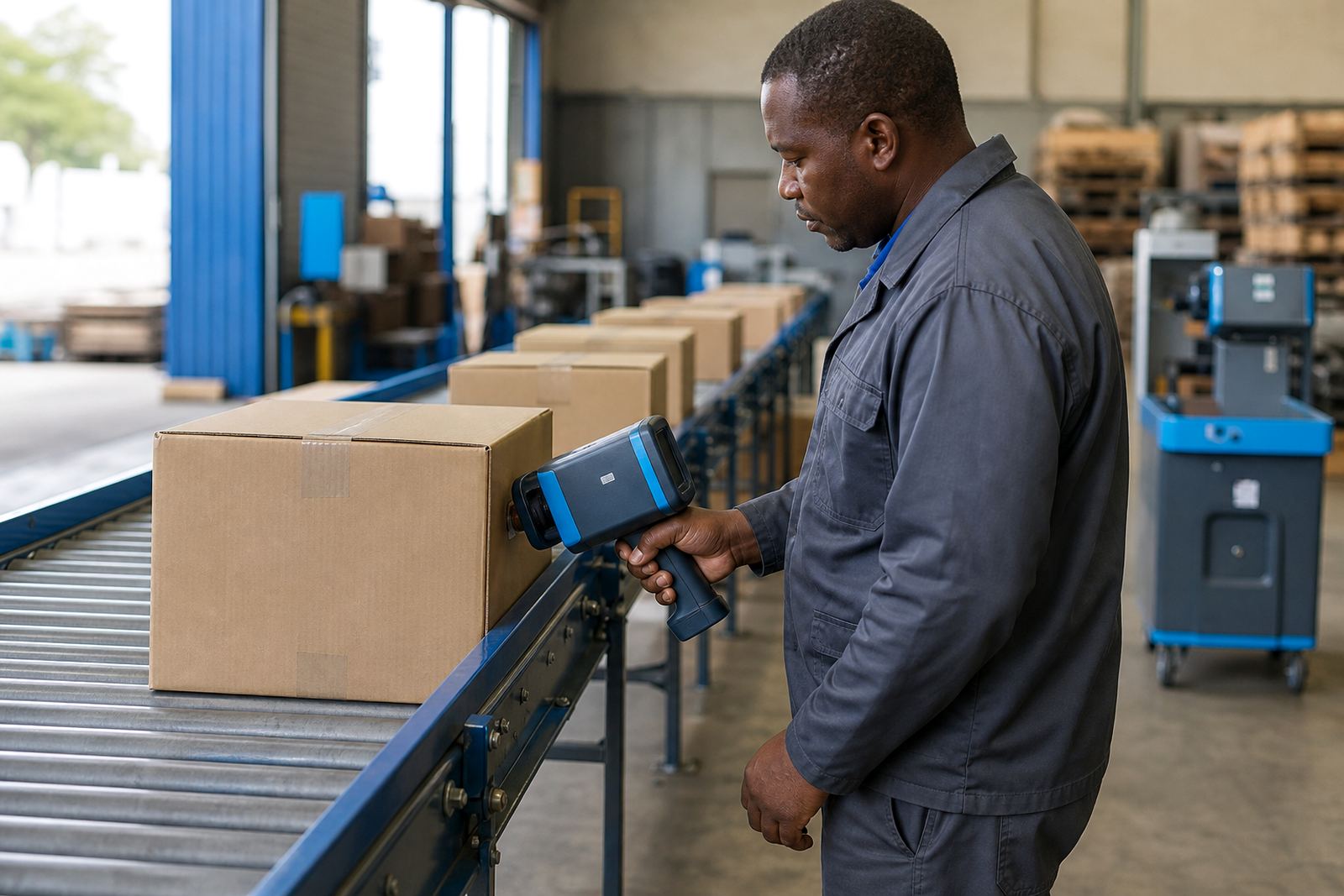
The service covers message loading, logo placement, test printing and ink selection help for the job at hand. If the material is dusty, porous, glossy or slightly curved, we set the logo to suit that surface before the printer leaves the setup area. That matters when the print must stay in line on moving stock or when the carton surface has a rough kraft finish.
Where barcode text or batch coding must sit beside the logo, we line up the fields so the print block stays tidy. The setup also includes basic operator training on trigger use, print speed, head distance and the angle of pass. On handheld units, a few millimetres of drift can blur a logo, so the first setup is practical and hands-on.
- Logo loading and position setting
- Test prints on the approved surface
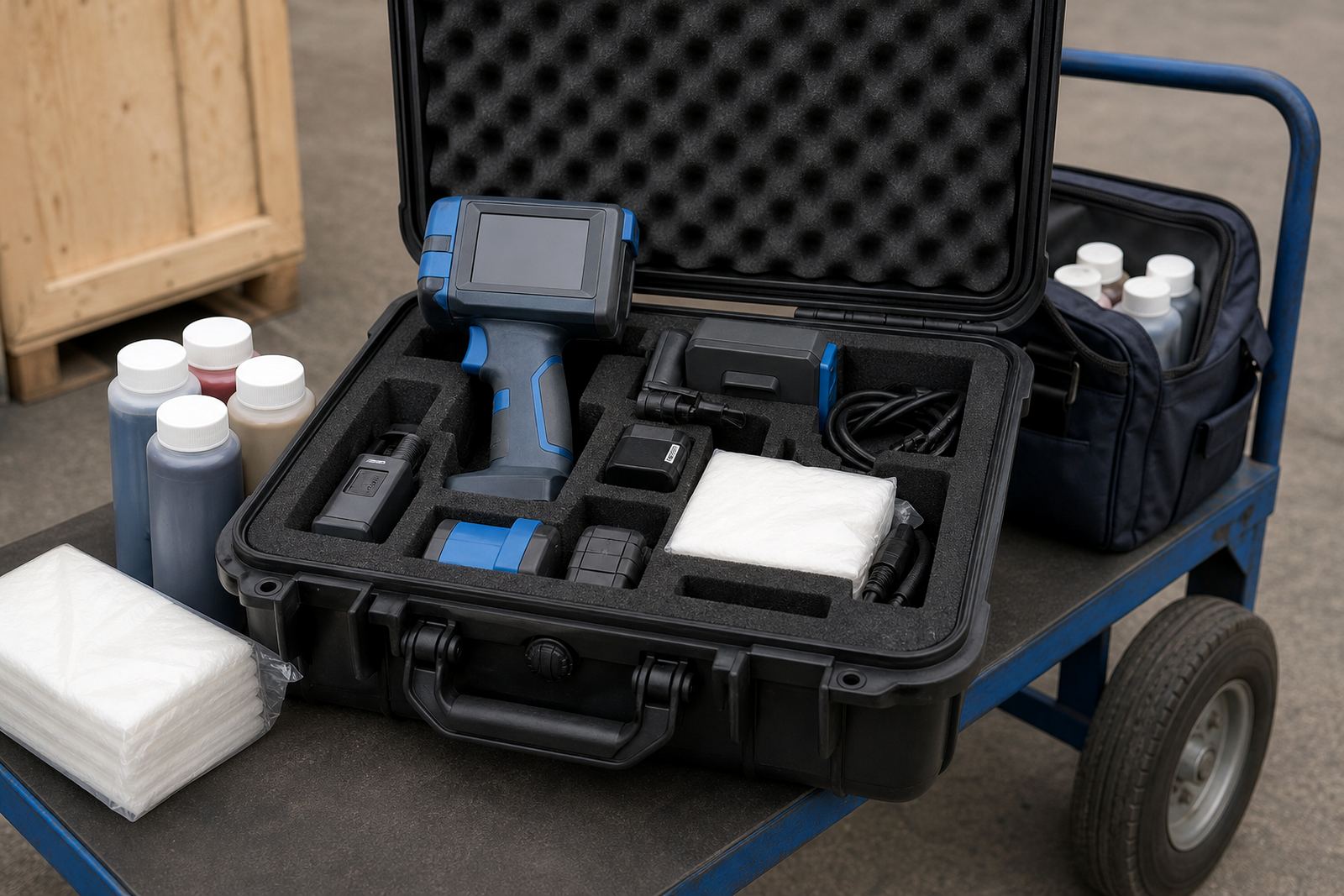
- Ink choice guidance for the substrate
- Operator training for steady handheld use
- Troubleshooting support if the print needs adjustment
Surface checks before the logo is loaded
Not every surface takes the same ink in the same way. Smooth steel, timber with open grain, woven bags and corrugated cartons each need a different approach to adhesion and drying. For cartons and timber, quick-dry or solvent ink is often used where handling happens soon after marking. Water-based ink can suit selected porous surfaces when drying conditions are stable, though it needs more caution on humid days in Durban or Richards Bay.
We look at the product line, the handling pace and whether the mark must stay sharp through stacking, wrapping or light rubbing. If the surface is oily, very glossy or uneven, the logo may need resizing or a different print direction. That keeps the code readable and saves repeated test runs at the loading bay.
- Cartons and bags usually need a simpler logo shape
- Timber accepts bold marks better than fine detail
- Steel needs the right ink and a clean, dry face
- Curved pipe sections may need a smaller print block
Working steps for logo setup and testing
Logo setup follows a practical sequence. First the artwork is checked, then the logo is reduced or cleaned to fit the handheld printer. Next the message is loaded, the print height is set and the image is tested on the actual material. If the logo needs a stronger edge, the spacing or line weight is adjusted before the printer goes into hire use.
Once the mark is right, we save the setup for the hire period and note the ink type used. If the job includes date codes, batch numbers or barcodes as well, those fields are arranged so the operator can shift between them without confusion. On larger runs, it is better to spend a bit of time at the start than to waste stock with crooked or faint marks.
- Artwork checked for printability
- Logo resized to suit the print head
- Field positions set for clear layout
- Test prints signed off on the material
- Message saved for the hire term
Hire terms, pricing approach and what shapes the rate
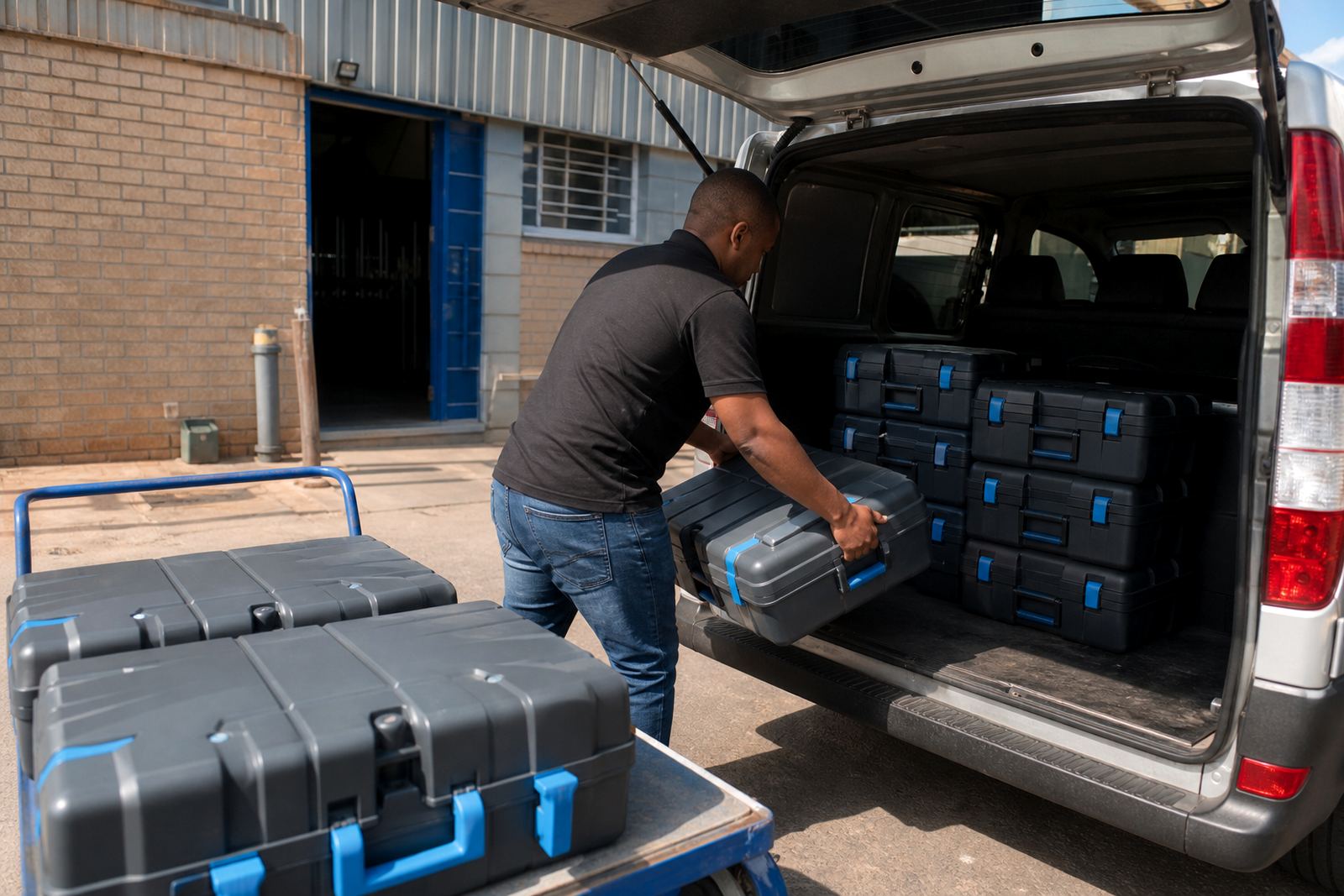
Logo setup is offered with weekly and monthly hire terms, with delivery and collection available from Pinetown, Durban and surrounding areas, and across South Africa into Pietermaritzburg, Johannesburg, Cape Town and Richards Bay. Pricing is based on the printer type, the ink required, the amount of setup work and whether the job needs on-site support or remote setup help. A small carton logo for a packing line is not priced the same as a multi-surface job with pipe marking and barcode fields.
Consumables, backup unit support and special ink selection can also affect the hire structure. The clearer the brief, the easier we can match the printer, ink and logo layout to the job on hand. That keeps the quotation tied to the work, not to guesswork.
- Weekly or monthly hire options
- Pricing depends on setup detail and material type
- Ink and consumables can be included where needed
- On-site or remote help can be arranged for the setup
Aftercare once the logo is running on line
After the first test print, we stay available for practical support if the logo needs a small adjustment in size, position or contrast. If the material changes from carton to timber or from timber to steel, the same logo may need a different ink or a different print height. That is normal on handheld coding jobs, especially where the stock mix changes through the week.
The aftercare also covers troubleshooting support if the print starts to feather, skip or dry unevenly. We can guide the operator on nozzle checks, ink handling and how to keep the print face clean between shifts. For recurring work, the logo file can be kept in a working format that suits the hire unit and the materials on site.
- Small adjustments to logo size or placement
- Support for ink changes and substrate changes
- Help with faint, blurred or broken logo marks
- Practical guidance for day-to-day use by the operator
Key facts
| Print heights | Common handheld settings from 10 mm to 25.4 mm, with some units allowing larger single-line marks |
|---|---|
| Logo style | Single-colour artwork only, with clean lines and limited fine detail |
| Suitable surfaces | Cartons, bags, timber, mild steel, pipes and other approved industrial surfaces |
| Ink types | Solvent, water-based and quick-dry inks depending on the surface and drying needs |
| Hire terms | Weekly and monthly hire available |
| Support options | On-site setup, remote setup help, message loading, test printing and troubleshooting support |