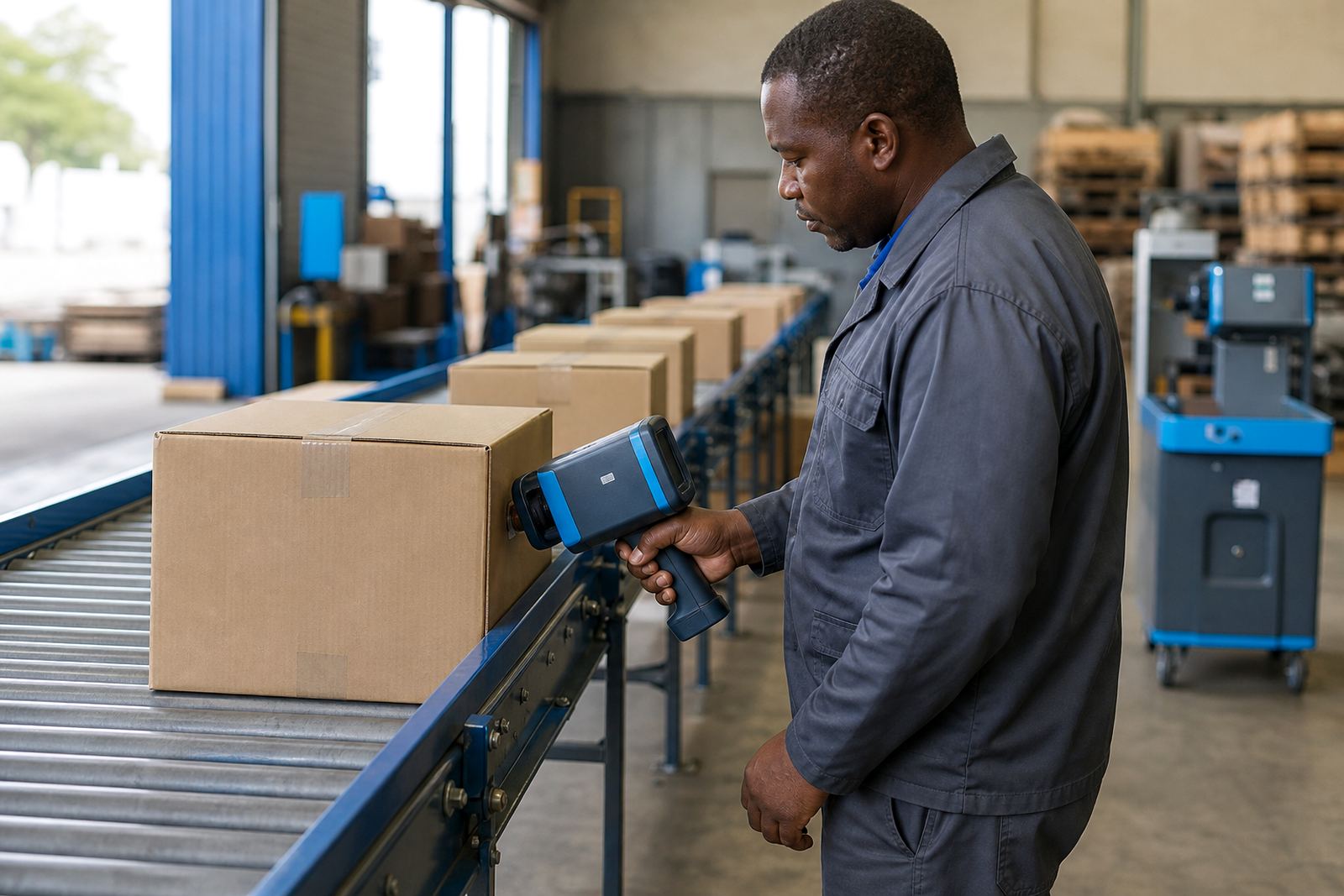
Site setup that starts with the actual surface
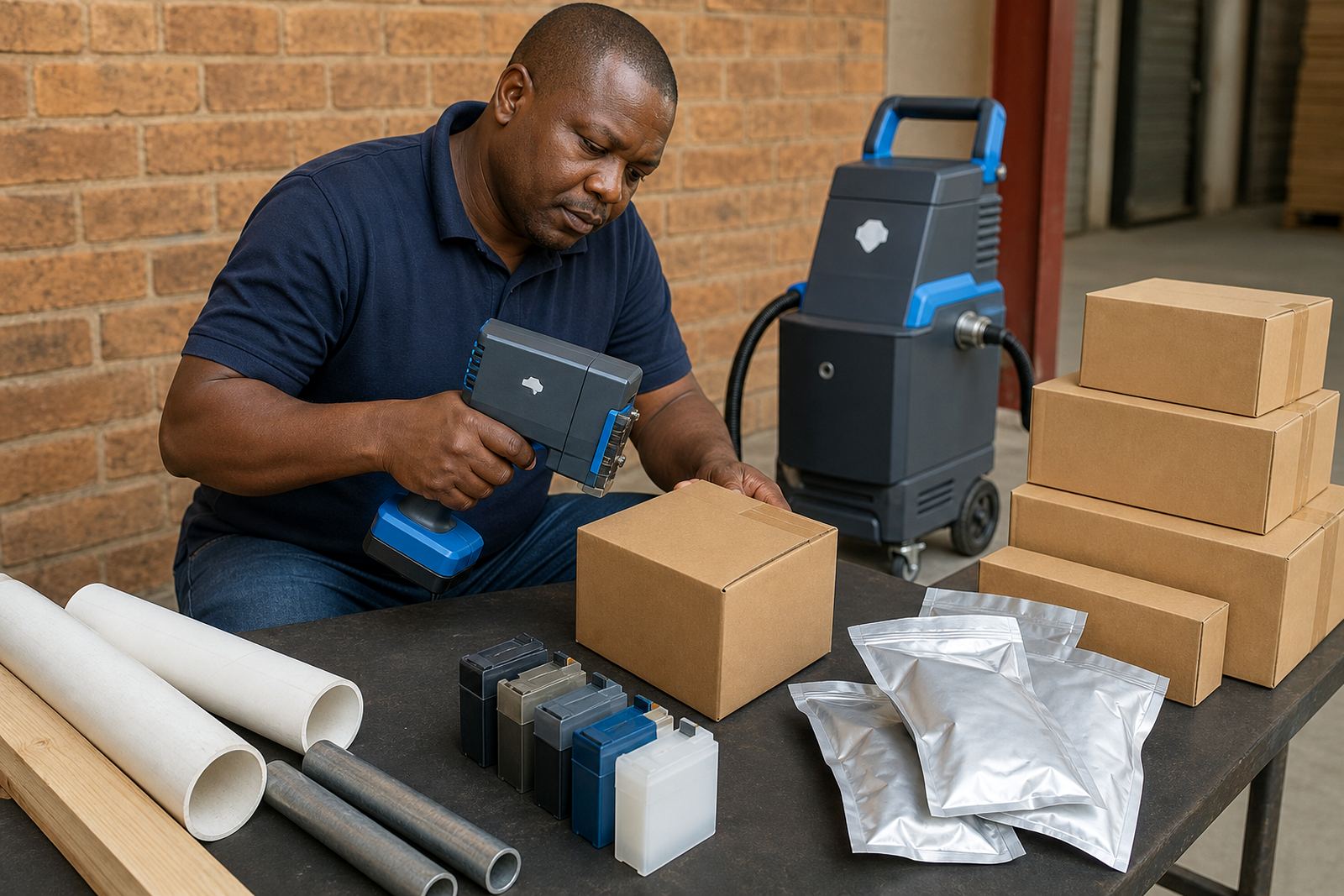
On-site setup covers the first working fit of a handheld inkjet coder on cartons, woven bags, pipes, timber and coated or uncoated steel. The aim is to match print height, ink type and message layout to the surface in front of us, not a sample on a table. That matters on dusty timber, slick film, corrugated cartons and damp coastal stock where ink behaviour can change quickly.
The setup visit usually includes printer orientation, message loading, surface checks and test prints on the material you will use. We also look at hand movement, print distance and the marking position so the operator gets a clean line without double hits or broken characters.
- Print heights commonly set between 2 mm and 25.4 mm, depending on the coder and message.
- Single-line, two-line and multi-line layouts can be loaded for dates, batch codes and simple logos.
- Barcode setup is handled where the scan size and print clarity suit the label or carton face.
- Spacing, margins and logo placement are adjusted for the product size and pack shape.
Ink choice for the job in front of us
We choose the ink during setup so it suits the product surface and the way the code will be handled. Solvent inks suit non-porous or harder surfaces where the mark needs fast drying and better adhesion. Water-based inks are better on porous materials such as cartons, timber and paper sacks. Quick-dry inks help where handling starts almost straight after marking, especially on production lines or packing benches.
Surface condition matters as much as ink type. Dust, oil, moisture and rough texture can change how the code lands, so we check the sample and adjust the settings before leaving the site. If the job involves humid Durban storage, fresh timber or coated packaging, the ink needs to be matched properly or the mark can smudge, feather or fade too soon.
- Ink support covers date coding, batch numbering, expiry marks and logos.
- We assess porous, semi-porous and non-porous surfaces separately.
- Where needed, we test more than one ink option on the same material.
- Consumables are supplied with the hire, including ink for the agreed coding task.
What happens during the visit
The setup process is practical and hands-on. First the coder is checked for battery charge, nozzle condition and cartridge fit. Then the message is loaded, the date format confirmed and the print position marked on the product or pack. After that we run trial prints and inspect the result for edge sharpness, contrast and spacing.
If the surface is uneven or the carton finish is rough, we may change the print speed, adjust the angle or alter the message format so the code stays legible. For barcodes and logos, the line thickness and print width need special attention. A small logo can work well on a clean carton panel, while a detailed graphic may need a simpler version for handheld marking.
- Test prints are done on the live material, not just on spare paper.
- Operators are shown how to hold the coder steady and keep a consistent pass.
- Where required, we load batch numbers, date rolls and product messages.
- We check code placement against the pack layout and the box fold lines.
Hire terms that fit short runs and longer programmes
On-site setup is available with weekly and monthly hire terms, which suits plants and pack rooms that need the coder for a defined period. Some clients need a unit for a seasonal run, others need one for recurring coding across several sites. The hire period is matched to the job, the usage pattern and the number of operators involved.
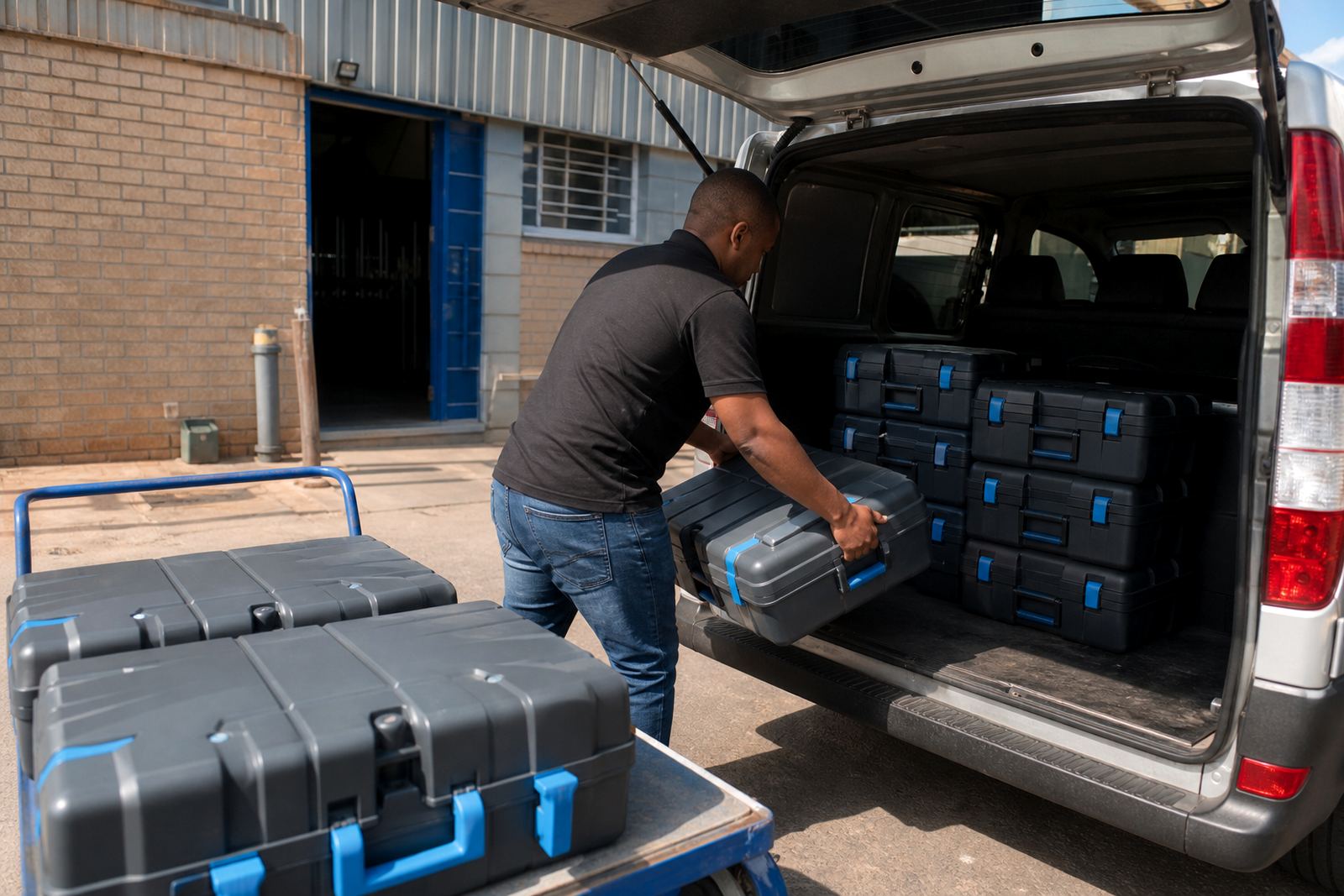
Pricing is set from the setup scope, the hire term, the ink requirement and any extra support needed for messages, barcodes or more than one surface type. Delivery and collection can be arranged, and backup unit support is available where the coding work cannot stop. The quote also takes into account whether the printer will be used in Pinetown, Durban, Richards Bay or further inland where site visits and transport need to be planned carefully.
- Weekly hire suits short production runs and trial work.
- Monthly hire suits ongoing coding on cartons, pipes, timber and steel.
- Pricing depends on the printer type, the ink mix and the setup scope.
- Backup units can be arranged for higher-risk or higher-volume jobs.
Training for the person holding the unit
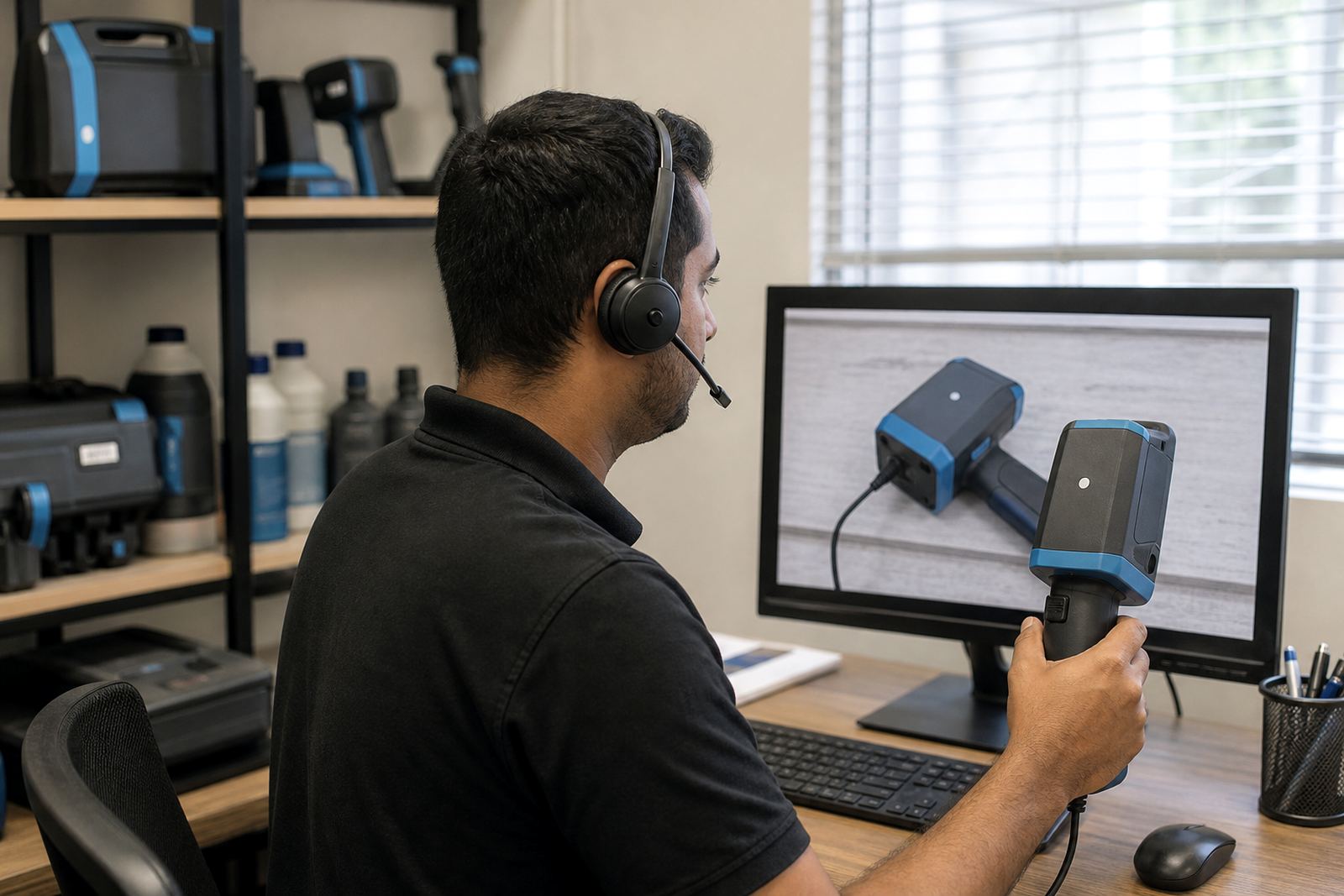
Proper setup covers the coder and the person using it too. Operator training covers basic handling, print alignment, cleaning points, battery care and the small adjustments that keep the mark readable. We keep the training practical, with the actual coder in hand and the actual pack or pipe in front of us.
Training is useful where more than one shift will use the same coder or where the job changes between cartons and timber. We also show the team how to spot early signs of nozzle drag, ink bleed or a weak code before the run gets too far. That helps avoid waste when the product line is moving and the marking point is tight.
- Training includes message loading and layout checks.
- We cover barcode setup where scan quality matters.
- Hands-on guidance is given for print distance and line steadiness.
- Operators are shown how to handle common marking faults on site.
Aftercare for the days after setup
After the first setup, support continues with troubleshooting, remote setup help where needed and consumables supply for the hired unit. If the print starts to fade, the barcode reads poorly or the surface changes, the settings may need a small adjustment. That is normal on mixed material jobs, especially where cartons, pipes and timber all appear in the same production week.
The aftercare work is meant to keep the code usable, not to overcomplicate the process. If an operator changes, the message changes or the product surface shifts, the print settings can be revisited and the unit checked again. In coastal areas like Durban and Richards Bay, humidity and storage conditions can also affect how the ink sits, so the chosen ink and handling method need to stay matched to the job.
Key facts
| Service | On-site setup for handheld inkjet coders |
|---|---|
| Print height | Typically 2 mm to 25.4 mm |
| Common marks | Dates, batch numbers, barcodes and logos |
| Surfaces | Cartons, bags, pipes, timber and steel |
| Hire terms | Weekly and monthly |
| Coverage | Pinetown, Durban, Pietermaritzburg, Johannesburg, Cape Town and Richards Bay |