Sample Marks On Your Own Material
Test printing is done on your actual product or a close sample, not on a generic sheet. That matters when the surface is dusty, coated, curved, rough or slightly oily, because each of those conditions changes how the ink lays down and how clean the code looks once it dries.
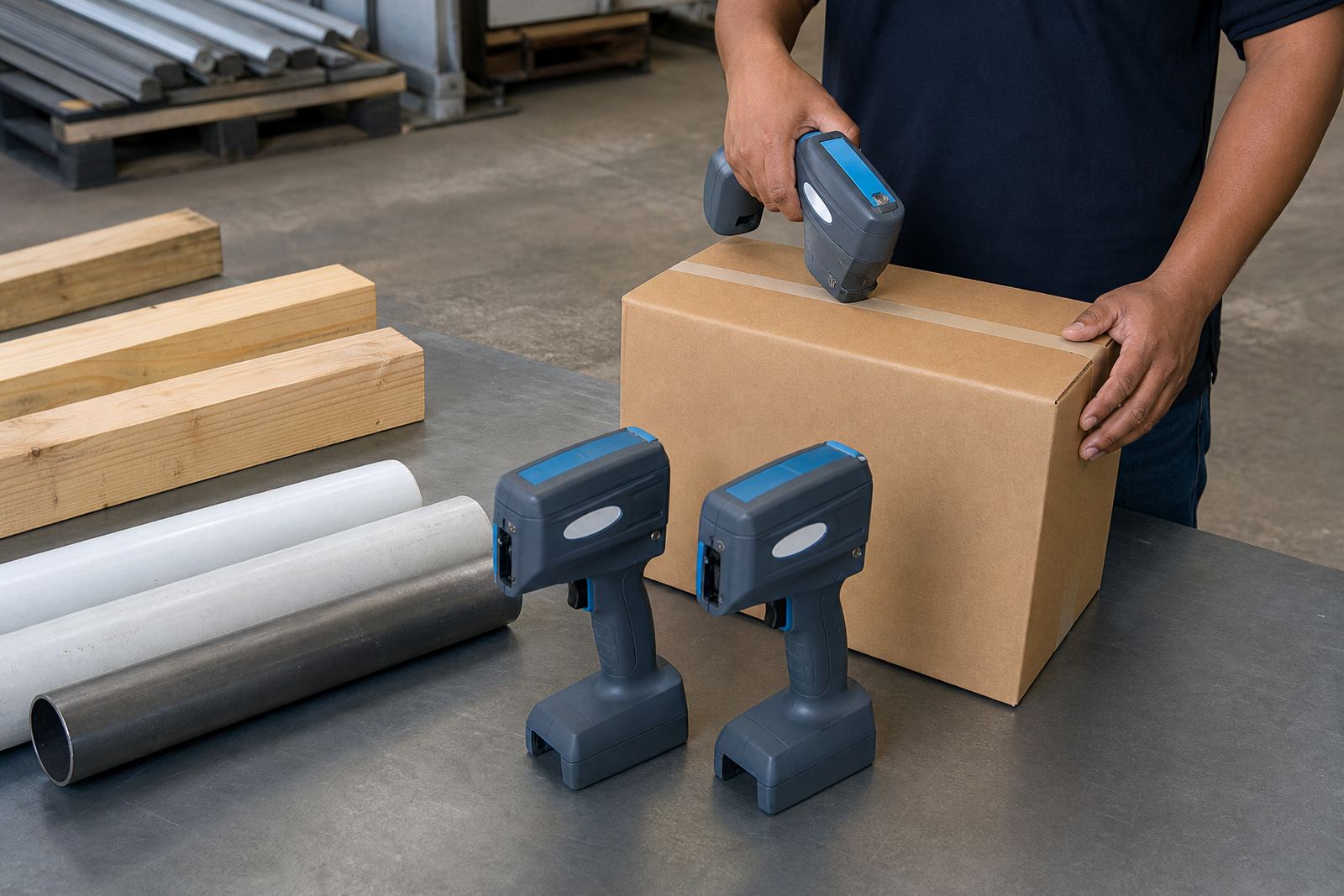
We trial handheld inkjet coders on cartons, woven bags, paper sacks, timber, galvanised steel, painted steel, PVC pipe and other common packaging surfaces. The aim is to check print quality before weekly or monthly hire starts, so the message size, ink type and hold angle are set with the job in mind.
- Dates, batch numbers and shift codes
- Barcodes, QR codes and simple logos
- Single line or multi-line messages
- Small text for narrow spaces
- Marks on flat, curved or uneven surfaces
What We Check During The Trial
A proper test print looks at more than whether the message appears on the surface. The mark must stay readable after handling, stacking and transport, and it must dry at a pace that suits your line or packing area. If the substrate is glossy, porous or fibrous, we test how much ink is needed and whether the print edge stays crisp.
We also check the print height against the space available on the pack or pipe. Handheld inkjet coders are commonly used for compact marks between 2 mm and 25 mm high, with some jobs needing a narrow single line and others needing a taller block for bigger cartons. Barcode testing is important too, because a code that looks acceptable to the eye may still scan poorly if spacing or contrast is off.
- Adhesion on the chosen surface
- Drying speed for the handling pace
- Readability under normal warehouse light
- Barcode scan quality where needed
- Ink spread on rough or absorbent stock
Ink Choice For Real Conditions
Different inks suit different surfaces, and the wrong one can smear, bead or fade too quickly. Solvent-based ink is often used on non-porous materials such as plastic, coated packaging and some metals. Water-based ink can work well on absorbent cartons, paper sacks and timber where the surface takes the mark readily. Quick-dry ink is useful where handling is immediate and the print must set fast before stacking.
During test printing we match the ink to the product, then check the result under normal handling. If the surface is dusty, textured or slightly uneven, we may need a different nozzle setting or a stronger ink choice. The point is not to force one setting across every job, but to find a mark that stays clear on the actual material in use.
- Solvent ink for sealed and non-porous surfaces
- Water-based ink for absorbent cartons and timber
- Quick-dry ink for faster handling
- Black, white or other visible contrast options depending on the substrate
- Trial marks before full hire commitment
How The Test Print Visit Usually Runs
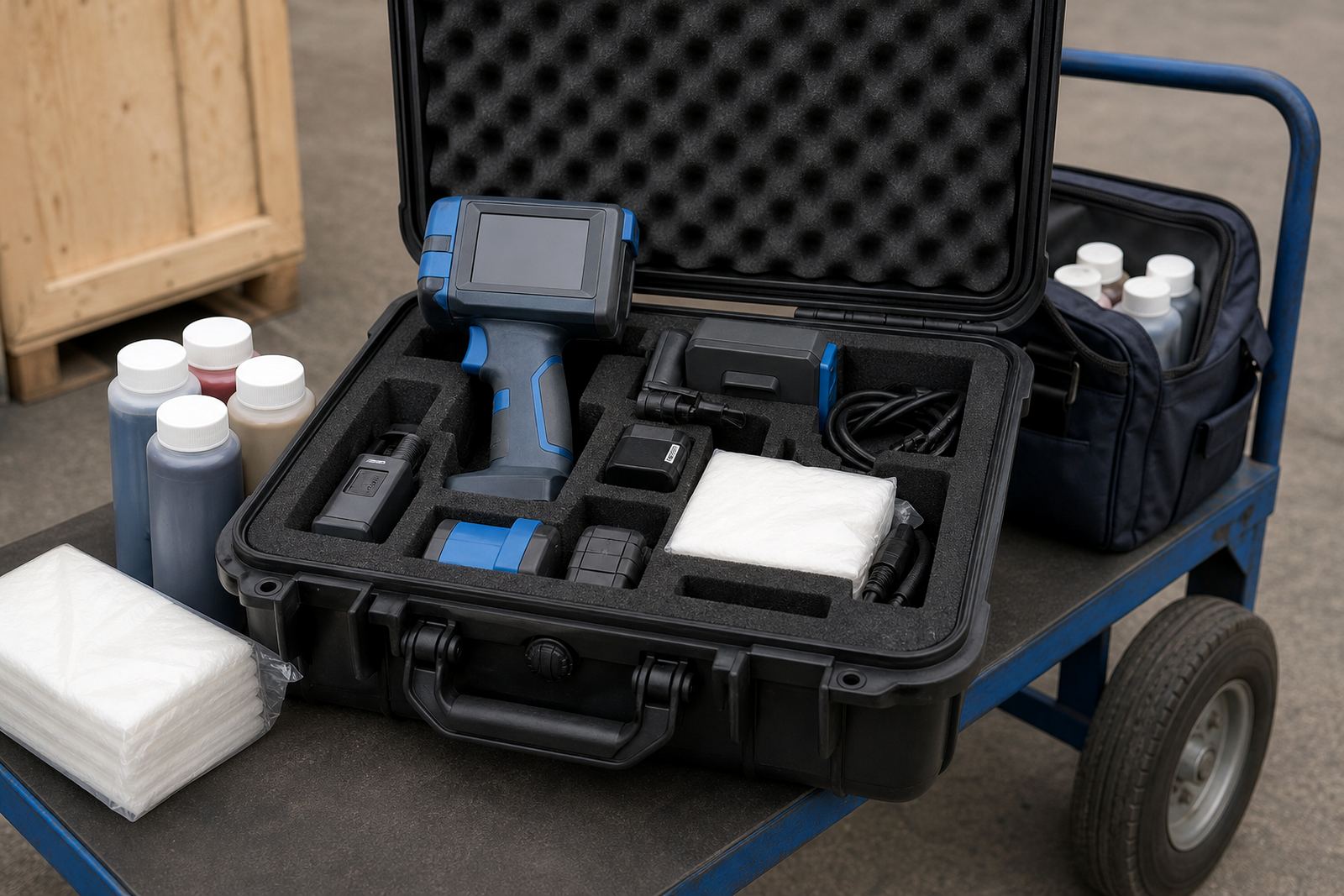
The process starts with the sample material and the message you want to print. That can be a date, a batch code, a barcode, a logo or a short product description. We then load the message, set the print height and run short trial marks in the positions you expect to use on your own packing table or line.
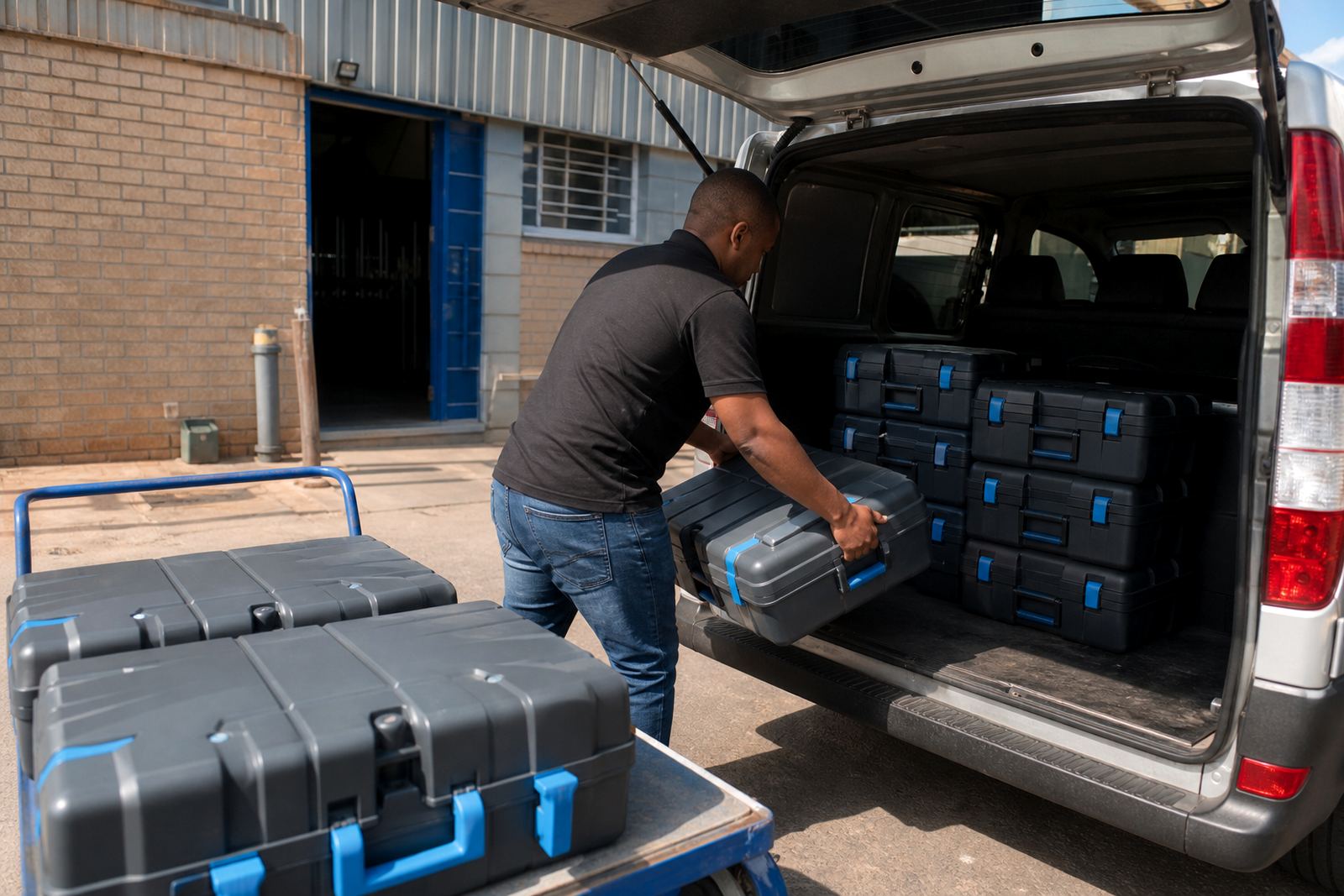
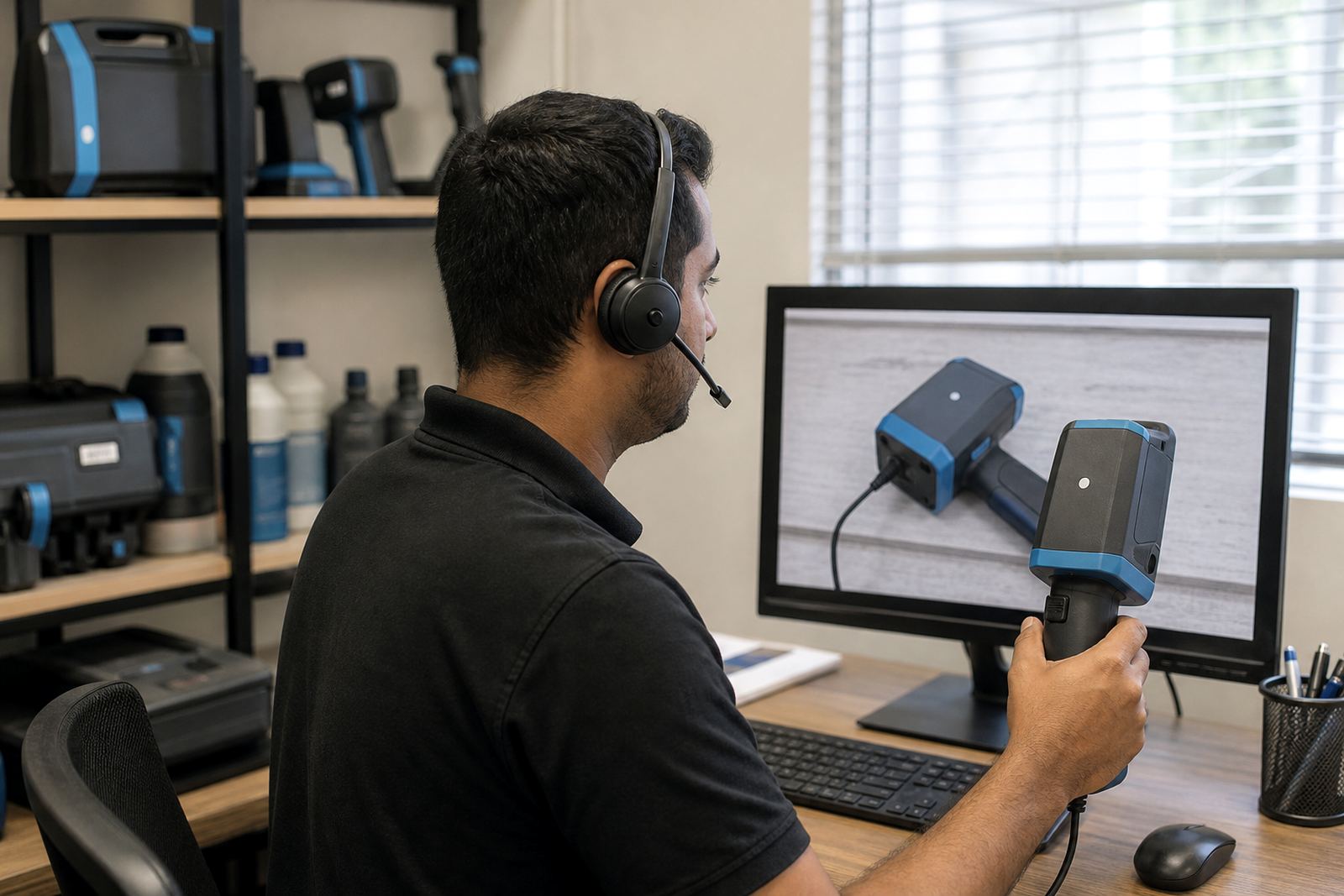
Where needed, we can do the test at your premises in Pinetown, Durban or arrange support for other South African locations through delivery and collection. Remote setup help can also be used when a customer already has the unit and wants guidance on message loading or barcode layout. If the print is too faint, too large or too slow to dry, we adjust and test again on the same sample.
- Message loaded before the first sample mark
- Print position checked against the product shape
- Barcode or logo tested for clarity
- Trial marks reviewed for dry touch and smear resistance
- Final settings recorded for the hire period
Hire Terms After The Test Stage
Test printing is often the step that settles whether weekly hire or monthly hire is the better fit. Short production runs usually suit weekly terms, while ongoing marking work on cartons, pipes or timber may justify a monthly arrangement. The trial makes that decision easier because the line speed, print size and ink use are already visible before the hire starts.
Our pricing approach is tied to the machine, ink choice and support needed rather than guesswork. Where a job needs on-site setup, operator training, test printing, backup unit support or consumables supply, those services are lined up around the hire package. The result is a cleaner start, fewer wasted labels or rework, and a code that matches the product being packed.
Aftercare Once The Mark Is Approved
Once the print is approved, support stays practical. We can help with message changes, barcode updates, logo loading and troubleshooting if a mark starts to drift or the surface changes part way through a job. If the ink behaves differently on a second batch of material, that gets checked against the original sample so the setting can be corrected.
Aftercare also covers consumables supply and backup unit support where a hire period is running across different sites. That is useful for distributors and packers moving stock between Durban, Pietermaritzburg, Johannesburg, Cape Town and Richards Bay, because the same message can be kept readable across different surfaces and handling conditions.
- Message edits for new dates or batch numbers
- Barcode and logo adjustments where required
- Consumables checked against the approved ink type
- Troubleshooting if print quality changes
- Backup support for continuous marking work
Areas We Cover For Test Printing Support
Our base is in Pinetown, Durban, with hire support moving through Westmead, New Germany and surrounding industrial areas. We also support handheld inkjet printer hire and test printing across South Africa, including Durban, Pietermaritzburg, Johannesburg, Cape Town and Richards Bay. The local conditions matter, because coastal humidity, warehouse dust and rough timber all affect how a trial mark should be judged.
For packing rooms, timber yards and pipe stockists, the best test is the one that matches the way the product is handled in practice. A sample that looks fine on a clean bench may behave differently when the cartons are stacked or the pipe is moved around. That is why the trial is done with the intended surface and not a substitute.
Key facts
| Print height range | Approx. 2 mm to 25 mm depending on message and surface |
|---|---|
| Ink types | Solvent-based, water-based and quick-dry options |
| Surface types | Cartons, bags, timber, pipes, steel and other common pack surfaces |
| Mark types | Dates, batch numbers, barcodes, QR codes and logos |
| Hire terms | Weekly or monthly rental |
| Support options | Test printing, setup help, message loading, barcode setup and troubleshooting |