
Timber bundles need marks that stay readable
The brief came from a busy Durban South timber yard handling stock for packing, retail supply and site delivery. They wanted a handheld inkjet coder for dates, batch numbers, short product notes and simple logos on timber packs and strap-bound bundles. The marks had to hold up on sawn timber, planed timber and wrapped packs that move through the yard in heat, dust and coastal humidity.
The team also wanted monthly hire rather than a purchase, with ink guidance and help setting up print messages. The marking had to stay clear on darker boards, rough faces and mixed timber thicknesses, so the print heads and ink choice needed proper matching to the surface, not guesswork.
- Timber stock marking on bundles, planks and cut lengths
- Date and batch coding for dispatch control
- Short logos and yard identifiers on packing runs
- Weekly checks during the first month of use
Surface notes from the yard floor
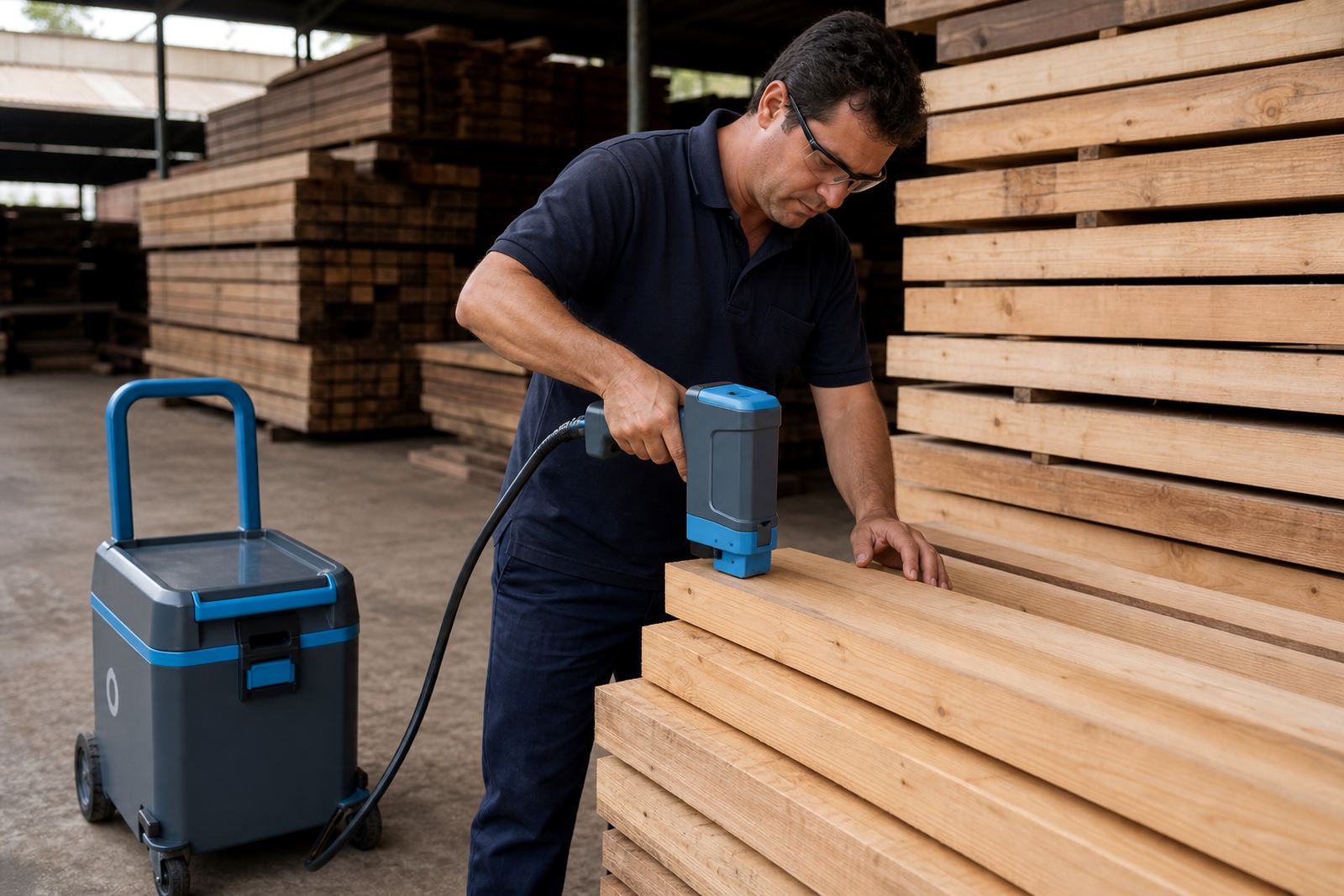
Timber can be forgiving on one board and difficult on the next. Fresh-cut surfaces absorb ink differently from dry stock, while dusty edges and resin spots can blur a print if the settings are off. The yard also wanted a coder that could be lifted between stacks without a fixed line or bench position, because the work moves with the timber stok rather than sitting in one place.
We selected a handheld inkjet printer setup with print height options suited to bundle marking, plus solvent-based and quick-dry inks for timber surfaces. Where boards had a smoother finish, the print could be set smaller and denser. On rougher faces, a wider mark gave better legibility. That balance matters when the packs are handled by forklift and strapped tight before they leave the yard.
- Print heights set for small codes and larger bundle IDs
- Quick-dry ink used where handling starts straight after marking
- Solvent ink kept for darker or less absorbent timber faces
- Message spacing adjusted for curved or uneven surfaces
Monthly hire setup at the Pinetown base
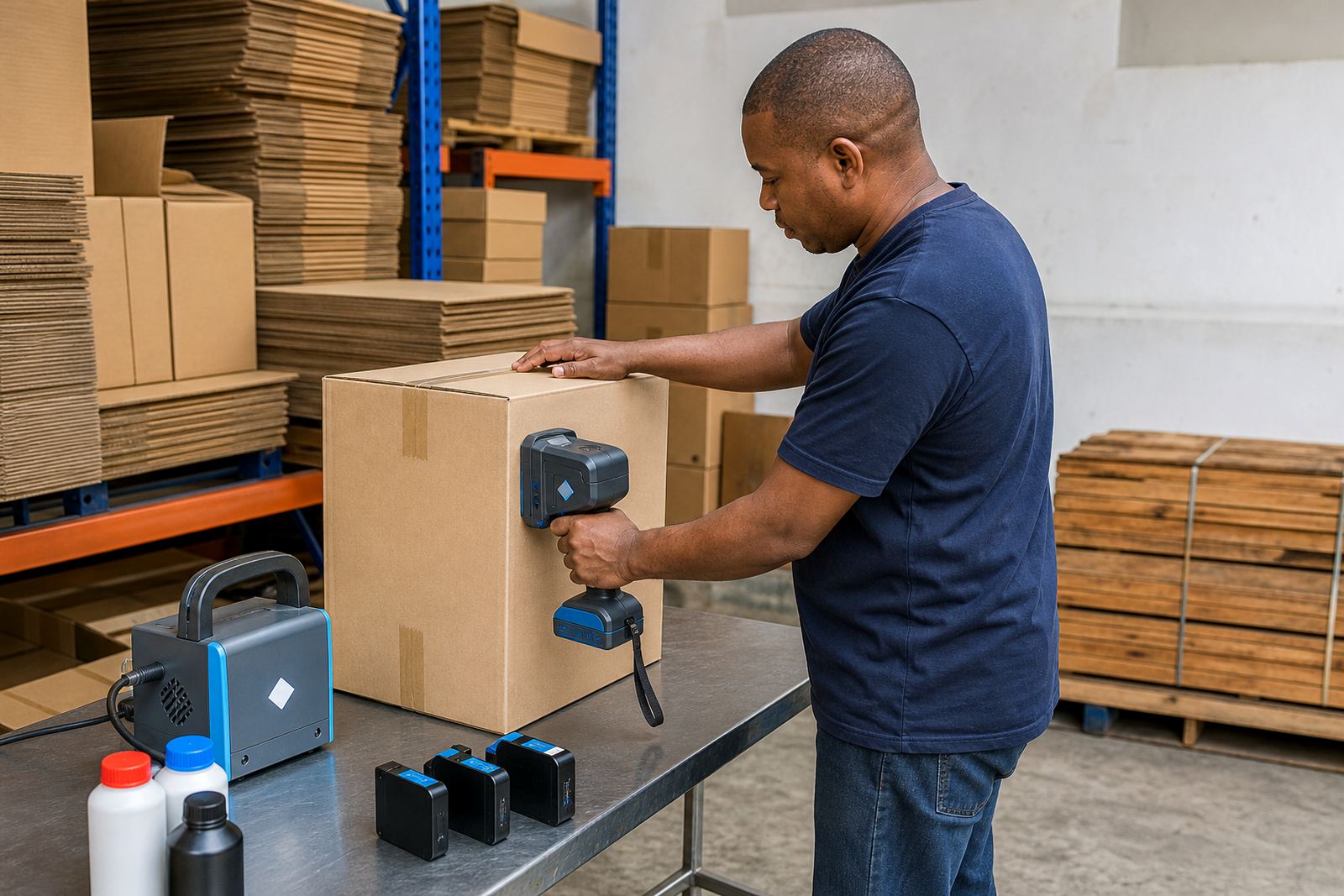
The rental started from our Pinetown base with delivery and collection arranged for the Durban South site. The package included the handheld coder, charger, spare consumables, test cards and support for setting up the first label text. We loaded date fields, batch codes and a short yard reference so the operators could move between timber lines without retyping the full message each time.
Because the yard runs on a mixed production pace, we kept the arrangement on a monthly hire term with room to adjust the message layout during the hire period. That suited the stock flow better than short ad hoc hire, and it gave the team a printer they could keep close to the packing area without extra travel to collect consumables.
- Delivery and collection from the Durban area
- Message loading for dates, batch codes and yard notes
- Consumables supplied with the hire package
- Backup unit support if the first unit needs attention
Setup work on timber, bands and bundles
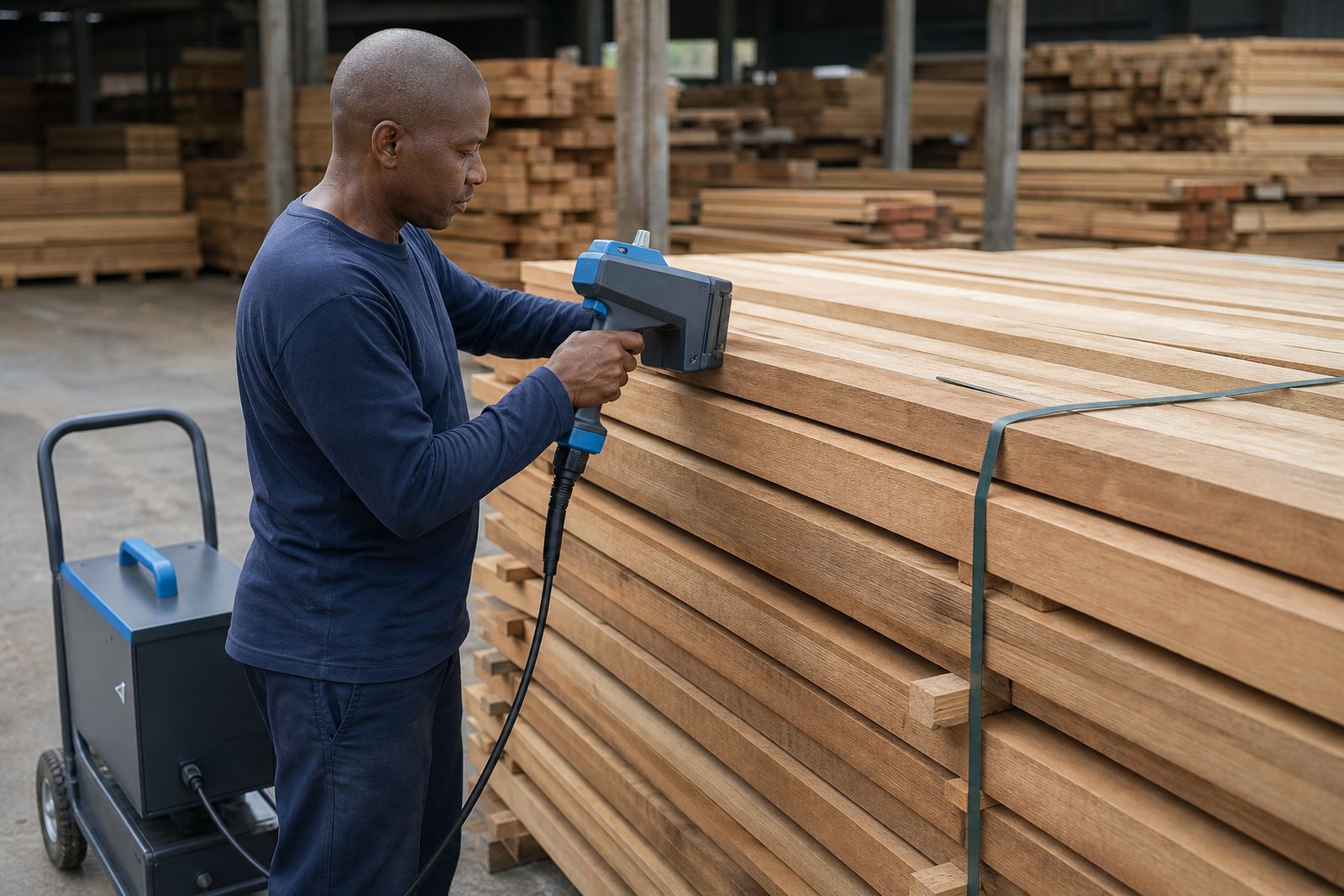
On site, the first job was to find the cleanest print position on each bundle type. Some packs carried plastic strapping, while others had exposed timber ends and rough side faces. We tested print placement on all three and tuned the density so the code stayed sharp without bleeding into the grain. Barcode setup was added for the packs that needed stock movement checks before loading.
The operators also wanted short logo marks for internal identification, not full artwork. That kept the print simple and readable. Where the stack height changed through the day, the handheld unit made it easy to shift position and keep printing at working height. The yard preferred that freedom because the bundles were not always lined up neatly, and the marking point could move from one bay to another in a single shift.
- Test prints completed on strap, end grain and face print positions
- Barcode setup added for selected dispatch packs
- Logo setup limited to a small, clean yard identifier
- Operator training covered speed, ink handling and nozzle care
First three weeks on the hire period
The opening weeks were used to settle the printer into regular timber stock marking. The team worked through daily batch changes, short run updates and repeat marks on bundles leaving for different customers. A few early adjustments were made to print spacing and ink density, especially where the timber surface was rougher than the sample boards. That kind of tuning is normal in a yard that handles mixed stock and moisture levels.
Our support included remote setup help, troubleshooting support and a check on how the consumables were holding under daily use. The printer was moving between packing points and the marks stayed readable on the boards and straps. For this yard, the biggest gain was consistency. The same code format could be used across different stack types without carrying extra equipment from bay to bay.
- Weekly hire tracking during the opening part of the term
- Ink selection reviewed for drying speed and surface grip
- Message changes handled as stock codes changed
- Field setup support kept the unit ready for daily use
What the yard gained from the job
By the end of the setup period, the yard had a clear marking process for timber stock, bundle IDs and short dispatch notes. The handheld coder reduced the time spent moving packs to a fixed marking point and made it easier to keep labels legible on rough timber. The staff could print directly where the bundles were stacked, which suited the way the yard already worked.
The result was not about flashy labelling. It was about cleaner stock control, fewer unclear marks and a practical monthly hire arrangement that fitted the pace of a Durban South timber yard. The same setup can be adjusted for other timber operations in Pietermaritzburg, Johannesburg, Cape Town or Richards Bay when the work involves bundles, rough boards or mixed stock movement.
- Clearer batch and date marks on timber bundles
- Better control over stock movement and dispatch notes
- Less handling around the marking point
- Reusable message layout for future hire periods
Yard job results worth repeating
For another timber yard, we would again start with the surface first, then match the ink and print height to the actual board finish. That order matters more than forcing one setting across every bundle. We would also keep the message short, because timber marks need to stay readable from a distance and still survive handling, stacking and transport.
A monthly hire term works well where stock moves daily and the marking needs can shift. With the right setup, the printer becomes part of the yard rhythm rather than an extra task. The Durban South job showed that a handheld inkjet coder can handle timber bundles cleanly when the ink, surface and print layout are set with care.
- Start with surface testing before message finalising
- Keep codes short for better legibility on rough timber
- Use quick-dry ink where handling begins at once
- Keep a spare unit plan for busy stock periods
Key facts
| Project type | Monthly hire for timber stock and bundle marking |
|---|---|
| Location | Durban South, with delivery from Pinetown, Durban |
| Materials marked | Timber bundles, planks, cut lengths and strap-bound packs |
| Print content | Dates, batch numbers, barcodes and short logos |
| Ink options | Solvent, water-based and quick-dry inks |
| Hire terms | Weekly and monthly hire with setup help and consumables supply |