Carton coding in a fast Phoenix packing room
The client also wanted the setup to work on cartoned product without wasting time on adjustment. That meant a handheld inkjet coder with enough flexibility for small text, a simple operator menu and ink that suited porous board. The surface mattered, because folded carton flaps can take ink differently from plain board and an uneven pass shows straight away.
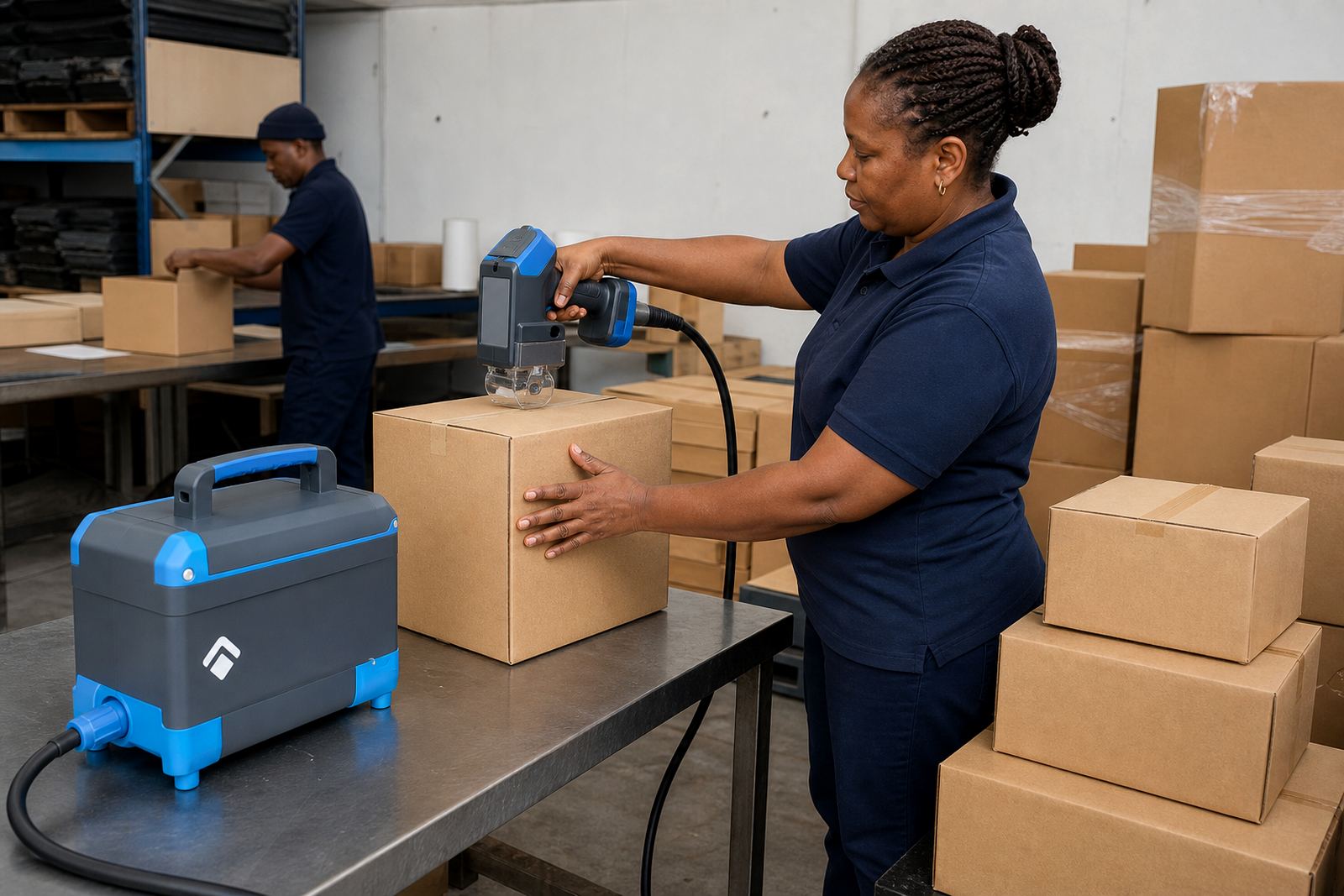
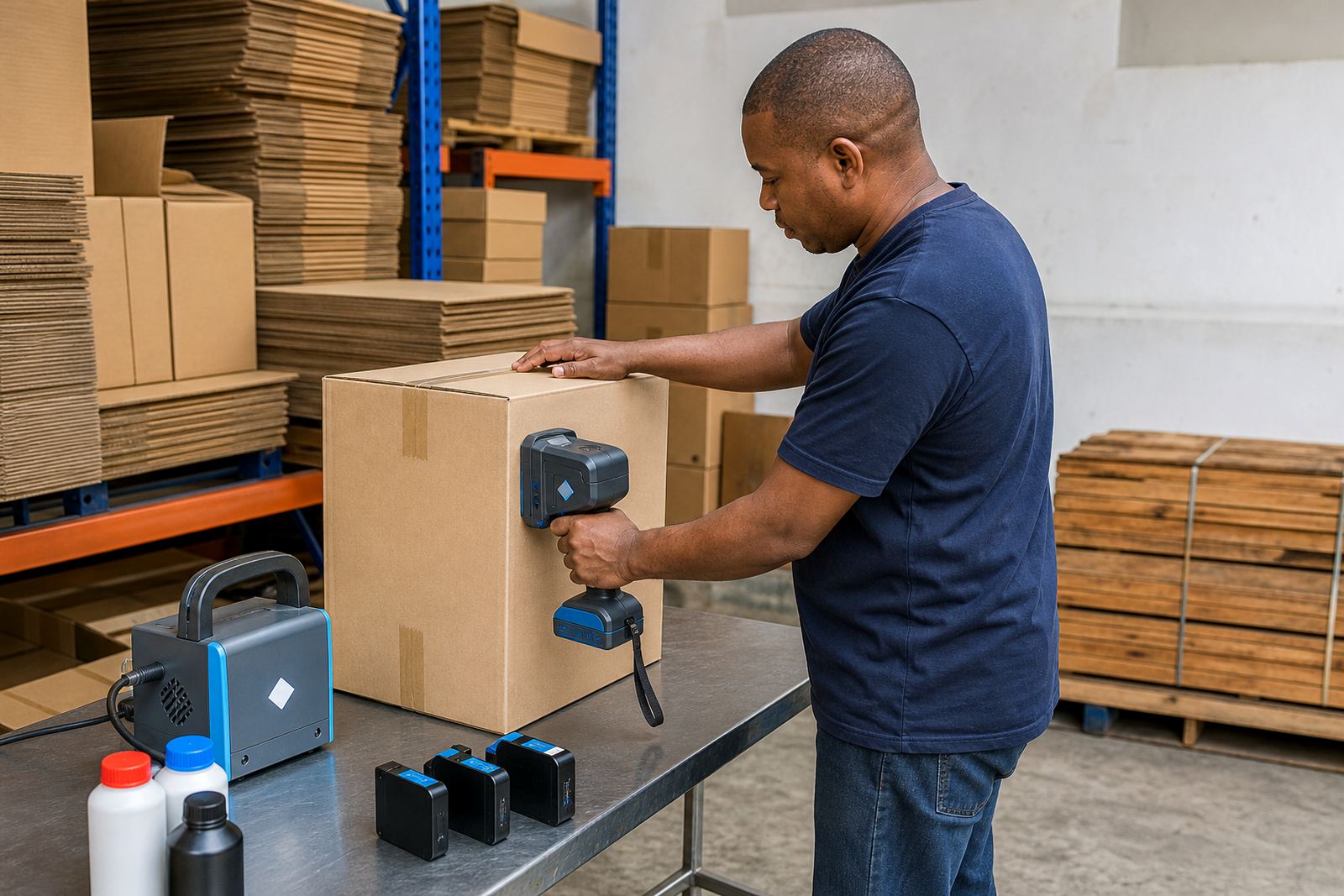
We discussed print height early. For carton dating, a character height in the 12 mm to 22 mm range usually gives enough visibility without taking too much panel space. The unit used here was set for compact date lines, with the option to stretch larger if the carton artwork left more room. We loaded the message, checked alignment on the actual carton sample and made sure the print sat square to the fold.
- Print height range used: 12 mm to 22 mm
- Surface: folded carton board
- Ink type chosen: quick-dry ink for porous packaging
- Marking style: clear text with batch line below
The room was busy and the operators did not need extra complication. The coder was kept light enough for hand use, but still consistent across repeated cartons. Where boxes were moved quickly from sealing to stacking, the drying time needed to be short enough that the mark would not transfer onto the next carton in the pile.
What we supplied for the carton date run
We supplied the handheld unit on weekly hire, with consumables and setup support included for the first run. The package covered message loading, test printing and a short training session for the operators who would handle the machine each shift. Because the team wanted batch control as well as dating, we built a layout that used the available print width without crowding the carton artwork.
The ink selection was matched to the carton material. A quick-dry formulation was used on the main carton line, while a water-based option was kept in mind for any lighter board trials. Where carton surfaces are less absorbent, solvent-based ink can be more suitable, but this particular job needed a cleaner drying profile on board that would be handled soon after printing.
- Handheld inkjet coder supplied on hire
- Quick-dry ink supplied for carton board
- Message loading completed before start-up
- Test prints done on live carton samples
- Operator training given on site
The client also had a barcode request on a separate packing label line, so we checked whether the same handheld system could support the code format they wanted. Barcode quality depends on print size, quiet zones and how steady the hand is during the pass, so we kept the setting conservative and readable rather than chasing a small code that would scan badly. For cartons, that was the sensible call.
Weekly hire fit for a moving packing line
The hire term ran for one week first, with the option to extend once the team had tested it in normal production. That suited the site because carton flow changes when a line is busy, and a rental unit gives room to adjust the message before committing to longer use. The first week was used to settle the text, confirm ink coverage and check whether the carton board behaved the same across all pallet batches.
We kept the support practical. A remote setup option was available if the client needed a message change after hours, and backup unit support could be arranged if the primary coder was taken out of service. For a packing room that cannot afford a long pause, having a spare unit and consumables available makes the difference between a small delay and a full stop.
- Initial hire term: one week
- Extension option: monthly hire
- Support offered: remote setup help and troubleshooting
- Spare unit cover: available on request
Our field setup technician checked the feed path, message spacing and print orientation on the carton line. That mattered because a handheld coder can be technically sound yet still produce a poor result if the operator changes the angle from carton to carton. Once the team had the movement right, the marks stayed neat across the run.
Two weeks of setup, testing and line handover
The project took two weeks from first discussion to stable use on the floor. Week one covered the brief, carton samples and ink matching. Week two focused on operator practice, print clean-up and confirming that the mark held up during packing, storage and movement. There was no need for a complicated installation, but there was plenty to check against the actual carton stock.
The training technician worked through message loading, date changes and the basics of cleaning the print head area after use. That part matters more than people think. Small residue on the nozzle plate can change the shape of the characters, especially on repeat runs with the same operator. Once the team understood the cleaning routine, the print stayed steady through the shift.
- Week 1: brief, sample review and ink match
- Week 2: training, test prints and handover
- Focus: consistent date and batch coding
- Outcome: cleaner carton marks with less rework
The packing room also wanted to avoid smudging on the flap edge. We adjusted the message position so the mark sat on a flatter section of the carton. That small change helped the code stay readable even when cartons were handled quickly, which is often where marks go wrong first.
Carton line results worth repeating
The final result was a cleaner carton date mark with batch detail placed where it could be read without slowing the packers down. The team could switch carton sizes, update the date and keep the marking process close to the packing step instead of sending cartons off for separate coding. That helped with control on the line and cut the number of cartons needing a second pass.
If we were doing the same kind of job again, we would still start with the carton sample in hand and not a guess about the board finish. Print height stayed modest, quick-dry ink suited the porous stock, and we left time for a short operator run before the real shift started. For jobs in humid coastal areas like Durban, that extra test is useful because carton behaviour and drying can shift with the weather.
- Cleaner date marks across the shift
- Better batch control on packed cartons
- Less rework from smudged prints
- Process kept close to the packing point
For Phoenix carton dating, the handheld hire model worked because the room needed flexibility more than fixed equipment. It also suited the client’s plan to keep the unit on weekly hire until the carton flow settled. That kind of arrangement gives room for small changes without tying the site into more machine than it needs.
Specs for this Phoenix carton dates hire
These are the key facts from the job as supplied on site. They reflect the carton board, the weekly hire term and the coding style used for the packing room.
Key facts
| Project | Phoenix carton dates |
|---|---|
| Location | Phoenix, Durban |
| Hire term | Weekly hire |
| Application | Date coding on folded cartons |
| Print height | 12 mm to 22 mm |
| Ink used | Quick-dry ink for porous carton board |