
A Paarl yard with mixed timber and shifting stock
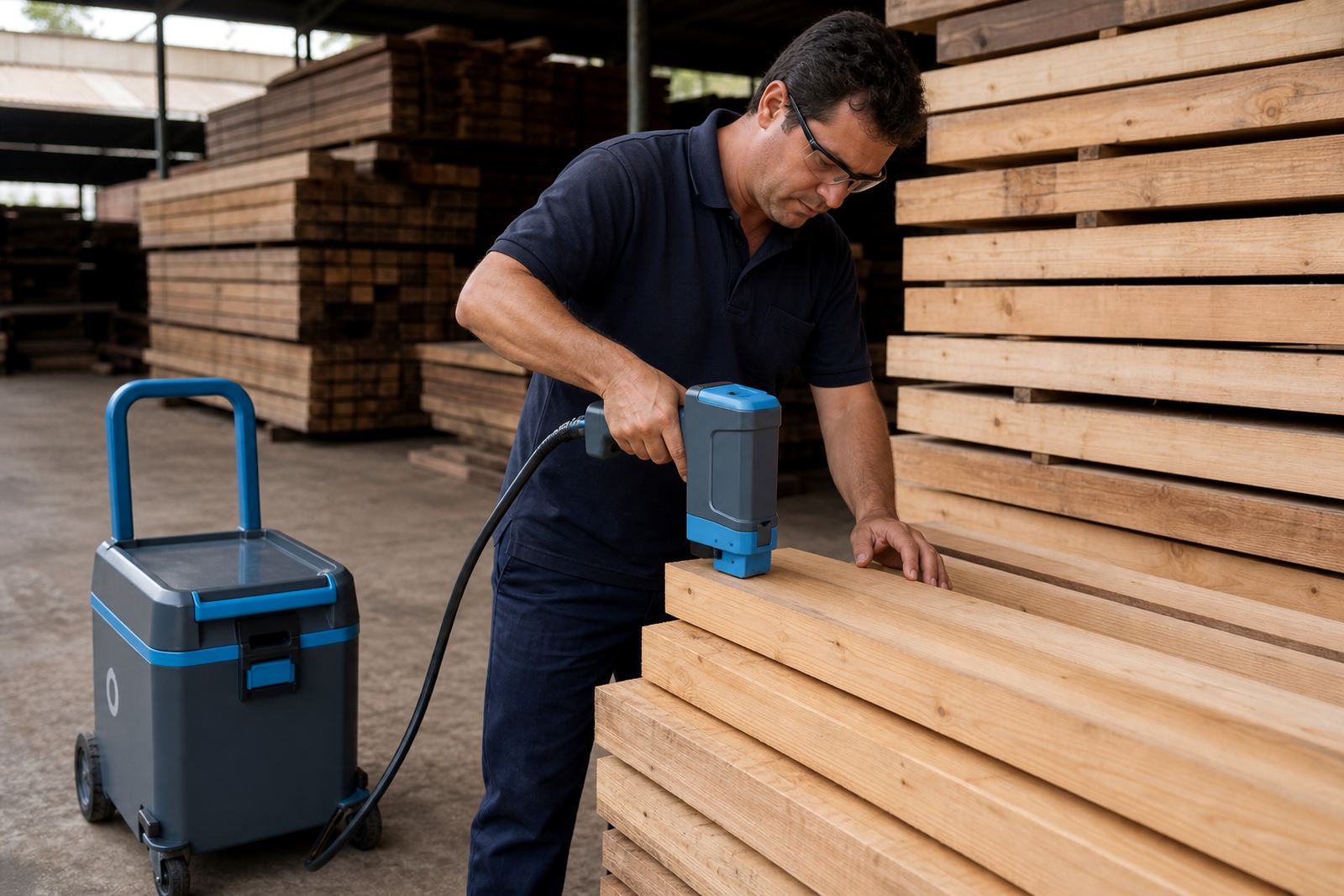
The brief came from a timber handling yard in Paarl where boards, cut lengths and bundled stock moved between storage, prep and dispatch points. The team needed a handheld coder that could mark lot numbers, dates and short identifiers without slowing the yard down or forcing stock through a fixed print station.
We worked around timber dust, changing surfaces and the need to print on both smoother planed timber and rougher cut faces. The yard also wanted marks that stayed legible after handling and strapping, with a setup that could be used by more than one operator without a long learning curve.
- Portable handheld inkjet coder for direct marking
- Rental terms by the week or month
- Support for timber, cartons and other porous surfaces
- On-site setup help and operator training included
What the hire package covered
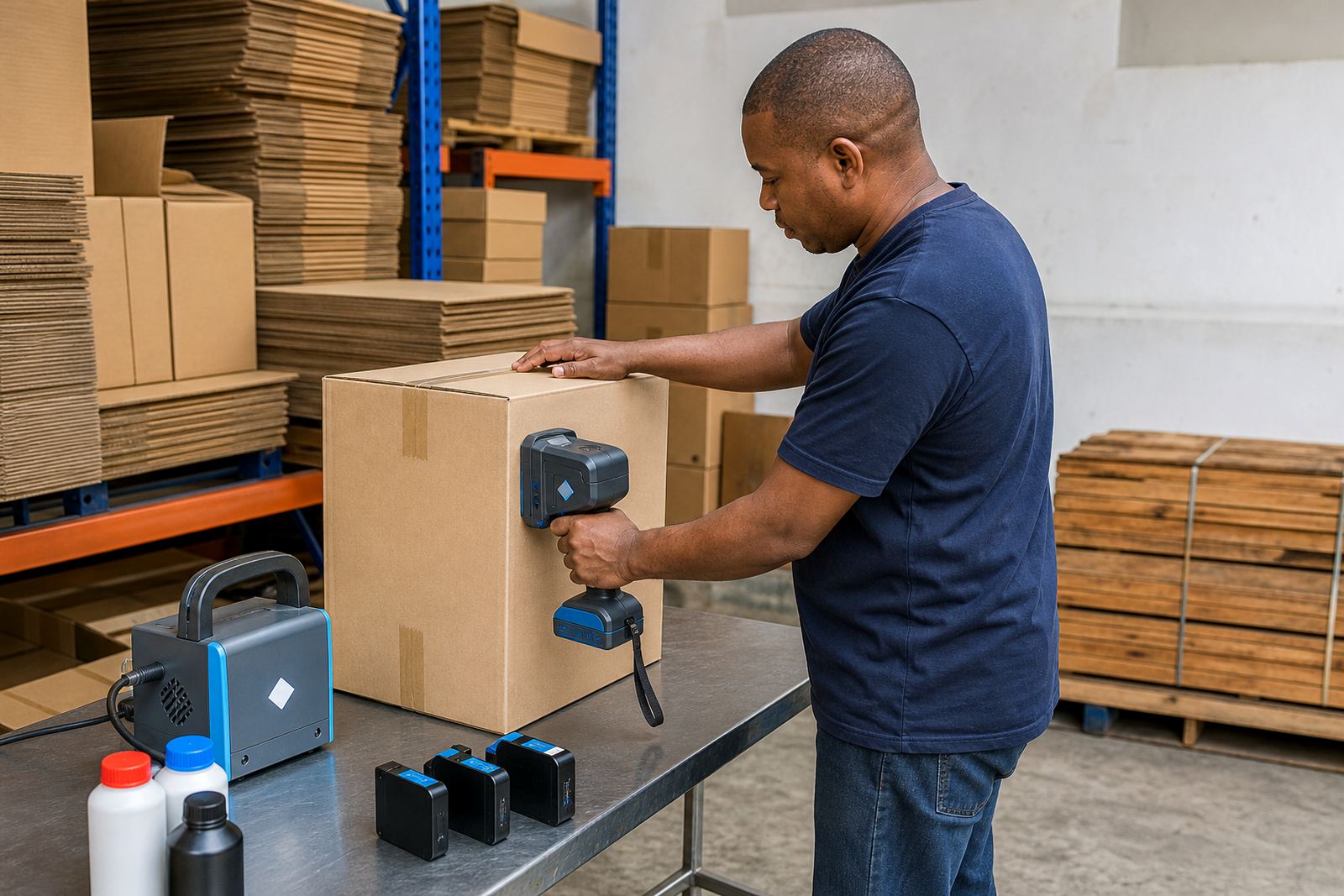
We supplied a handheld inkjet printer with quick-dry ink for timber work, plus a second ink option for different surface behaviour where needed. The print head was set up for clear text, batch coding and simple logos, with print heights suited to the marking area on each bundle or board face.
The hire also covered message loading, barcode setup where required, and test printing on the actual timber being used in the yard. That mattered because pale pine, treated timber and darker pieces do not all take the same mark in the same way, especially when there is surface fibre or light dust present.
- Print heights suitable for small date codes and larger handling marks
- Solvent based ink for faster drying surfaces
- Water based ink for selected porous materials
- Message loading for dates, lot numbers and short product text
Setup in the yard and training for the operators
The first stage was a practical site setup in Paarl, with the coder checked against the yard's actual workflow. We positioned the unit for easy use near the stock holding area, then loaded the first messages and ran test prints on representative timber pieces before the team started routine marking.
Training covered how to hold the unit steady, keep a clean print pass, and adjust the print position for uneven boards and bundle faces. The operators also worked through basic cleaning and ink handling, which helped prevent fuzzy codes when timber surfaces were dusty or slightly rough.
- On-site setup aligned to the yard layout
- Remote setup help available if messages changed later
- Practical training for more than one operator
- Basic cleaning and maintenance guidance
Timeline measured in weeks, not rushed in hours
The job moved in weeks. One week covered the brief, surface review and hire planning. The next stage covered delivery, setup and operator familiarisation. After that the yard used the unit through a normal production stretch, which showed whether the marks held up on stacked timber and whether the ink choice suited the stock mix.
That pacing worked well for a stock handling yard because timber movement changes from day to day. A code that looks fine on a single board needs to stay readable once the bundle is strapped, shifted and handled several times.
- Week 1: brief, surface review and hire planning
- Week 2: delivery, setup and test printing
- Following weeks: yard use with support on call for adjustments
What held up well on timber and pack marks
After setup, the yard had a clearer marking process for lot identification and outgoing stock. The main result was consistency. The operators could place the code where it was easiest to read, and the quick-dry ink reduced smudging when pieces were moved soon after printing.
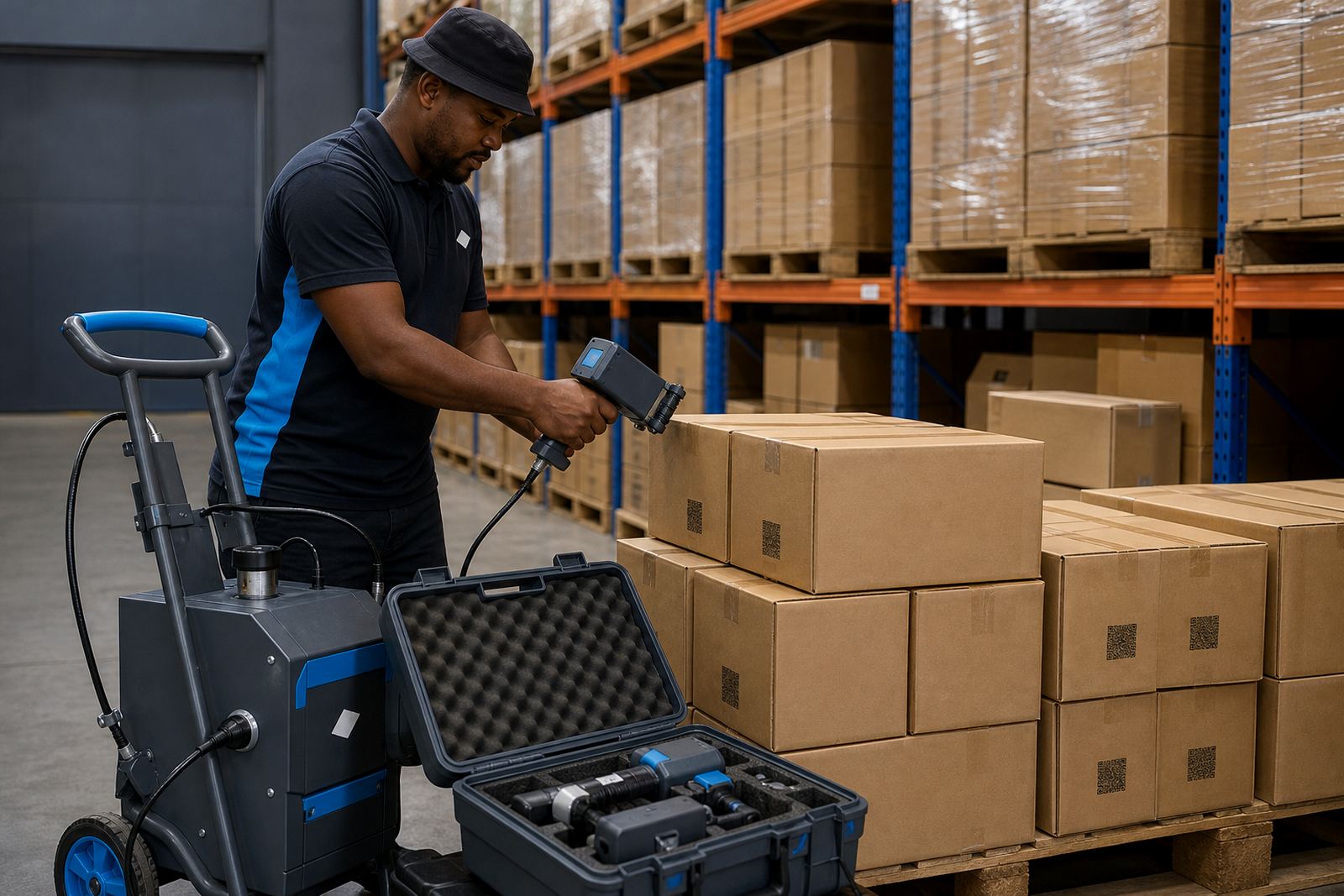
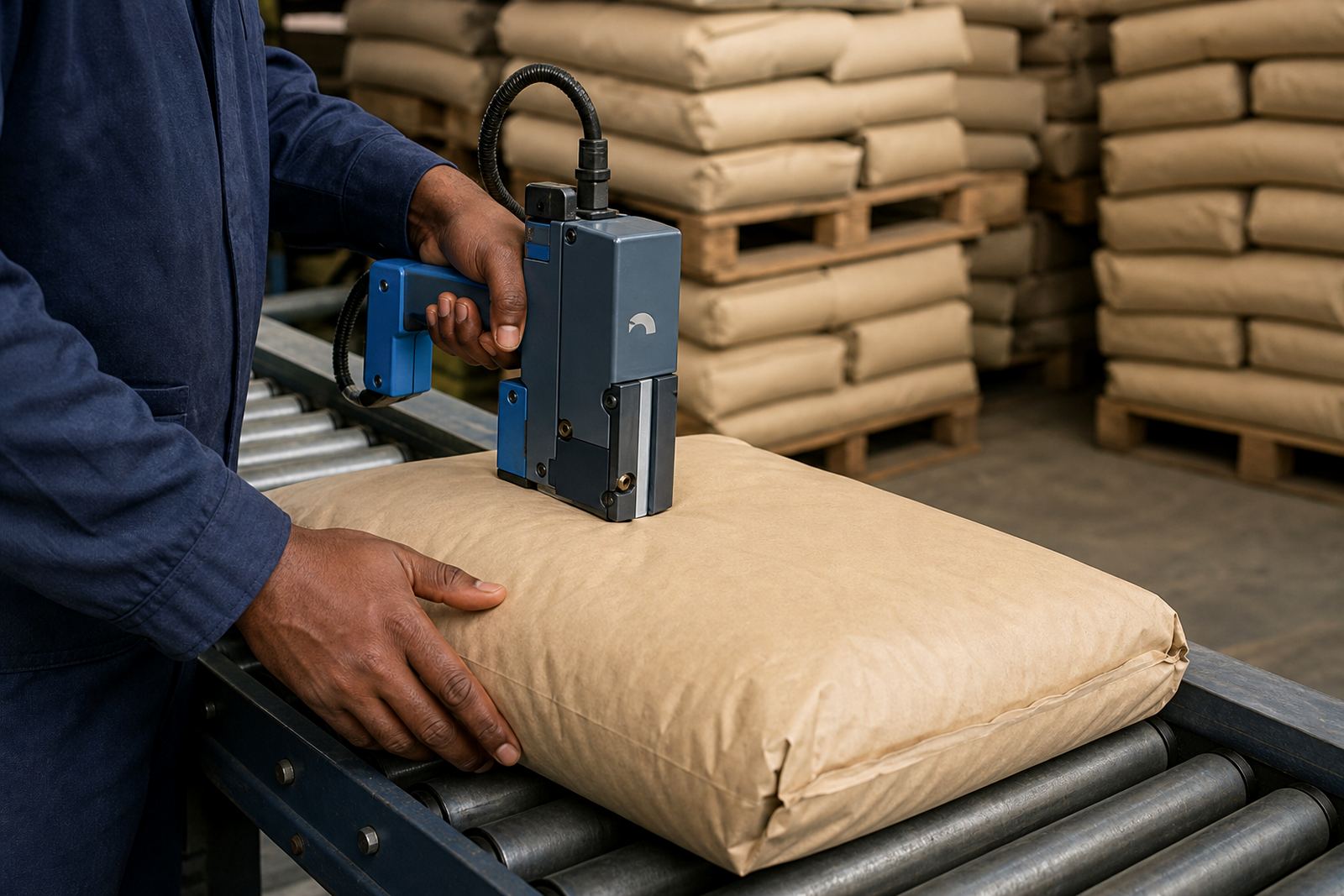
The coder also proved useful on mixed materials in the same yard. While timber was the main focus, the same hire unit could mark cartons and other handled stock when needed, which made the setup more useful across the yard instead of being tied to one task only.
- Cleaner lot marks on timber bundles
- Readable date and batch codes on handled stock
- Less smearing during normal yard movement
- Flexible use across more than one packing area
What we would carry into a similar timber hire
For a similar project in Paarl or another timber handling yard, the sequence stays as it was: check the surface, choose the ink against the timber finish, then test the exact message on real stock before the unit goes into daily use. That sequence avoids surprises with drying, adhesion and print contrast.
We would also keep barcode setup and logo loading in the package where the yard needs it, because timber stock often carries more than one mark at the same time. A clear code, a handling line and a short logo can all sit on the same face if the print area is planned properly.
- Test on the actual timber grade first
- Select ink to match the surface and drying need
- Load all required messages before routine use
- Keep backup unit support available for busy periods
Key facts
| Hire type | Handheld inkjet coder rental |
|---|---|
| Main use | Lot marks, dates, batch numbers and logos |
| Print height | Adjustable for small codes and larger handling marks |
| Ink options | Solvent, water-based and quick-dry |
| Surfaces | Timber, cartons, bags, pipes and steel |
| Hire terms | Weekly or monthly |
| Coverage | Paarl with South African delivery and collection |