
Warehouse carton coding for an inland dispatch floor
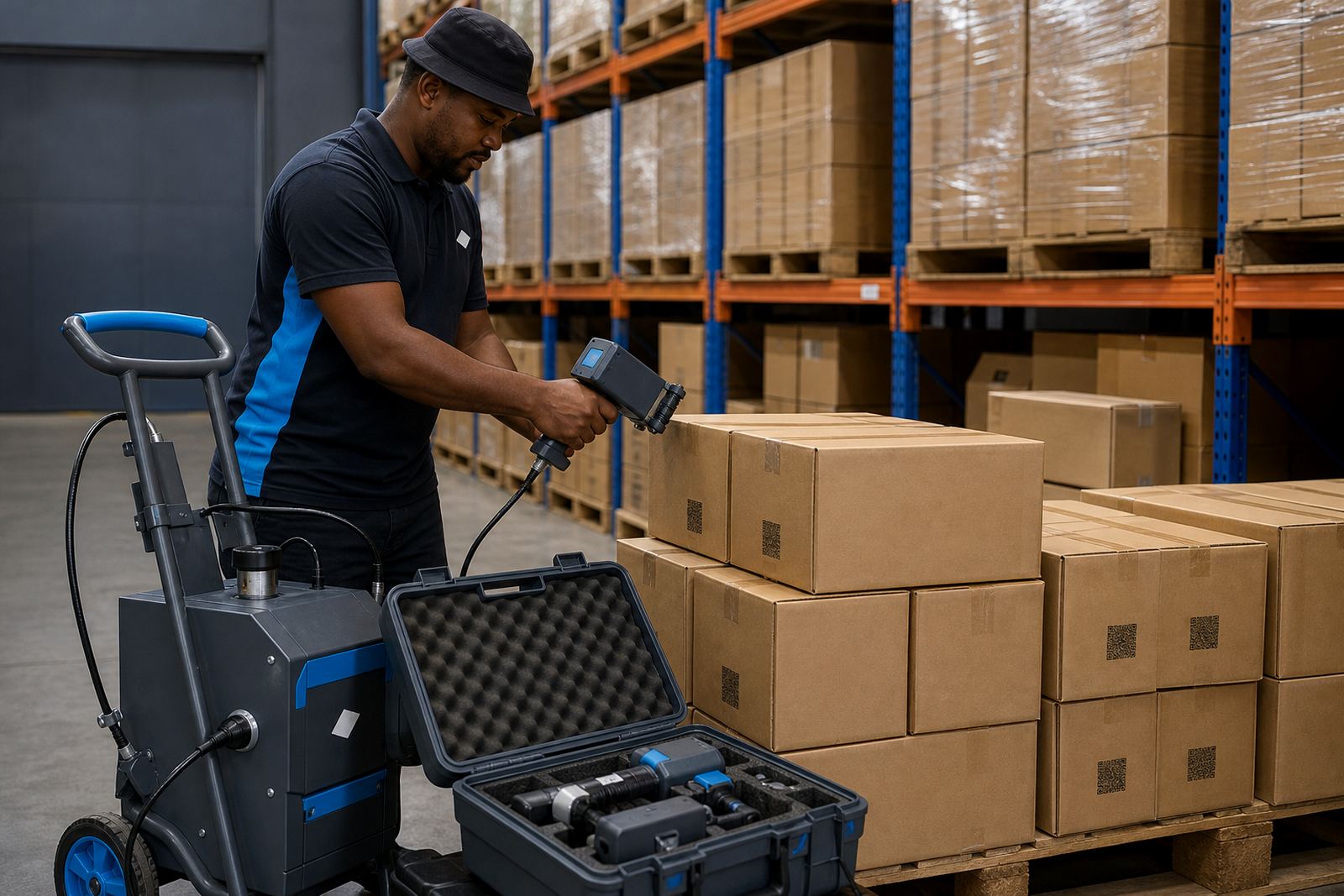
The work came from a larger warehouse operation in Johannesburg that handles cartons moving through intake, storage and despatch. Their team needed date marking, batch codes and a small logo on plain corrugated boxes, with clear print that would hold through handling, stacking and transport. The brief called for a portable unit that could move between packing lines and still leave a neat mark on fast moving cartons.
Because the cartons changed size through the week, the printer had to cope with short runs as well as repeat labels. The operator group wanted a unit that was light in the hand, easy to guide along a box face and simple to reset between products. We worked around warehouse dust, mixed carton finishes and a steady pace of packing that leaves little room for clumsy setup.
- Monthly hire suited the pace of the warehouse.
- Prints covered dates, batch numbers and logo blocks.
- Cartons stayed legible after stacking and movement.
Handheld inkjet setup for cartons, not a fixed line
We supplied a handheld inkjet coder with print height options suited to small text and cleaner logo blocks. The unit was loaded for carton work, with quick-dry ink chosen so fresh marks would not smear during handling. The team also needed a barcode format for selected carton types, so we loaded the relevant message files and checked line spacing before release.
The warehouse did not want a fixed conveyor system, and that suited the brief. A handheld coder gave them flexibility for off-line boxes, rework cartons and occasional urgent runs at a packing bay. The same unit could mark plain board, coated board and other common packaging surfaces when the surface was flat enough for a controlled pass.
- Print heights were set for readable warehouse coding.
- Quick-dry ink reduced the risk of smudging on cartons.
- Barcode fields were tested before the unit moved into use.
What went into the hire pack
The hire package covered the coder, the ink selection, message loading and practical operator training. We also supplied test printing support, so the team could check placement on the carton face before the main run started. A backup unit formed part of the support plan, which matters when a warehouse keeps moving stock through a narrow packing window.
The client wanted a monthly term rather than a short weekly arrangement, because the box marking formed part of their normal dispatch rhythm. We kept the setup plain and direct, with the messages arranged for everyday packing use. Their supervisors needed a clean handover, while the operators needed enough guidance to keep the print straight and consistent.
- Message loading covered dates, batch codes and logo text.
- Consumables supply kept ink on hand for the hire term.
- Troubleshooting support covered print alignment and message checks.
Two weeks from briefing to steady use
Week one covered the brief, carton samples, ink choice and message layout. We checked the print area on the box face, then loaded the date and batch formats that the warehouse wanted for daily dispatch work. We also trained the operators on cleaning the nozzle area, checking print quality and keeping the unit steady across the carton surface.
Week two was the live run, with our field setup technician handling the first round of on-site adjustment. Small changes were needed around print position because the warehouse used different carton depths on different orders. Once those settings were settled, the team used the coder in ordinary packing work without needing a separate marking station.
- Week one covered samples, ink choice and message loading.
- Week two covered live use and position adjustment.
- Operator training focused on steady hands and clean print starts.
What the Johannesburg team gained from the setup
The main result was cleaner carton identification across incoming stock and outbound loads. The warehouse no longer had to rely on loose labels for every mark, and the printed data stayed readable on the box face during normal handling. Batch identification became easier for stock control staff, while the logo mark gave their cartons a more consistent outward finish.
The inland location also meant the team needed inks that would dry well on packaging stock moving through a busy floor. The finished setup worked for cartons used in a dry warehouse environment, with occasional dust and repeated handling. The operators kept to the same simple routine each shift, which reduced missed marks and cut down on rework.
- Carton identification became easier for stock control.
- Printed data held up through handling and stacking.
- The warehouse used one routine across multiple carton types.
Warehouse hire results worth repeating
For Johannesburg box marking, we keep the print layout narrow for different carton sizes and still test the ink on sample board before release. We would also keep a backup unit ready where the marking forms part of daily despatch, because that keeps the warehouse moving if a unit needs a clean-over or a setting check.
We would use the same approach to training, with one operator group learning the setup and a supervisor shown how to verify print quality. That mix worked well on this hire because the warehouse needed something practical, not a complicated marking station. The setup stayed portable, the messages stayed clear, and the monthly term matched the pace of the site.
- Keep the message layout sized for mixed carton dimensions.
- Test the ink on real board before full use.
- Keep a backup unit available for active dispatch floors.
Key facts
| Project | Johannesburg Box Marking |
|---|---|
| Hire term | Monthly hire |
| Equipment | Handheld inkjet coder |
| Print use | Dates, batch codes, barcodes and logo marks |
| Surface | Corrugated cartons and mixed packaging board |
| Ink type | Quick-dry ink for carton handling |
| Support included | Setup, training, message loading and backup unit cover |