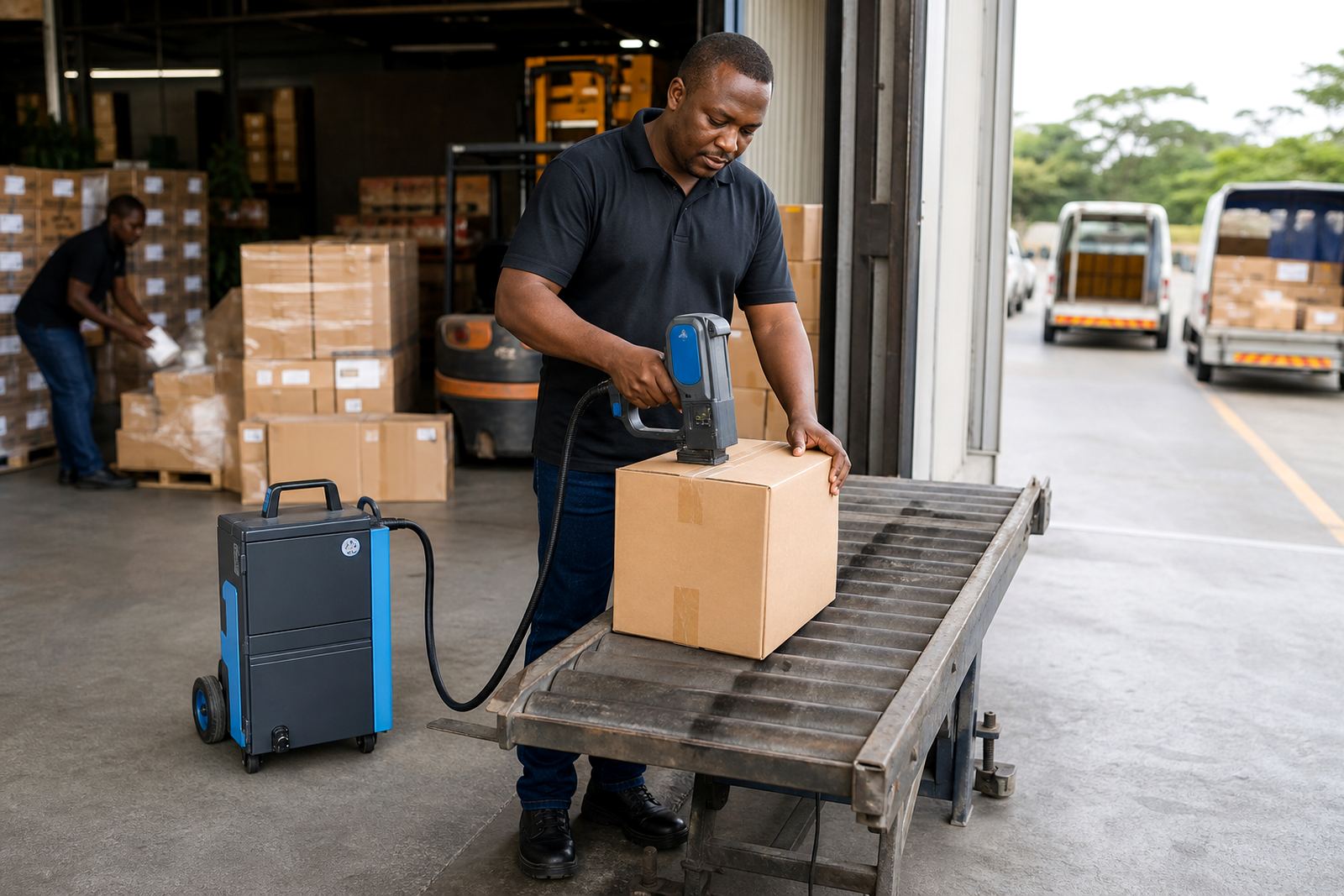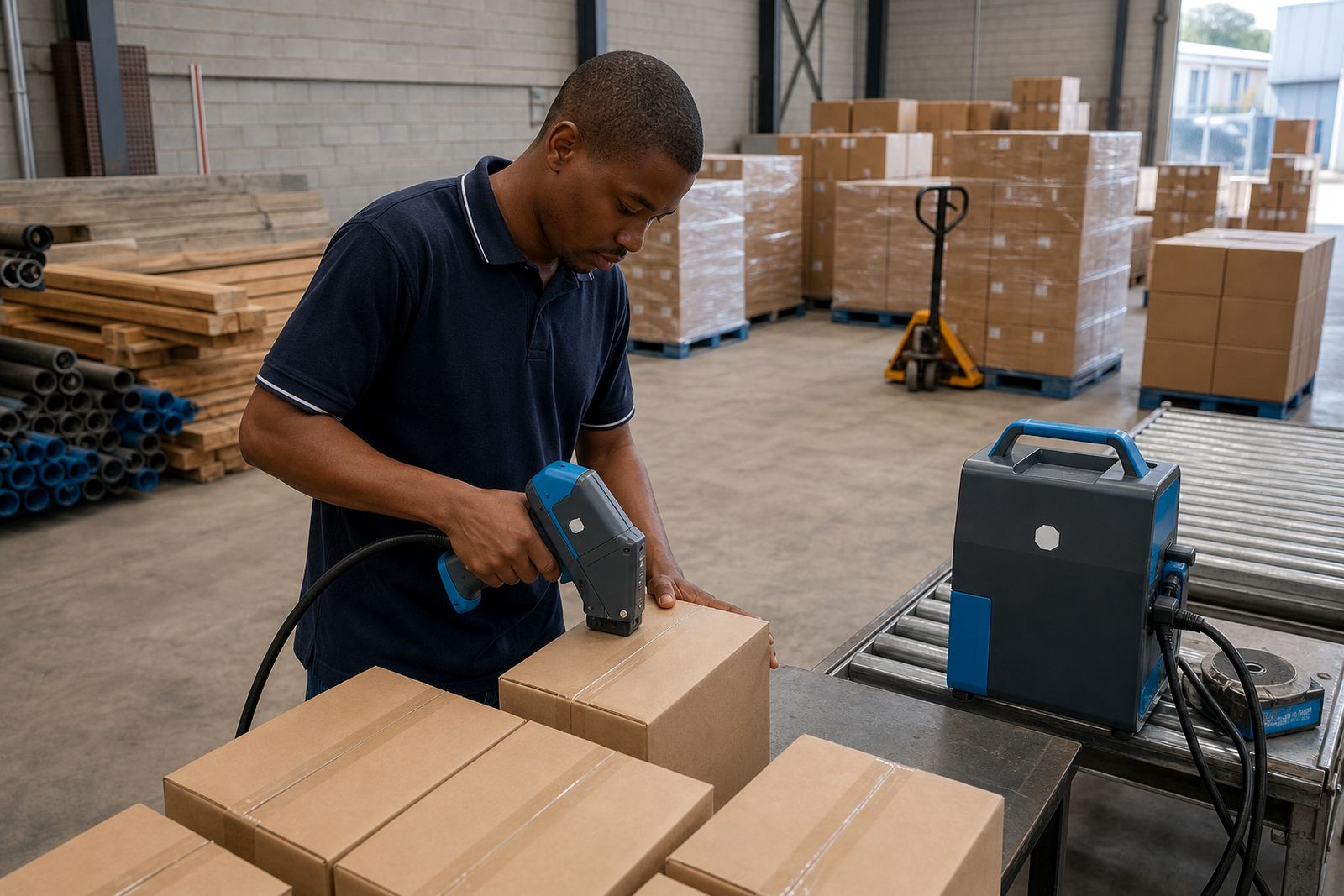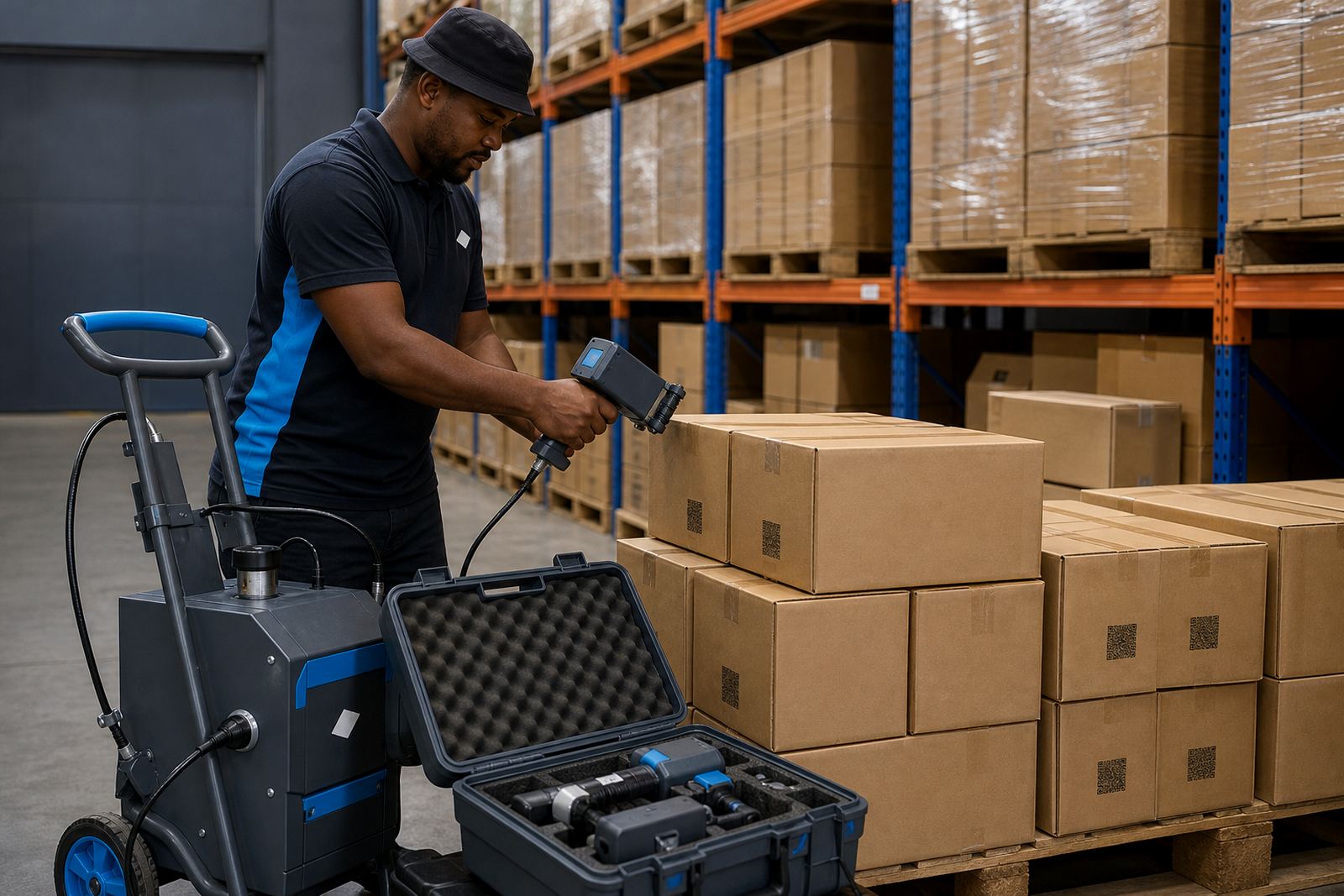

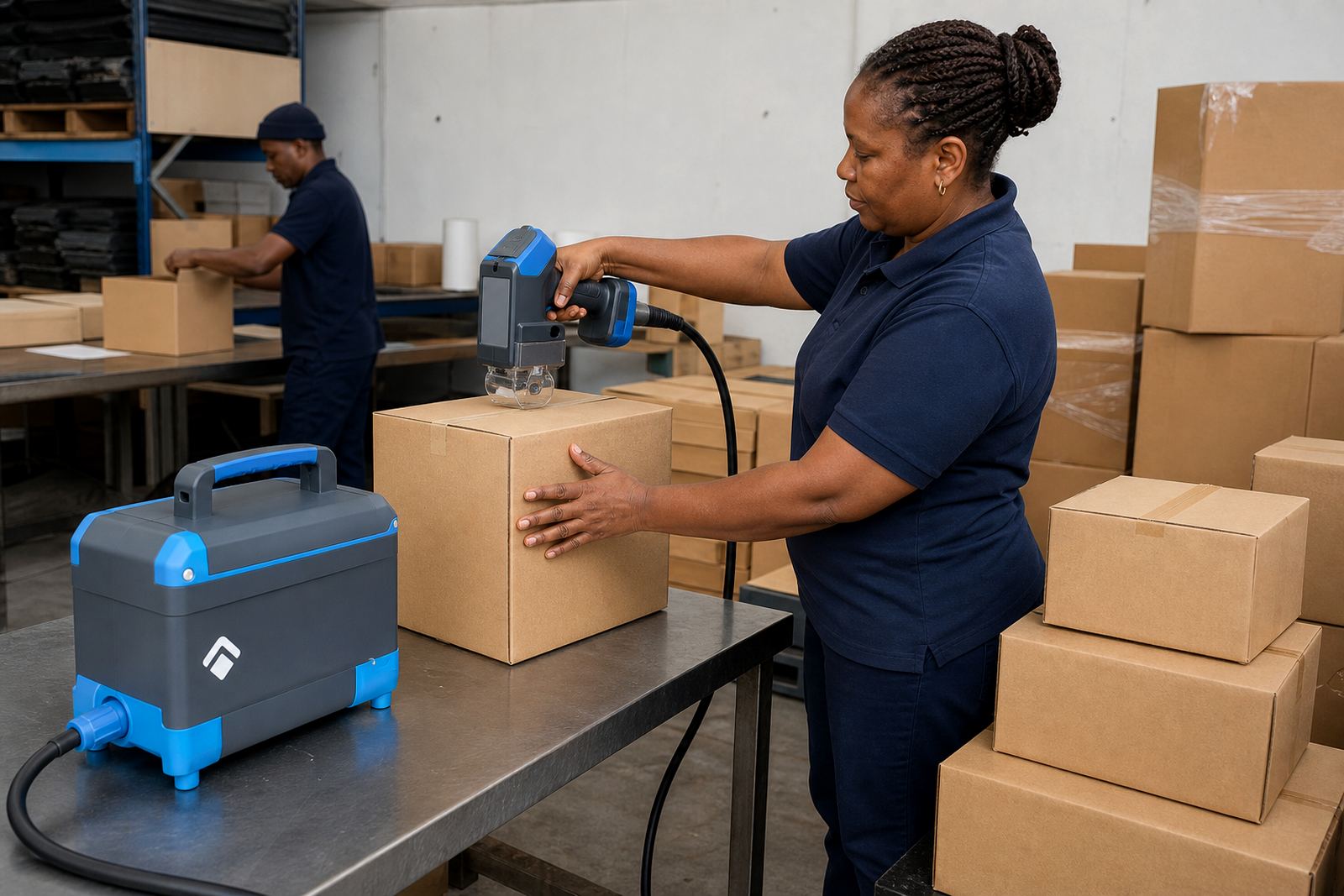
A Pinetown packing floor with mixed carton stock
The site handled cartons for daily packing runs, with different board finishes moving through the same area. Some cartons had a smooth outer layer, others carried a slightly fibrous face, so the print had to hold its shape without smudging while boxes were stacked, lifted and sealed.
The brief was direct. The team needed date and batch coding on cartons, plus a neat logo mark for product identification. The carton line ran in Pinetown, with weekly hire preferred so the unit could fit a short production cycle without tying the site into a long rental period.
Coastal humidity in Durban can affect drying on certain inks, especially where cartons are handled soon after marking. That shaped the ink choice and the test sequence. The print had to stay readable on the first pass, and it had to sit well on plain brown cartons as well as lighter printed stock.
- Town: Pinetown, Durban
- Surface: carton board with mixed finishes
- Marking: date, batch code and logo
- Hire term: weekly
What the brief asked for on the line
The site wanted a handheld printer that could move from one carton stack to another without needing a fixed mounting point. The operator had to print clearly on the side panel of each carton, with enough space for a date line, a batch number and a small logo block.
We kept the message layout simple so the print stayed legible at handheld height. For carton work, the key is not crowding the field. A print height around 12 mm to 25 mm suits most date and batch layouts, while a logo can sit above or beside the text if the artwork is kept clean and bold.
Because the cartons were handled soon after coding, we suggested quick-dry ink for the main run. Where carton faces were more absorbent, water-based ink was also discussed for cleaner coverage. Solvent-based ink remained available for non-porous materials in the same site, though this carton job focused on board surfaces.
- Print field sized for date and batch codes
- Logo kept compact for carton side panels
- Quick-dry ink used for handling after print
- Message spacing checked before the run started
Hire set-up and message loading
We supplied the handheld coder on weekly hire and arrived with the message already prepared for the carton line. The unit was checked, the date format was loaded and the batch code style was arranged so the operator could move through the stack without pausing to reset the layout for every carton size.
On site, the printer was tested on the actual cartons in use, not on a substitute sample. That matters with board stock because print clarity changes when the surface has a rough face, a dusted edge or a light coating. A few test prints showed the right density straight away, but the logo needed a small spacing adjustment to keep the outline crisp.
The operator training covered grip, scan path, print speed and where to place the head on each carton. The team also got a short note on nozzle care and how to keep the cartridge seated properly during the week. For a local packing site, that practical setup avoids unnecessary stoppages.
- Weekly hire supplied for the packing period
- Message loaded for date, batch and logo work
- Test printing done on the site cartons
- Operator training included handling and print placement
Ink choice and carton results
The carton job used ink matched to the surface and handling pace. Quick-dry ink was the safest option where cartons moved straight to stacking and sealing. It reduced the chance of light transfer when boxes touched each other on the line. On more absorbent board, the print settled in well and the text stayed sharp enough for warehouse checks and dispatch labels.
Readability was the main measure. The date line had to be plain enough for staff to read without leaning in, and the batch number needed even spacing so the code could be traced later if a pack was queried. The logo sat neatly beside the text and did not bleed into the carton grain.
By the end of the first week, the site had a print format that matched its carton flow. The unit worked across several box sizes, including smaller cartons where the print had to stay within a narrow panel. That made the hire useful for the whole run, not just a single pack size.
- Quick-dry ink suited for fast handling
- Clear date lines for dispatch checks
- Batch codes kept even and readable
- Logo print held its shape on carton board
Support during the hire period
The hire included backup unit support, consumables supply and troubleshooting support, which matters when a packing site runs a tight sequence. The team in Pinetown did not need a complicated arrangement, just a printer that could stay on task and stay legible through repeated use.
Remote setup help was available if the message layout needed a shift, while on-site setup remained the best option when a new carton size entered the line. For jobs like this, barcode setup can be added later if the carton needs traceable scanning, and logo setup can be adjusted if the pack artwork changes with the season or customer order.
In this case the site only needed a clean carton code, but the handheld unit gave room to extend the print field later if another product line moved into the same area. That kind of flexibility suits local packing work where schedules change and stock comes through in mixed batches.
- Backup unit support available during the hire
- Consumables supplied with the rental
- Remote help available for layout changes
- Barcode and logo options kept open for later use
What this weekly carton job showed
The result was a neat, readable carton mark that held up through packing and dispatch. The team could date code, batch code and place a small logo without moving to a fixed print station. For a Pinetown site handling cartons in mixed runs, that kept the marking task compact and practical.
What worked well was the combination of message loading, test printing and a quick-dry ink choice matched to the carton handling pace. The line did not need a more complicated system, only a handheld coder that could stay accurate from the first carton to the last pallet.
For this Pinetown carton hire, our approach stays the same: test on the actual board, set print height for the carton panel, and keep the message field clear and uncluttered. That gives the operator a cleaner run and keeps the code legible where it matters, at packing and at dispatch.
- Weekly hire suited the production cycle
- Carton codes stayed clear through handling
- Layout stayed readable across mixed box sizes
- Setup matched the site’s packing pace
Key facts from the Pinetown hire
This carton project used a handheld inkjet coder on weekly hire for a packing site in Pinetown, Durban. The unit printed dates, batch numbers and a logo on cartons, with test printing, operator training and consumables supply included in the support package.
The hire suited mixed carton stock and a short production cycle. The site could use the same printer on cartons of different sizes, with the print height kept within a practical range for side-panel marking. That kept the coding clean without slowing the packing area down.
Key facts
| Project type | Weekly handheld inkjet coder hire |
|---|---|
| Town | Pinetown, Durban |
| Printed details | Date, batch number and logo |
| Surface | Cartons with mixed board finishes |
| Print height | About 12 mm to 25 mm |
| Support included | Setup help, training, inks and backup unit support |