
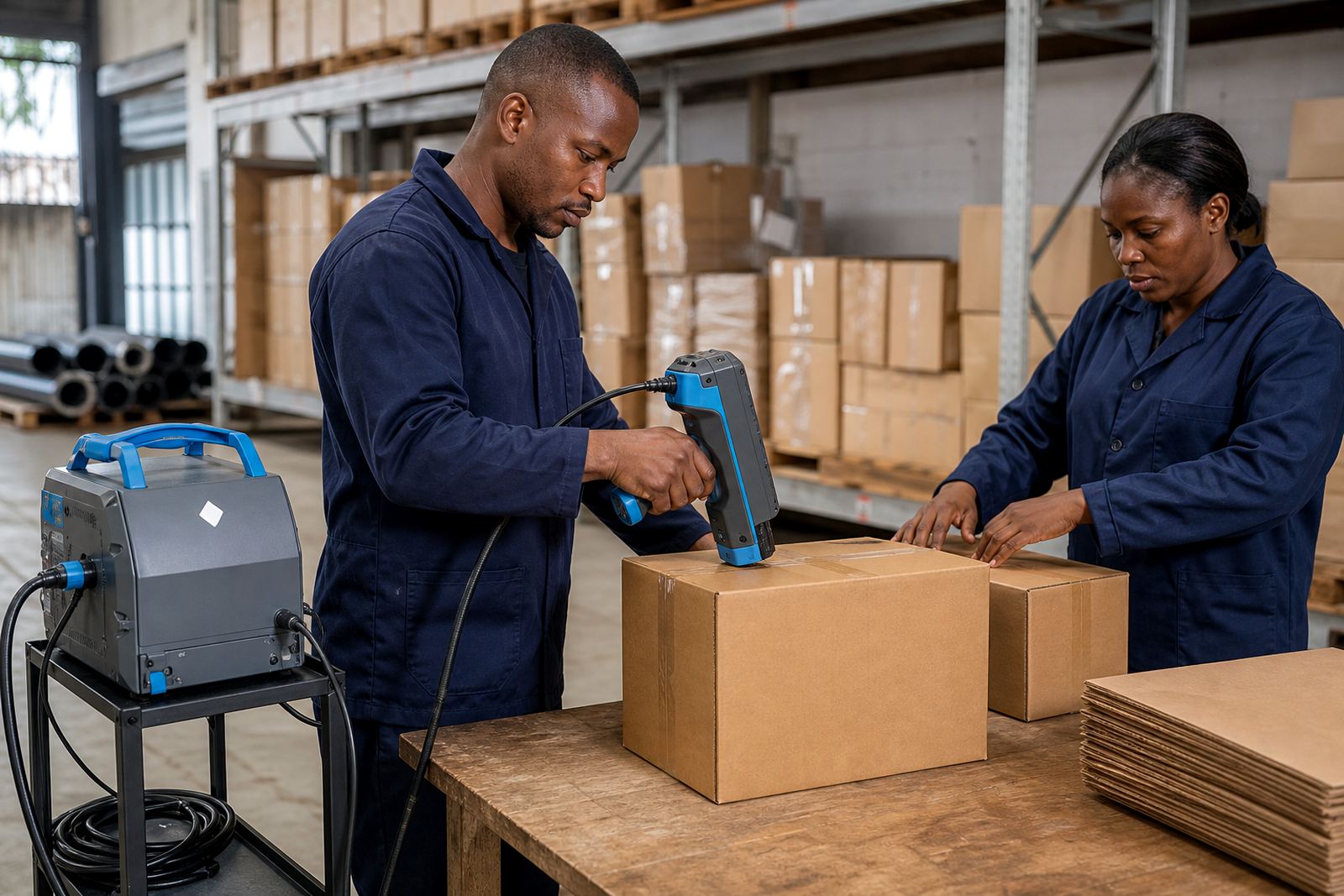
Pietermaritzburg carton recode brief
A local packing team in Pietermaritzburg needed a practical way to replace date information on finished cartons without pulling product out of the flow for long. The cartons carried mixed carton board finishes, and some had light print marks already on the face, so the recode needed to sit clear of old markings and stay readable through handling.
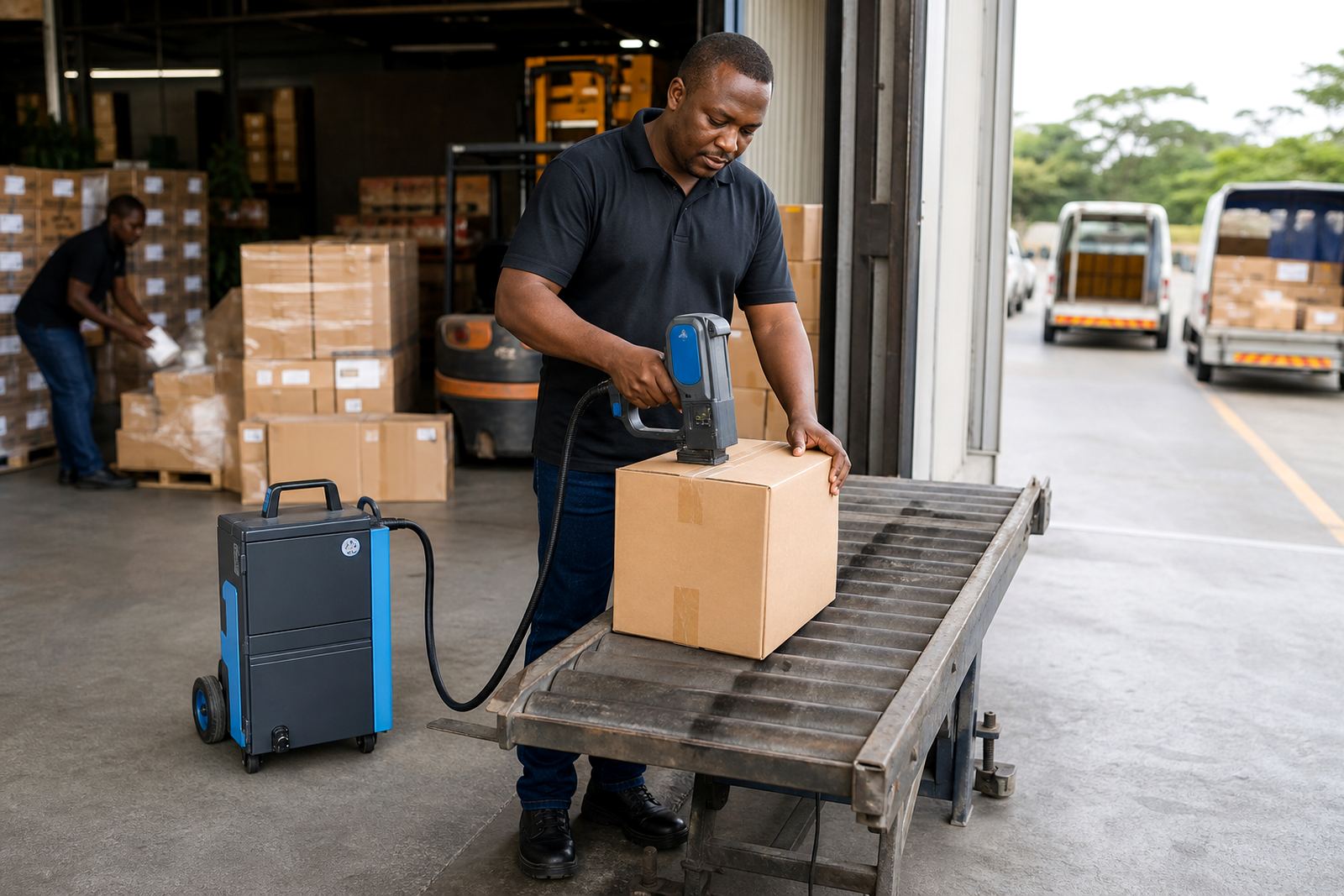
The job called for handheld inkjet coders rather than fixed line equipment. That gave the operator room to work around stacked cartons, irregular print positions and boxes that were already sealed. The brief also included batch changes, so the message had to be easy to swap when the production sheet changed during the week.
- Replace date lines on cartons already packed and sealed
- Add batch codes where the packing line changed over
- Keep print neat on brown and white carton board
- Allow barcode and logo trials where space allowed
Print setup used on the cartons
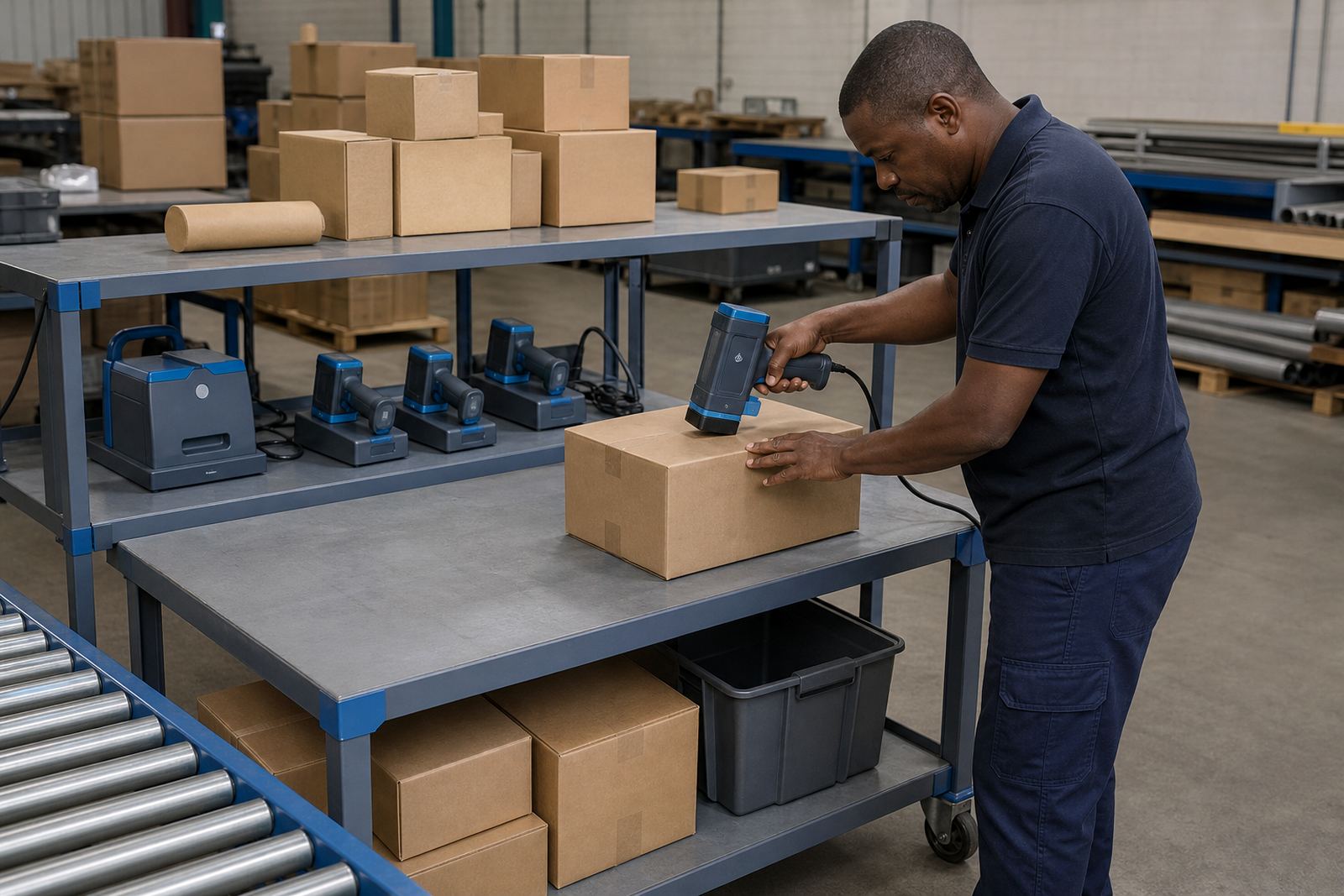
We supplied handheld printers set up for compact carton marking, with print heights suited to short date lines and longer batch text. The coding format used a clean single line where possible, and a second line where the carton face gave enough height for date and batch detail together.
Ink choice mattered because the cartons were handled in storage and loading. A quick-dry option was used on the smoother surfaces, while a solvent-based ink was kept ready for areas that needed stronger adhesion on treated board. Water-based ink was also discussed for cleaner carton surfaces, although not every board type takes it well in a busy packing room.
- Print height suited to date and batch coding
- Quick-dry ink for faster handling on cartons
- Solvent ink for tougher board finishes
- Test prints before the main run started
Site work and operator handover
Our field setup technician handled the first run on site, then trained the operator on message loading, print alignment and nozzle care. The operator needed a steady hand more than fancy settings, because the carton faces varied in size and the recode had to stay in the same band across different pack formats.
We also checked barcode placement for cartons that carried tracking marks. Where the code area was narrow, the barcode was reduced to a size that still scanned cleanly under normal warehouse lighting. That kind of adjustment matters on recode work, because a code can look neat but still fail if the bar spacing is crowded.
- Operator training on first use and message changes
- Barcode setup checked against the carton area available
- Logo loading tested on plain board before production use
- Troubleshooting support kept on hand during the hire
Hire term and working rhythm
The hire ran on a weekly basis first, then moved into a monthly term once the carton recode pattern settled. That gave the team enough time to work through the stock changes without rushing the message changes or locking into a fixed long term arrangement too early.
For a job like this, the schedule is usually shaped by packing volumes rather than a machine running all day. The printer had to be ready at dispatch points, on the packing floor, and in store areas where cartons were being labelled after sealing. Delivery and collection were arranged around that pattern, with consumables kept available for the full hire period.
- Weekly hire used for the first stage of the job
- Monthly hire followed once the format was settled
- Delivery and collection handled as part of the hire
- Backup unit support was available if needed
What changed after the recode run
The main result was cleaner carton identification without slowing the pack line down. Old date marks no longer had to be crossed out by hand, which reduced messy cartons and cut the chance of confusion in dispatch. The print also held up well on the box faces that had a slightly rough finish, which is common on cartons moving through inland distribution.
The client gained a more controlled marking process for dates, batch numbers and short reference codes. The packing team could shift between carton sizes without waiting for a fixed printer to be reset, and the same handheld unit could also handle small logo marks when a branded carton face needed that extra identifier.
- Cleaner replacement of date information on packed cartons
- Less hand marking and less crossing out of old text
- Better consistency across mixed carton sizes
- Room for future barcode and logo use on the same unit
Choices that suit a similar recode job
A few choices would suit another carton recode project of this kind. Keep the message short, leave enough white space around the print zone, and test the ink on the actual board before the main batch starts. If the cartons are moving through a humid store or a colder loading area, the ink selection and print delay need checking against the surface, not just the label artwork.
For Pietermaritzburg work, the same approach also helps when cartons are coming through from different pack rooms or from suppliers using slightly different board finishes. A handheld unit makes those changes easier to manage, as long as the operator has a clear message file and knows where each print should land on the box.
Key facts
| Project | PMB Carton Recode |
|---|---|
| Town | Pietermaritzburg |
| Service type | Handheld inkjet printer hire for carton recoding |
| Print applications | Dates, batch codes, barcodes and short logos |
| Ink options | Solvent, water-based and quick-dry |
| Hire terms | Hire by the week or month with setup support |