
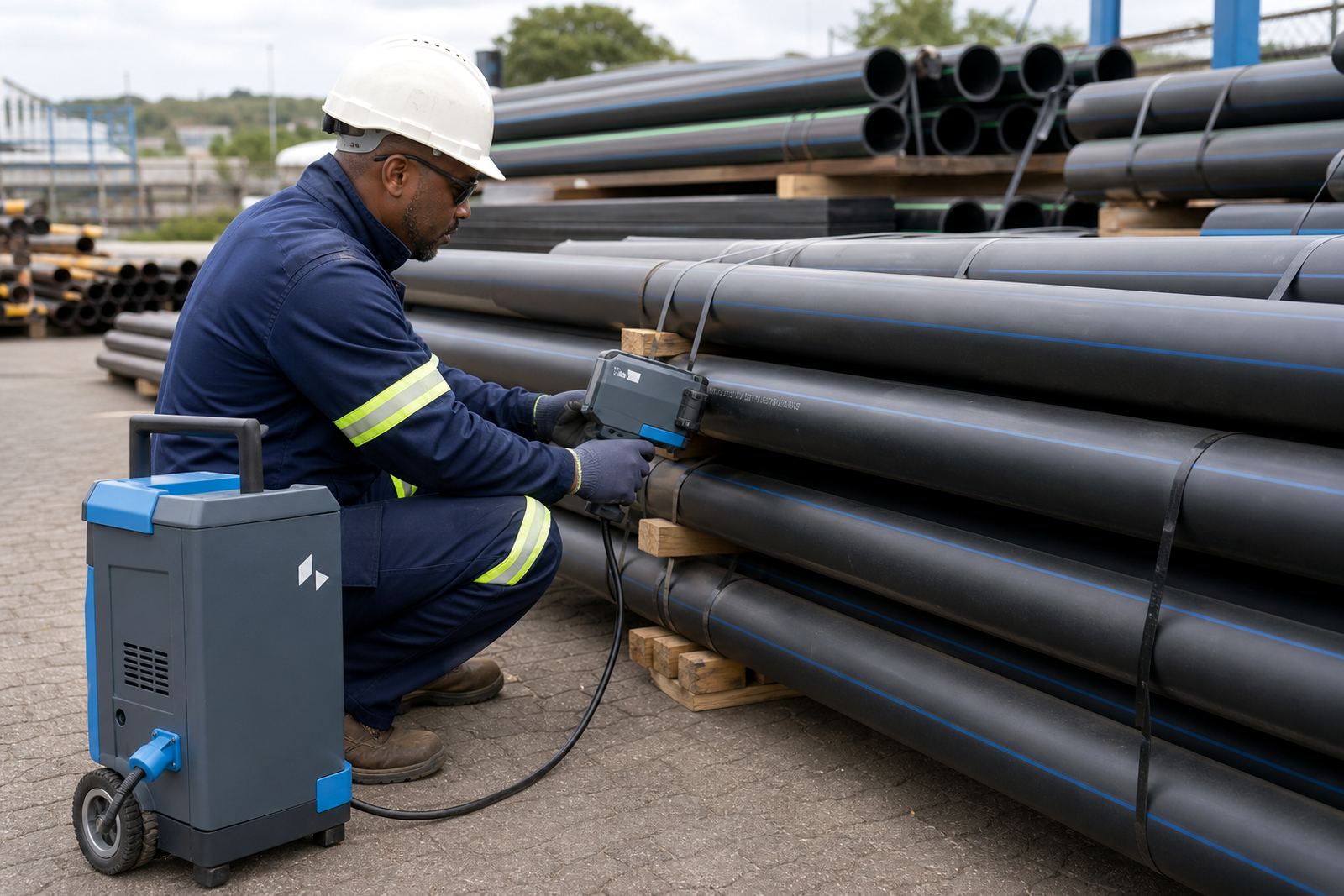
Pipe marking in a yard that moves all day
The job came from a pipe handling yard in Richards Bay where lengths of steel pipe move through unloading, cutting, staging and dispatch. The brief was straightforward on paper, but the marking had to hold up in a working yard where surfaces are not always clean and pipes are often handled with gloves, straps and slings.
The team needed dates, batch numbers and a short identification line on each pipe section. Some pipes were bare metal, while others carried light oil, dust or mill residue. We set the rental around a handheld inkjet coder that can print directly onto curved surfaces, with enough character height for quick reading at a distance without taking up too much space on the pipe.
Richards Bay brings in damp air, salt in the atmosphere and plenty of surface contamination from normal yard work. That means the ink choice matters as much as the printer itself. We matched the job to fast drying ink for clean handling, then kept a second ink option ready for different surfaces and finish conditions.
The brief and the yard limits we worked around
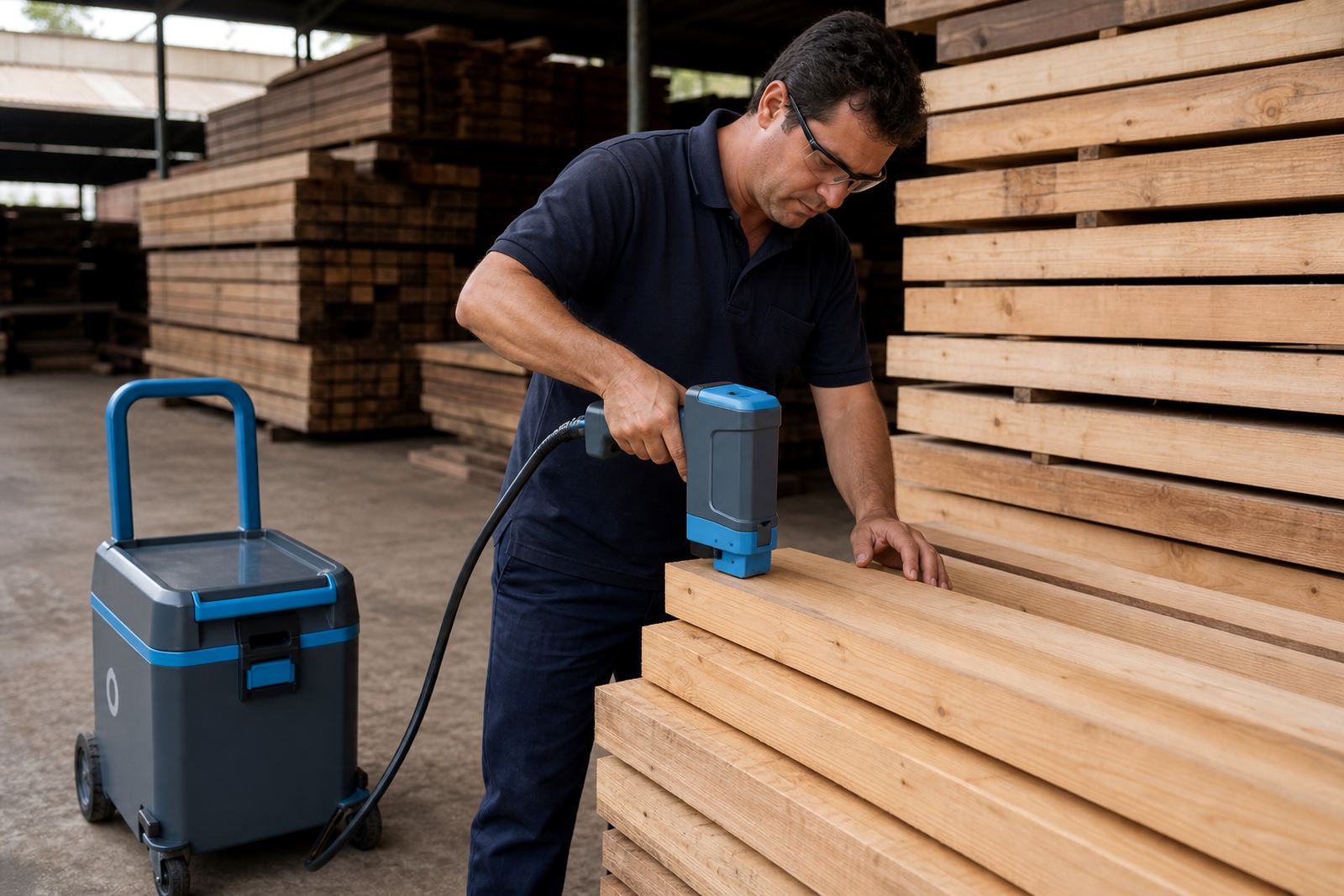
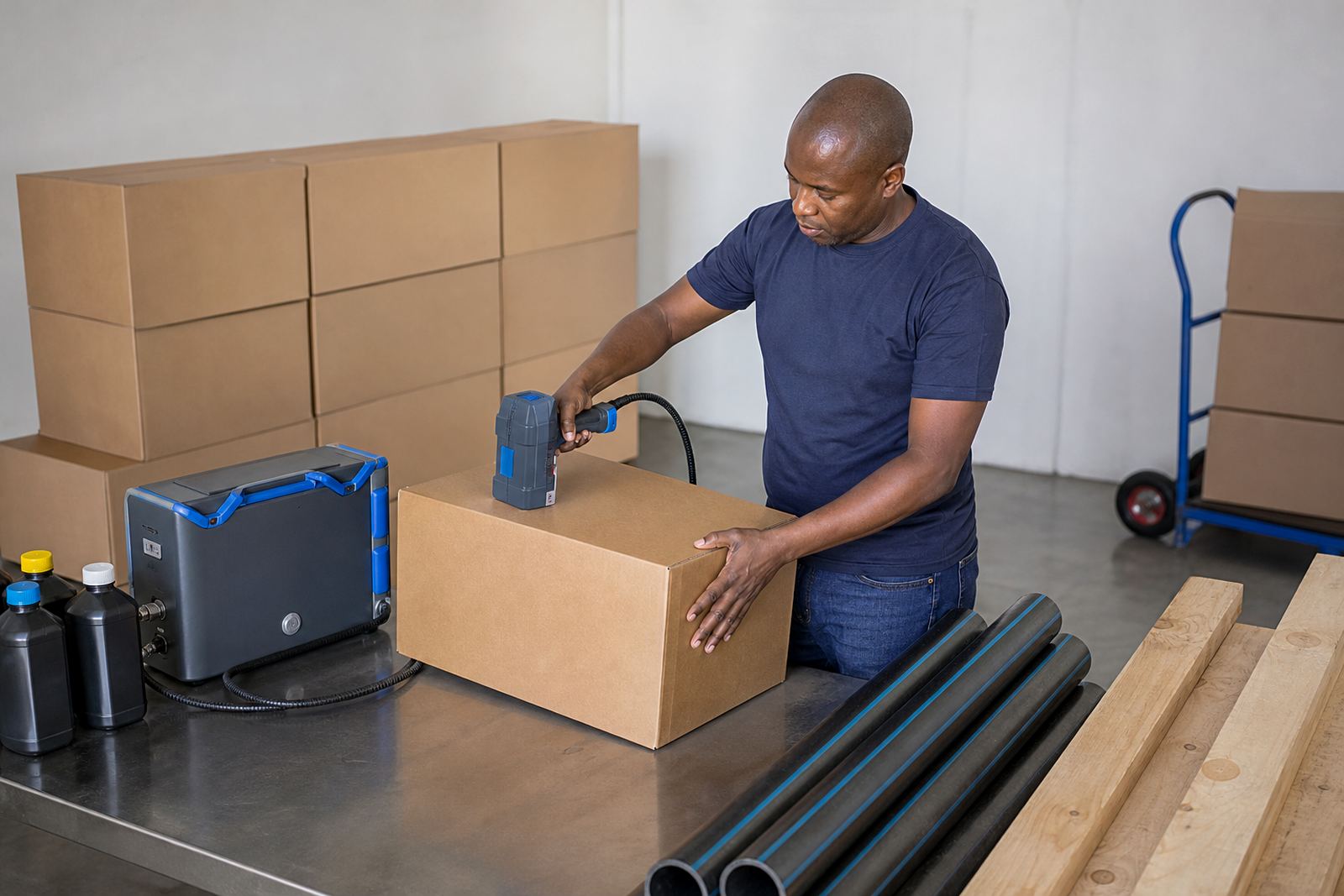
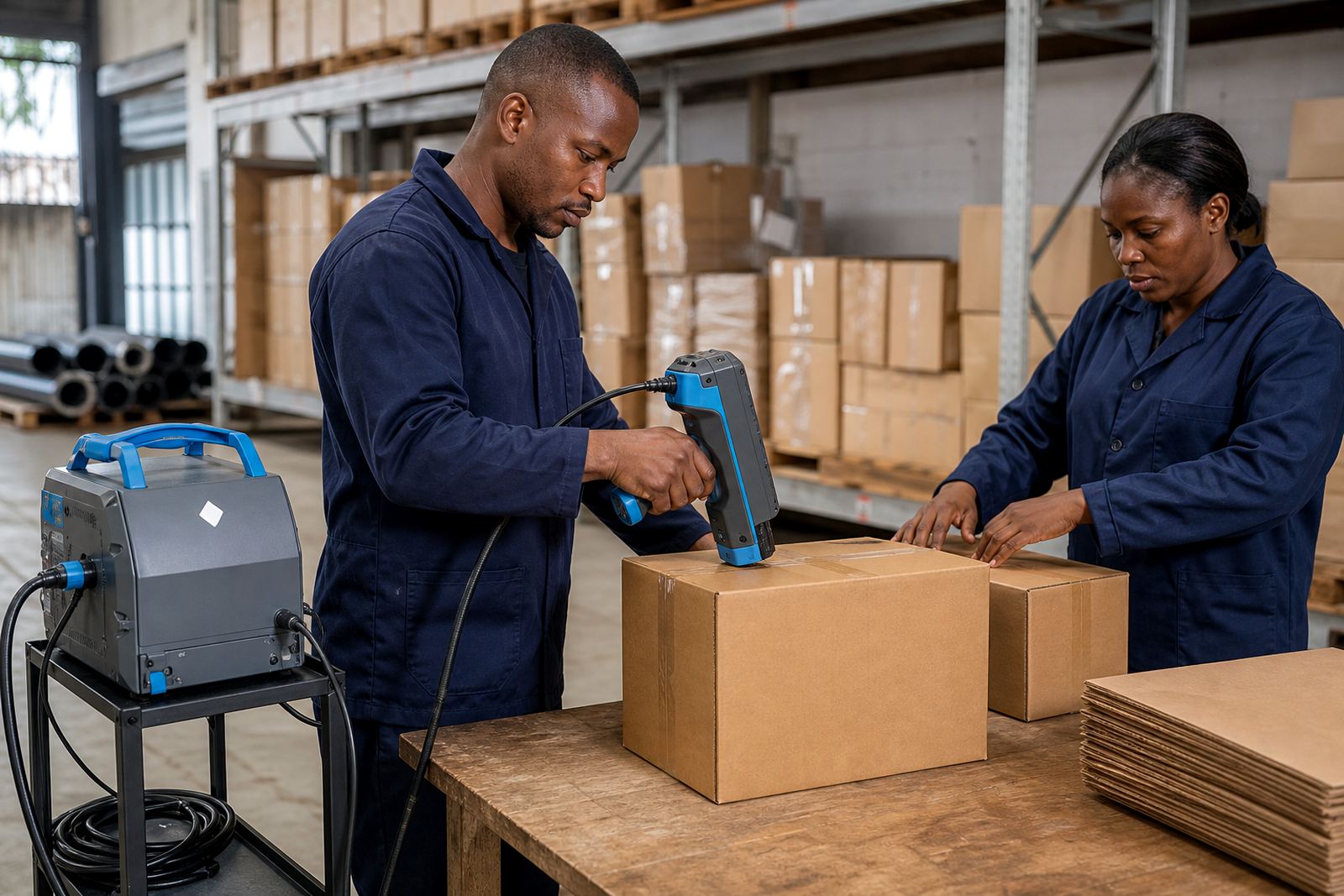
The marking had to be mobile, light enough for one person to carry, and practical on pipe racks and open storage areas. The yard did not want a fixed line or a bench setup, because pipes were being shifted through different parts of the site during the week. A handheld unit gave them the freedom to code pipes where they sat, which cut down on rehandling.
We also had to keep the print layout tidy. Pipe identification only works if the message is placed in the same position and the letters are crisp. We loaded the message format, tested the barcode content and set the print height to suit the pipe diameter and the space available between clamps, welds and lifting marks.
- Pipe diameter and curvature checked before final print settings
- Print height set for clear reading on steel sections
- Batch code, date and short product ID loaded into the unit
- Barcode format tested on the actual pipe surface
- Ink chosen for quick dry handling on metal
The yard staff also wanted enough flexibility to use the printer on different pipe sizes without resetting everything each time. That meant a practical operator setup, with the message stored clearly and the trigger action kept simple.
What went out on hire for the Richards Bay job
For this work we supplied a handheld inkjet coder with setup support, a suitable cartridge set and test prints on the same type of pipe surface the yard was using. We also included operator guidance so the team could keep the print line straight and avoid smudging on freshly coded sections.
The hire package covered weekly and monthly rental terms, which suits a yard that may need the unit for one shipment cycle or for a longer production run. The client took the longer term, because the pipes were being marked in stages as stock moved through the yard.
- Handheld inkjet coder for pipe marking
- Fast dry ink for handling and stacking
- Secondary ink option for less absorbent surfaces
- Message loading for dates, batch numbers and short text
- Barcode setup and test printing
- On-site setup help and operator training
- Backup unit support available if the main coder is being serviced
We kept the kit limited to what the yard could use properly. No extra clutter, no loose accessories that sit in a store room. The emphasis was on clean output, a stable print and a unit the team could work with during a normal shift.
How the setup held up on steel and coated pipe
Pipe surfaces are not all the same. Some are smooth and clean, others have a slight sheen, and some carry dust or a thin film from storage. We handled that by testing the print position first, then checking how the ink sat on the surface before confirming the final layout. That step matters on steel because a good code can still fail if the print lands on a rough seam or a greasy spot.
The unit was configured to print legible characters without forcing the operator to hold the printer at an awkward angle. On curved pipe, that makes a real difference. A short, steady pass gives more consistent text than trying to rush the mark across the surface.
We also kept the barcode size practical. Too small and it becomes difficult to scan after yard handling. Too large and it starts crowding the pipe. The finished setup found a middle ground that worked for dispatch and internal tracking.
Weekly movement, monthly hire and support on the ground
The rental was set up on a monthly basis, with the option to shift into a weekly term if the marking window changed. That suits industrial yards where work can move with deliveries, plant maintenance or shipment timing. The client did not need a permanent installation, only a mobile coding solution that could move with the work.
Because the yard was active, we paid attention to consumables supply and practical support. If the team was using more pipes than planned, the ink had to remain available in the right type. If the message changed, the loaded text had to be updated without a complicated reset.
- Weekly or monthly hire terms available
- Delivery and collection arranged for site use
- Remote setup help for message changes and layout checks
- Consumables supply for ongoing coding
- Troubleshooting support for print quality or alignment issues
The process stayed tidy from start to finish. The yard kept moving, the printer stayed mobile, and the coding work followed the pipe flow rather than interrupting it.
What we would use for a similar pipe yard job
For another coastal pipe yard, we would use the same broad approach: verify the surface first, choose the ink against the actual pipe finish and keep the print message short enough to read at a glance. That combination cuts down on wasted prints and avoids codes that look fine on the first pipe but slip on the next one.
We would also keep training practical. One person should know how to reload the message, check print alignment and spot when a nozzle or cartridge needs attention. In a yard environment, that knowledge matters because a small marking fault can slow the whole dispatch line.
For Richards Bay type conditions, the best result usually comes from fast drying ink, a clear print height and a unit that can be moved without fuss. When the marking task changes from one pipe size to the next, the printer should adapt without making the operator fight the equipment.
This job showed that handheld coding works well for pipe identification when the print is matched to the surface and the team has enough support to use it correctly.
Key facts
| Project | Richards Bay pipe identification hire |
|---|---|
| Surface type | Steel pipe and coated pipe sections |
| Print use | Dates, batch numbers, short text, barcode and logo marks |
| Print height | Set to suit pipe diameter and readable yard identification |
| Ink type | Fast dry ink with solvent and water-based options available |
| Hire term | Weekly or monthly rental |
| Base area | Pinetown, Durban |
| Service area | Richards Bay and other South African industrial sites |