Barcode coding for moving stock and packed goods
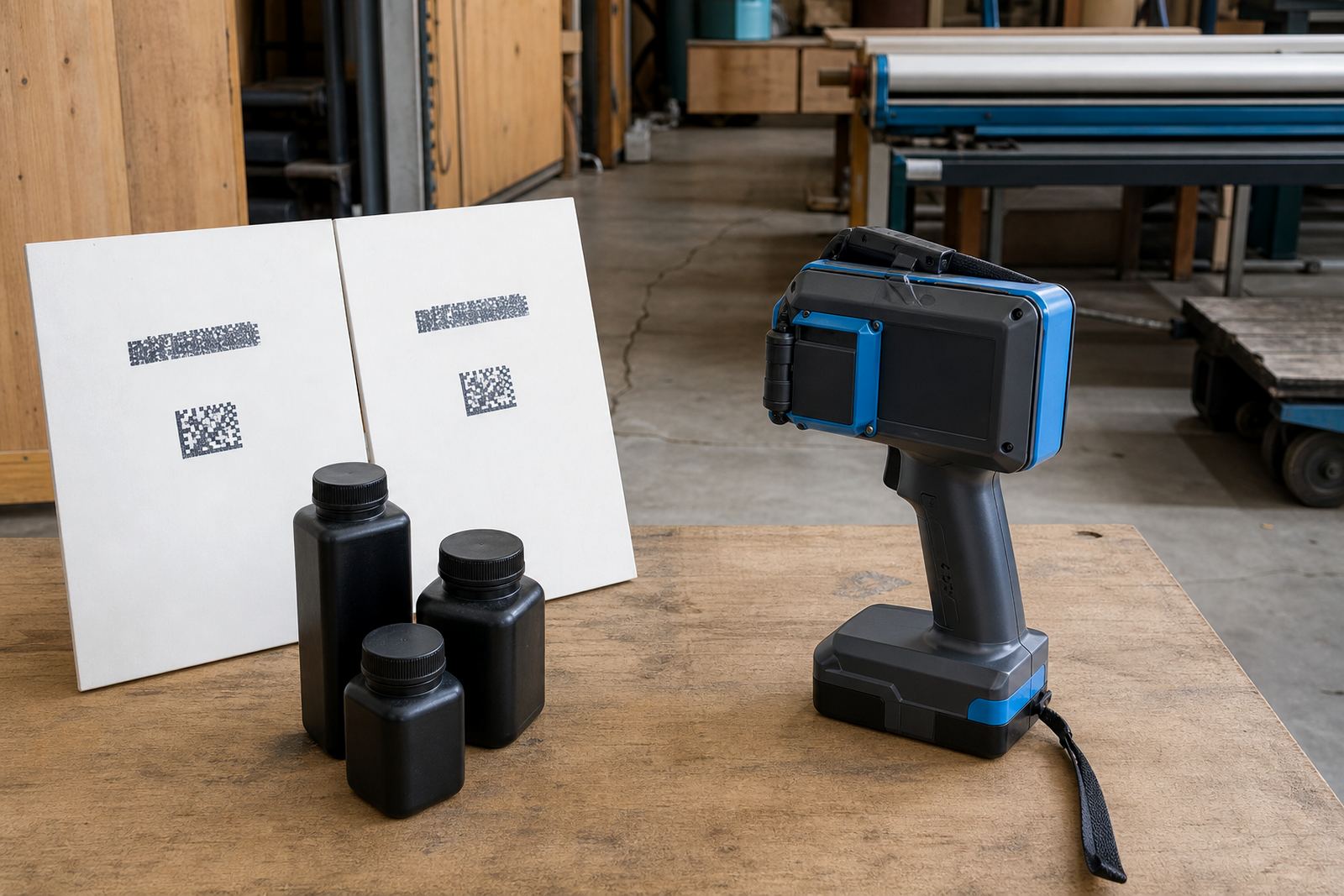
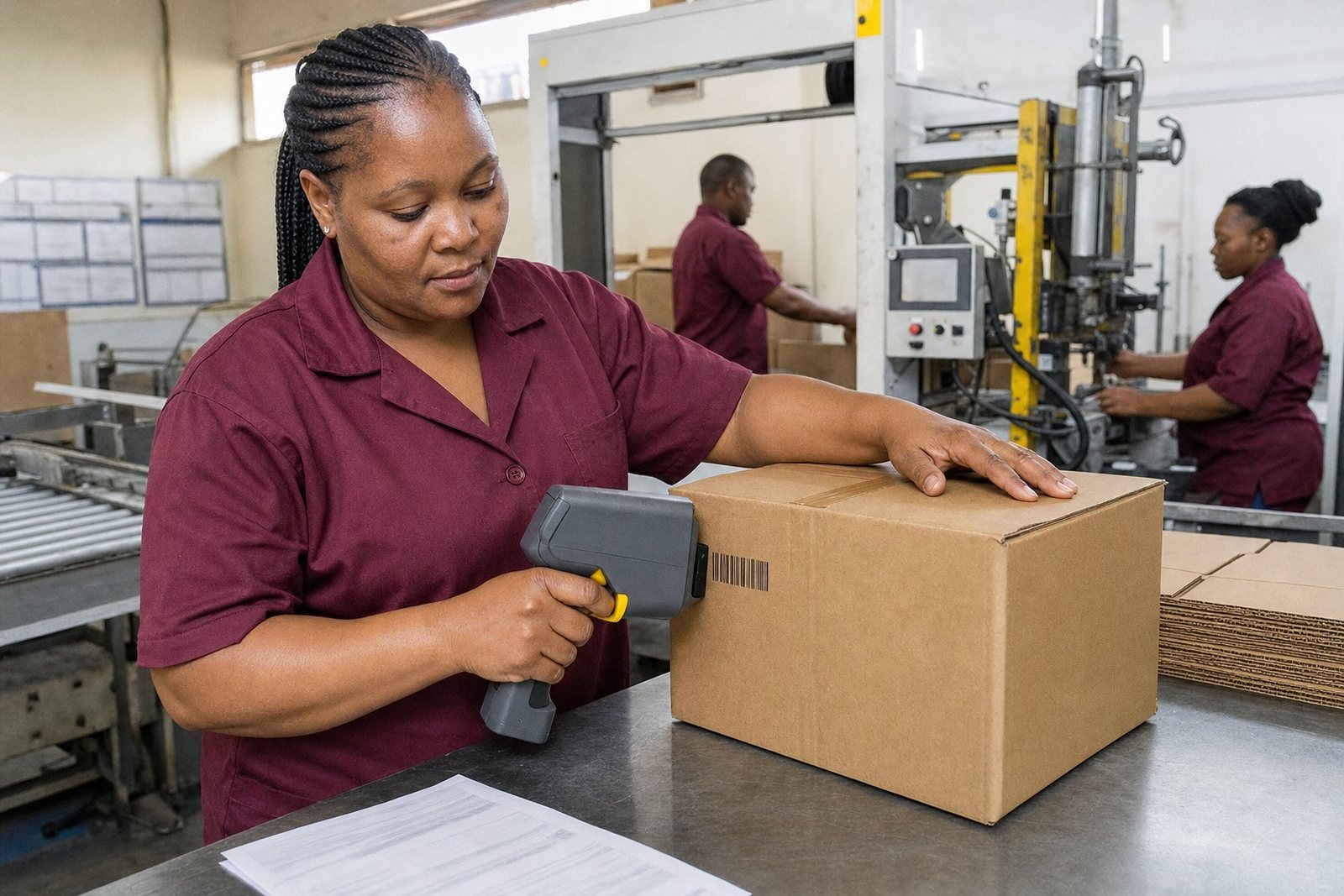
This unit is used where a label printer is not the right fit and the code needs to be printed straight onto the pack or carton. It gives a tidy barcode image for batch control, dispatch tracking and stock movement, with enough clarity for scanners on dry, smooth or lightly textured surfaces.
It suits carton sides, pre-printed shipping packs, shrink-wrapped items, inner liners and selected sachet or bag surfaces. On porous pack faces, the print hold depends on the ink choice and the surface finish, so the job needs the right match between code size, substrate and handling after print.
- One-dimensional barcode printing for stock coding and dispatch marks
- Suitable for carton board, labels, selected plastic packs and some coated surfaces
- Used with date codes, batch numbers and short product identifiers
- Helpful where the barcode must be added on the line or at pack-out
Print sizes, code height and layout options
The unit can be set for compact coding or a slightly larger barcode panel, depending on how much room the pack gives you. For smaller packs, the print area is usually kept tight so the code stays readable without crowding the carton edge or folding line.
Typical print height options range from about 12 mm to 50 mm, with the actual barcode size depending on the module width and the length of the data string. Where more than one line is needed, the barcode can sit with a short human-readable line under it, which helps on picking and verification.
- Print height options from 12 mm up to 50 mm
- Best used with short to medium barcode strings
- Can carry a barcode plus a readable code line beneath
- Layout can be adjusted for carton face, side seam or pack top
Ink choice for clean scanner reads
Ink selection matters because barcode edges need to stay dark and well defined. Solvent based ink is often used on non-porous or harder surfaces, water based ink works well on absorbent board and timber, while quick-dry options help where packs move soon after marking.
For coastal work in Durban or Richards Bay, the surface finish and humidity can influence how fast the mark settles and how it holds during handling. On timber, the grain can pull the ink slightly, so a test print is worth doing before the full hire period starts.
- Solvent based ink for non-porous or slicker surfaces
- Water based ink for absorbent cartons, timber and fibre board
- Quick-dry ink where printed packs are handled soon after coding
- Ink colour choice depends on the surface and scanner contrast needed
Where the barcode print unit fits into the job
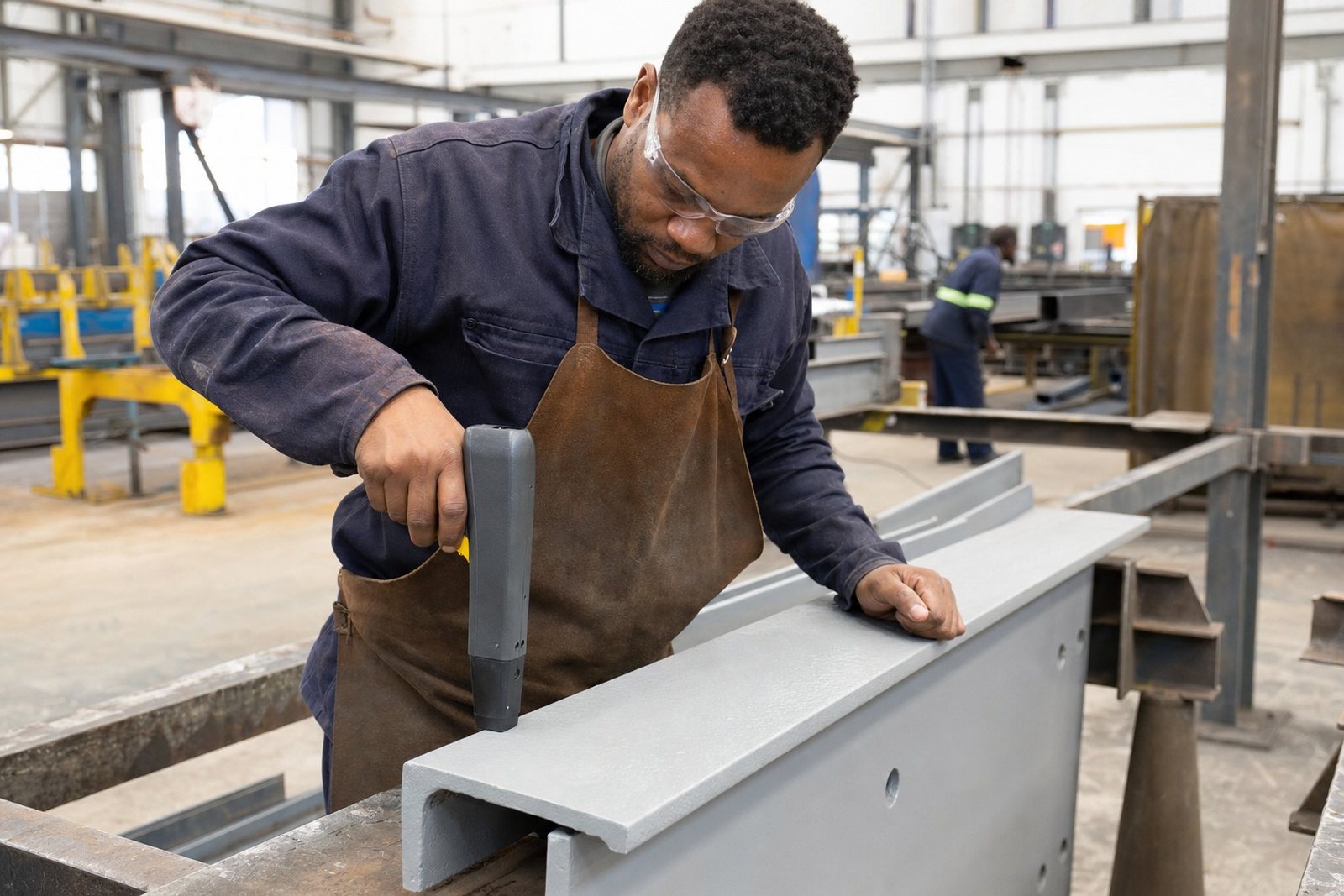
This hire works well in pack houses, timber yards, pipe and steel marking areas, dispatch tables and small production runs where coding must happen in the same space as packing. It is also useful for contract packers who need a portable unit that can move between benches, pallet stations or staging points.
For cartons and labels, it gives a direct code without needing a separate label run for every job. On pipes or timber, the print position needs to be planned around curvature, surface moisture and handling marks, so the operator can place the barcode where it stays legible.
- Carton coding for dispatch and warehouse control
- Label marking where short one-dimensional codes are needed
- Selected packs, bags and wrapped goods with suitable ink
- Pipe, timber and light industrial marking where the surface allows
Set-up, fitting and operator handling
The unit is supplied with setup guidance and can be loaded for the code format you need, including barcode setup, message loading and test printing before the run starts. If the site needs help, on-site setup or remote setup help can be arranged, and the operator training covers placement, print distance and the way the head should travel across the surface.
Power is part of the normal setup for the unit and the work area needs a steady place for charging, testing or any connected kit used with the coder. The unit is usually handled from a cart or bench position, so the surface should be stable and the print face kept clean before each run.
- Barcode setup for the code type and data length required
- Test printing to confirm legibility before full use
- On-site setup or remote setup help where needed
- Operator training for print angle, speed and placement
Hire terms, care and order details
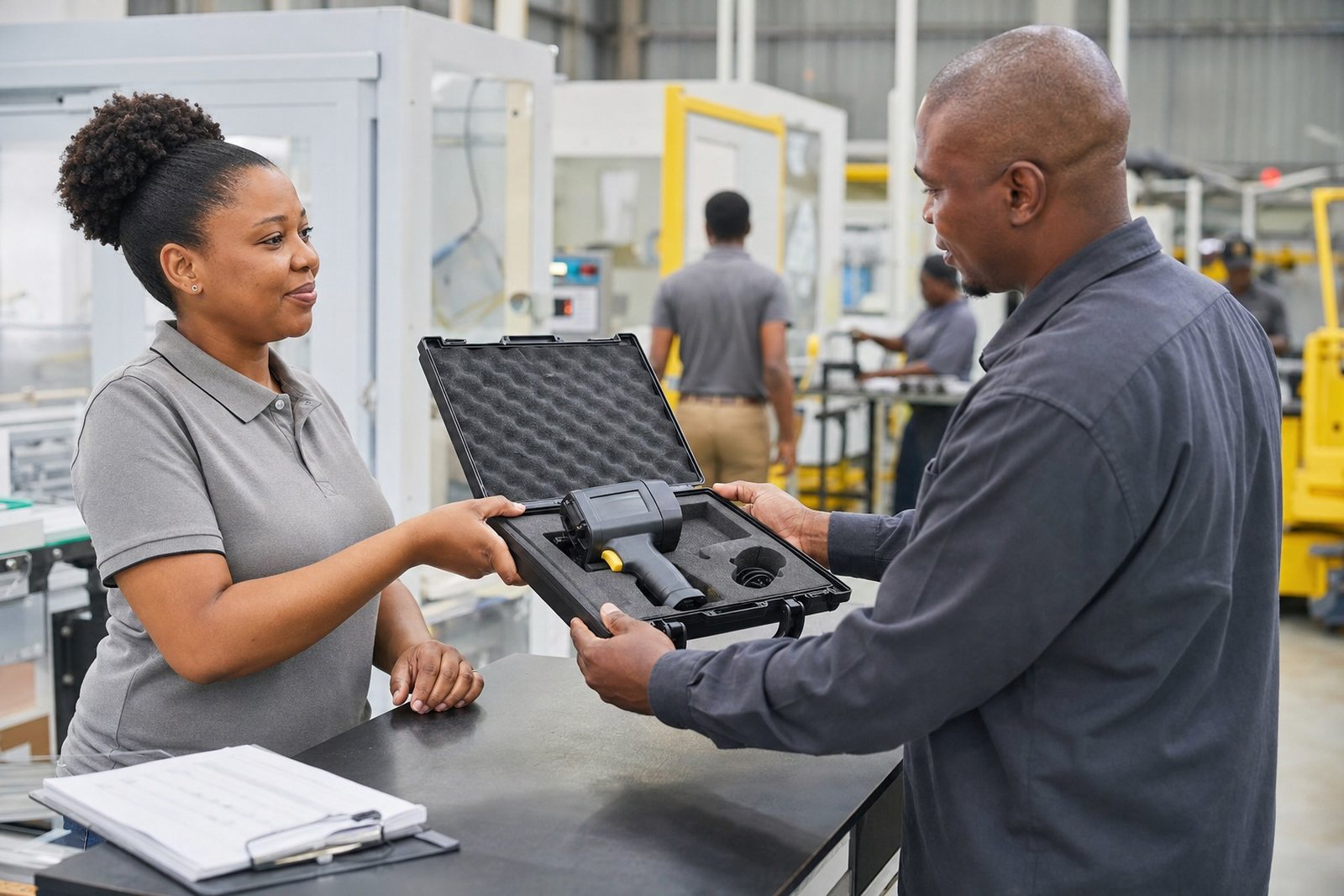
Week-to-week or monthly terms are available from Pinetown, Durban for sites in Durban, Pietermaritzburg, Johannesburg, Cape Town and Richards Bay. Delivery and collection can be arranged, with consumables supply, troubleshooting support and backup unit support available where the job calls for extra cover.
Before the hire is set in motion, it helps to confirm the surface type, barcode content, required print height, expected pack speed and whether the job needs solvent, water based or quick-dry ink. A clean surface gives better contrast, and the print head should be wiped carefully so fibre, dust or dried ink do not affect the next code.
- Short weekly or longer monthly terms
- Delivery and collection across South Africa
- Consumables supply and backup unit support available
- Surface type, print height and ink choice should be confirmed
Key facts
| Product type | Handheld inkjet barcode print unit |
|---|---|
| Print use | One-dimensional barcodes, batch codes and short text |
| Print height | Approx. 12 mm to 50 mm |
| Ink options | Solvent based, water based and quick-dry |
| Suitable surfaces | Cartons, labels, selected packs, timber and some pipe or steel surfaces |
| Hire terms | Weekly or monthly, with delivery and collection available |