
Handheld coder for carton faces and dispatch marks
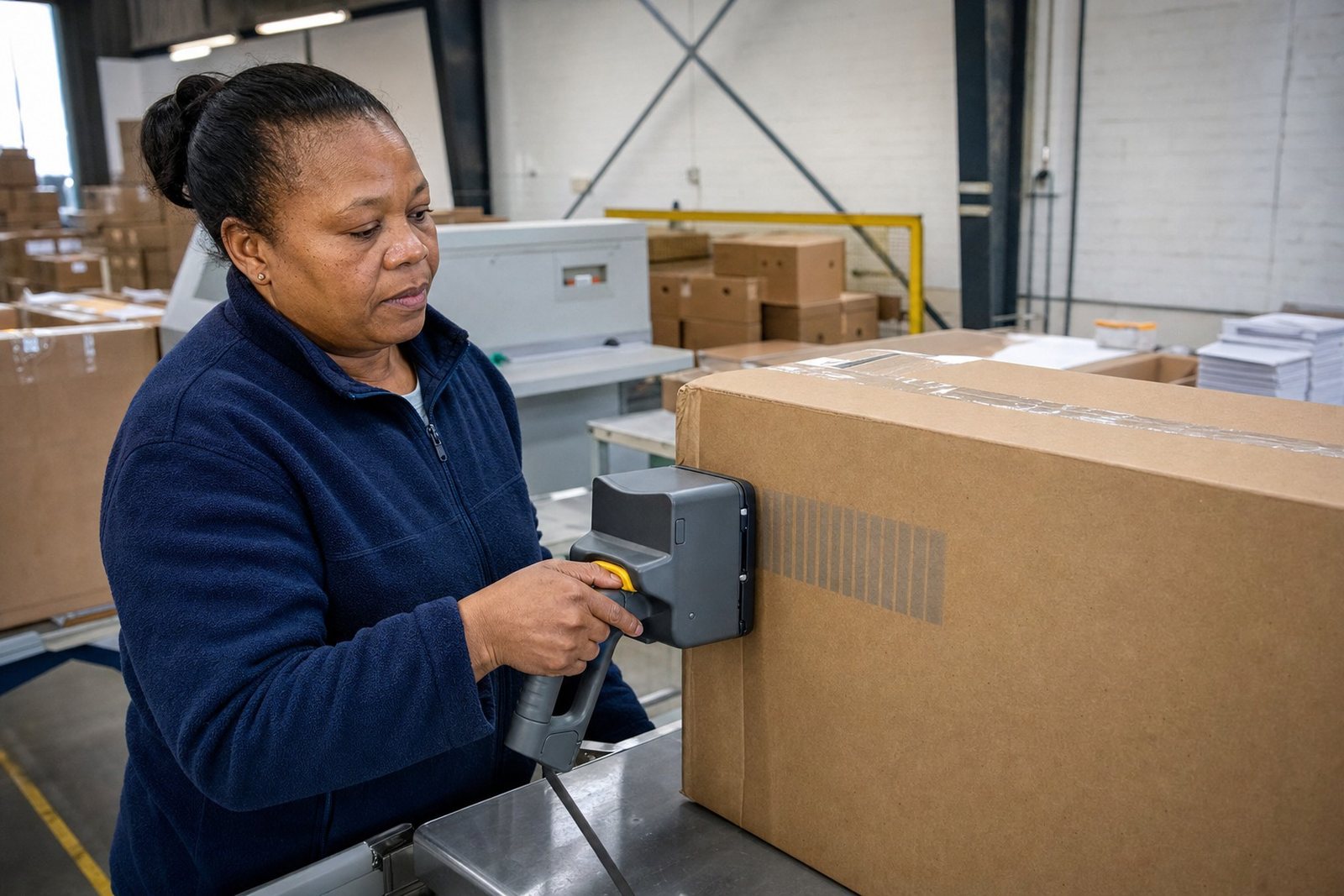
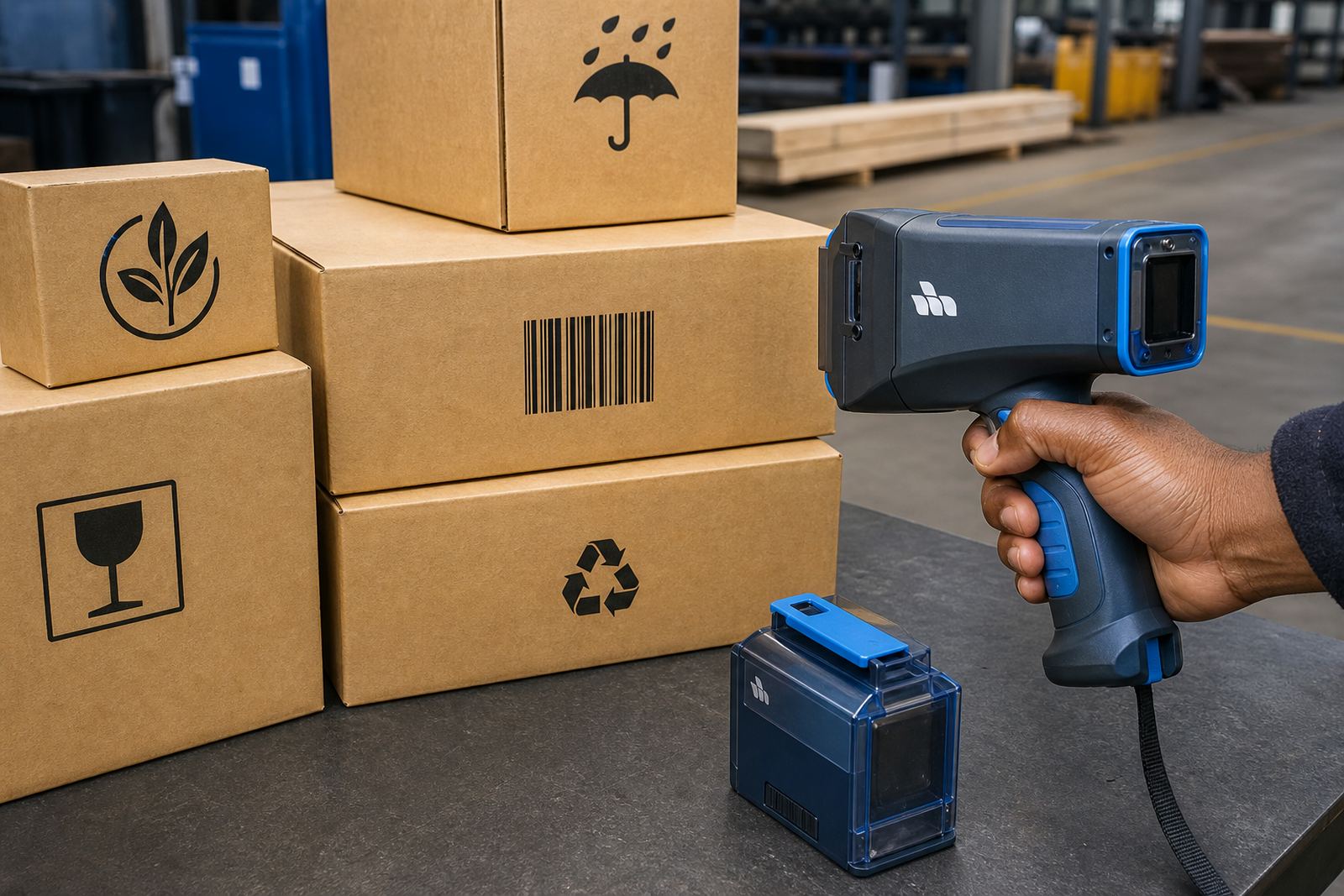
This hire unit is a handheld inkjet printer made for direct marking on carton surfaces, inner and outer packaging, and mixed warehouse stock. The operator guides the print head by hand while the message is placed onto the carton in one pass or two, depending on the size of the logo or barcode. It suits line-side packing, sealing tables and dispatch areas where cartons need clean traceability marks without changing the pack format.
Most carton marking jobs need legible text first, then a tidy barcode, then a logo if the brand mark must stay visible on the box. The printer can carry variable details such as expiry dates, batch codes, item names, shift codes and transport labels. On plain corrugated board the print is usually crisp and direct, while coated cartons may need a different ink choice and a slower hand movement for a cleaner edge.
- Prints dates, batch codes, lot numbers and short messages
- Suitable for cartons, sleeves, trays and wraparound pack faces
- Works with variable data, barcodes and simple logos
- Useful for short runs, rework and mixed product lines
Print sizes, height options and message layout
Carton work often needs a print size that stays readable from a handling distance, but does not overpower the pack. Handheld coders are generally available with adjustable print height options, from small text for internal codes to larger characters for shipping marks and logo blocks. The right size depends on the carton face, the text length and how much flat space is available between seams, tape lines and folds.
For carton marking we usually look at the message width as well as the height. A long batch code might fit neatly at a smaller height, while a short dispatch line can be set larger for better visibility. Barcodes need enough quiet space around them so scanners can read them reliably after packing, stacking and transport. If the carton has a rough flute texture or a light sheen, the print layout may need a bit of adjustment so the marks stay clear.
- Common print heights suit small text through to larger handling marks
- Layout can be set for one line, stacked lines or mixed text and barcode
- Barcode size needs enough quiet space and a flat print area
- Logo placement depends on carton width and seam positions
Where carton marking printers work best
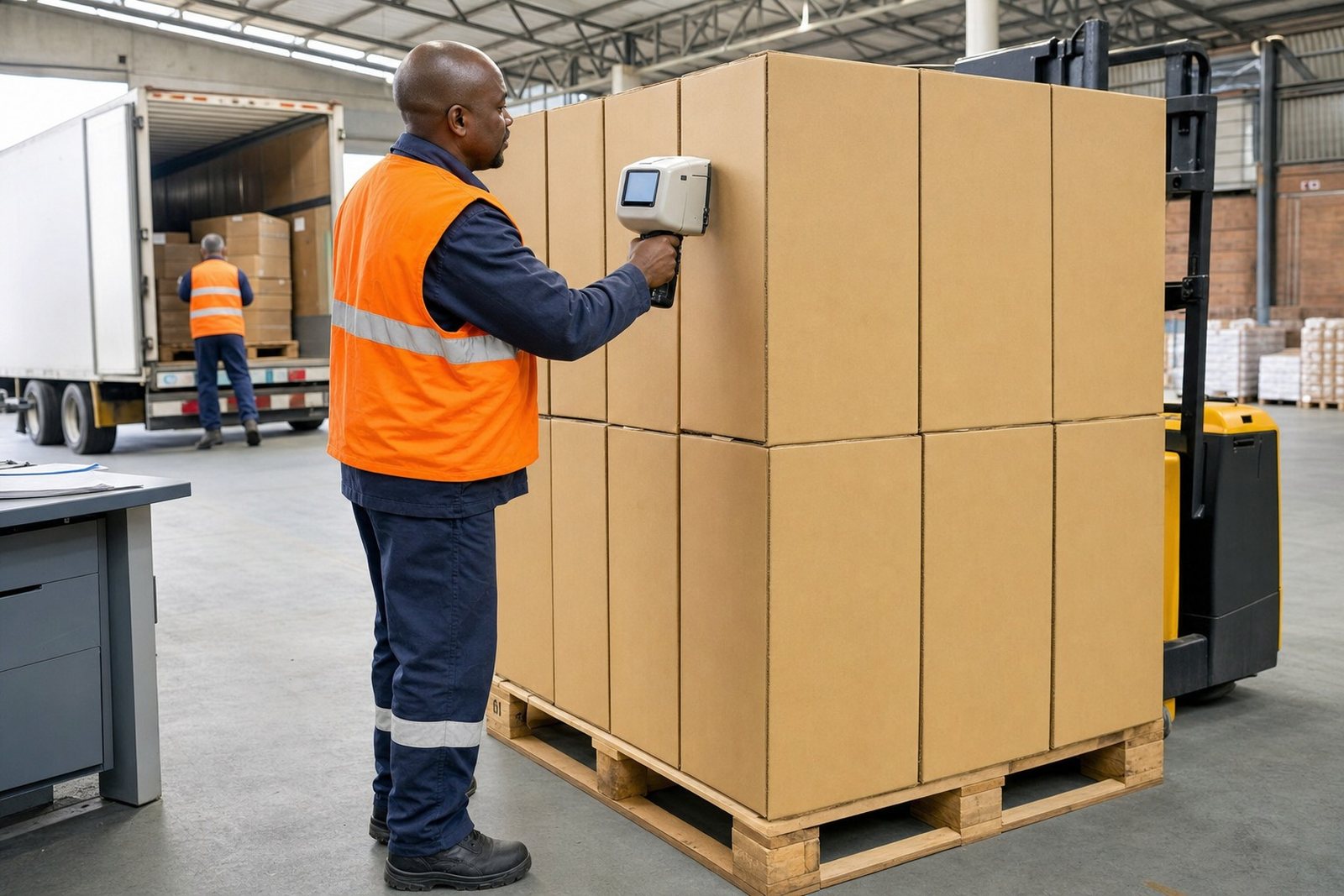
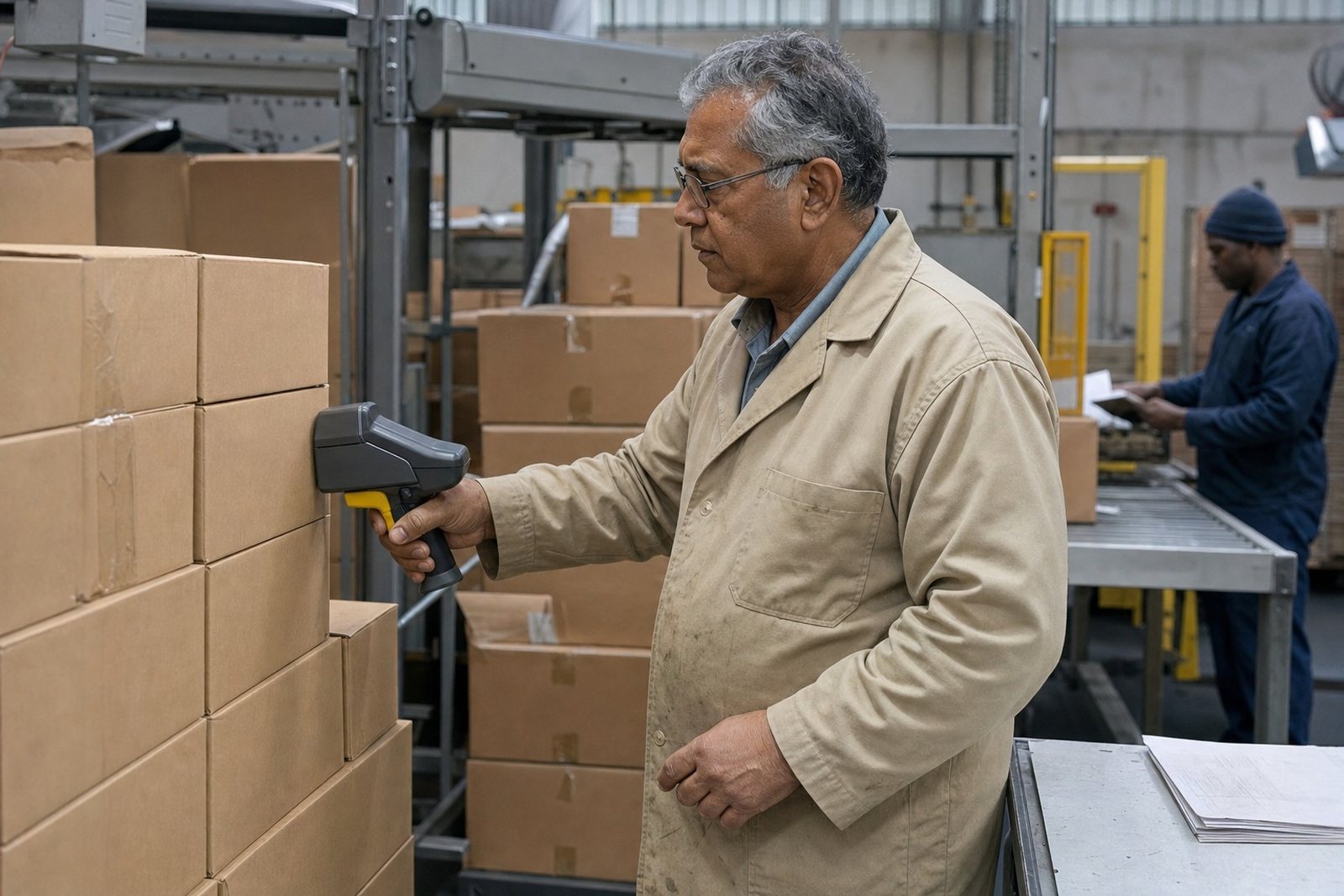
This hire printer suits packing rooms, export tables, finished goods stores and dispatch points where cartons move in batches. It is a practical fit for food packing, general manufacturing, agricultural packing, timber merchants and product rework areas. In Durban and Pinetown, coastal humidity can affect how quickly ink settles on some packaging faces, so ink type and carton surface need to be matched carefully.
It also works where cartons are not all the same size, or where printed labels alone are not enough. Many teams use handheld coding when the pack line changes often and the message must follow the product rather than the machine. For sites sending cartons to Johannesburg, Cape Town or Richards Bay, the print must stay readable through handling, stacking and courier movement, so ink adhesion matters just as much as the text itself.
- Packing rooms with mixed carton sizes
- Dispatch bays where dates and batch codes are added at the last stage
- Export packing where carton identity must stay clear through handling
- Rework stations where goods need fresh marking before release
Inks, surface matching and adhesion choices
Ink choice matters on carton jobs because cardboard, coated board, shrink wrap, timber and painted steel all behave differently. We help with solvent-based, water-based and quick-dry inks, depending on the surface and the handling speed after printing. For cartons, quick-dry ink is often useful where boxes are stacked soon after marking, while water-based options can suit more absorbent board when the finish is open and dry.
On cartons with a slight sheen, solvent-based ink may give better hold and sharper contrast. When cartons are rough, dusty or fibrous, we set the print head and ink flow to suit the surface texture. In humid conditions around coastal warehouses, drying behaviour can shift a bit during the day so a test print is worth doing before a long run starts. Clean boards print better than dusty boards, and that small difference shows up quickly in barcode scans.
Setup, operator handling and small site requirements
These printers are portable, but they still need sensible setup so the print lands in the same place each time. A flat carton face helps, as does steady operator handling and a clean surface. The printer battery, ink cartridge or fluid system, software settings and message memory all need a proper check before production starts.
Our hire process can include on-site setup, remote setup help, operator training and test printing. If the job includes barcodes or logos, the file or message must be loaded carefully so the proportion and contrast work on the actual carton. For sites with many packers, one person should be assigned to check message changes and keep the print head clean between runs, especially where dust from board cutting or timber packing is common.
- Flat carton face and steady hand movement improve print quality
- Battery charge, ink level and message memory need checking before use
- Barcode and logo settings should be tested on the real carton stock
- Training helps operators keep marks consistent across shifts
Hiring terms and practical details to confirm
We rent carton marking printers on weekly or monthly terms, with delivery and collection available across South Africa. When placing a hire request, the important details are the carton type, the message content, the number of print lines, the surface finish and whether the job needs dates, batch codes, barcodes or a logo. It also helps to note the town, the site layout and whether the printer will move between packing tables or stay at one point.
For a smooth hire, the message length, print height, ink type and carton material should all line up before the unit leaves the base. If the cartons are printed in a humid coastal area or in a busy dispatch room with frequent batch changes, it is worth planning for spare consumables and a backup unit. That keeps the marking job moving if a cartridge runs low or a message needs adjusting during the shift.
- Flexible weekly or monthly terms available
- Delivery and collection arranged for South African sites
- Consumables supply can be added to the hire
- Backup unit support is available for critical packing work
Key facts
| Printer type | Handheld inkjet coder for carton marking |
|---|---|
| Print content | Dates, batch codes, barcodes, logos and short variable text |
| Print height | Adjustable, depending on message and surface |
| Ink options | Solvent, water-based and quick-dry inks |
| Surface use | Cartons, bags, timber, steel and other pack faces |
| Hire terms | Weekly or monthly hire with delivery and collection |