Handheld logo printing for repeat marks
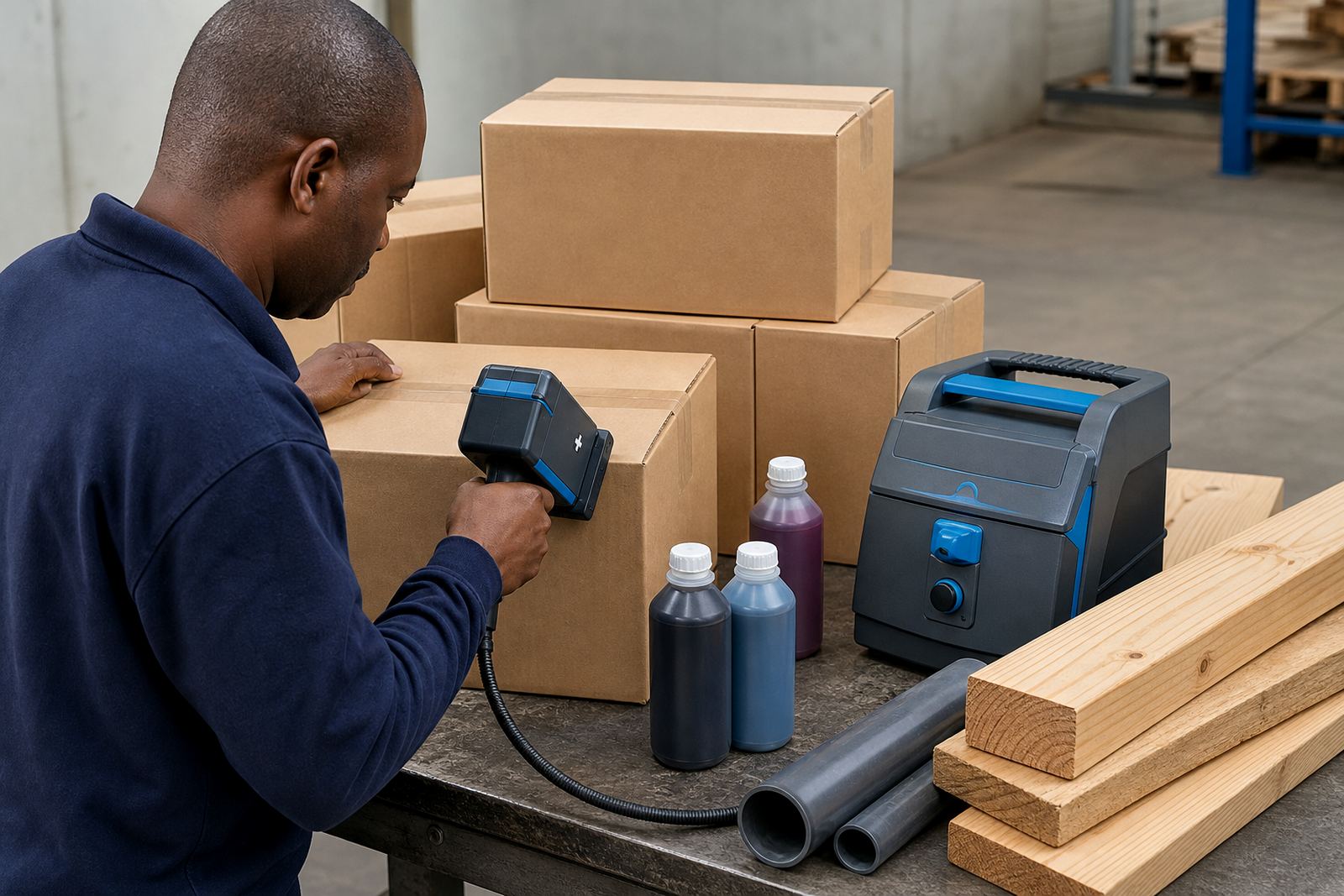
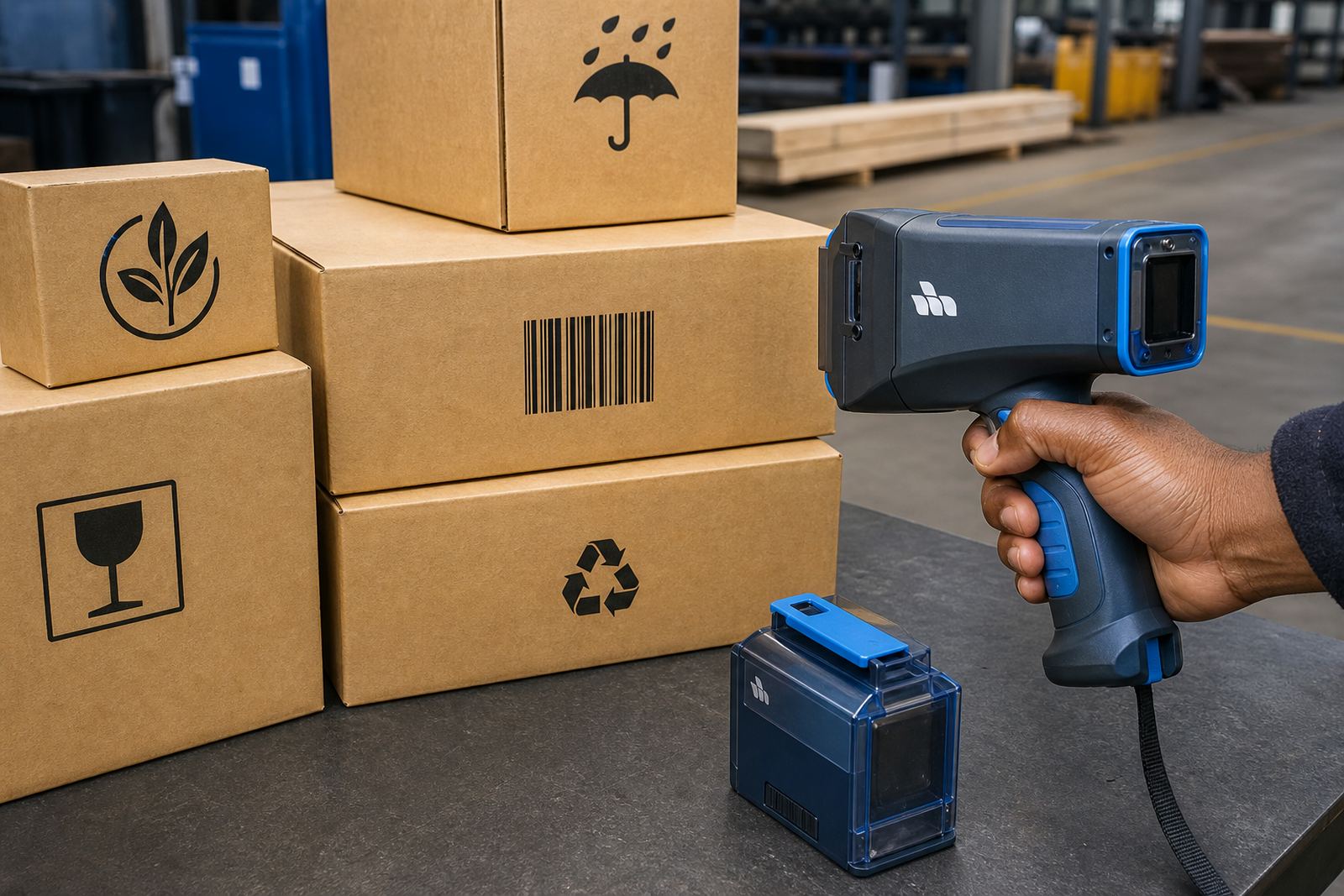
Picture a hand-guided inkjet coder set up to place simple graphics, symbols and repeat production marks onto moving or packed goods. The unit is held against the surface and guided by hand, so it suits short runs, variable batches and jobs where the mark must sit in the same position on every item.
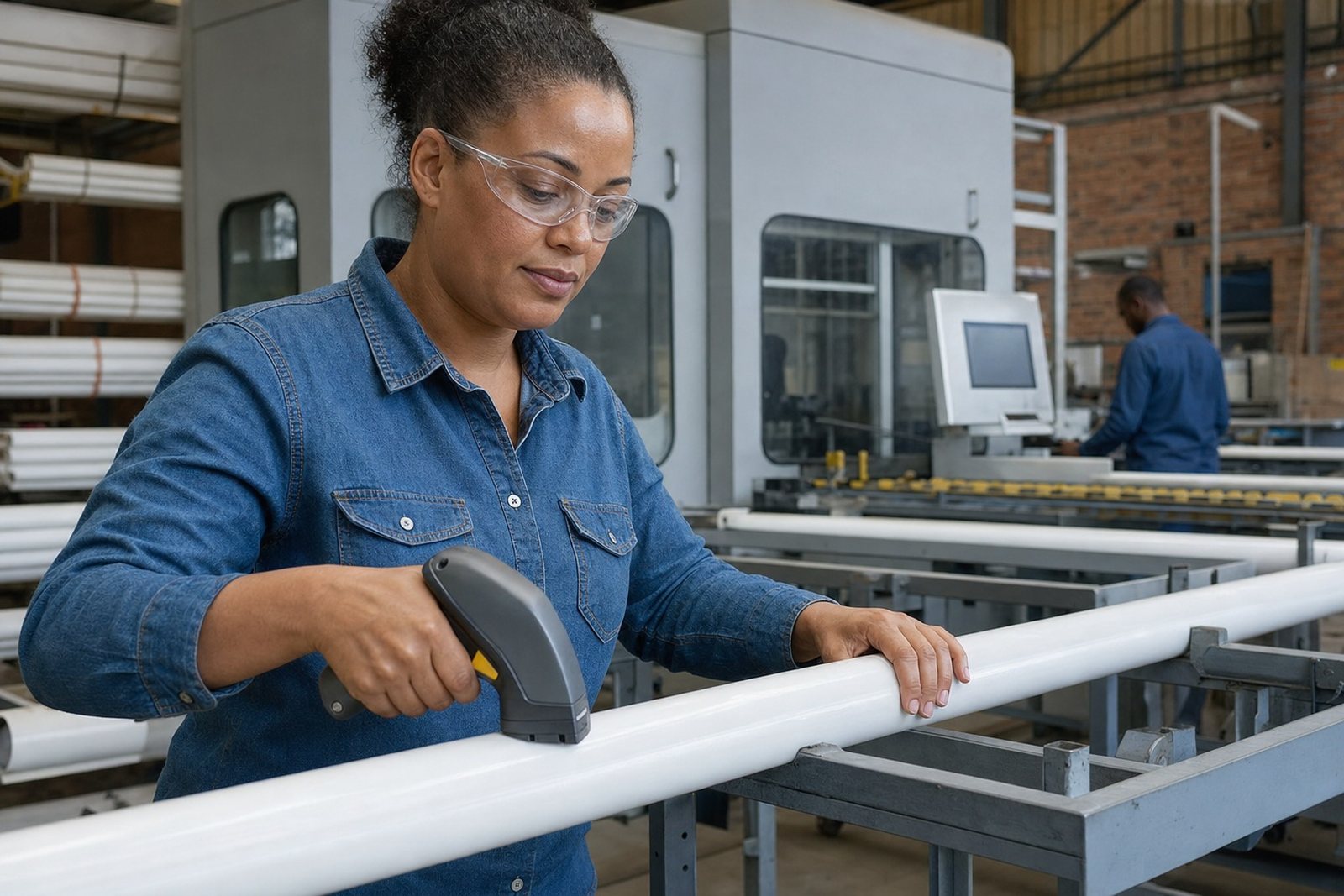
For carton lines, timber bundles, pipe lengths and steel sections, the print head can be loaded with a logo file, an icon or a repeat graphic alongside text. The mark may be used for brand identification, product grouping, pallet notes or a plain production symbol, and the same unit can usually carry date code, batch number and barcode work in the same pass.
We set these units up for South African hire work from Pinetown, Durban, with weekly and monthly terms for sites in Durban, Pietermaritzburg, Johannesburg, Cape Town and Richards Bay. The equipment is used where a neat visible mark is needed without moving goods through a fixed line printer.
Sizes, print height and layout choices
Logo print units are selected around print height, message length and the surface you need to mark. Small graphics are often kept tight and plain, while wider marks can include a symbol, a line of text, then a batch code beneath it. The print head size and the file quality both matter, especially when the logo has fine edges or small lettering.
Common working options include compact handheld coders with one print head, units that accept multi-line layouts and models that print clear marks on porous and non-porous materials. We can supply ink and loading support for:
- print heights around 12 mm to 56 mm, depending on the unit and message build
- single-line logos, two-line graphics, or logo plus date and batch code
- text, simple icons, barcodes and repeat production marks
- high-contrast marking for cartons and timber, or cleaner lines on coated surfaces
On uneven timber or curved pipe, the logo usually needs a simpler shape than a flat carton label would allow. Fine serif text and thin borders can break up on rough stock, so a bold, well-spaced mark normally gives better results.
Where this unit fits on a real production floor
This hire unit suits packing benches, dispatch areas, tube yards, timber handling, bagging lines and rework stations where the logo has to be placed after filling or cutting. It is also useful for short-term production changes, contract packing and temporary overflow work, because the operator can move from one stack to another without changing the whole line layout.
In Durban and Richards Bay, coastal humidity can affect surface drying and ink choice, especially on coated cartons or damp timber. On steel, pipes and other smoother materials, the mark is usually judged by adhesion, dry time and whether the logo stays readable after handling. Solvent based, water based and quick-dry inks each behave differently, so the match needs to suit the substrate and the handling pattern.
- cartons and corrugated cases with branding marks
- timber packs, battens and treated wood lengths
- pipes, tubes and extrusions with repeat identity marks
- bags and sacks where the print area is limited
- steel stock where a clear logo needs to sit beside a code
Setup, fitting and operator handling
These units do not need permanent fitting, but they do need correct setup before production starts. That includes loading the message, checking print direction, selecting the right ink and running a test on the actual surface. When the logo must sit in a fixed position, the operator also needs to know the hand speed and contact distance that keep the mark square.
Our team handles on-site setup, remote setup help, message loading, logo setup and test printing. Where the work is awkward or the surface shifts, a field setup visit helps with the first passes and keeps the mark aligned. Training is also useful when several operators will share the same unit across a week or month of hire.
A clean logo file matters more than most people expect. Strong outlines, limited detail and enough open space between elements usually print better than a crowded image with tiny type. For a production mark that must survive daily handling, the layout should be practical before it is decorative.
Inks and surface care between hires
Ink choice changes how the mark dries, how it sits on the surface and how much rubbing it can take before the job leaves the line. Solvent inks are often used where faster drying and stronger adhesion are needed, while water based inks can suit more absorbent surfaces. Quick-dry options are useful when cartons or packs are moving quickly into stacking or wrapping.
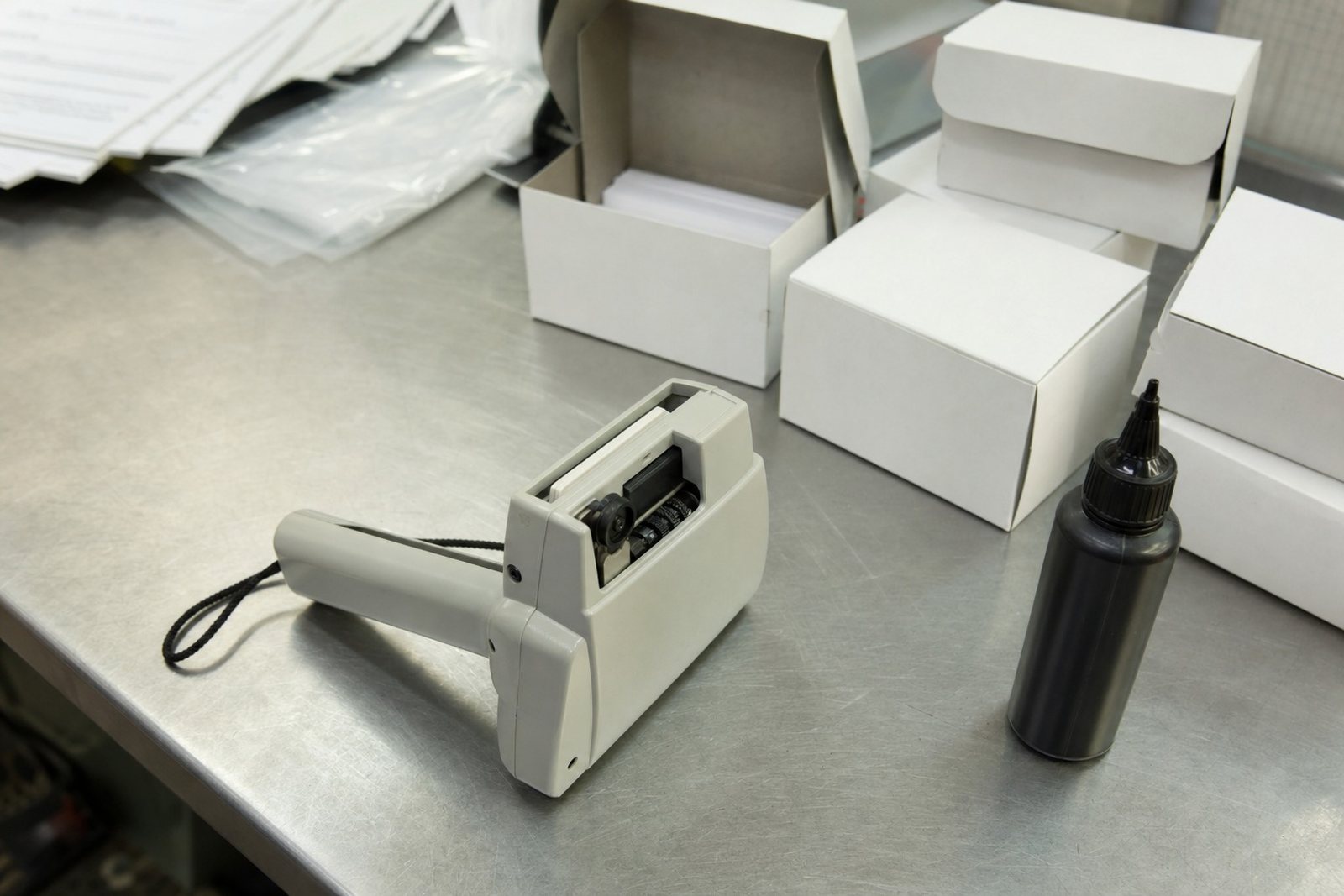
Between hires, the print head should be capped or stored as instructed, and the outside of the unit kept free from dried ink and dust. On humid coastal jobs, a clogged head or contaminated roller can spoil the edge of a logo very quickly, so the unit needs routine cleaning, proper storage and fresh consumables when a job starts up again. If the machine is left unused for long periods, the ink path should be checked before the next run.
- keep nozzles and head covers clean after use
- store inks upright and tightly closed
- use the right ink type for the material
- run a test print before production starts
- check the logo edge if the surface is dusty or damp
What to confirm before a logo unit is loaded
Before hire starts, the job needs a few working details so the message can be loaded correctly. The logo artwork, print height, target surface and expected production pattern all affect the setup. If the mark must sit beside a date code or barcode, the spacing between items should also be made clear before the first test print.
- the surface type, such as carton, pipe, timber, bag or steel
- the logo size in millimetres, or the available print area
- whether the unit must print only a logo or logo plus text
- the ink preference, if the material calls for a specific drying behaviour
- the hire term needed, weekly or monthly
- delivery, collection, or on-site support needs for the site
For hire across South Africa, we also check whether the job needs consumables supply, backup unit support or field setup. That helps keep the unit matched to the site, whether the work is in Pinetown, New Germany, Westmead, Johannesburg, Cape Town, Pietermaritzburg or Richards Bay.
Weekly or monthly terms for production runs
Logo print unit hire is available on weekly and monthly terms for short runs, seasonal demand and longer production work. A shorter term suits changeover periods, while a monthly term works better when the same graphic is repeated across several batches or dispatch cycles. The same unit can also be used for logo setup, barcode setup and message loading when one job needs more than a plain mark.
Delivery and collection can be arranged for hired equipment, and consumables can be supplied with the unit where needed. For sites that rotate operators, training support helps keep the logo placement steady from shift to shift. In practical terms, the right hire is the one that matches the surface, the pace of packing and the level of finish the goods must carry out of the yard.
That is the point of a logo print unit in trade work: a clear mark, loaded properly, and ready to hold up on real stock without turning the line into a bigger job than it needs to be.
Key facts
| Product type | Handheld inkjet logo coder for hire |
|---|---|
| Print height | Common working range 12 mm to 56 mm |
| Mark formats | Logo, icon, text, barcode and batch information |
| Suitable surfaces | Cartons, bags, pipes, timber and steel |
| Hire terms | Weekly and monthly |
| Service area | Pinetown, Durban and nationwide delivery |
| Ink options | Solvent, water based and quick-dry |
| Support | Setup, training, test printing and troubleshooting |