
Bold marking for outer packs and rough timber
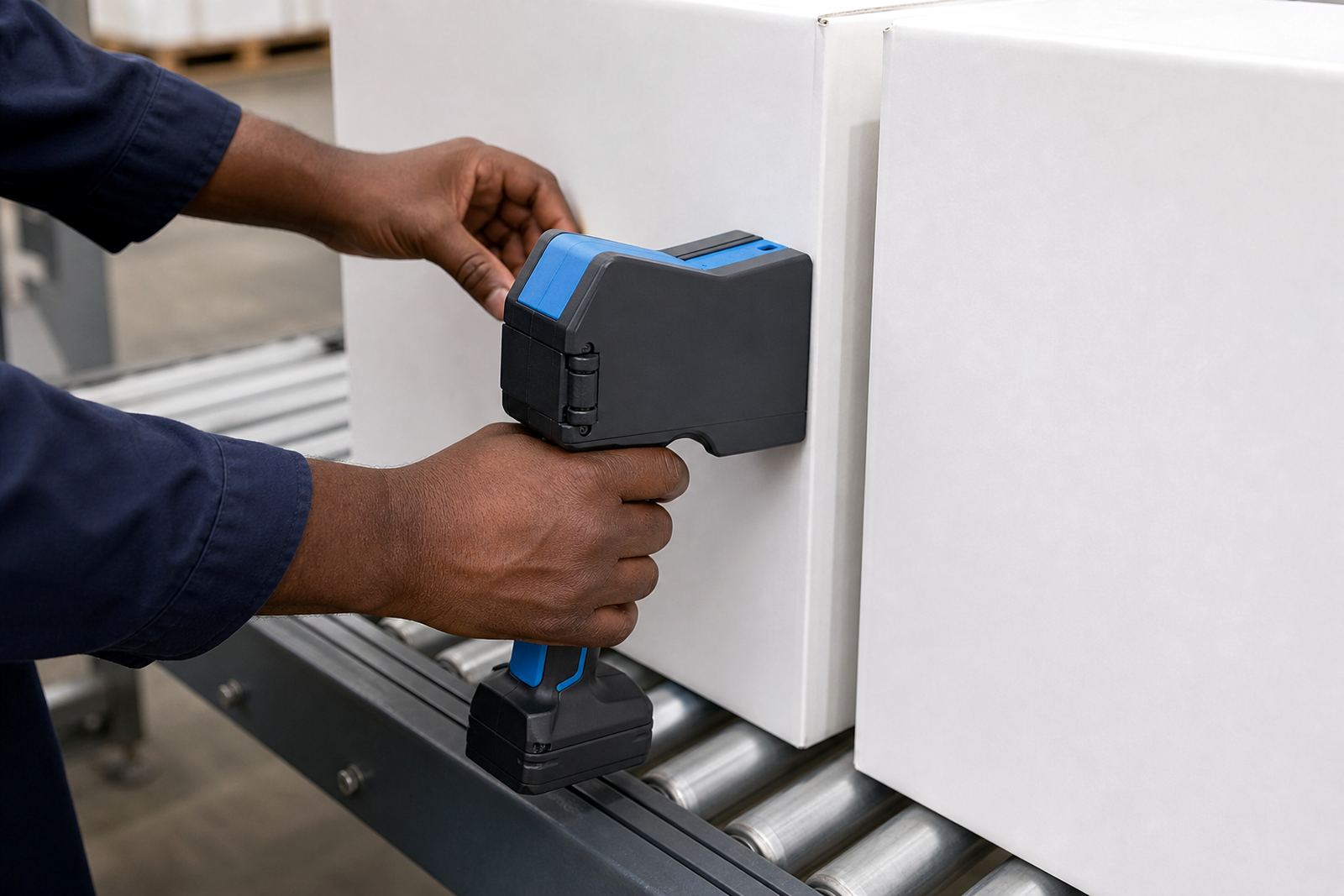
The large print coder is a handheld inkjet printer built for heavier marking work on outer cartons, timber lengths, pipes and wrapped packs. It lays down a wider character set than a standard unit, which helps when the mark must stand out from a few metres away or remain legible on a grainy surface.
In hire work, this unit is often used for dates, batch numbers, shift codes, handling notes and simple logos on products moving through dispatch or storage. The mark size can be adjusted to suit the space on the pack, with common print heights from 10 mm up to 70 mm depending on the model and the message layout.
- Suitable for bold alphanumeric codes on cartons and timber
- Clear enough for larger logos, handling notes and route marks
- Works with porous and semi-porous surfaces when the ink is matched correctly
- Useful where a small coder would look too faint or too narrow
Ink choices that match the surface
The cartridge you load decides the result as much as the coder does. Solvent-based ink is often used for non-porous or lightly coated surfaces, while water-based ink is better suited to absorbent materials such as timber, fibreboard and many cartons. Quick-dry ink is used when the print must be handled soon after marking, especially on smooth pack surfaces where smudging would cause trouble.
For coastal work around Durban and Richards Bay, humidity can affect how a mark cures and how long the pack should sit before stacking. On timber and certain boards, the grain can pull ink away from fine detail, so the message layout should be sized with that in mind. A broad, well spaced code usually prints cleaner than cramped text on this kind of surface.
- Solvent ink for many non-porous and coated surfaces
- Water-based ink for cartons, fibreboard and timber
- Quick-dry options for faster handling on smooth surfaces
- Logo files and barcode layouts can be loaded before hire starts
Where the larger format earns its keep
Our coder suits packhouses, timber yards, fabrication stores, distribution depots and production floors where the mark must stay easy to read on a larger surface. It is also useful for pipes, sleeves, crates and other items that carry large batch information or oversized handling text.
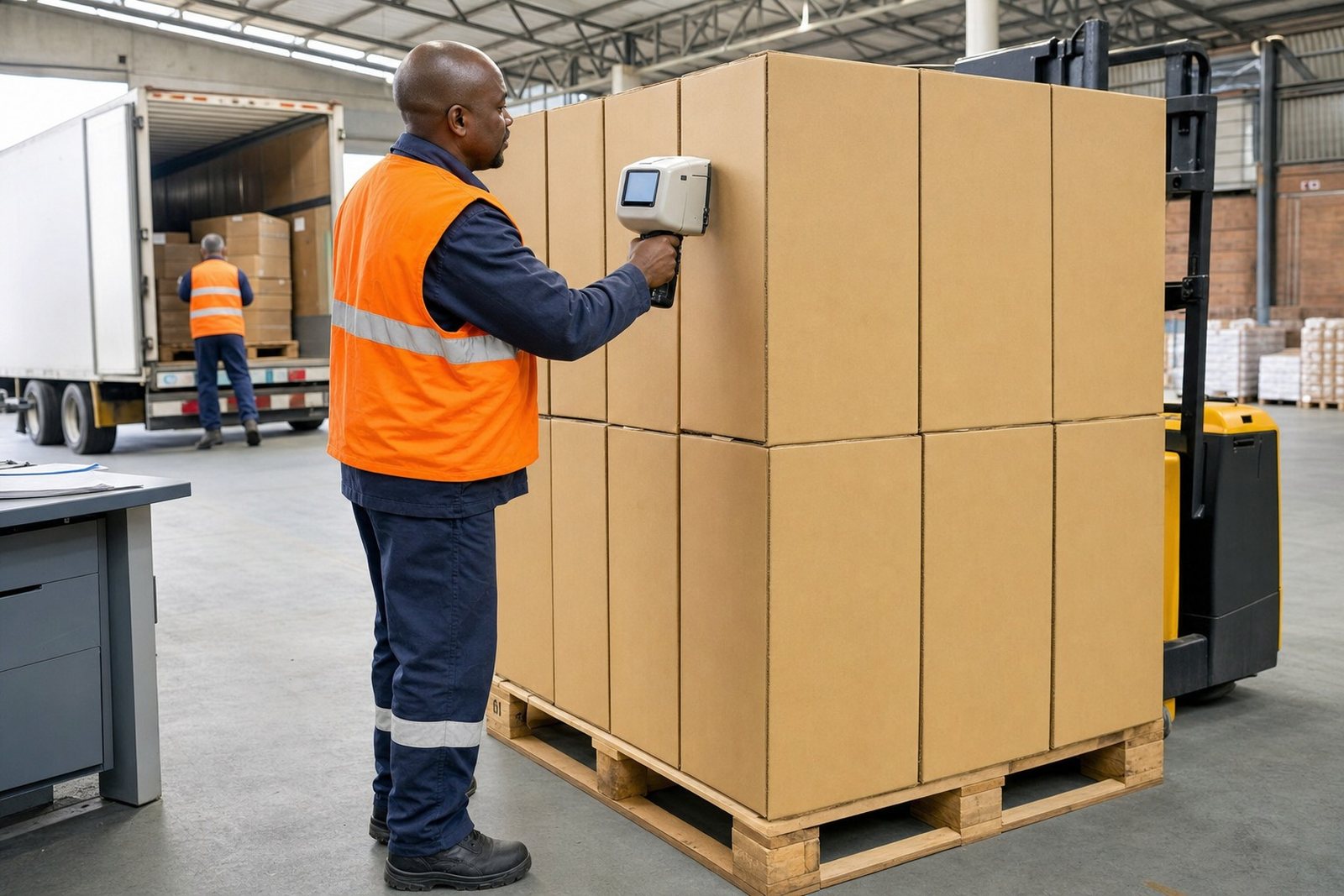
On cartons, the larger print helps when pallet labels are not enough and the outer case still needs a visible code. On timber, it is handy for grade marks, length notes and identification codes that need a solid, plain block of text. It is less about fine detail and more about clear identification on a larger patch of material.
- Outer cartons and corrugated packs
- Timber lengths, boards and treated wood sections
- Pipes, sleeves and wrapped industrial stock
- Warehouse dispatch areas where codes must be easy to spot
Setup, loading and site fitting details
The unit is hired with support for message loading, barcode setup, logo setup and test printing before it goes into use. In many jobs, the coder is set up on a bench or packing line, then checked against the real carton or timber surface so the print width and ink transfer can be judged properly. If the line uses a repeat code across several product sizes, the layout can be adjusted so operators are not changing text all day.
Power is only relevant for charging the unit and keeping the handheld system ready for work between shifts. The practical fit is usually about where the operator stands, how the product moves past the mark point, and whether the message needs to face the same direction on every item. A neat test run saves waste and helps avoid faint marks or clipped edges.
- On-site setup and remote setup help are available for hire units
- Test prints confirm spacing, darkness and alignment before full use
- Barcode and logo loading can be matched to your artwork files
- Backup unit support can be arranged when a site needs continuity
Keeping the coder and print line in shape
Handheld coders stay cleaner when the nozzle area is wiped down and the unit is capped correctly after use. Ink should be stored upright and kept in a clean place, away from dust and heat that can thicken it or affect flow. If the coder is moved between dry timber and coated cartons, the nozzle and head area need a quick check before the next run starts.
For regular hire work, consumables supply matters because a half-used cartridge or bottle can still run low in the middle of a shift. Clean handling, correct ink selection and proper test printing all help the mark stay even from the first carton to the last. If the print begins to feather, smear or look patchy, the surface, speed and ink type should be checked together.
- Store inks cleanly and keep caps fitted after use
- Wipe the print face before each run on dusty stock
- Match ink to the surface rather than forcing one type everywhere
- Check the first prints after any change in material or layout
Details to settle before the hire goes out
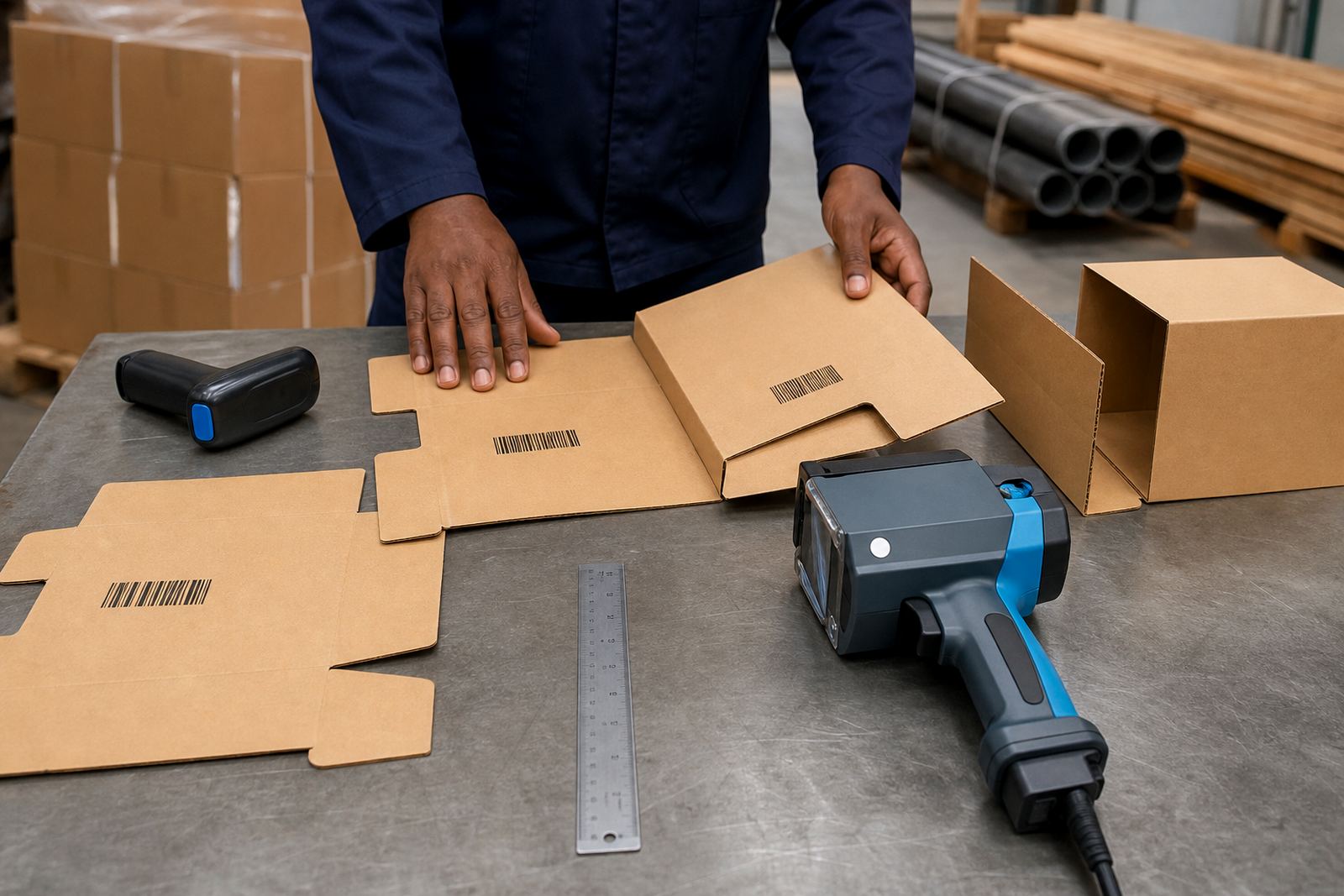
When ordering a large print coder, the useful details are the material, the print height, the message content and the surface finish. A carton line may need a simple date and batch code, while a timber yard may need larger block text or a logo that can still read across the stack. If barcodes are included, the size and scan direction matter, because a code that looks fine to the eye can still scan badly if the module size is too tight.
Weekly and monthly hire terms are used across Durban, Pinetown, Pietermaritzburg, Johannesburg, Cape Town and Richards Bay, with delivery and collection arranged as needed. The team also supports Pinetown, Westmead and New Germany for local hire work. Hire can include inks, training, operator guidance and troubleshooting support where needed.
- Surface type: carton, timber, pipe, board or wrapped pack
- Print height: usually 10 mm to 70 mm, depending on layout
- Message type: date, batch code, barcode, logo or handling text
- Hire term: weekly or monthly, with consumables and setup included where needed
Key facts
| Product type | Handheld large format inkjet coder |
|---|---|
| Typical print height | 10 mm to 70 mm depending on message and head setup |
| Common markings | Dates, batch numbers, barcodes, logos and handling text |
| Suitable surfaces | Cartons, timber, pipes, crates, sleeves and fibreboard |
| Ink options | Solvent-based, water-based and quick-dry inks |
| Hire terms | Weekly and monthly rental with delivery, setup and consumables available |