
Handheld coding for timber yards and pallet lines
This hire unit is a handheld inkjet coder for marking timber boards, pallet stringers, crates and bundle packs with lot numbers, grade marks, dates, shift codes and simple logos. It is used where timber moves through the yard and the mark has to hold its shape on rough grain, planed faces or treated stock.
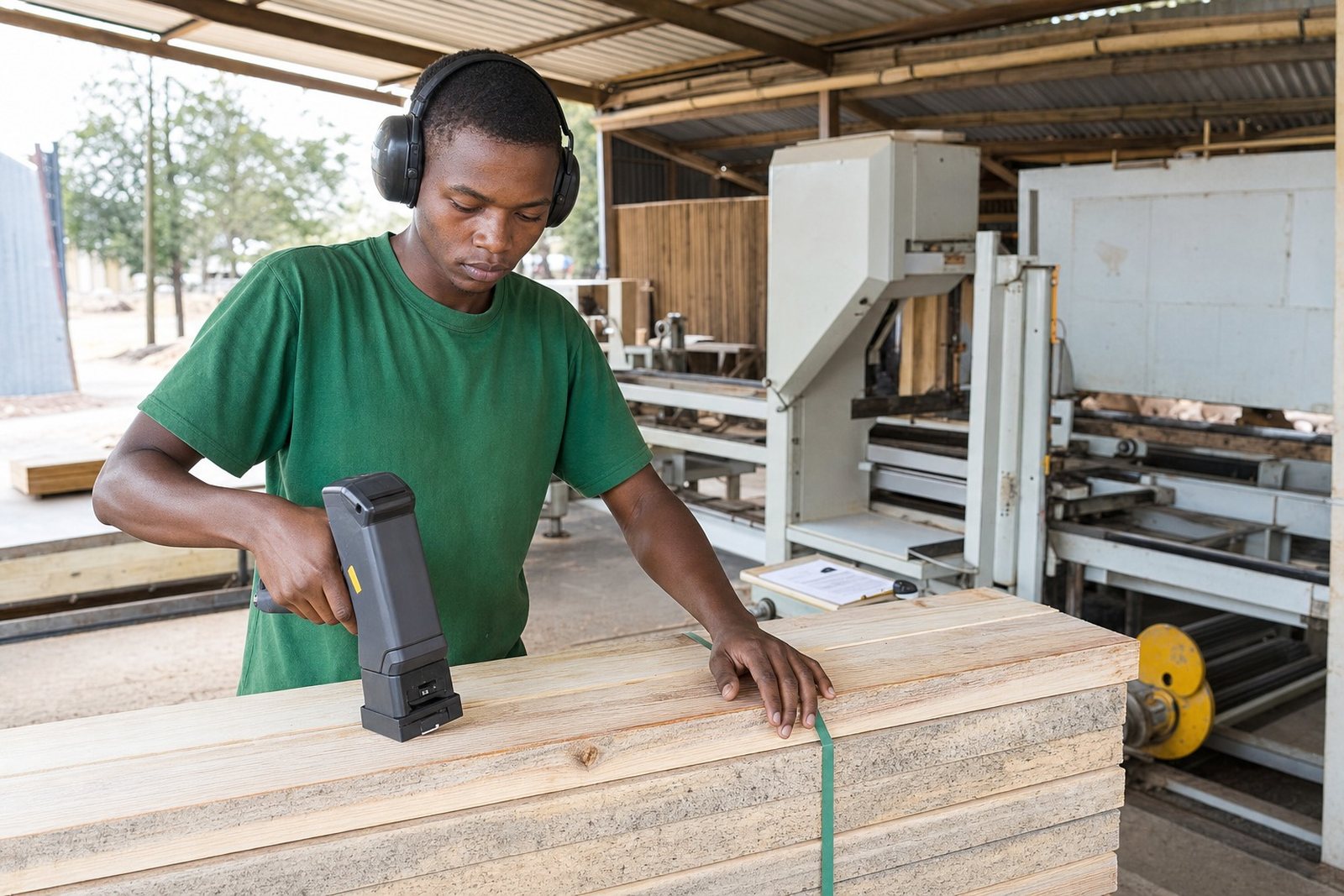
The printer sits in the hand and prints directly onto the board face or side. That makes it useful for short runs, mixed sizes and on-site marking where a fixed line is not practical. The mark can be set up for one line or two lines, with a clear character height for the board size and the distance the operator keeps to the surface.
- Marks text, numbers, batch codes and simple symbols
- Works on timber boards, pallets, crates and timber packs
- Print height can be set to suit the job, from small codes to bolder marks
- Useful for dispatch, grading and treatment records
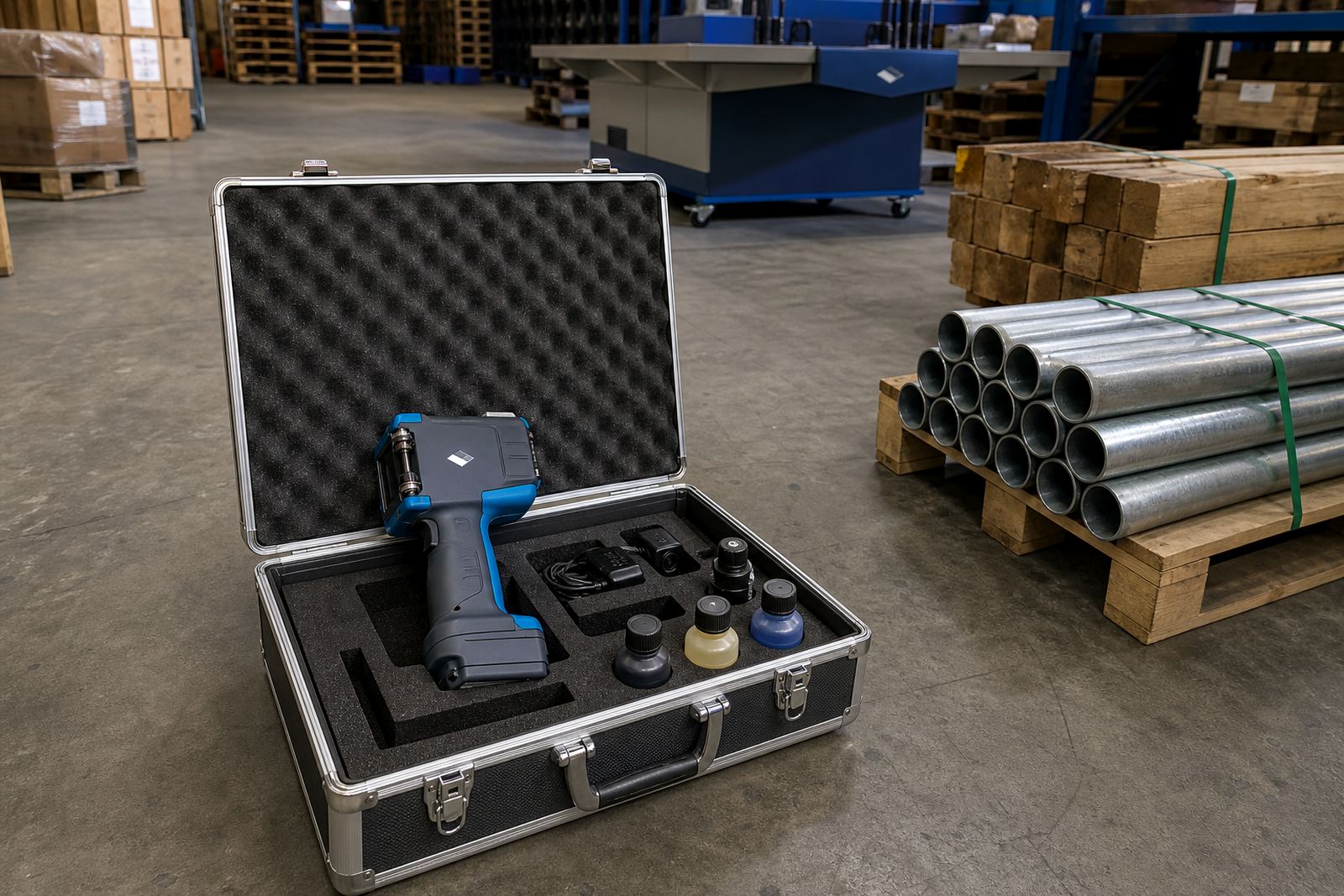
Ink choice for dry timber, treated stock and cooler stores
Ink choice matters on timber because the surface can vary from dry pine to treated hardwood and damp stock that has just come out of storage. Solvent inks are often used where fast drying and grip on less even surfaces are needed. Water-based inks suit cleaner indoor handling and many standard timber marking jobs. Quick-dry inks help when boards are moving quickly through a packing area or when the stack is handled soon after printing.
We help with ink selection for the board finish, the timber moisture level and the way the packs are handled after marking. Coastal humidity in Durban and Richards Bay can change drying behaviour, so the ink and print setting should be matched to the site rather than guessed.
- Solvent, water-based and quick-dry ink options
- Suitable for rough sawn and planed timber surfaces
- Can be set for darker or lighter marks depending on the timber tone
- Handy for yards near the coast where drying conditions shift
Where this rental suits the work best
This product suits timber merchants, pallet repair yards, treatment plants, joinery teams and freight contractors that need portable marking across different spots on the same site. It is also useful for boards that are stacked in mixed lengths, because the operator can move around the pile and place the mark where it reads best.
In Pinetown, Durban, Westmead and New Germany, the unit is often used for pallet grades, dispatch marks and pack identification. In Pietermaritzburg, Johannesburg, Cape Town and Richards Bay, it fits yards where stock is broken into smaller lots and the coding has to follow the bundle through sorting, treatment or loading.
- Board grading and lot control
- Pallet and crate identification
- Timber treatment traceability
- Dispatch marking for export or local delivery packs
Setup, operator handling and printing habits
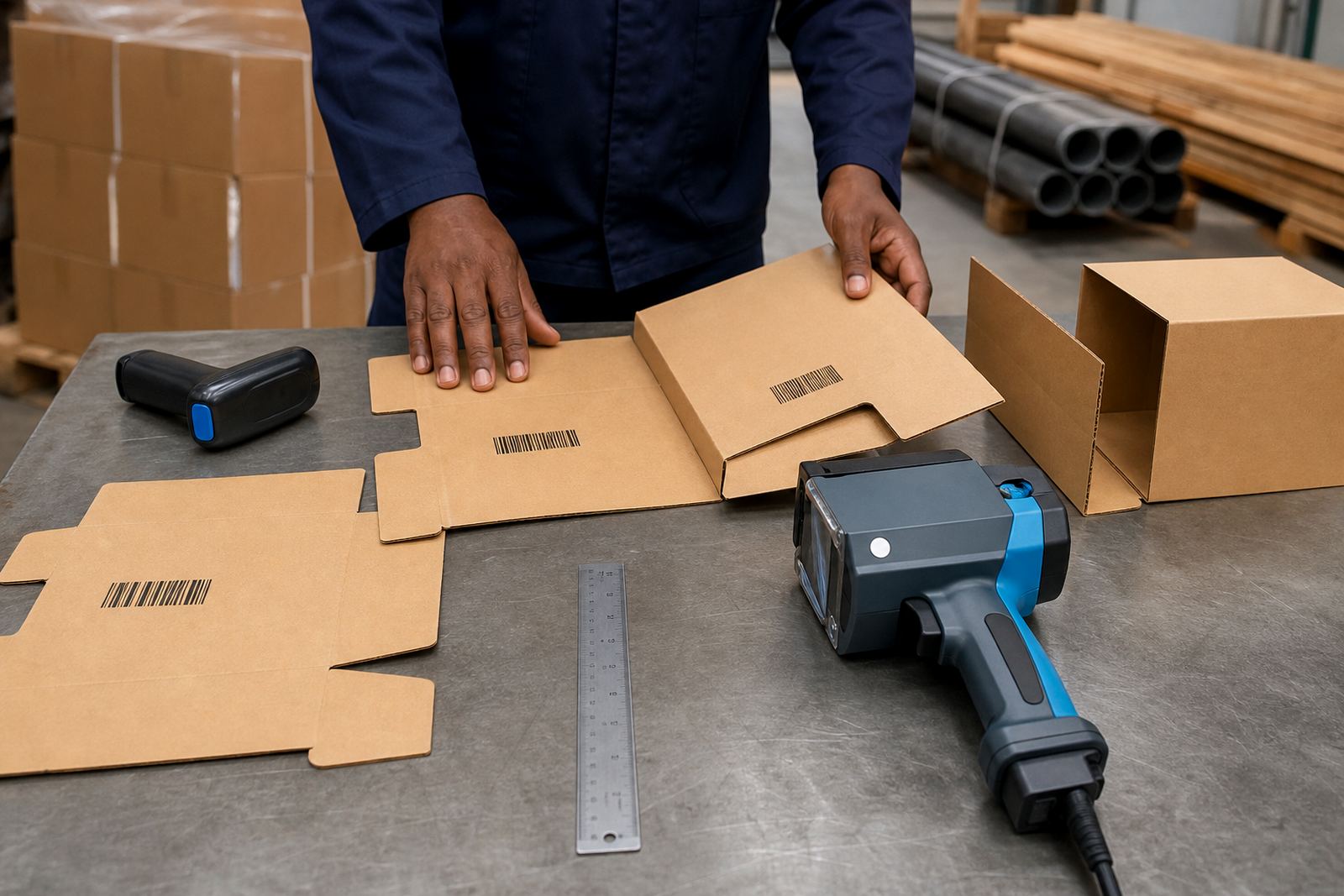
The unit is supplied for handheld use and benefits from a short setup check before the first run. That covers message loading, print height setting, spacing, and a test print on the same timber type that will be marked in production. If the job includes barcodes or a logo, those elements need to be placed so the print stays readable on a board surface with grain and knots.
We support on-site setup, remote setup help and operator training, depending on the hire plan and the site layout. A steady hand and a clean pass matter on timber, especially when the mark sits near an edge, knot or saw line. The operator should keep a consistent travel speed so the print stays even.
- Message loading for dates, batch codes and grade text
- Barcode setup where the size and contrast suit the timber
- Logo setup for simple marks on pallet decks or board ends
- Test printing before the first production run
Care between shifts and the rough yard conditions
Timber sites are hard on marking equipment, so care matters. Dust, resin and fibres can collect around the print head area, and that affects the finish if they are not cleared out. The unit should be stored with the cap fitted and the cartridge checked before each shift. If the site uses treated timber or wet packs, a short wipe-down routine helps keep the print sharp.
Keep the print head clean, use the correct ink for the surface and avoid dragging the unit across rough boards. If the mark starts to look patchy, it is usually a sign that the nozzle needs attention, the message spacing is off, or the ink is not matched to the timber finish. Backup unit support is available when a site cannot pause marking.
- Wipe dust and fibres from the print area
- Store with the head protected after use
- Check ink flow before long marking runs
- Use the same test board when checking print quality
What to confirm when hiring for timber marking
When ordering, confirm the timber type, whether the surface is rough sawn or planed, and whether the boards are dry, treated or still carrying moisture. Also confirm the mark size needed, the number of lines, and whether the job needs plain text only or also a barcode or logo. These details affect the ink choice, print height and message layout.
Also note if the job involves loose boards, bundled packs, pallets or finished crates, because the handling pace changes the printing method. Flexible weekly or monthly terms are available, with delivery and collection across South Africa from the Pinetown base. Consumables supply is available for sites that need ongoing ink and related items during the hire.
- Timber type and surface finish
- Mark content, line count and print height
- Site location and delivery point
- Hire period, weekly or monthly
Key facts
| Product type | Handheld inkjet timber marking printer |
|---|---|
| Typical use | Lot marks, grade marks, dates, batch codes, barcodes and simple logos |
| Print height | Adjustable for small codes through to bolder board marks |
| Ink options | Solvent, water-based and quick-dry inks |
| Hire terms | Weekly and monthly hire |
| Coverage | Pinetown, Durban, Pietermaritzburg, Johannesburg, Cape Town and Richards Bay |