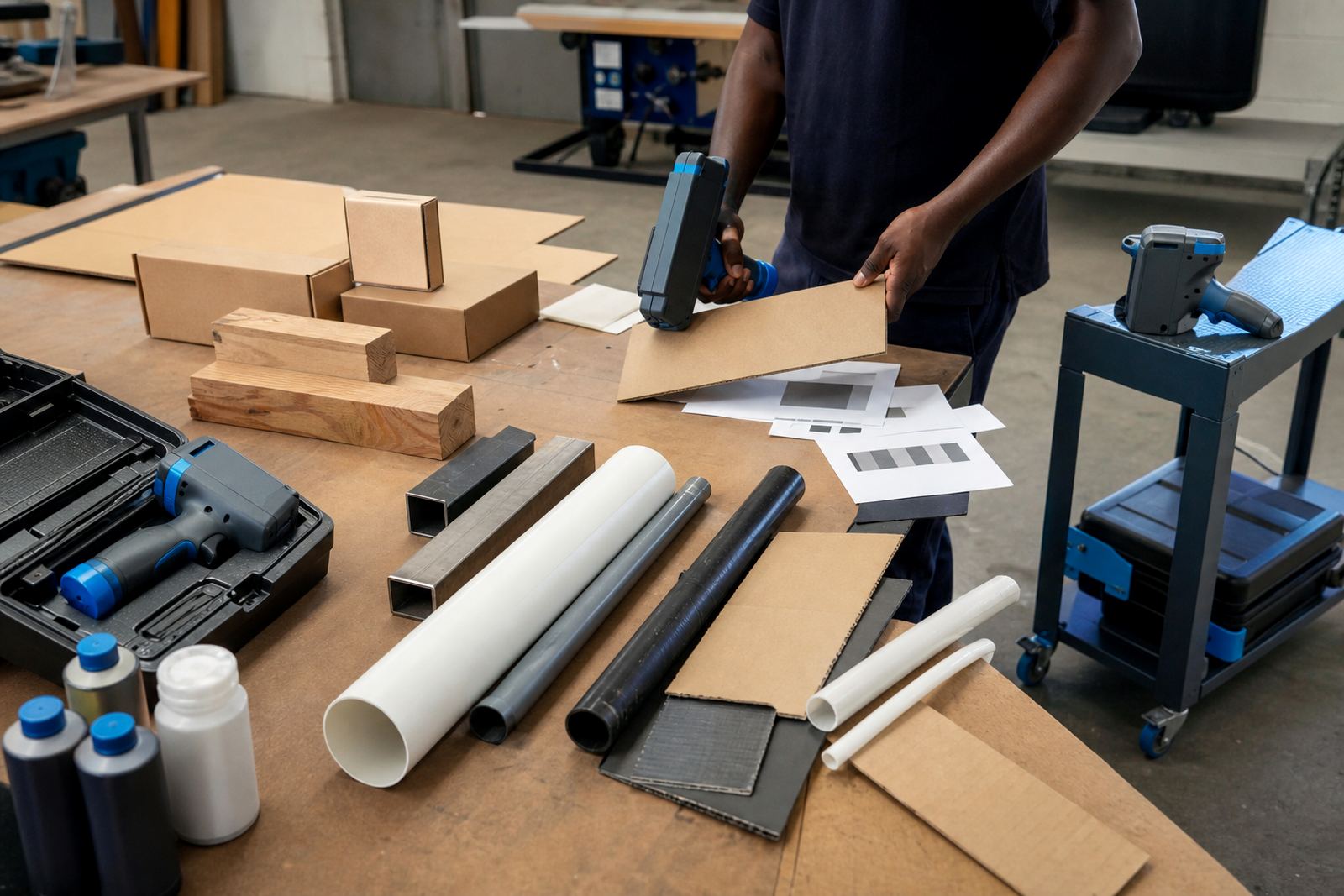
Trial sheets that show the print before the job starts
The Sample Print Pack is arranged for mark testing on the same sort of material you expect to use in production. It helps confirm whether the message reads cleanly on cartons, bags, pipes, timber or coated stock, and whether the print sits straight when the hand moves across the surface. That matters on real jobs in Pinetown, Durban and further out in Pietermaritzburg, Johannesburg, Cape Town and Richards Bay, where surface texture and handling can change from one pack run to the next.
The pack is used to compare line sharpness, edge bleed and how the print behaves on curved or uneven areas. If you are checking dates, batch numbers, barcodes or a simple logo, the sample stage shows whether the content needs a smaller font, a wider text block or a different ink type. It saves guesswork when the line is moving and the carton board is slightly rough or the timber grain is open.
- Trial prints for cartons, sacks, pipes, timber and steel
- Checks for date codes, batch codes, barcodes and logos
- Useful for smooth film, absorbent board and textured surfaces
- Helps compare quick-dry, solvent and water-based ink behaviour
Sizes and print settings that can be checked in advance
The sample pack is prepared around the print height your handheld coder can deliver, with common settings from small date lines through to larger marks used for site or warehouse identification. Print height is usually checked in millimetres, because a short code on a carton corner is not the same as a larger logo across a timber face. On a tight carton panel, even a few millimetres can affect spacing and legibility.
Sample material can be set up for one-line, two-line or multi-line messages, depending on the message loading needed for the job. That includes plain text, numeric codes, barcodes and a basic logo block where the image has clean edges and enough contrast. If the job needs a taller print or a wider mark, the pack shows how the coder handles that before the full hire starts.
- Typical print height checks: 2 mm, 5 mm, 12 mm and larger layouts
- Single line, double line and stacked line samples
- Barcode spacing and scan clarity checks
- Logo placement on flat and slightly curved surfaces
Where the pack earns its place on real materials
This sample pack suits hire jobs where the surface is known to be awkward or inconsistent. Rough timber can pull ink into the grain, and some pipe surfaces need a different wipe pattern to keep the print from smudging. On cartons, the board type and coating decide whether the mark sits crisp or needs another ink choice. The same goes for bags, especially where the weave is open and the surface drinks more ink than expected.
For clients running weekly or monthly hire terms, the pack is a useful step before the coder is put into regular use. It supports work in packaging rooms, yard areas, timber stockholding and light fabrication where batch control matters. If the print must stay readable after handling, stacking or brief exposure to moisture, the sample stage shows whether the message needs a quicker dry time or a different surface setting.
- Packaging lines using cartons, sleeves and outer wrap
- Timber yards marking grades, lengths and stock codes
- Pipe and steel marking where a clean edge matters
- Bagging work where print absorbs into woven material
Ink choice and drying behaviour on South African work surfaces
The Sample Print Pack is not just about the words on the page, it is also about the ink chemistry behind the mark. Solvent inks are often used where the surface is less absorbent or where quicker grip is needed. Water-based inks suit more absorbent materials and are commonly checked on carton board and timber. Quick-dry options help when the surface is handled soon after marking, especially where stacked product moves through a busy pack area.
Humidity, dust and the surface finish all affect how a handheld inkjet printer behaves. A sample on a dry inland carton may not behave the same way as a print done near the coast in Durban or Richards Bay. The pack lets the operator see whether the chosen ink settles cleanly, whether the code edges hold, and whether any change in pressure or distance is needed for the surface at hand.
- Solvent ink checks for tougher or less absorbent surfaces
- Water-based ink checks for carton board and timber
- Quick-dry checks for handling and stacking after marking
- Useful for humidity, dust and coated surface comparison
Fitting and setup notes for the test run
The sample pack is used alongside setup help so the first test reflects how the coder will be handled on site. That can include message loading, barcode setup, logo setup and a short test print on the chosen material. If the job needs a different nozzle distance, print angle or hand movement, those settings are worked through during the sample stage rather than on full stock.
Where the hire includes on-site setup in Pinetown, Durban or nearby areas like Westmead and New Germany, the sample material helps the technician tune the coder to the real surface. Remote setup help can also use the pack when the unit is being prepared for dispatch elsewhere in South Africa. The point is to check the print in real use, not on a clean sheet that behaves differently from the job material.
- Message loading for dates, batch numbers and product text
- Barcode setup for readable industrial marking
- Logo setup for simple single-colour marks
- Test printing on the same substrate planned for hire use
Checking storage details before hire
Sample materials need to be kept clean and flat so the print result stays useful. Dust, damp corners and folded sheets can distort what the coder is actually doing. If the sample pack includes absorbent board or timber offcuts, store them away from moisture and direct sun. For coated stock, keep the surface free of oil or powder so the ink reading is not affected by handling residue.
When ordering, confirm the surface type, the rough size of the print area, the message text, and if the mark must include a barcode or logo. If the coder will be used on cartons one week and pipe the next, say so at the start, because different surfaces often need different ink behaviour. Short weekly or longer monthly terms are available across Durban, Pietermaritzburg, Johannesburg, Cape Town and Richards Bay, with delivery and collection arranged to match the hire plan.
- Confirm the substrate type and finish
- Confirm the print area width and height
- Confirm the message, barcode and logo content
- Tell us if the surface is flat, curved or textured
Key facts
| Product | Sample Print Pack |
|---|---|
| Use | Test print materials for layout, ink choice and legibility |
| Print types | Dates, batch numbers, barcodes and logos |
| Surface range | Cartons, bags, pipes, timber and steel |
| Ink options | Solvent, water-based and quick-dry |
| Hire terms | Weekly and monthly rental options |