A hire unit built for repeat coding jobs
A monthly hire printer is, in short, a portable inkjet coder supplied for ongoing marking work on site or in the warehouse. It is suited to production lines and packing areas that need dates, batch numbers, traceability text, barcodes or simple logos printed through the month without tying up capital in a purchase.
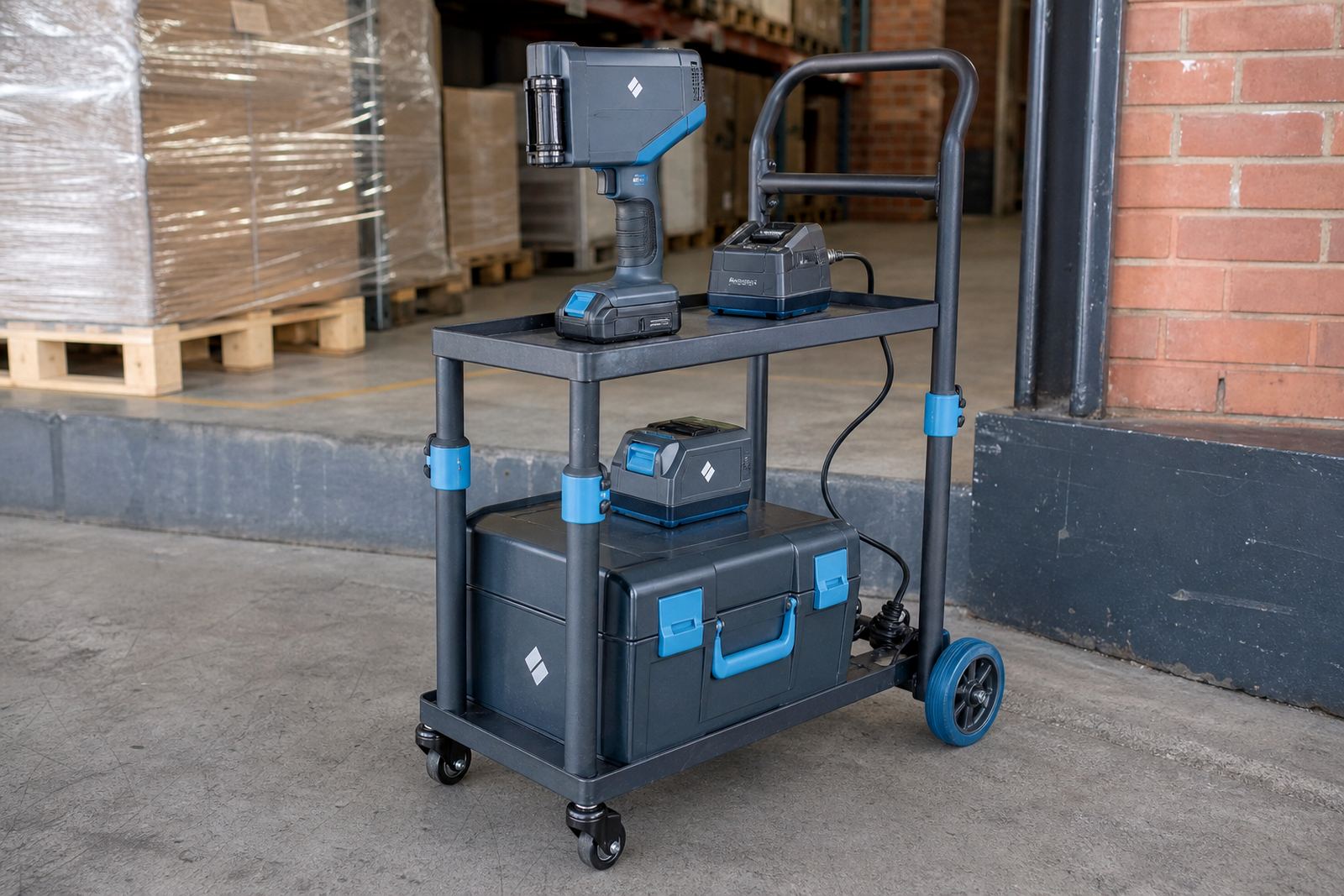
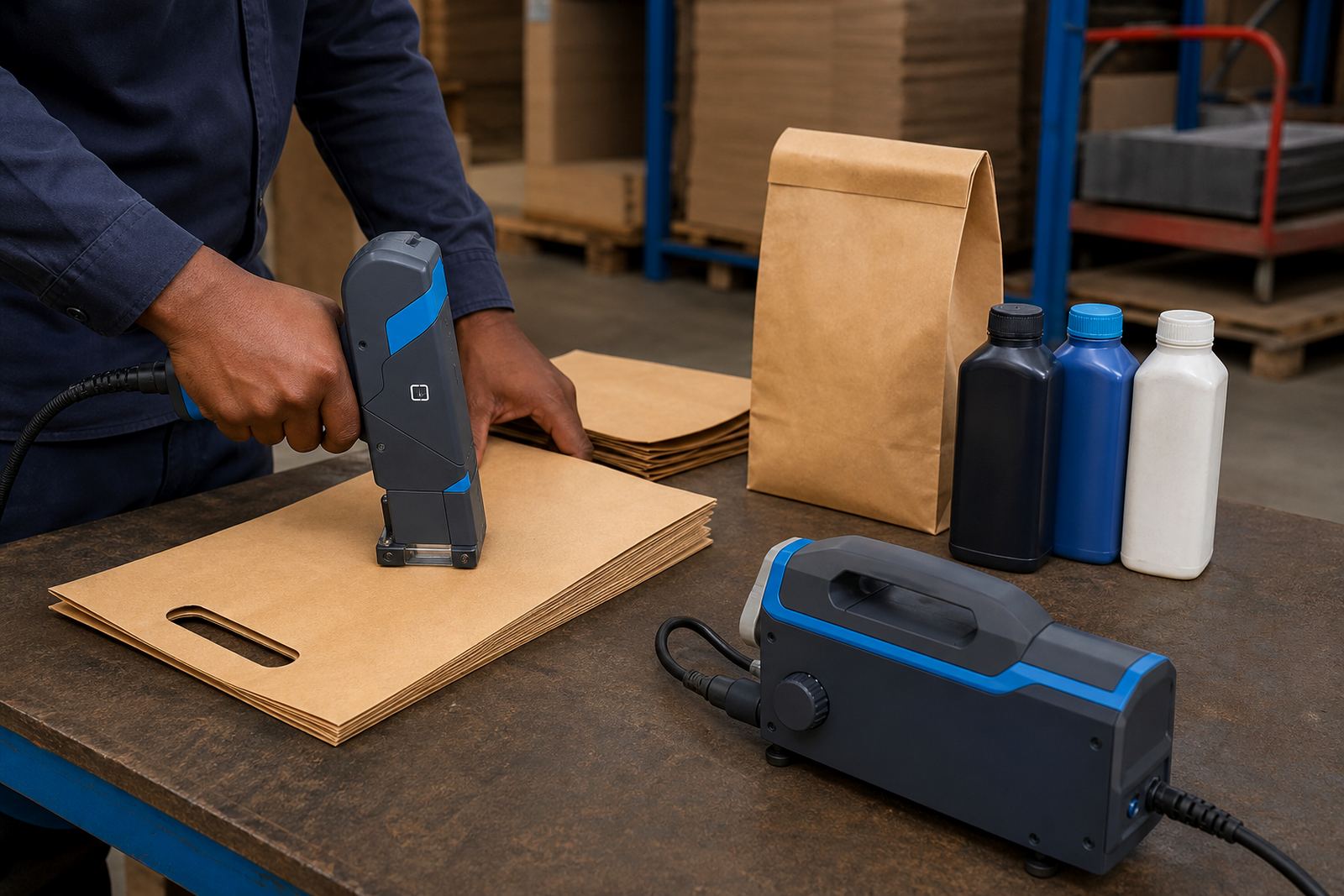
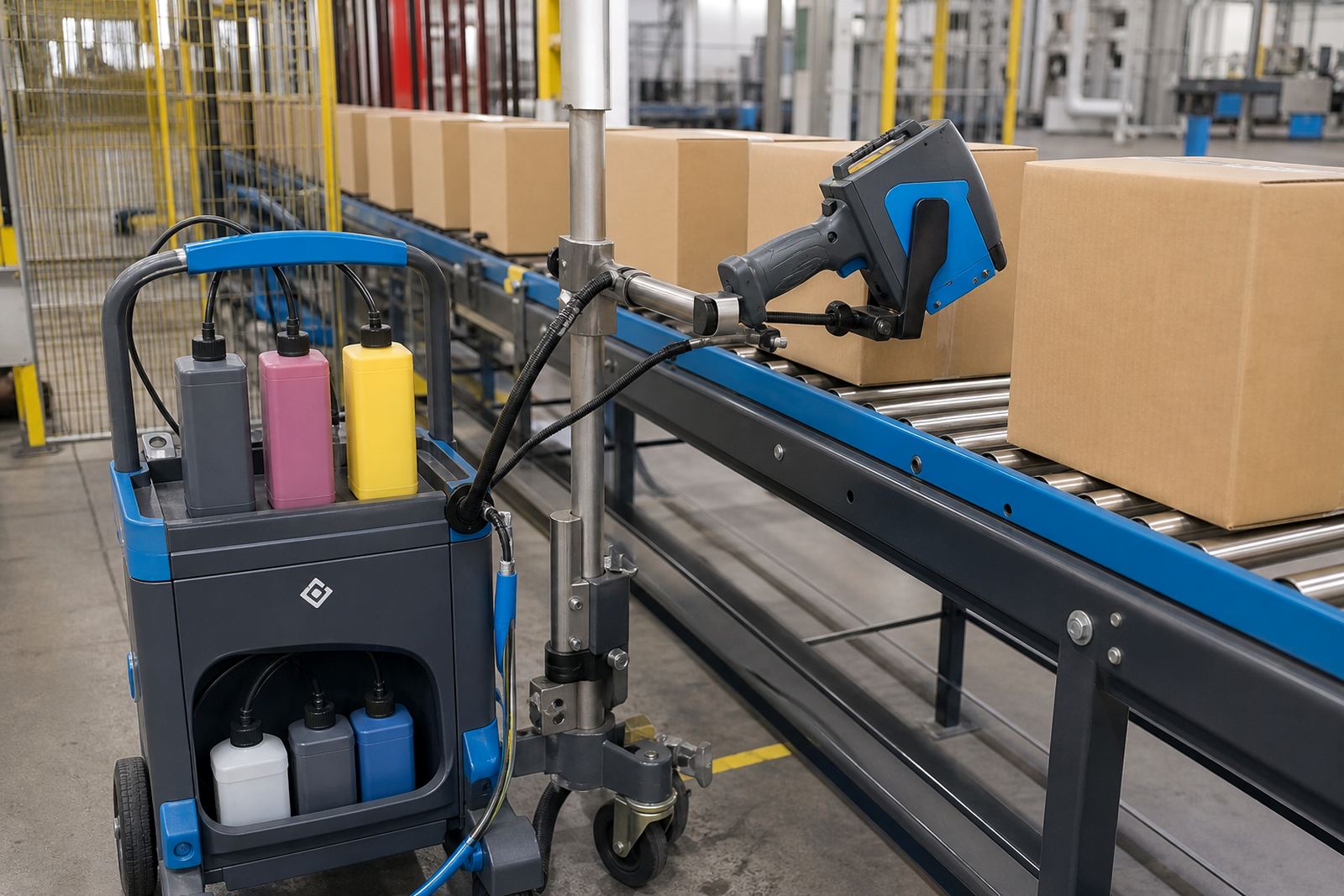
The units we hire out are compact, handheld and easy to move between stations. They are used with fast-drying or solvent based inks, and where the substrate calls for it, water-based ink can be set up for cleaner porous surfaces. The print head and cartridge choice depends on the surface, the line speed and the finish you need.
In Durban and Pinetown, humidity can affect curing on some surfaces, so ink selection matters. On coated cartons, timber, steel, plastic pipe and woven bags, the print has to suit the surface texture and the handling that follows after marking.
Print sizes, message lengths and surface match
Handheld inkjet printers in monthly hire are usually set up for variable print heights, often around 2 mm to 12.7 mm depending on the model and cartridge fitted. That gives room for short codes, larger batch text and simple barcodes on packaging or stock pieces.
- Small text for dates, shift codes and short traceability marks
- Mid-size lines for carton labelling and bag marking
- Barcodes for stock control and dispatch labels
- Logos or symbols for product recognition
- Multi-line messages where the panel size allows it
Some surfaces take a clean print with very little soak in, while others need slower drying ink and careful hand speed. Smooth steel, painted pipe and coated board often need a different setup from raw timber or kraft cartons. That is where message loading and test printing matter before production starts.
Where monthly hire fits in production
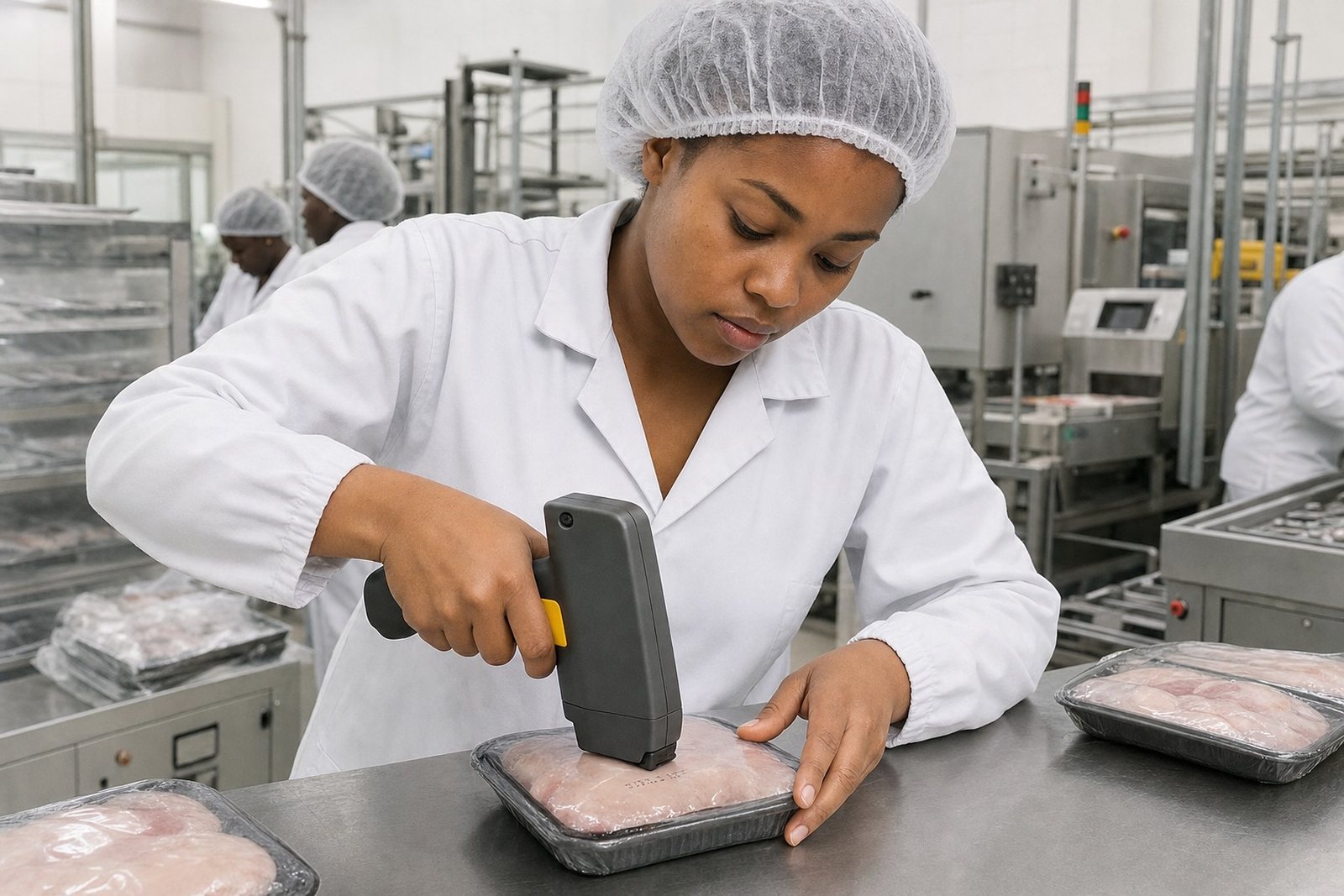
Monthly hire works well where coding is part of the regular routine and the same print style is repeated across stock. It suits packhouses, timber yards, plastics handling, warehousing and fabrication spaces that need a portable coder for changing jobs through the month.
The unit can be moved from one bay to another, which helps where the team marks cartons in the morning and pipe bundles or steel pieces later in the day. In coastal conditions near Durban or Richards Bay, the printer and ink choice should suit moisture, handling and the finish on the item being marked.
- Cartons leaving a packing line
- Pipes and tubing in storage or dispatch
- Timber lengths, planks and treated stock
- Bags, sacks and outer packs
- Steel parts that need trace codes or batch marks
For longer projects, monthly hire gives room to keep the same unit on site while production settles into a steady pattern. That reduces changeover stress and keeps the coding method consistent across shifts and batches.
Setup on site and the support that sits with it
A monthly hire printer usually needs operator setup, message loading and a short check on the printing angle, speed and surface gap. Where the team is new to handheld coding, on-site setup or remote setup help can be arranged so the first print is clean and readable.
For barcode work, the message format must be checked against the scanner and the label or panel space. For logos, the artwork needs to be in a usable form and scaled to the print height available. On steel or painted surfaces, a test print is the safest way to check adhesion and clarity before a full run starts.
- On-site setup for first use or changeover
- Remote setup help when the unit is already on the floor
- Operator guidance for everyday use
- Backup unit support where the job cannot pause
Ink choice, consumables and cleaning care
The right ink depends on the material, surface finish and drying window. Solvent inks are common for fast drying on less porous surfaces, while water-based inks can suit absorbent materials. Quick-dry options help where marked items move quickly into handling or stacking.
Monthly hire can include consumables supply, which keeps the right cartridges and cleaning items with the unit through the hire period. The print head area should be kept clean, caps fitted when not in use and the unit stored away from heat, dust and direct moisture. If the printer is used on rough timber or dusty steel, regular wipe-downs protect print quality.
- Match ink to coated, porous or metal surfaces
- Keep spare cartridges available for long runs
- Protect nozzles from dried residue and dust
- Use test prints after a change in substrate
- Store the unit in a dry, clean area after use
Details to send with a monthly hire order
For the correct monthly hire unit, the job details need to show what is being marked, the print size, the message content and the surface finish. It also helps to know whether the work is on cartons, bags, timber, pipes or steel, and whether the print must stay readable after handling, stacking or wrapping.
Please include the message text, number of lines, barcode type if needed, logo file if it is part of the print, and the surface colour. If the work moves between branches or sites, tell us whether delivery and collection, remote setup help or field setup is needed.
- Item to be marked and the surface type
- Print height, line count and message length
- Barcode or logo requirements
- Ink preference if the surface is already known
- Hire term, site location and any training needed
Monthly hire is available for steady production in Pinetown, Durban, Pietermaritzburg, Johannesburg, Cape Town and Richards Bay, with support for active coding work across South Africa.
Key facts
| Hire term | Monthly |
|---|---|
| Print height range | About 2 mm to 12.7 mm, depending on unit and message |
| Print content | Dates, batch codes, barcodes, logos and short text |
| Typical surfaces | Cartons, bags, timber, pipes, steel and similar production items |
| Ink types | Solvent, water-based and quick-dry options |
| Support included | Setup help, training, message loading, test printing and consumables supply |