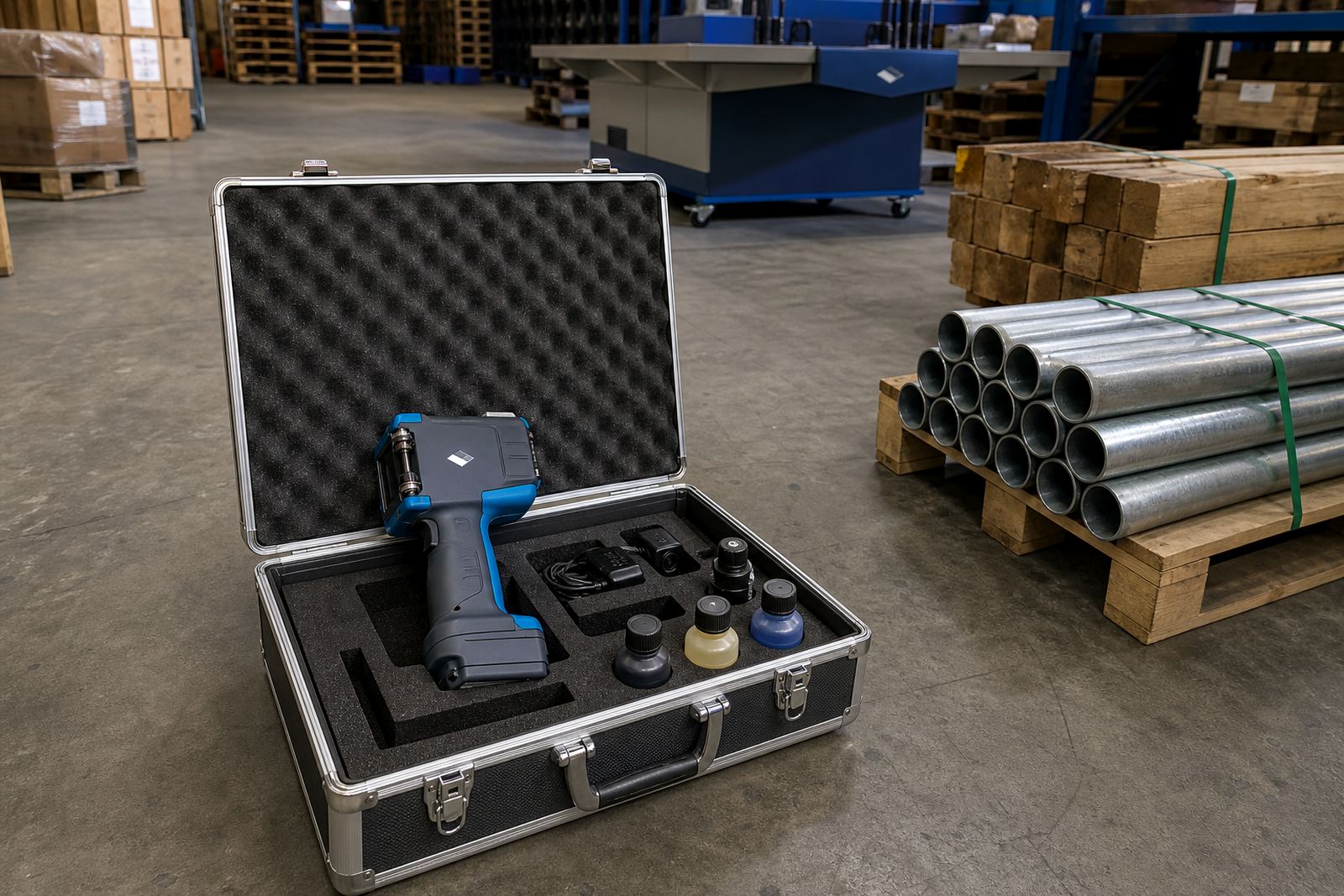
Handheld kit for live marking in the warehouse
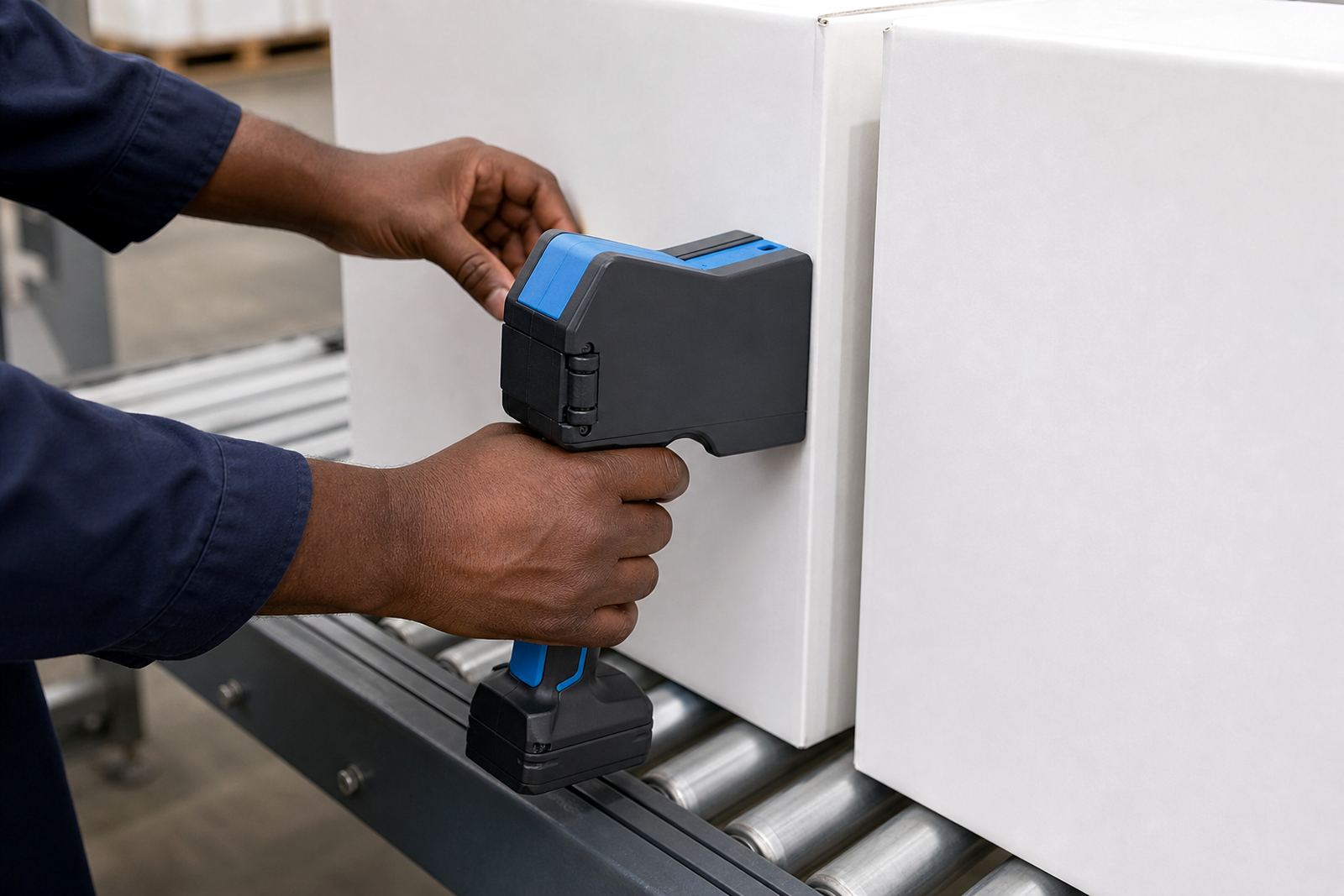
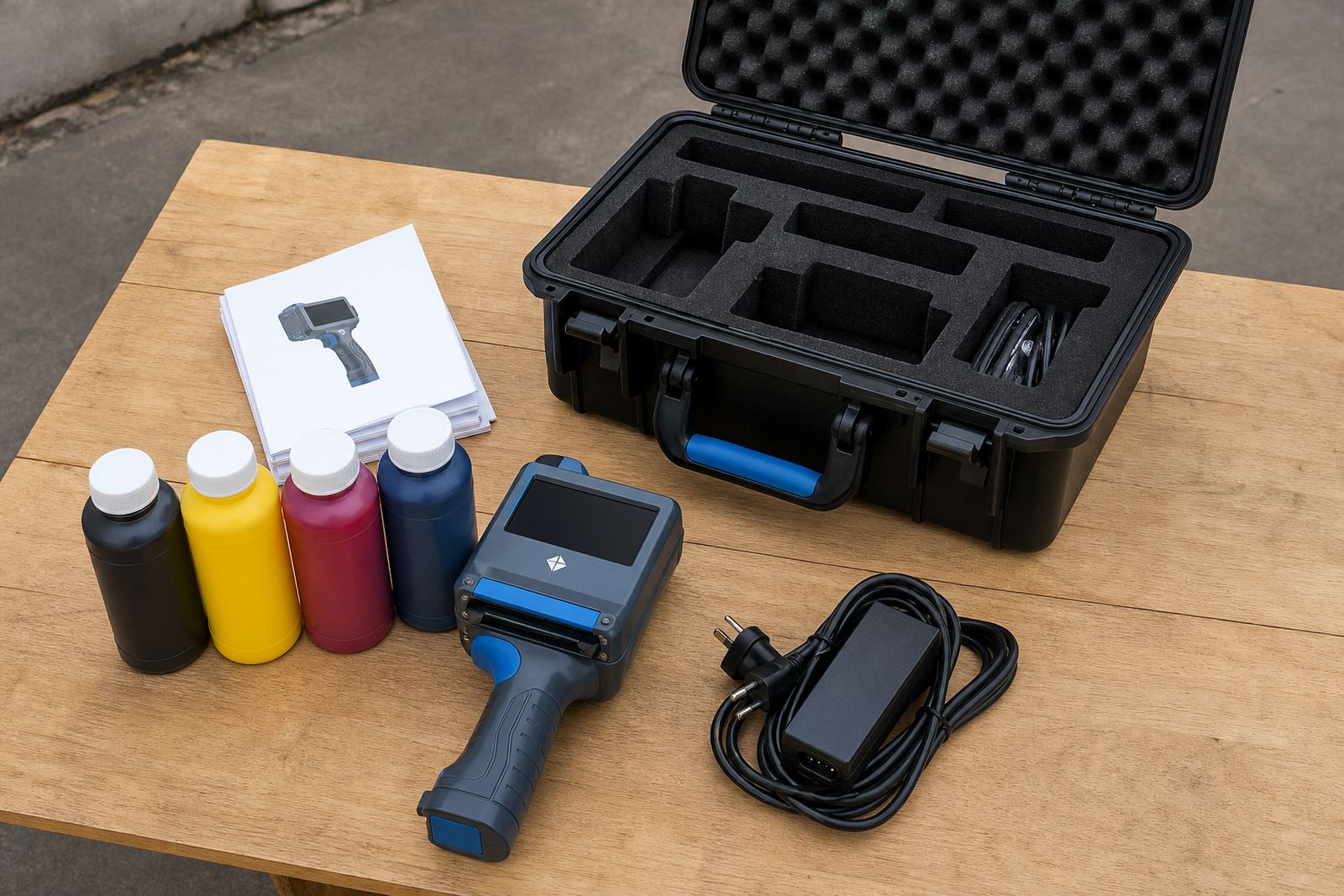
This hire set brings together a handheld inkjet printer, a charged battery, charger, ink cartridge and basic setup accessories for coding jobs that move from bench to pallet to dispatch. It is used for dates, batch numbers, shift codes, barcodes and simple logos on packaging and product surfaces that need clear identification before leaving site.
Print height is usually set to suit the message, with common options around 2 mm up to 12.7 mm, and some models can run more than one line if the artwork allows it. The coder can be handheld for spot marking or guided by a simple side rail when a straighter pass is needed on cartons or timber lengths.
- Suitable for cartons, woven bags, film wrap, timber, pipes and coated metal.
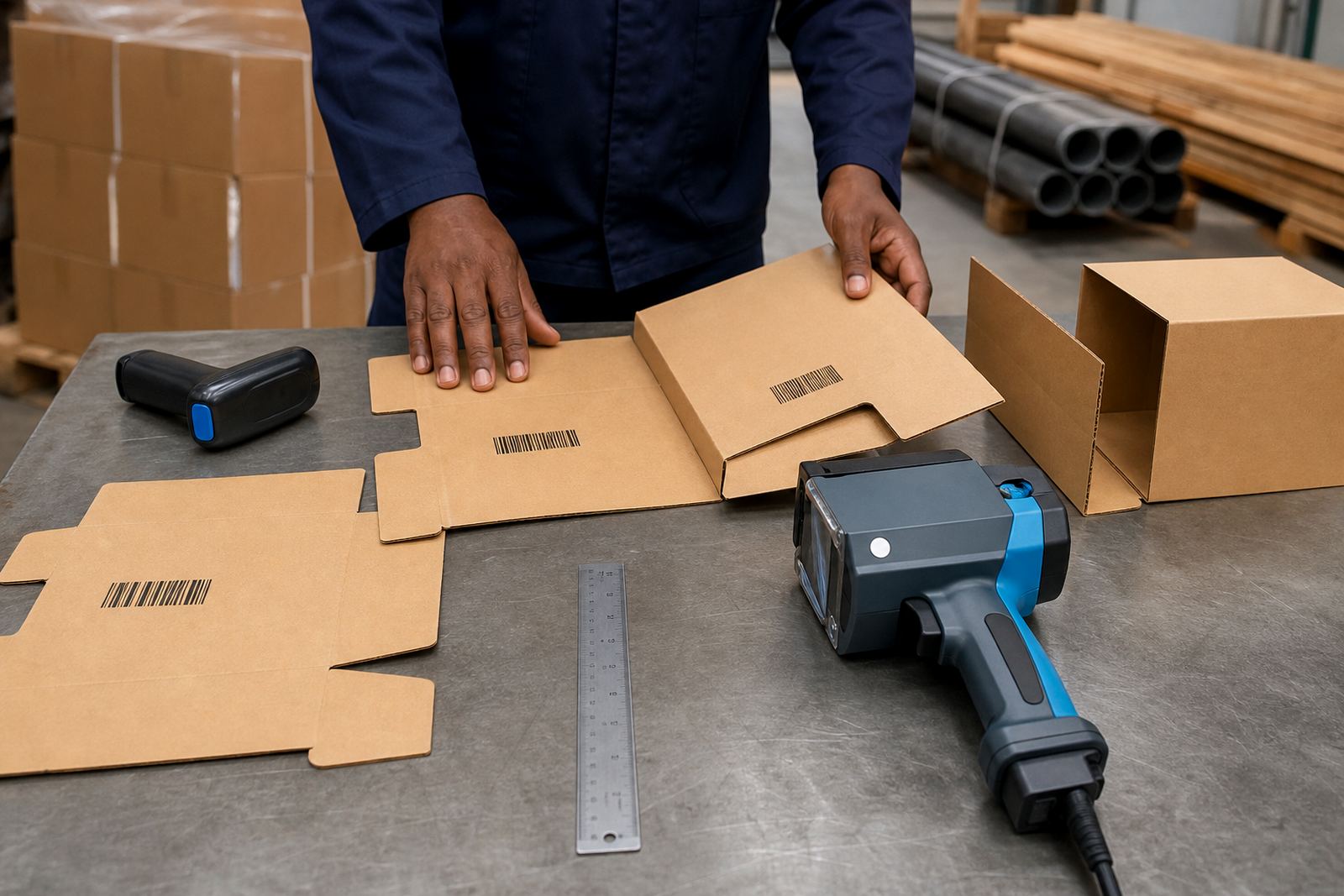
- Supports text, numeric codes, barcodes and basic logo blocks.
- Used with solvent, water-based or quick-dry inks, depending on the surface.
Where the kit fits in a busy dispatch flow
Warehouse teams often need a portable coder for mixed stock, short runs and last minute label changes. This kit suits packing lines, returns handling, kitting bays and yard dispatch where goods shift around and printed marks must still stay legible after handling.
On porous surfaces such as timber and some cartons, water-based or quick-dry inks can work well. For plastics, coated bags and certain metals, solvent-based ink is often the better fit because it grips faster and stands up better to rub, dust and light moisture. In Durban and Richards Bay, coastal humidity can affect drying on some surfaces, so ink choice matters more than people expect.
- Good for weekly dispatch runs and monthly production batches.
- Handles mixed surfaces without tying the job to one fixed station.
- Works well where codes change often and re-labelling would waste time.
Hire terms and setup support around the job
The kit is hired out on weekly or monthly terms, which suits short campaigns, trial lines and repeat warehouse work. A hire can include delivery and collection, on-site setup, remote setup help, operator training, message loading, barcode setup and logo loading where the artwork is ready for the coder.
Where the unit is used on a packing bench or in a dispatch room, it may need a clean surface, stable storage and room to keep the print head free from knocks. The operator should keep the printer upright when not in use and close the cap or cover after printing so the nozzle area does not dry out.
- Delivery and collection can be arranged for site use.
- Backup unit support is useful when a line cannot pause.
- Consumables supply covers ink and related items tied to the hire.
Print sizes, surfaces and marking details to match
The right setup depends on what must be printed, where it will sit and how close the mark is read. For batch numbers on cartons, a smaller character height may be enough, while pallet labels, logos or larger handling marks often need a taller print line. Barcode size should suit the scanner used at receiving or dispatch, and the quiet strip around the code needs to stay clear.
Flat surfaces give the cleanest result, though some curved pipes and timber lengths can still be marked if the pass is steady. Rough sawn timber, dusty steel and porous bag material may need a different ink or a test print first, because absorption and surface texture change the finish a lot.
- Character height can be set to suit small codes or bigger handling marks.
- Barcode spacing should match the scanner and the viewing distance.
- Logo artwork needs a clean file so edges stay readable at print size.
Care on site and daily handling habits
Handheld coders last longer when they are cleaned and capped properly after use. Print heads and nozzles should be checked for dried ink, especially where the team works through mixed shifts and the unit sits in a dusty store or warm packing bay. A quick test print before a run helps pick up fades, gaps or poor alignment before cartons are already stacked.
Keep spare ink sealed and stored as directed, away from heat and direct sun. Solvent inks need careful handling, while water-based inks are often chosen for cleaner warehouse work on absorbent surfaces. If the unit is moved between sites in Pinetown, Durban, Johannesburg or Cape Town, a protective case helps reduce knocks in transit.
- Wipe the print area after use to limit blockage.
- Store cartridges upright where practical.
- Run a test strip before a full batch starts.
Confirm these details before the kit leaves the depot
Before a warehouse coding kit is booked, it helps to confirm the surface type, print height, code content and whether a barcode or logo is included. The team also needs to know if the job is for cartons, pipes, timber or bags, because that affects ink selection and the way the message is loaded.
For larger warehouse runs, check whether the unit will be used at one bench or moved around the site, and whether the operator needs training at the same time. If there is existing artwork, send it in a clean file format so the logo or barcode can be set up without guesswork. When the job is split across branches such as Westmead, New Germany or Pietermaritzburg, the hire can be matched to the local workflow and dispatch pattern.
- Surface material and finish.
- Code type, print height and number of lines.
- Need for barcode setup, logo setup or test prints.
- Hire length, site location and any backup unit need.
Key facts
| Product type | Handheld inkjet coder hire set for warehouse marking |
|---|---|
| Print height | Adjustable, commonly from about 2 mm to 12.7 mm |
| Marking formats | Dates, batch numbers, barcodes, logos and text |
| Surface range | Cartons, bags, timber, pipes, coated steel and similar surfaces |
| Ink options | Solvent, water-based and quick-dry inks |
| Hire terms | Weekly or monthly hire with setup support and consumables supply |