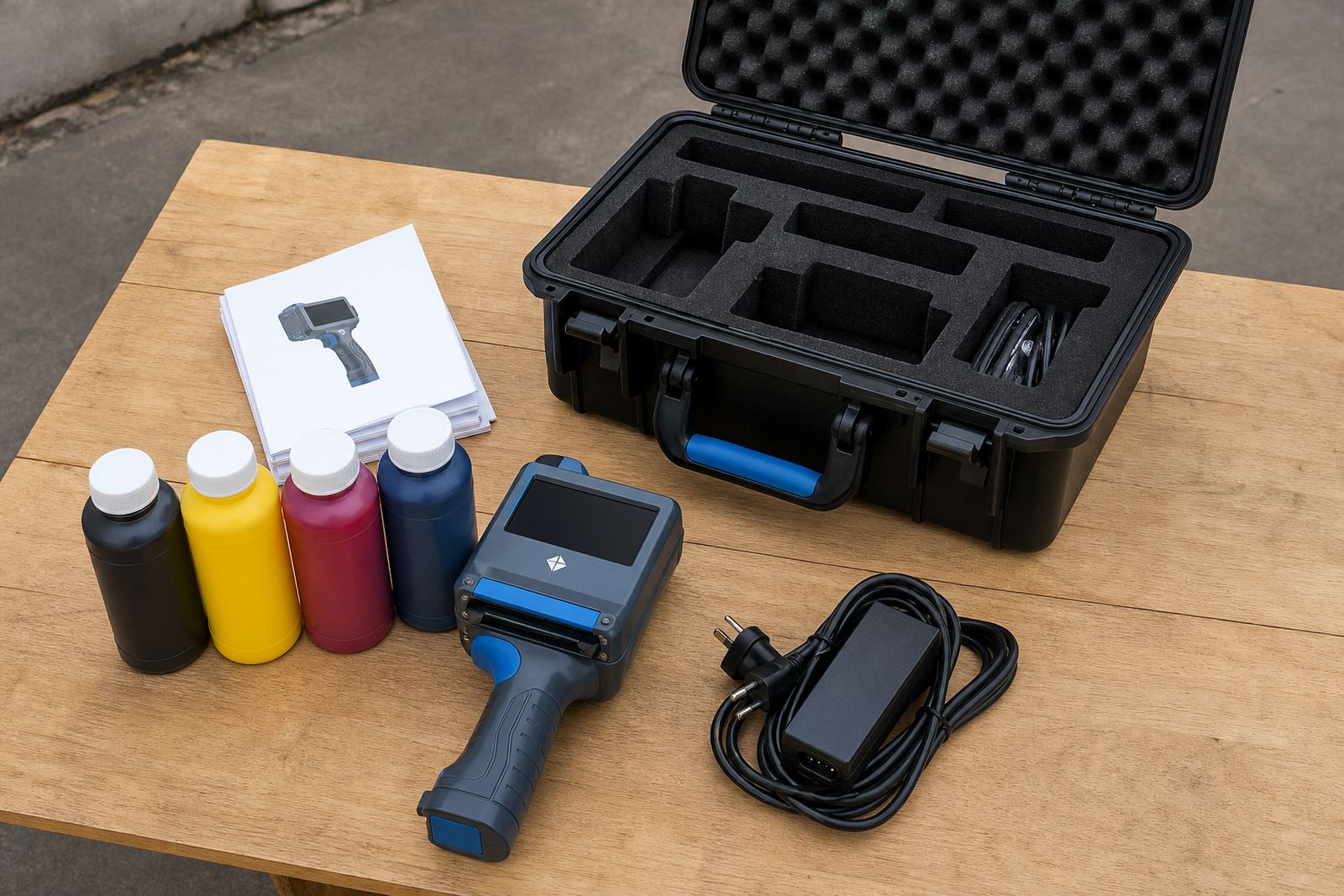
A first hire pack for day-to-day coding work
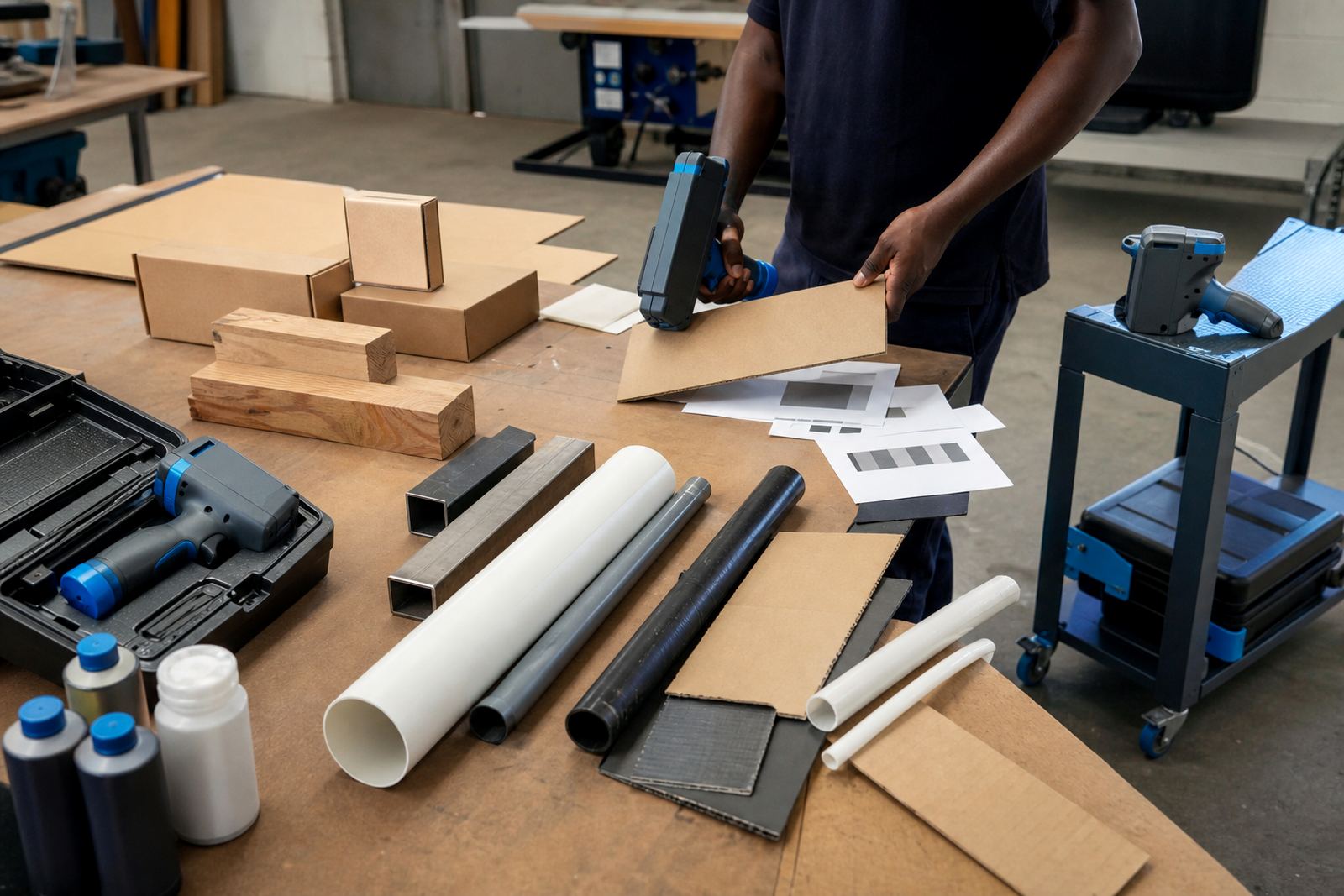
The Starter Hire Pack is built for teams that need a handheld inkjet printer without taking on a full purchase straight away. It covers the basics for coding cartons, bags, pipes, timber and steel sections with clear date marks, batch references, shift codes or a simple logo block. The pack is often used where product moves through a store room, dispatch area, workshop or yard and the mark must be readable on the spot.
This hire option suits short runs, seasonal work, launch jobs and contract packing where coding volumes change from week to week. It is also useful for teams still settling on message layout, print height and ink type before committing to a longer hire. A starter pack keeps the setup practical, with the machine, ink and loading help matched to the surface and the mark needed.
For wet coastal stores in Durban or Richards Bay, a dry timber yard in Pietermaritzburg or a steel fabrication space in Johannesburg, the same basic pack can be adapted to the job. The value sits in getting the right print on the first pass, not in over-specifying equipment that will not be used.
What does the starter hire setup cover
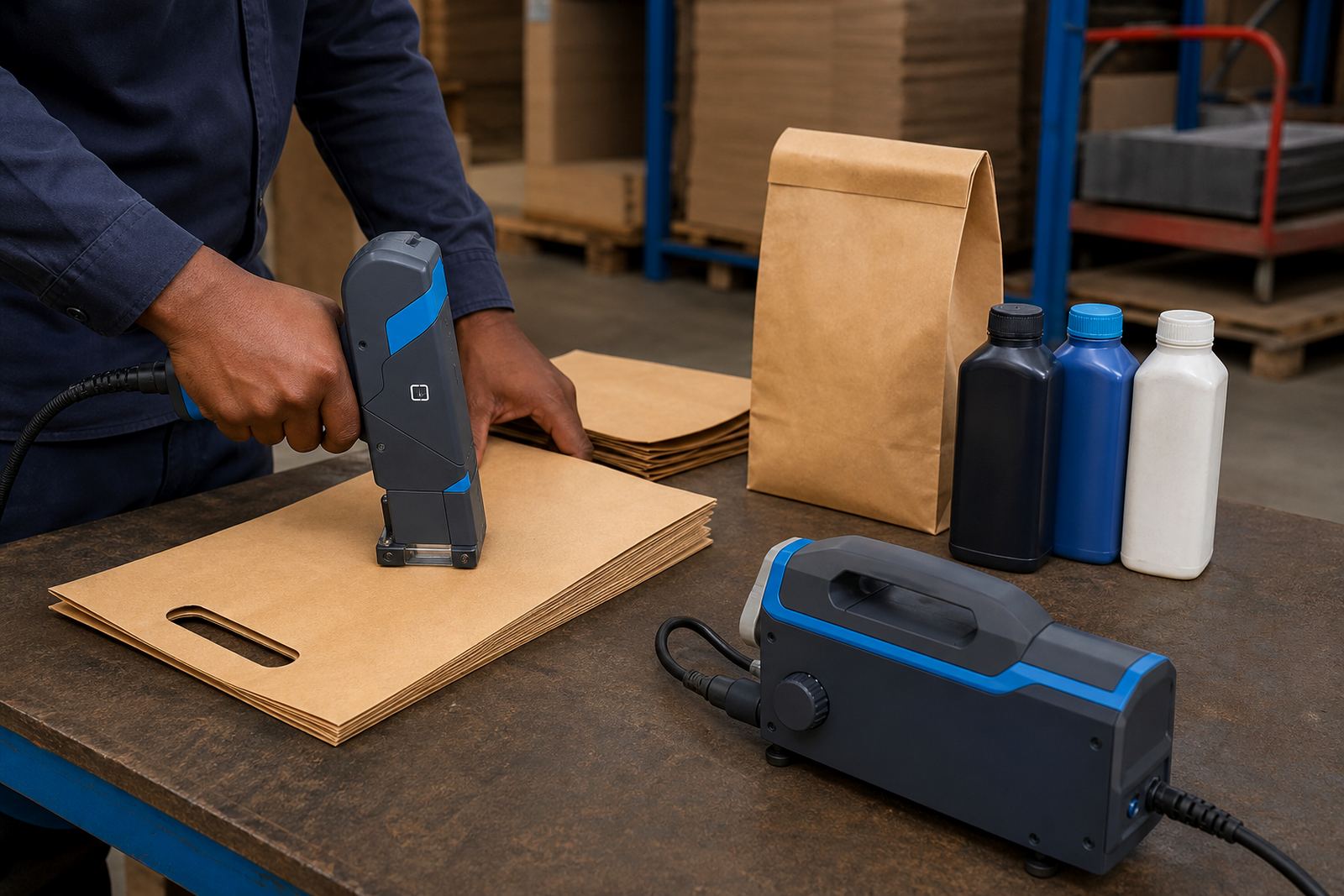
Every Starter Hire Pack is arranged around the coding job rather than a fixed one-size bundle. The handheld coder is supplied with the ink suited to the surface, a basic message layout, and support for test prints before normal use begins. Where the message includes a barcode, the barcode module is set up with the required height and spacing so scanning remains practical on site.
- Handheld inkjet coder for manual marking on flat or slightly uneven surfaces
- Solvent, water-based or quick-dry ink matched to the substrate
- Message loading for date, batch and simple text lines
- Barcode setup for common carton and pack coding work
- Logo setup for a basic one-colour mark where the surface allows it
- Test printing with operator guidance before the unit goes into use
The pack can also include consumables supply for the hire period, plus backup unit support where a busy line cannot wait for a unit to be swapped around. That matters on contract packing floors and in small distribution spaces where the same printer may move between stations during the day.
Print sizes, surfaces and the marks the pack handles
Handheld inkjet coders in this hire range are generally used for print heights from about 12 mm up to 50 mm, depending on the message, the head and the surface. Smaller text is useful for batch coding on cartons and inner packs, while taller marks help on timber, pipe bundles and steel sections where the operator needs the code to stand out from a few metres away. The right size is usually chosen around legibility, not decoration.
The starter pack is suitable for porous and non-porous surfaces, although the ink choice changes the result. Cartons and paper sacks usually work well with water-based or quick-dry inks. Plastic, foil-lined packaging, painted steel and sealed timber often call for solvent-based ink so the code bonds properly and dries with less smudging. Where the job moves between surfaces, the ink selection needs to be handled carefully because one setting does not suit every material.
- Cartons, sleeve packs and shipping cases
- Woven bags and paper sacks
- PVC or coated pipe sections
- Timber lengths, crates and packing battens
- Steel pipe, sections and fabricated parts
Humidity, dust and handling speed can affect the finish. In coastal Durban, for example, slow-drying ink on a slick surface may need more care than the same message on dry timber in inland stores.
Where the pack fits on a working floor
The Starter Hire Pack fits operations that need a portable coder without tying the line to one fixed point. It is used in dispatch areas, receiving bays, small production lines, warehouse aisles and yard spaces where stock is marked by hand as it moves. That makes it useful for businesses that print short runs, change label text often, or need to code mixed loads leaving Pinetown, Westmead or New Germany for other parts of the country.
In Pietermaritzburg, the pack is often suited to timber, agricultural packing and general goods. In Johannesburg, it can be used where cartons, pipe bundles and fabricated parts need clear identification before loading. In Cape Town and Richards Bay, moisture and storage conditions make ink choice important, especially where cartons or timber stand in cool rooms, covered yards or exposed loading points.
The pack suits teams that need a practical way to mark goods without changing the packing flow too much. It works best where a person can hold the unit steady, follow a set message and keep the nozzle and surface at the right distance. If the job needs constant movement, the setup can be adjusted with training and a test run before the hire goes into regular use.
Setup, fitting and operator care on site
The unit does not need permanent fitting, but it does need correct setup before printing starts. Message loading, print orientation, nozzle height and test marks all need checking against the product and the surface finish. Where a barcode is included, the quiet part of the setup is usually the spacing and contrast rather than the code itself, because scan quality depends on clean print edges.
Operator training matters on the first hire. The person using the unit needs to know how to keep the print head clean, how to store the ink, how to line up the mark on the carton or pipe, and how to avoid rubbing the fresh code too soon after printing. If the job shifts between a porous carton and a coated pipe, the settings should be checked again before production starts.
- Keep print heads clean and capped when not in use
- Store ink upright and out of direct sun
- Run short test marks after any message change
- Wipe dust from timber, steel or carton surfaces before coding
- Handle freshly printed stock with care until dry
On jobs with repeated changeovers, remote setup help can save a lot of trial marks and wasted product. For heavier use, an on-site setup visit and backup unit support may be the better fit.
Hire terms, care points and the details to confirm
The Starter Hire Pack is available on weekly or monthly hire terms, which helps when the coding need is tied to a project, seasonal stock or a longer contract run. Before the pack goes out, the surface type, print height, message content and barcode requirement should be confirmed so the correct ink and head setup can be prepared. The more exact the surface note, the cleaner the first print usually is.
Basic care during hire is straightforward. The unit should be kept in a clean, dry place when not in use, and it should not be left with dried ink on the nozzle. If the pack is moving between Durban, Johannesburg, Cape Town or Richards Bay, transport and storage conditions matter because heat, dust and moisture can affect the print. Consumables supply is available where the job runs long enough to need extra ink or cleaning items.
- Surface material and finish
- Message text, batch code format and date style
- Required print height and barcode size
- Any logo artwork or simple graphic mark
- Hire term, delivery point and collection point
- Need for setup help, training or backup unit cover
For enquiries, the team uses the enquiry form on the contact page, with support arranged from the Pinetown base and the hire areas across Durban, Pietermaritzburg, Johannesburg, Cape Town and Richards Bay.
Key facts
| Product type | Starter hire pack for handheld inkjet coding |
|---|---|
| Hire term | Weekly or monthly |
| Typical print height | About 12 mm to 50 mm depending on message and surface |
| Supported marks | Dates, batch codes, barcodes, simple logos and text |
| Ink options | Solvent, water-based and quick-dry |
| Common surfaces | Cartons, bags, pipes, timber and steel |
| Service cover | Delivery and collection, setup help, training, consumables and troubleshooting |