
Carton Barcodes That Stay Readable Through Dispatch
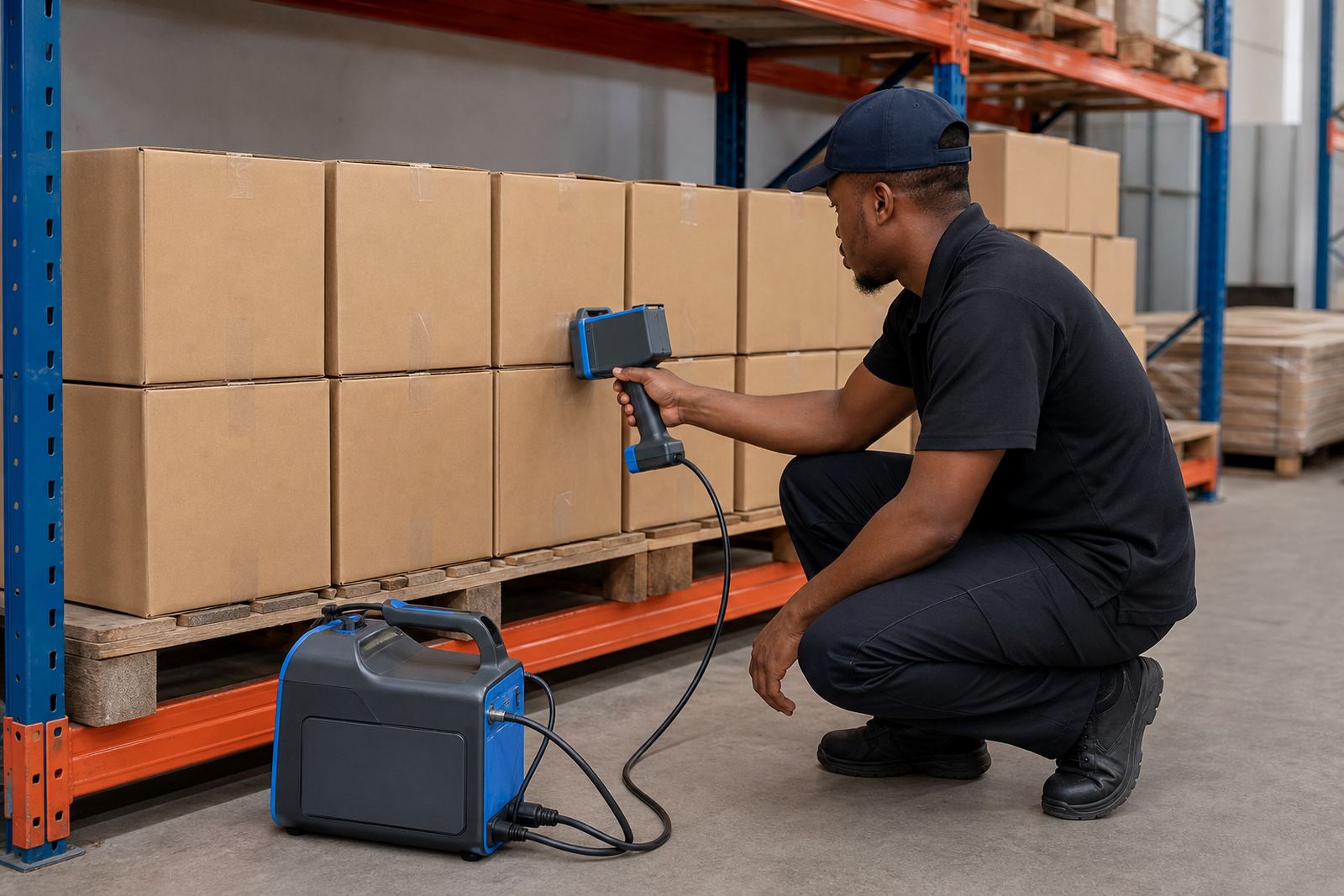
For warehousing and outbound packing, the barcode has to sit flat, print dark enough for a scanner and leave enough quiet space around the code. Handheld inkjet printers work well on plain cartons, printed sleeves and many corrugated boards, especially when the line changes often or cartons move across different packing tables.
Most carton jobs use one-dimensional barcodes, with the code placed on one side panel or the top face where handlers can see it without turning the box around. A clear human-readable number beneath the bars helps when a carton is checked manually at receiving or loading.
- One-dimensional barcode artwork loaded into the coder
- Batch or dispatch number added beside the code
- Quiet space left around the bars for scanning
- Matt carton surfaces give cleaner marks than glossy wraps
The Usual Hire Set For Carton Coding
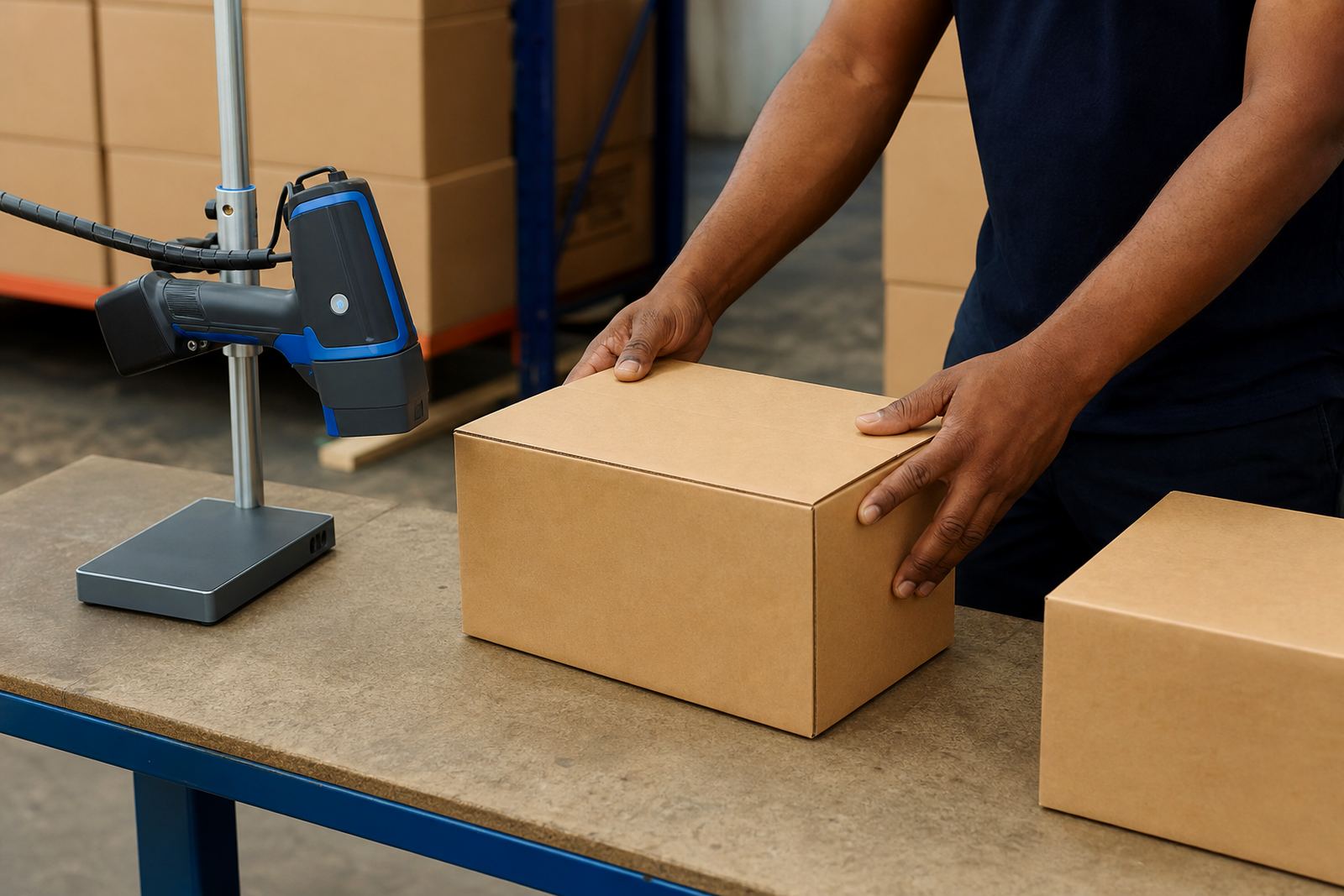
A carton coding set normally includes the handheld printer, the correct ink for the board being marked, and the message file or layout loaded into the unit. Where cartons carry only one barcode and a short line of text, a compact handheld coder is often enough. If the carton face is wider or the mark needs extra detail, a wider print head or a taller character setting may suit the job better.
Ink choice matters. Quick-dry ink suits fast handling, while solvent-based ink tends to grip better on some coated or dusty surfaces. Water-based ink can work on absorbent carton stock, but it is not the first pick where cartons are handled soon after marking.
- Handheld printer with the right print height for the code
- Ink matched to absorbent or coated carton stock
- Barcode file, batch text and any logo block
- Test prints before the first full run
Layout Notes Before The First Carton Goes Through
A barcode on a carton should be placed where the label or code will not rub against tape seams, corner crush or strapping. If the dispatch team stacks cartons tightly, the side panel often works better than the top face. For mixed product lines, keep the barcode in one fixed position so operators do not need to search for it on every pack.
Barcode width needs matching to the available print area and the scanner being used in the warehouse. Too small and the bars break up. Too large and the code runs too close to folds or edges. A short print trial on actual cartons gives a better result than setting the artwork by guesswork.
- Keep codes away from folds, tape and seam lines
- Use the same carton side for every dispatch format
- Leave a clean margin around the bars
- Check scanability under normal warehouse light
Mistakes That Turn A Clean Barcode Into A Return Job
Carton barcode issues often start with the wrong ink or a rushed setup. A pale code can happen when the head setting is too light, the carton surface is dusty, or the ink does not suit the board finish. Smudging usually points to handling too soon after printing or the wrong ink type for the surface.
Another common problem is printing over tape, stamps or pre-printed artwork. That breaks the bars and makes the code hard to read. If the carton is textured or slightly damp from coastal humidity in places like Durban or Richards Bay, the mark needs a proper test before the run starts.
- Printing over tape, folds or printed graphics
- Using a code that is too small for the scanner
- Skipping test prints on the actual carton stock
- Choosing ink without checking the surface finish
Hire Terms And Budget Bands For Barcode Work
Short weekly or longer monthly terms suit carton coding jobs that run in peaks, especially where dispatch volumes change from one customer order to the next. A short hire can suit a seasonal push or a trial run. Longer hire terms make sense when the same carton format is used daily and the message changes only for dates, batch lines or dispatch references.
Budget depends on the printer size, ink type, support level and whether barcode loading, operator training or on-site setup is needed. For many carton jobs, the cost sits in a practical middle band rather than the high end of industrial print systems. A clear quote usually reflects the print width, the number of messages, the ink chosen and how much setup work the site needs.
- Weekly hire for short production bursts or trial runs
- Monthly hire for steady carton dispatch work
- Extra support for barcode loading and test printing
- Consumables and backup units can be added where needed
Local Hire Support For Durban, Gauteng And Beyond
Carton barcode hire work often starts in Pinetown or Durban, then moves out to Pietermaritzburg, Johannesburg, Cape Town and Richards Bay for packing floors, warehouses and distribution yards. Delivery and collection can be arranged around the hire set, with remote setup help available where the operator needs layout guidance before the first cartons are marked.
For sites that want a cleaner handover, on-site setup, message loading, barcode setup and operator training help keep the carton run steady. That suits businesses marking outer cartons for warehousing, retail dispatch or inter-branch stock movement, where the same code format has to stay legible across multiple shifts and sites.
- Pinetown, Durban, Pietermaritzburg, Johannesburg and Cape Town
- Richards Bay and nearby industrial areas
- Westmead and New Germany hire coverage
- Setup help, inks and backup unit support available