When best-before lines need to stay readable
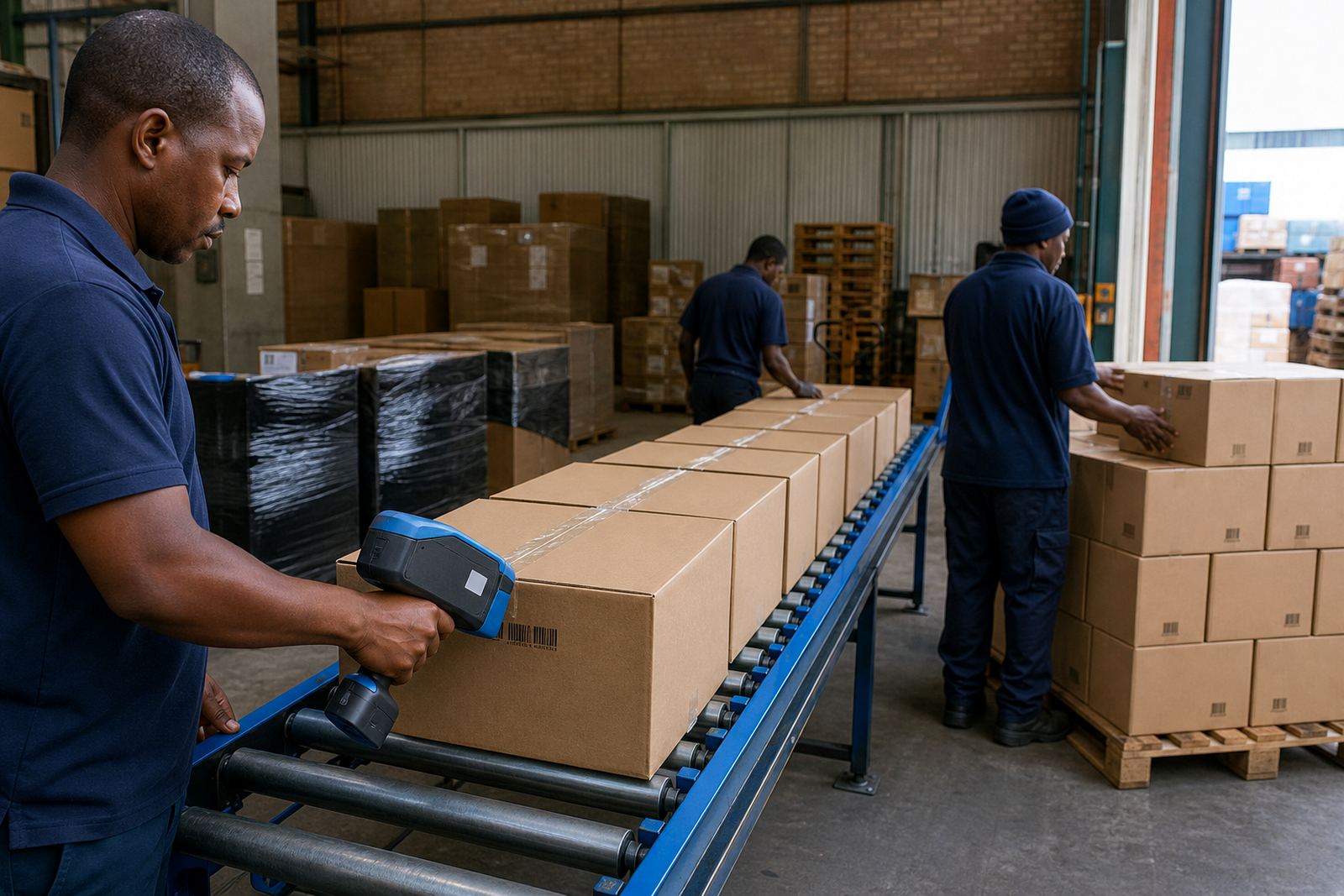
Best before information usually needs to sit where packers and checkers can read it fast, without hunting for the mark. On cartons, sleeves and paper bags, the print has to stay sharp through handling, stacking and transport, and on coated packs it must dry properly before the next box lands on top.
For food packs, beverages, dry goods and related packaging, the usual request is a clear date line with a batch code beside it. Some lines also need a simple logo, product line reference or barcode, especially where stock control is checked by hand and by scanner. The printer setup has to suit the surface, the line speed and the size of the message not just the date itself.
Handheld coder sets that suit short production runs
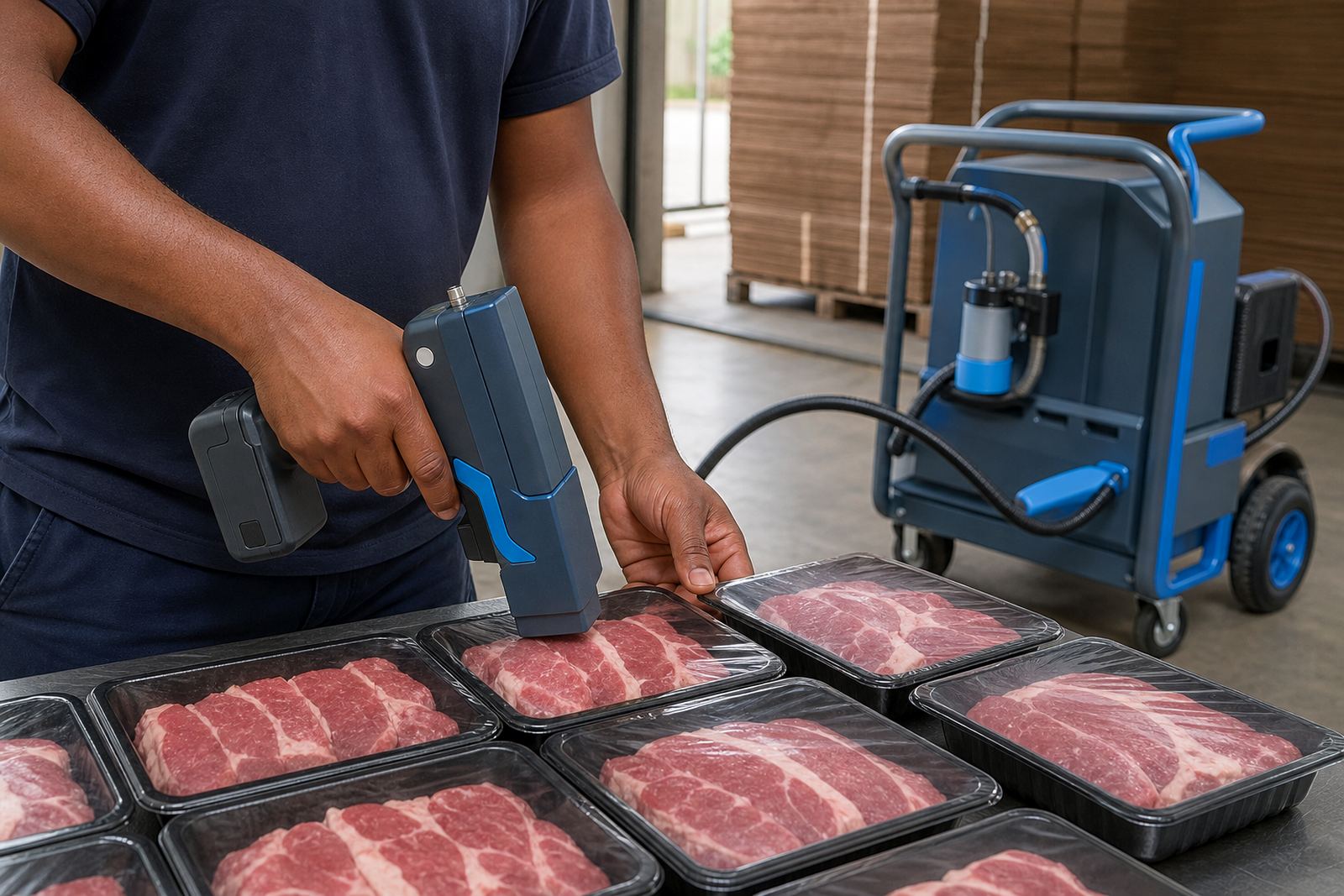
A typical hire set includes a handheld inkjet printer, the correct ink, a charger, message setup help and a test print before the unit leaves site or is used on the floor. For best before work, print heights often sit in the 12 mm to 25 mm range, though smaller or larger text can be set depending on the unit and the message length.
- Cartons and sleeves usually take quick-dry or water-based ink.
- Plastic-lined bags and some coated packs often need solvent-based ink.
- Porous timber and untreated board can take a wider, more forgiving mark.
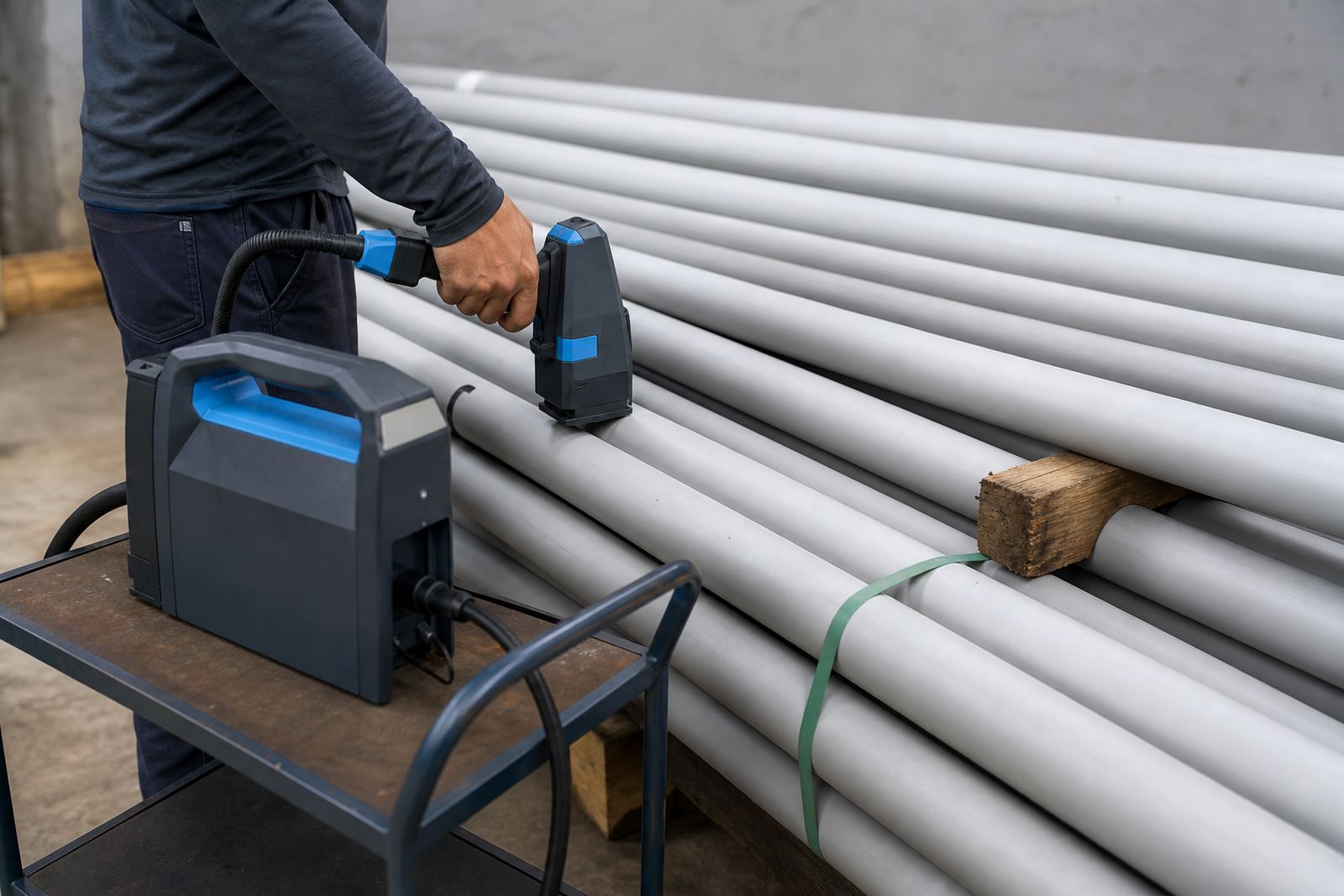
- Metal pipes and steel need careful surface prep before coding.
- Barcodes need clean spacing, enough contrast and steady hand movement.
For many food and packaging jobs, a short line of best before text works well with a batch number underneath. A logo can fit too, but the layout must leave enough room for the date so operators are not guessing where the code should sit.
Planning the mark before the first carton moves
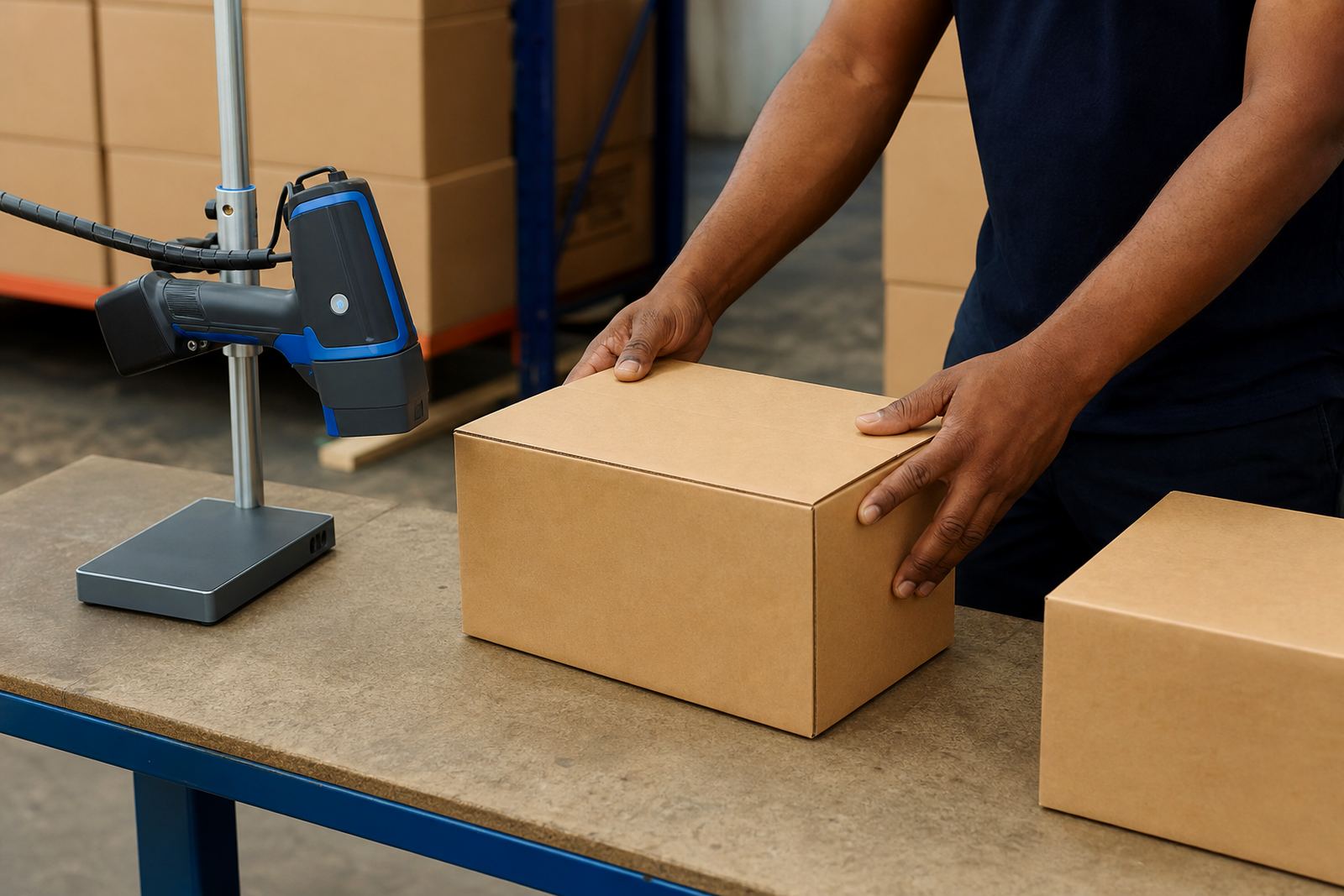
The best result starts with the pack itself. A plain kraft carton, a glossy sleeve and a woven bag do not behave the same way, and ink that looks fine on one surface can feather or smear on another. It helps to confirm the message length, the font size, the print position and whether the mark must sit on one face or across a fold.
Handling matters too, from the filling line to the retail shelf. If cartons are stacked straight after coding, quick-dry ink is often the safer call. If the job is on bags or sleeves that move from one station to the next, a steadier print head setting may be needed so the code stays even across a batch. A neat setup saves a lot of rework later, especially when the same message must appear in the same spot all day.
- Keep the date format consistent across the shift.
- Leave enough clear space around barcodes and batch codes.
- Test on the real packaging, not only a sample sheet.
- Check whether the surface is porous, coated or slightly damp.
- Choose ink after the pack material has been confirmed.
Common mistakes that spoil a clean code
Most trouble starts with the wrong ink, the wrong print height or a message that is too long for the space available. A heavy hand can also leave streaks, especially where the operator moves too slowly across the pack or pauses in the middle of a print pass. On some bags and sleeves, the surface texture hides small text, so a bigger, simpler line works better than a crowded layout.
Another issue is poor spacing between the best before line and the batch code. If everything is packed too close together, the mark becomes hard to read and the operator may have to stop to fix it. The same happens when the printer is set for a flat carton but the job moves onto a curved pipe or rounded container later in the day.
We often advise a short test run before full production starts. That gives room to check dry time, legibility and barcode reading without wasting packaging. It also shows whether the message should be moved a few millimetres higher or lower on the pack.
Hire terms and what fits the budget
A one-week rental suits shorter packing runs, seasonal work and trial batches. Monthly hire works better where the same coder is needed throughout a steady production cycle or where the line needs a unit on hand for regular date changes. Delivery and collection can be arranged to suit the job location, with support available for setup, loading the message and checking the first prints.
Budget depends on the printer type, the ink choice, the print height and whether extras are needed such as barcode setup, logo loading or backup unit support. For smaller best before jobs, a basic weekly hire may sit in the lower Rand range, while a fuller monthly package with consumables and setup help will sit higher. Jobs that need specialist ink for coated packs, metal or outdoor handling can also shift the figure.
- Short runs often favour weekly hire.
- Steady production usually suits monthly hire.
- Extra setup work can change the total hire cost.
- Consumables and backup support may be added where needed.
Coverage across Durban, Gauteng and the coast
Best before coding hire is available from Pinetown, Durban and nearby areas including Westmead and New Germany, with hires moving into Pietermaritzburg, Johannesburg, Cape Town and Richards Bay. That matters when a packhouse, converter or distributor needs the same kind of handheld coder at different sites. Coastal humidity in Durban and Richards Bay can also affect how quickly some inks set, so the ink choice needs to suit the local conditions as well as the packaging.
The team includes Sibusiso Moagi, Nokuthula Kotze, Jared Rademeyer, Anele Vermaak, Priya Pillay and Morne Oosthuizen, covering hiring, training, technical support, operations and field setup. Our hire can include message loading, test prints, remote setup help and troubleshooting support when a best before coding job needs it.