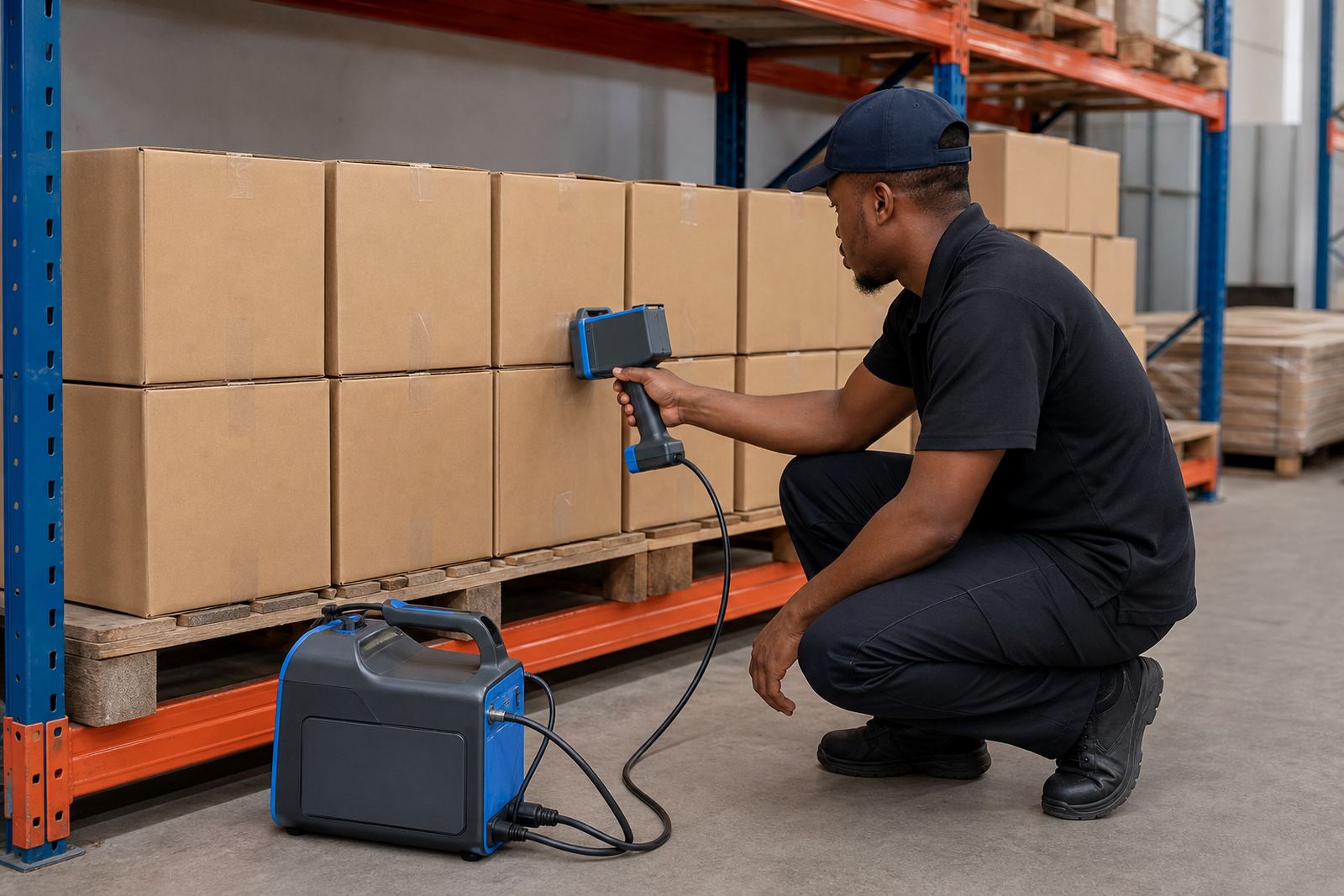
When box coding has to stay readable through handling
Lot coding on boxes is usually needed where cartons move through stores, warehouses and delivery bays before they reach the next point in the chain. A clear lot reference lets a receiving team match stock to a production run, isolate an issue and keep rotation under control. On corrugated cartons the print must hold its shape, not feather into the flute lines, and still read cleanly after stacking, taping and handling.
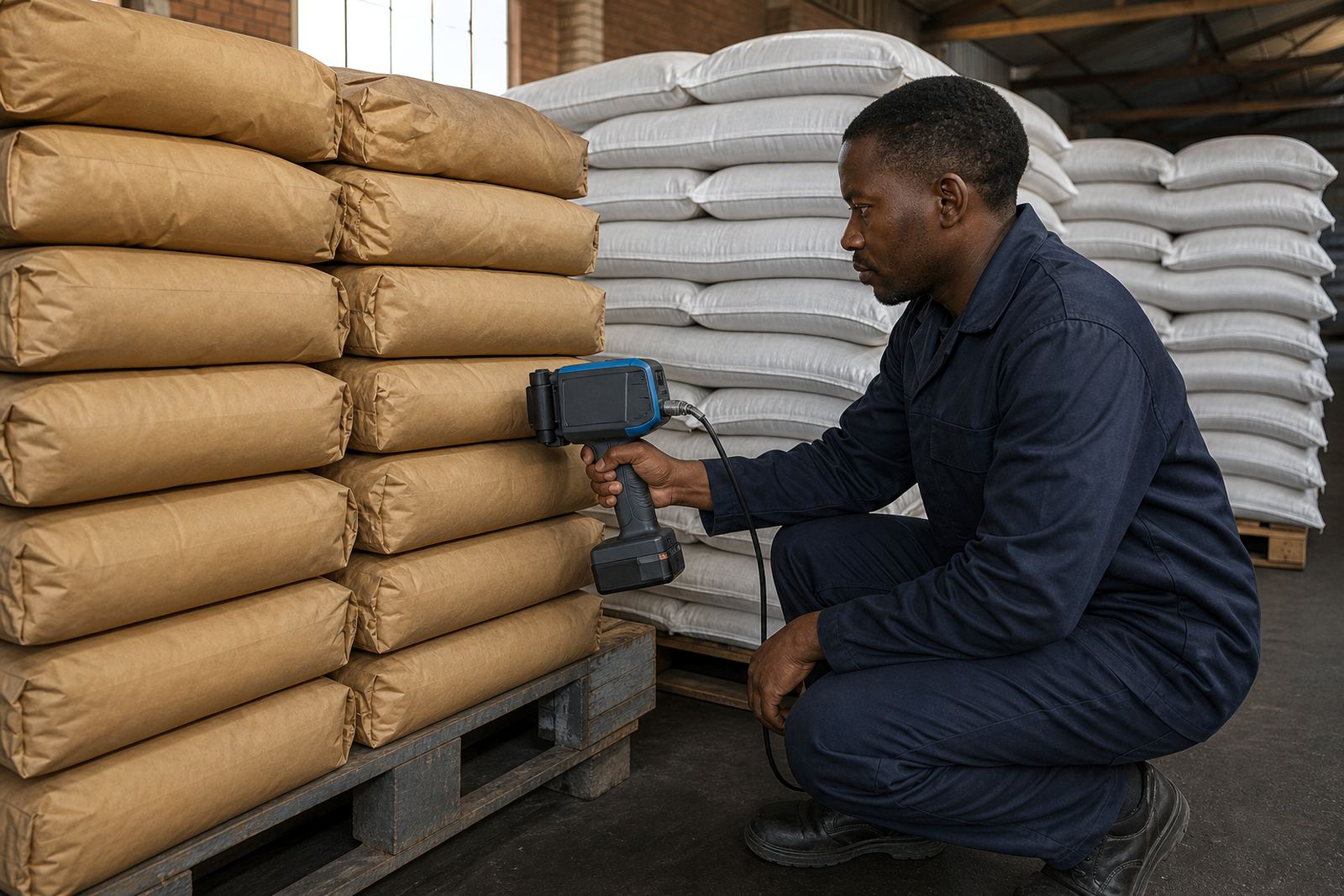
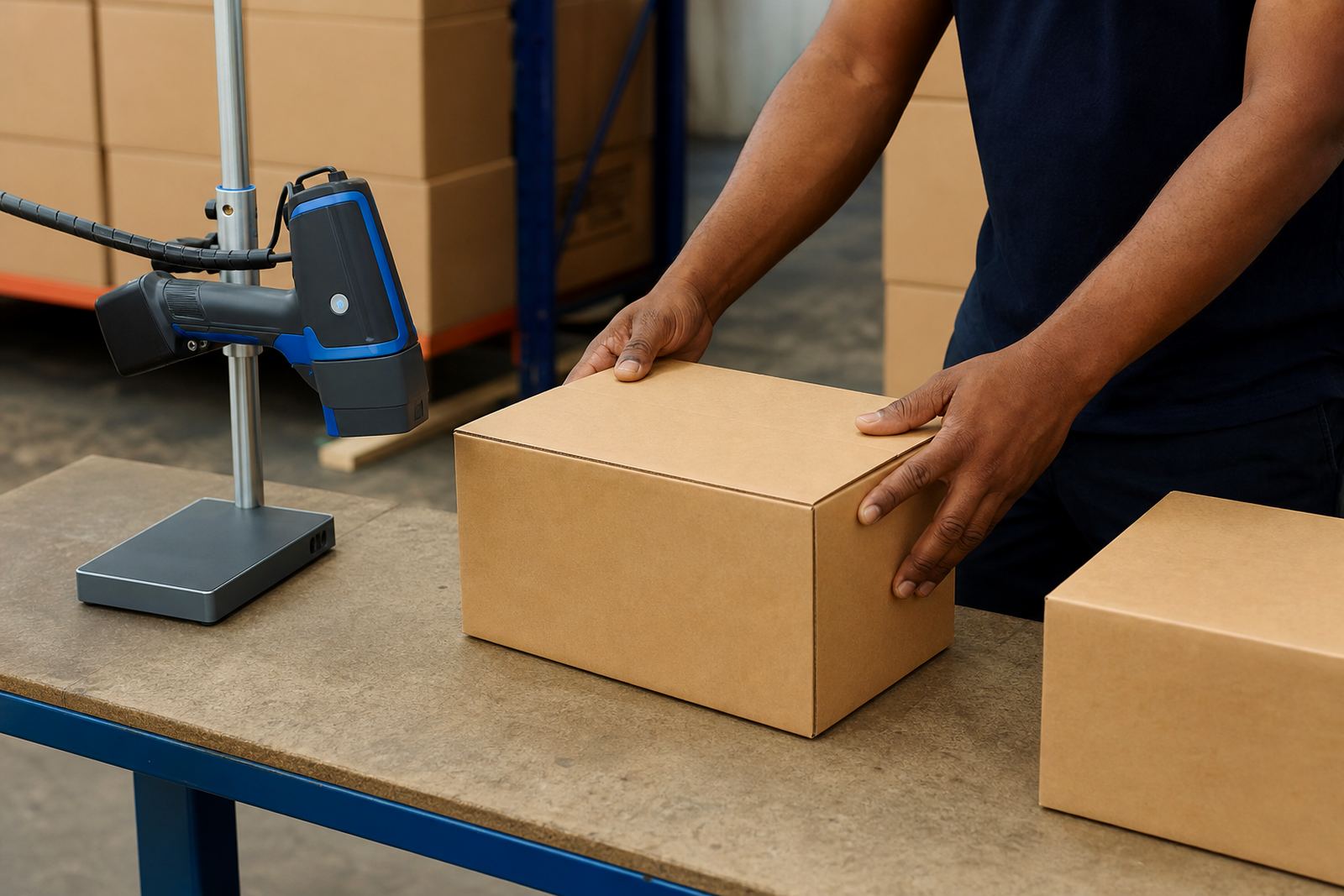
Handheld inkjet coders are useful when cartons change size often or when the print position moves from one line to another. They suit product names, batch numbers, date fields, short internal references and simple logos. For box work, the operator usually marks one face or a side panel, with the message set to fit the available flat area.
Printer setup for cartons, sleeves and mixed surfaces
The right unit depends on the surface, the line speed and how much detail the code needs. For boxes, a print height in the small to medium range is common, especially for lot numbers and date fields. On wider carton faces, two lines can be used with a logo above or beside the code. If the carton is glossy, coated or dusty, the ink choice matters as much as the message itself.
- Water-based inks are often used on porous cartons and timber where the surface drinks the ink in.
- Quick-dry inks suit faster handling where printed cartons are stacked or moved soon after coding.
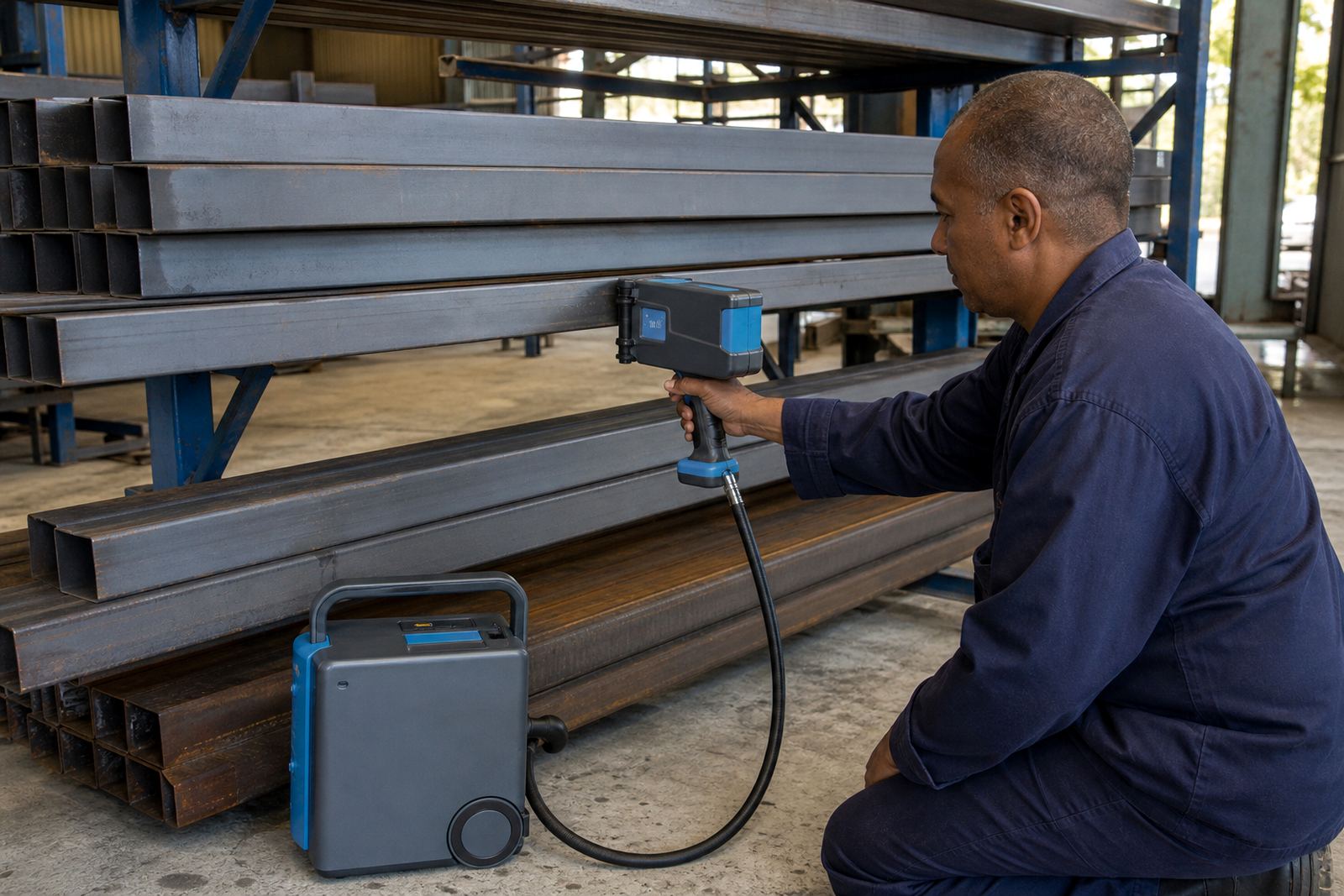
- Solvent-based inks are useful on less porous surfaces, including some plastics and metal parts.
- Barcode setup helps when a lot code must sit beside a scannable label or ticket.
For mixed work, we look at whether the same machine needs to move from boxes to pipes or timber. That affects nozzle selection, message height and the ink cartridge choice.
Layout notes that keep lot codes in the right place
A good box layout starts with the carton size, the fold lines and the way the box is sealed. The code should sit clear of seams, tape and corners so the print stays legible. If the carton is handled by fork trucks or manual stacking, place the lot reference where it will not rub off against another box. On smaller cartons, the code may need to sit tighter to the top edge, while larger cartons leave more room for a logo or product line.
For dispatch work, many teams use one fixed print area and one fixed message format. That keeps the operator from guessing where the code should land each time. It also helps when stock comes in from different print runs and the team needs to separate batches without opening every carton.
Common mistakes on box coding jobs
The most common issue is printing too close to a fold or taped seam, which breaks the line and makes the lot reference hard to read. Another problem is using the wrong ink for the board finish, so the code smudges or dries patchy. Low contrast can also be a problem, especially on brown cartons where a pale print is hard to scan or read at a glance.
- Set the message too large and it wraps over a crease.
- Use a porous-surface ink on a coated carton and the mark sits on top too long.
- Move the printer by hand without a steady guide and the text skews.
- Load a barcode that is too small for the available box face.
- Skip a test print on the actual carton material and discover the error later.
When the job involves several box sizes, a short test on each board type helps settle the spacing before production starts. A lot code that looks fine on one carton can land badly on another, even if the size seems close.
Hire terms for short projects and repeated box runs
Weekly hire works well for a short contract, a stocktake, a seasonal packing run or a new line that is still settling. Monthly hire suits regular box coding where the same coder is used through several production cycles. The hire package can include message loading, operator training, ink selection help, barcode setup, logo setup, test printing and backup unit support if the job needs it.
Delivery and collection are arranged for locations in Durban, Pietermaritzburg, Johannesburg, Cape Town and Richards Bay, with Pinetown and Westmead often used for local hires. For teams that need more hands-on support, on-site setup and remote setup help can be paired with the hire so the printer is ready for the carton format in use.
Budget depends on the hire length, the number of units and the ink type needed for the surface. For a single handheld coder on a short box-marking job, teams usually plan for a few thousand rand over the hire period. Longer monthly use, extra cartridges and setup support will move the figure higher, especially where barcode work or logo printing is part of the brief.
What a box-coding hire package can include
Many box jobs need more than a printer in the crate. The unit must carry the correct message, the print area must suit the carton size, and the operator needs a clear method to keep the code in the same spot. That is where the support side of the hire makes a practical difference.
- On-site setup for a new line or a changed carton format.
- Remote setup help when the printer must move between sites.
- Operator training for steady hand movement and correct placement.
- Consumables supply for ink and related printing needs.
- Troubleshooting support if the code shifts, fades or smears.
Some box lines are straightforward, while others move between cartons, bags and timber offcuts in the same week. A flexible hire setup is useful there because the message, ink and print height can be adjusted without buying a fixed machine for one small part of the work.