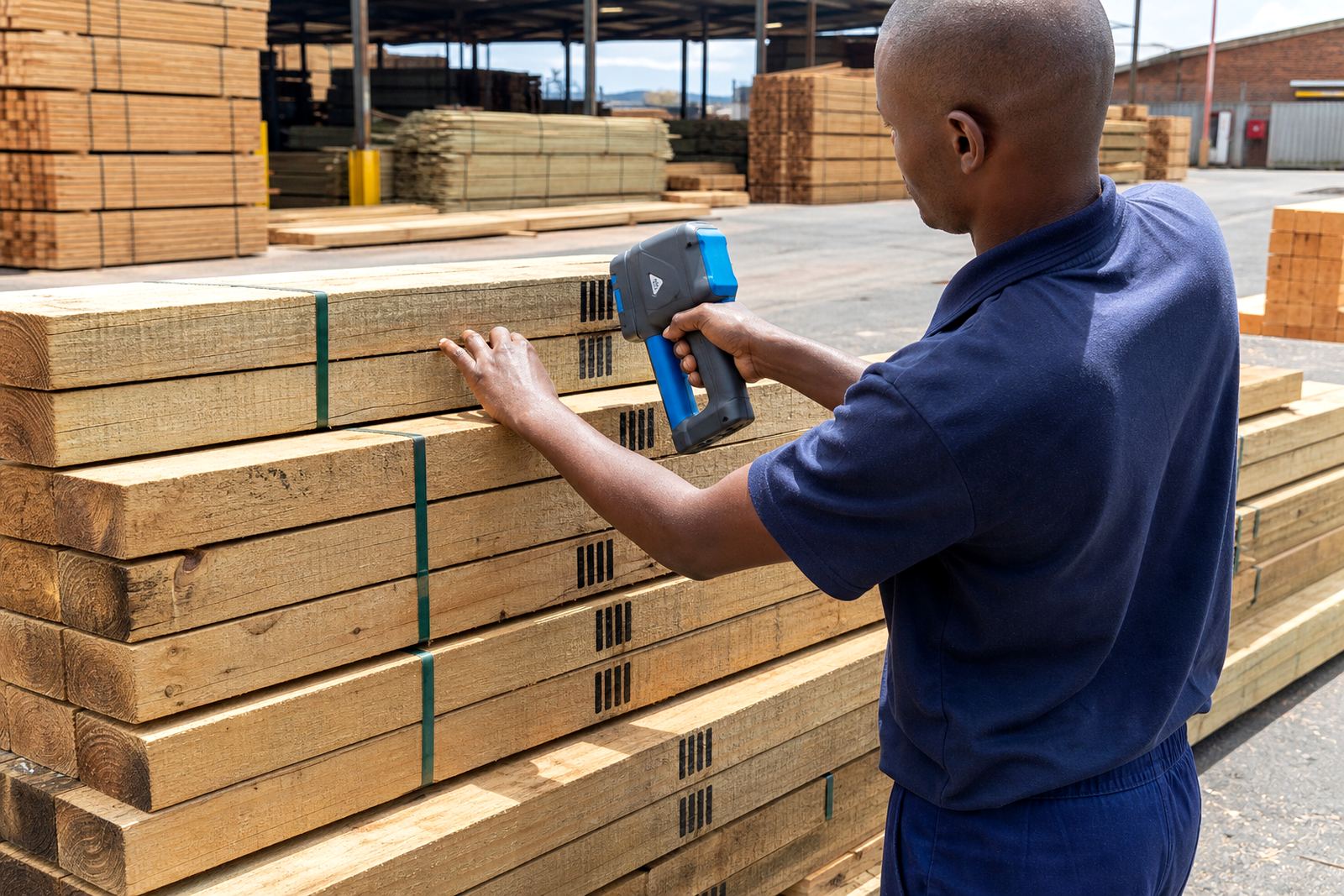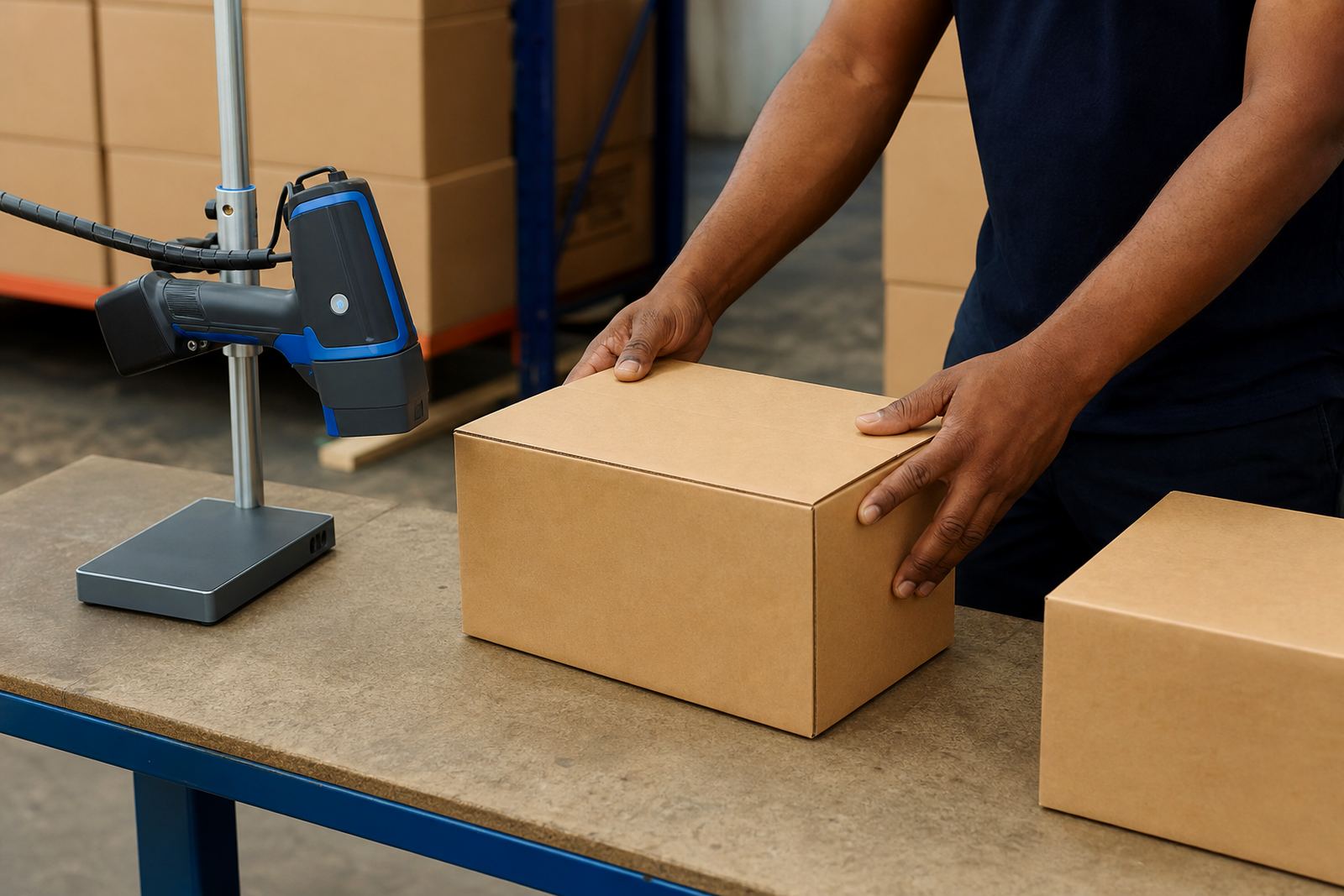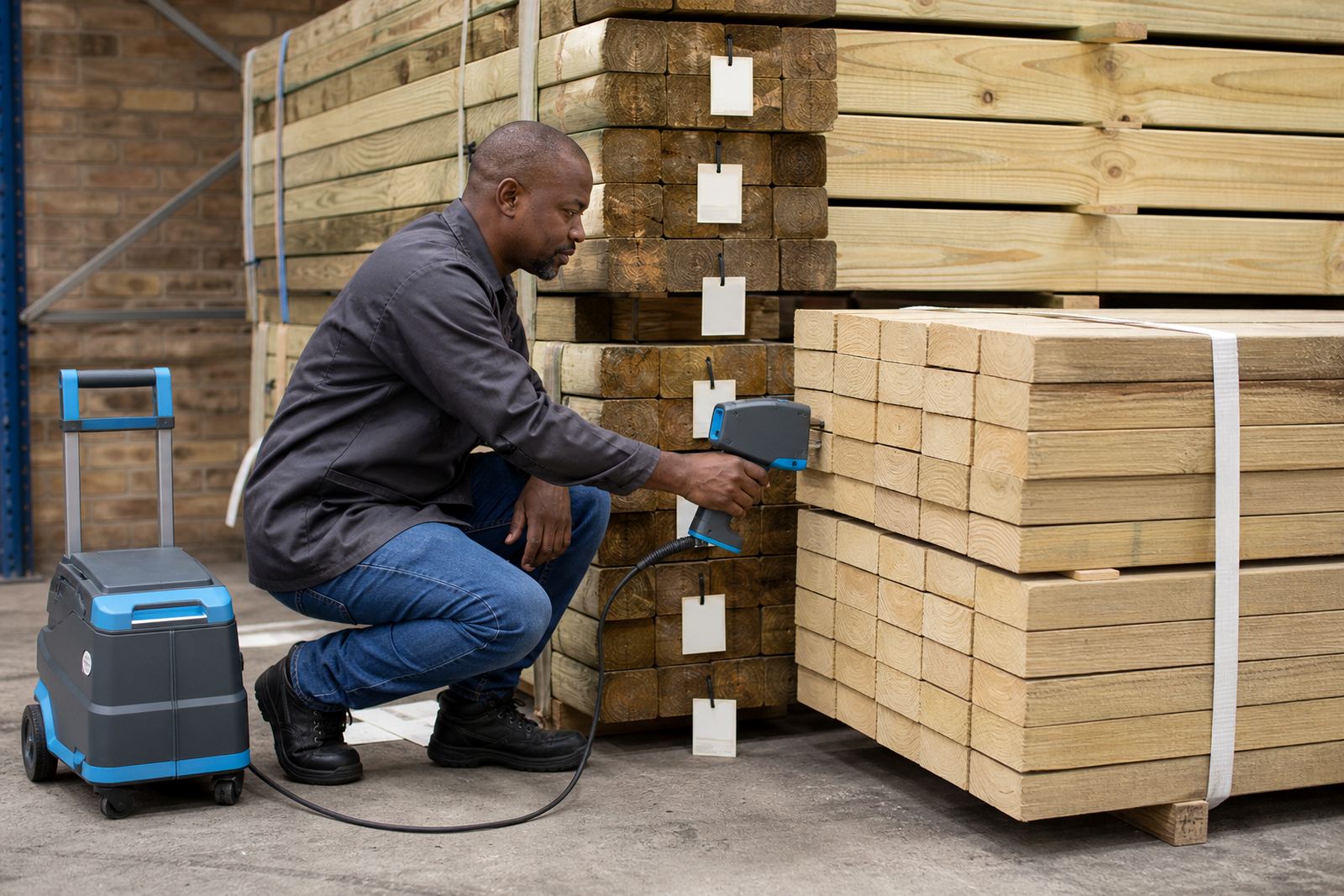

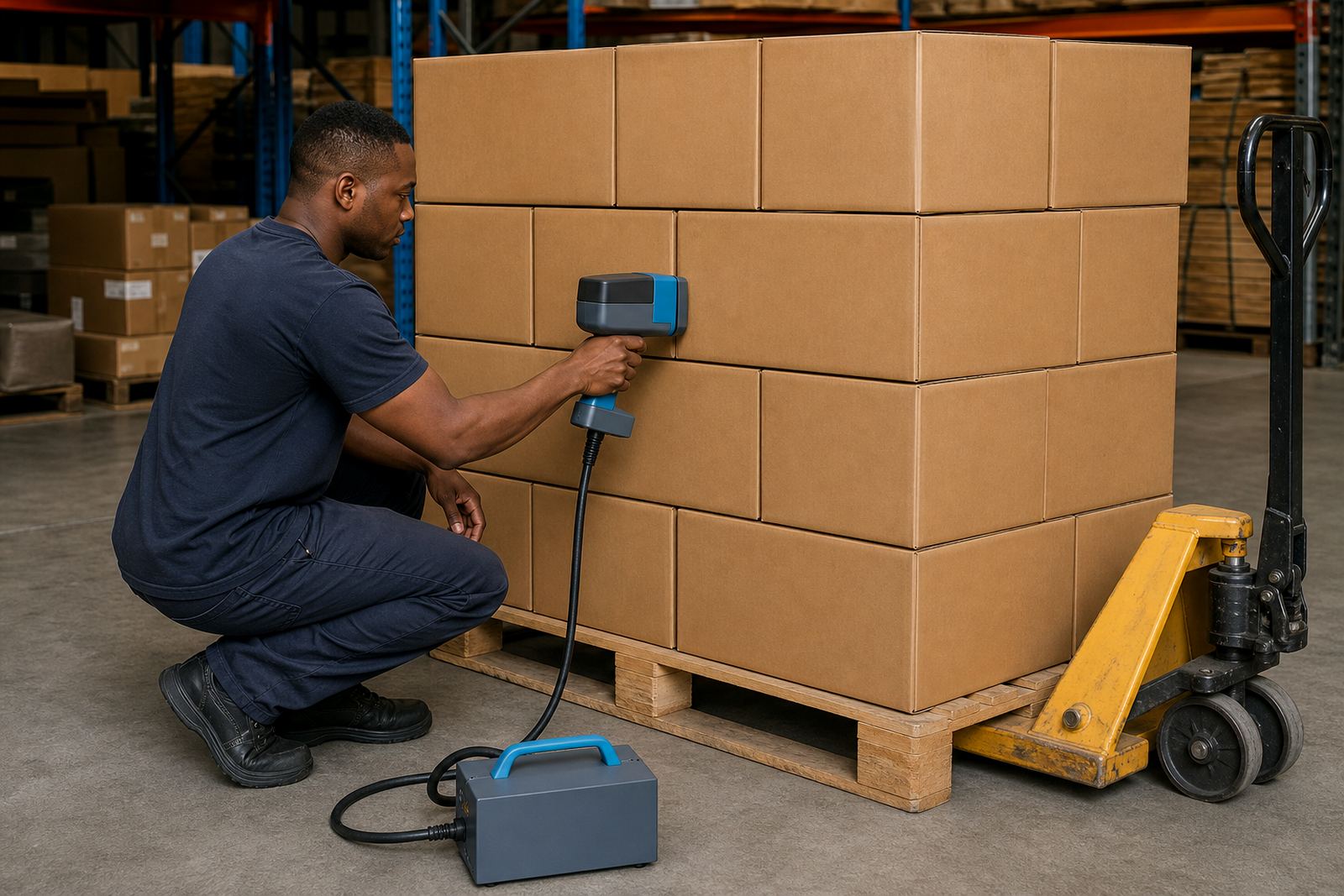
When cartons need the code on the box
Carton coding usually comes up when goods leave the packing line in sealed outer boxes and the mark has to stay readable through storage, transport and warehouse handling. A handheld coder lets the operator print directly on corrugated cartons, even where the box size changes through the week or the same line handles more than one product family.
For Durban stores, coastal humidity can affect drying on plain cardboard, so ink choice matters. Quick-dry and solvent-based inks are often used where cartons move fast, while water-based ink can suit more absorbent board in calmer indoor areas.
- Packed-on date for warehouse traceability
- Expiry date on food, cosmetics or consumables cartons
- Batch number for recalls and stock control
- Product name, shift code or line reference
The handheld setup that works on carton work
A carton job usually needs a handheld inkjet coder, the correct ink cartridge or refill, and a short layout built around the print area on the box. Most operators want a clear message in one or two lines, with the date format placed where the loader or checker can read it at a glance.
Print height depends on the message and the carton face. Smaller carton marks may sit around 12 to 18 mm high, while bigger carton panels can take larger text or a barcode that needs more quiet space around it. The surface should be dry, flat and free of heavy dust, glue marks or loose fibres.
- Single-line date codes for fast packing
- Two-line layouts for batch plus expiry details
- Barcodes where stock handling needs scanning
- Logo blocks for branded outer cartons
Layout notes before the first carton is printed
Good carton coding starts with where the box is held, stacked and scanned. If the mark lands too close to a flap or seam, the print can fold into the crease and lose clarity. If it sits too low on a rough carton edge, the ink may spread or break up.
We usually look at the carton material, the distance from the operator's hand to the print face, and whether the code must stay readable on a shelf or only in transit. For pallet loads sent into Johannesburg or Cape Town, it helps to keep the code in the same place on every box so warehouse staff do not waste time searching for it.
- Leave a clean print panel away from seams and tape
- Keep codes away from handles, perforations and corners
- Match the ink to the carton finish and handling speed
- Load the message in the same position across the pack run
Common carton coding mistakes that slow a pack line
Most carton coding problems are practical, not complicated. The wrong ink on coated board can bead, while a message loaded too close to the edge may print half on the flap and half on the face. A hurried setup also leaves the date too large for the panel, which means the carton has to be reworked.
Some sites in Pinetown and Westmead use recycled cartons with uneven surfaces, and that needs a firmer hand and a sensible test print. If the carton is dusty or the board has absorbed damp air, the print may look pale until the surface is wiped down and the message checked.
- Poor surface preparation before the first run
- Ink choice that does not suit the board finish
- Print size that is too large for the carton face
- Barcode spacing that makes scanning unreliable
Hire terms and budget thinking in rand
Flexible weekly or monthly terms are useful when carton coding is needed for a short campaign, a seasonal run or a contract pack order. Weekly hire suits a quick job with a clear end date, while monthly hire suits a steadier packing rhythm where the coder stays in use across several production batches.
Budgeting is usually worked out in rand around the hire term, the coder type, the ink choice and any setup or training support. A carton line that needs barcode setup, logo loading and a backup unit will sit in a different hire band from a straightforward date code on plain cartons.
Delivery and collection, on-site setup, remote setup help, operator training and test printing all shape the final hire package. For sites in Durban, Pietermaritzburg, Richards Bay, Johannesburg or Cape Town, that support can keep the carton code consistent across the full run.
Support around the hire, from setup to test prints
Carton date coding often needs more than a machine in a box. The message has to be loaded in the right format, the print height checked against the carton face, and the operator shown how to keep the print straight when the run speeds up.
Our hire support covers consumables supply, troubleshooting support and backup unit support where the line cannot sit waiting on a missed carton code. Sibusiso Moagi leads the operation from the Pinetown base, with Nokuthula Kotze handling hire coordination, Jared Rademeyer on technical support, Anele Vermaak on training, Priya Pillay in operations and Morne Oosthuizen on field setup.
We supply handheld printer hire across Pinetown, Durban, Westmead, New Germany, Pietermaritzburg, Johannesburg, Cape Town and Richards Bay.