
When a small logo does the job
A logo on packaging usually has a practical role first. It helps a carton or bag carry a cleaner identity on the line, and it gives a product a consistent mark when a full print system is not needed. For short runs, seasonal packing, mixed product sizes or site work, a handheld inkjet coder is often the easiest fit.
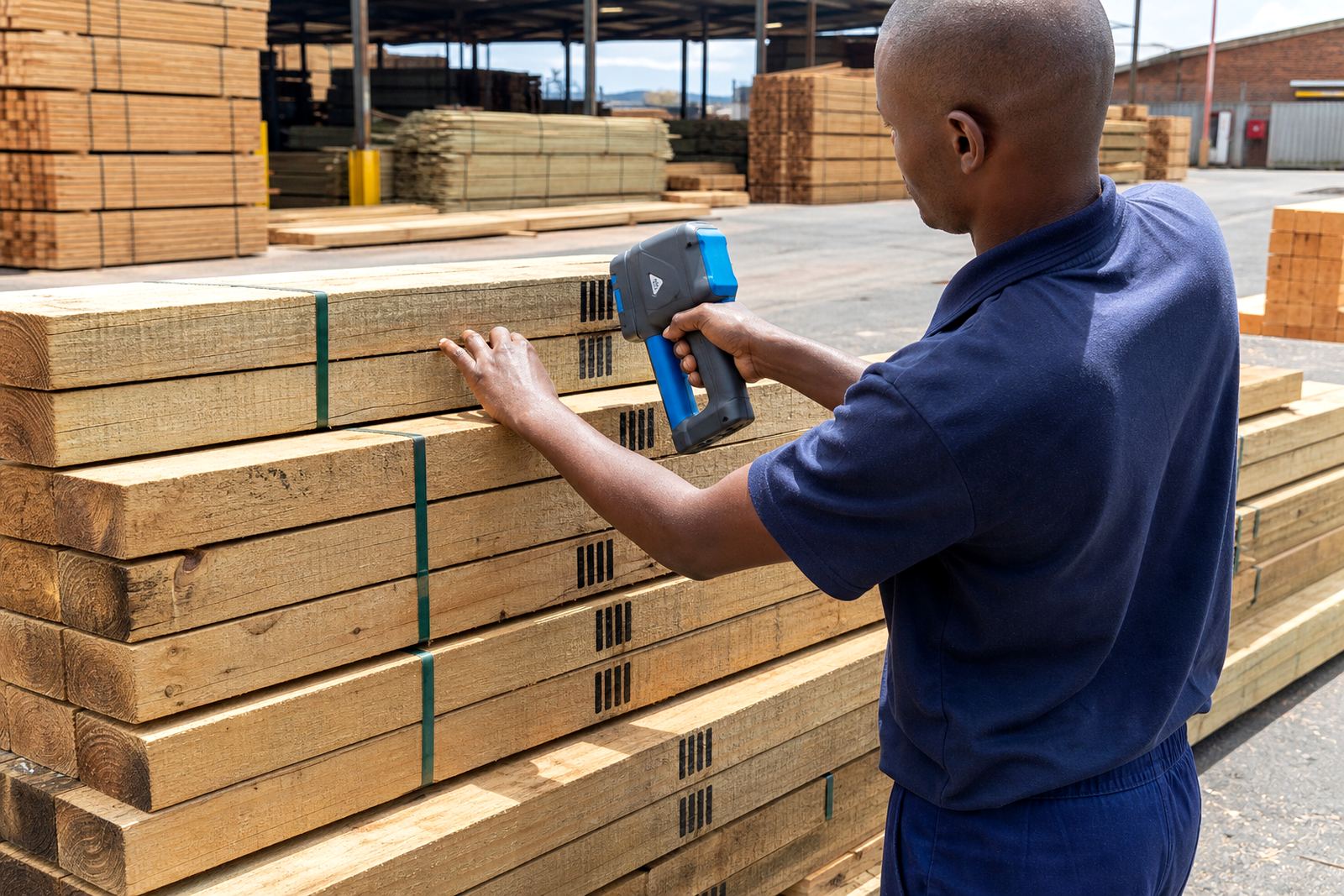
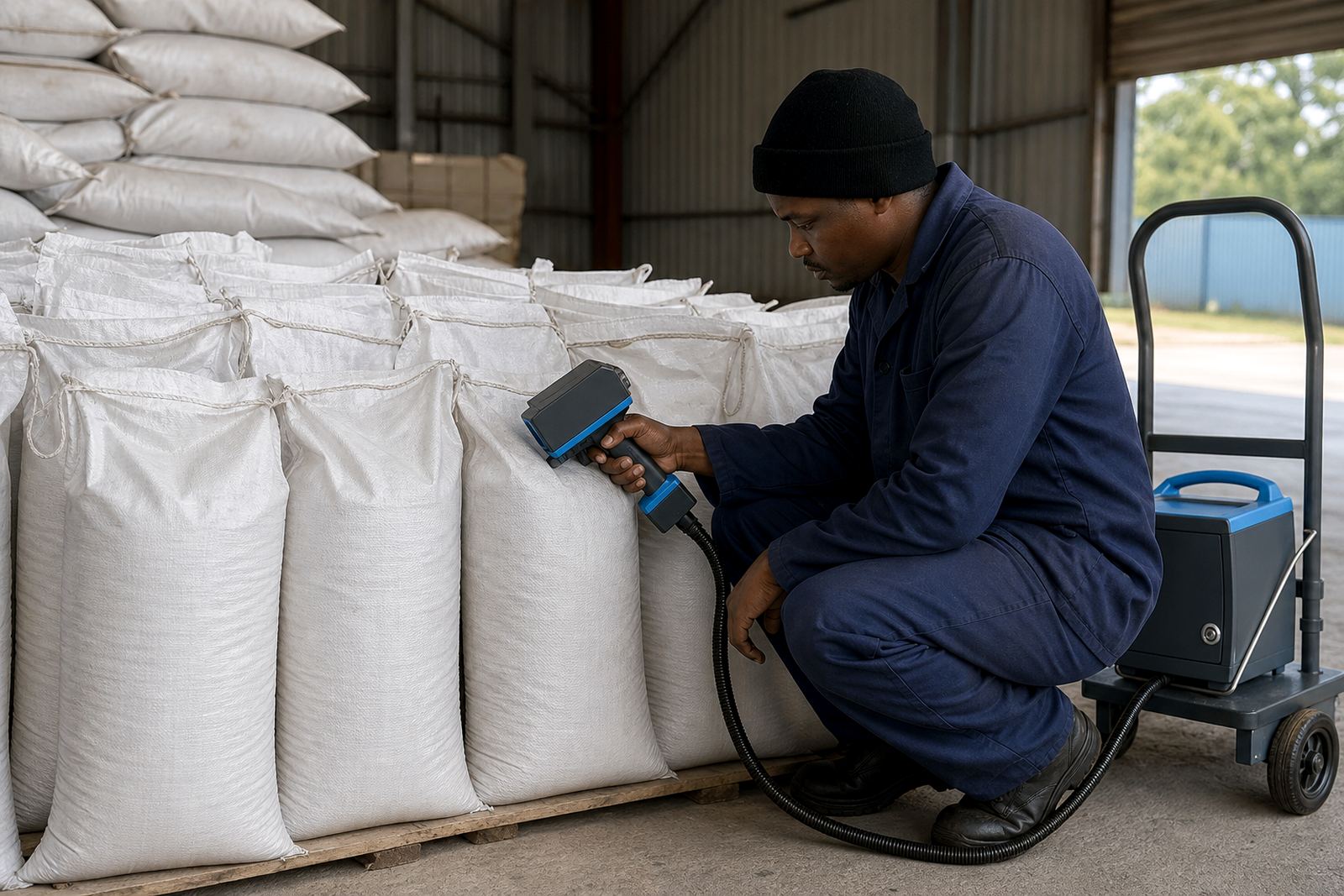
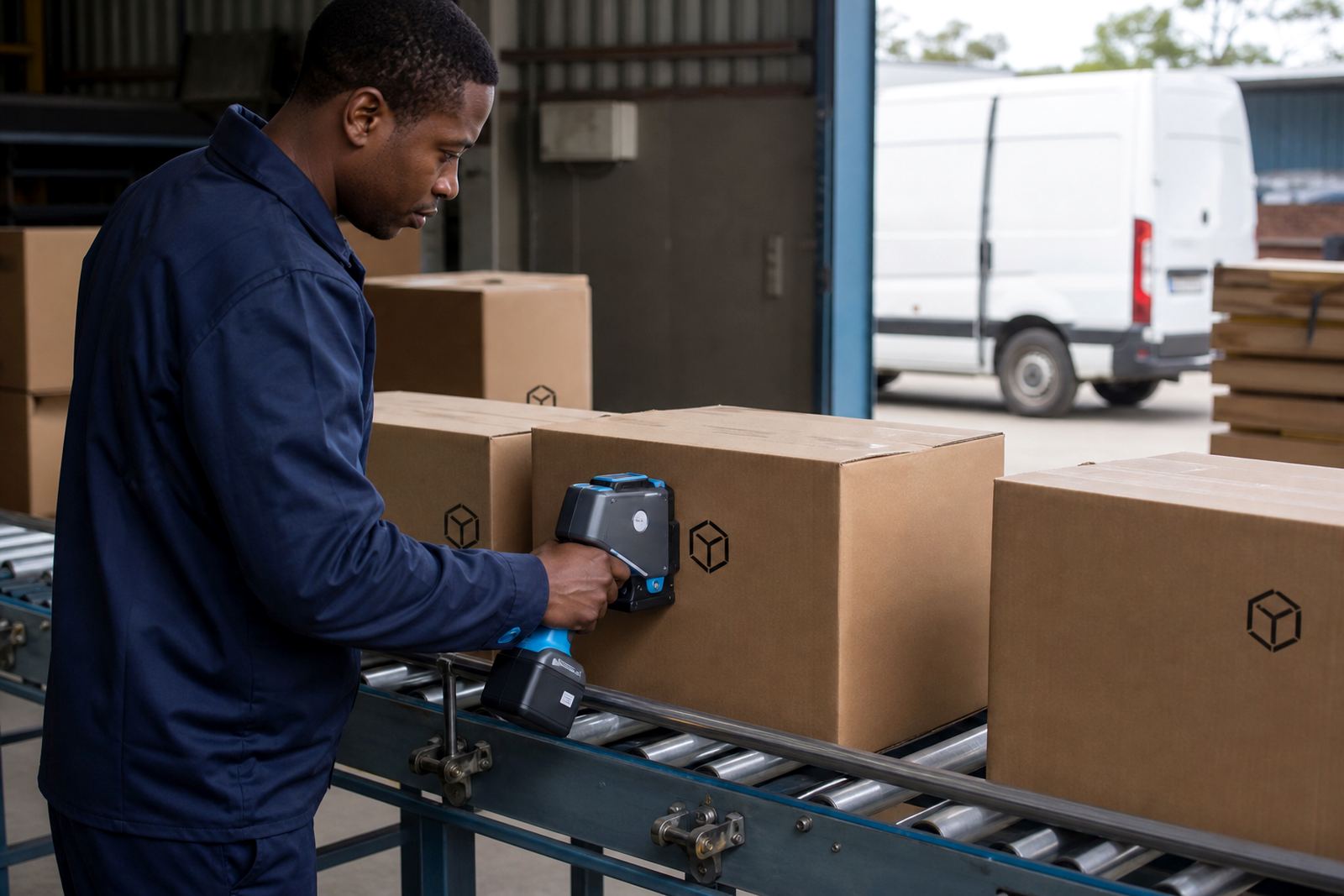
These units are used for simple symbols, single-colour logos, batch markings and short identification marks on corrugated cartons, woven bags, shrink wrap, timber and coated surfaces. On rough timber or dusty cartons, the print result depends on how flat the surface is and how stable the hand movement stays during the pass. A clean logo on packaging is usually not about fancy artwork, it is about correct sizing, clear contrast and a surface that accepts the ink properly.
For many jobs, the logo sits beside a date, batch code or bar code so the pack carries both branding and traceability. That combination is common on food packs, hardware cartons, seed bags and light industrial goods. If the print area is small, the design has to be simplified so the edges stay readable at handheld speed.
The kind of handheld set-up that suits logo work
A typical hire set-up includes the handheld coder, the right ink for the surface, charging gear, test pieces and a short loading file for the message or logo. Print height is usually kept within the machine's standard range, with smaller text around 2 mm to 12 mm high and larger marks set lower or split across lines where needed. For packaging logos, that balance matters more than size alone.
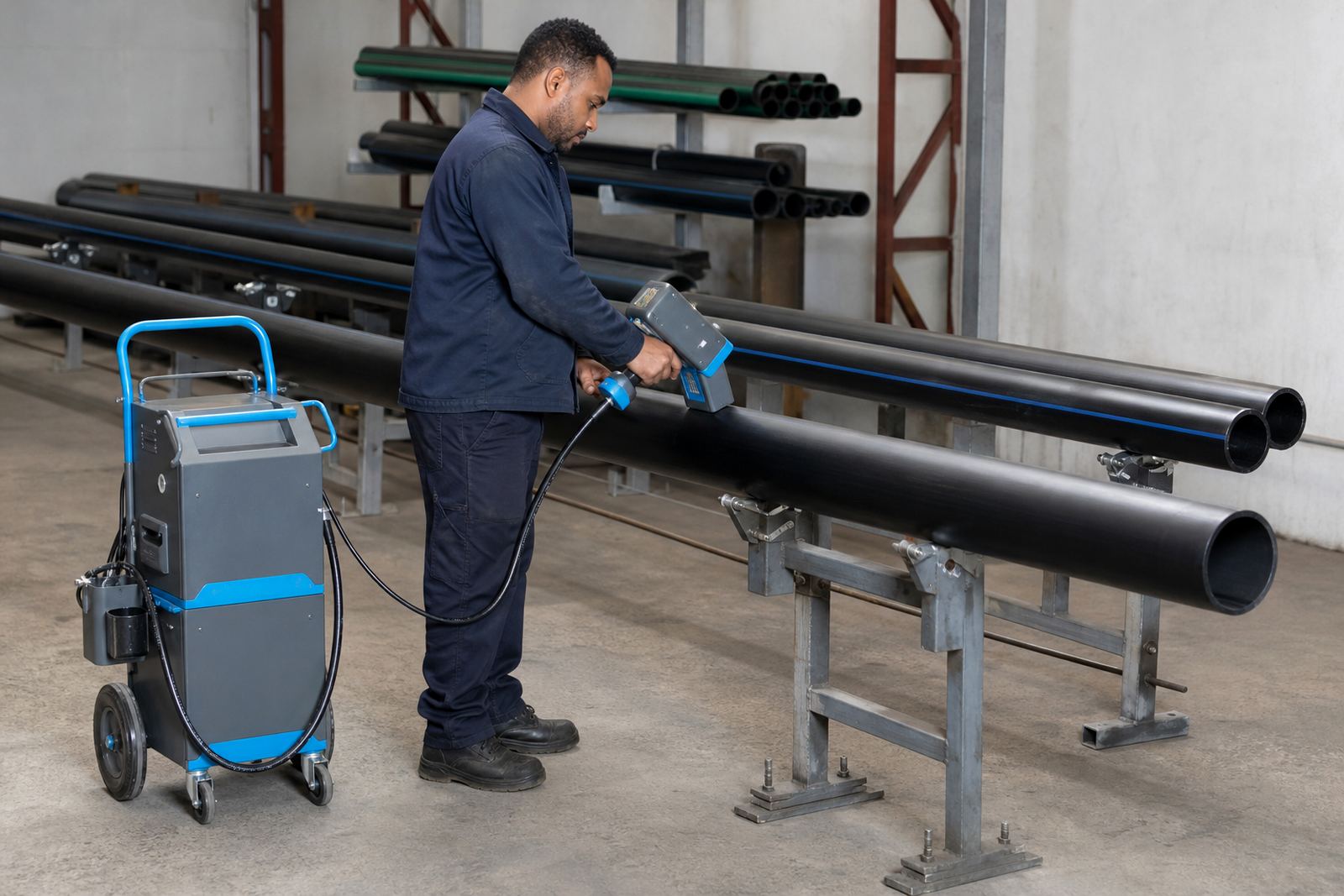
On cartons and porous bags, water-based ink can suit certain indoor packing lines. On non-porous or semi-porous surfaces, quick-dry or solvent-based ink is often more suitable, especially where the pack is handled soon after marking. Pipes, painted timber and coated boards need more careful ink selection because the surface finish affects how the mark bites. A test print is worth doing before a full batch goes out.
- Handheld inkjet coder with logo file loaded
- Ink matched to carton, bag, timber or pipe surface
- Test print sheet or sample pieces for checking alignment
- Operator training for spacing, speed and print placement
- Backup unit support where the job needs continuity
Layout choices that keep the logo readable
Logo placement on packaging needs a steady hand and a sensible layout. The print should sit on a flat section where possible, away from folds, staples, seams and heavy texture. On cartons, the side panel or top flap often gives a better result than a curved edge. On bags, the logo should avoid the gusset and any sealed seam because the ink can feather or break up there.
Spacing around the logo also matters. If the mark sits too close to a barcode, date line or seam, the result can look cluttered and the scan area may be affected. For timber and steel, surface preparation makes a big difference. Dust, oil and condensation can spoil the first print or leave a patchy edge, so the area should be dry and clear before marking starts.
Where the logo includes fine lines, small text or a thin icon, the file often needs trimming back for handheld use. A simple symbol with strong edges usually prints better than a busy artwork file. In Durban and Richards Bay, coastal humidity can also affect dry time on some surfaces, so the ink choice and handling plan need to match the conditions on site.
Common mistakes on cartons, bags and timber
A lot of logo marking problems come from trying to print too much detail in too little space. Tiny lettering, thin outlines and crowded artwork can break up on uneven packaging. Another common issue is using the wrong ink for the surface, which can leave a mark that smudges, scratches or disappears into the texture. A test piece catches that before stock is wasted.
Bad positioning is another one. If the operator does not leave enough room from the edge of the pack, part of the logo may roll off the side or clip a fold. On woven bags, the weave can pull the print apart if the pass is too fast. On timber, knots and grain lines can distort the image more than people expect. For pipes, curved surfaces need a careful pass and steady hand speed so the logo does not stretch.
- Do not load a detailed logo into a tiny print area
- Do not skip a test on the actual packaging surface
- Do not mix ink types without checking the substrate
- Do not print across folds, seams or heavy texture
- Do not assume a clean carton behaves like a coated one
Hire terms that fit short runs and recurring work
Week-long hire suits short production runs, launch periods, project work and jobs where packaging changes often. Monthly hire works better where the logo, date line or batch mark stays in place for a longer cycle. Both terms are used across Durban, Pietermaritzburg, Johannesburg, Cape Town and Richards Bay, with delivery and collection available for many jobs.
Some clients only need the unit for a trial lot, while others use it for regular repacking, seasonal packing or a site that moves between products. If the logo is changing from one pack size to another, message loading and test printing become part of the normal handover. Operator training helps the team hold the print head steady, set the spacing, and keep the logo in the right place from pack to pack.
For jobs that need continuity, consumables supply and backup unit support can be arranged as part of the hire. That is especially useful where packaging moves in and out of stores, or where production is split between a warehouse and a packing area in another town.
Budget ranges for logo marking jobs in Rand
Budget depends on the hire term, the surface type, the ink chosen and whether the job needs setup support on site. For straightforward logo marking on cartons or bags, a short weekly hire often sits in a lower range than a longer monthly arrangement, while projects that need several inks, barcode setup or extra training sit higher. Jobs on timber, steel or coated surfaces may also need more testing, which adds to the planning side of the hire.
As a broad guide, straightforward logo marking hire for a short period may begin at a few thousand Rand, while hire that includes setup, consumables and support usually falls into a higher bracket. Monthly hire is often better value where the same logo prints across a steady run of cartons or bags. The exact figure depends on how much marking is needed, which surface is involved and whether a backup unit is part of the arrangement.
It helps to think in terms of the whole marking job rather than the logo alone. Ink choice, print height, surface texture and handling all affect the final cost. A neat mark on a clean pack usually takes less adjustment than a logo pushed onto a rough or curved surface.
People involved in the hire and setup
The hire side is handled by the team in Pinetown, Durban, with support for clients in Westmead, New Germany and wider South Africa. Sibusiso Moagi oversees the operation, while Nokuthula Kotze handles hire coordination and Priya Pillay manages the admin side. Jared Rademeyer supports technical setup, Anele Vermaak handles operator training and Morne Oosthuizen works on field setup where an on-site handover is needed.
That mix matters because logo marking is rarely just about putting a picture on a box. It involves the machine, the ink, the surface and the person holding the unit. When all four match, the result is usually a clear mark that sits properly on the pack and holds its shape through handling.
Logo marking hire starts with a note on the contact form, whether the job is for cartons, bags, pipes or timber. The best setup usually keeps the print clear and the work flow practical.