Pipe marks that stay readable in the yard
Pipe coding usually needs more than a plain date. A clean mark can carry size, batch number, shift code, cut length, destination note or a simple logo so the load is easier to sort at dispatch and easier to trace later. On painted pipe, bare steel, galvanised sections and coated bundles, the print has to dry fast enough to avoid smudging when straps move or the pipe is stacked tight.
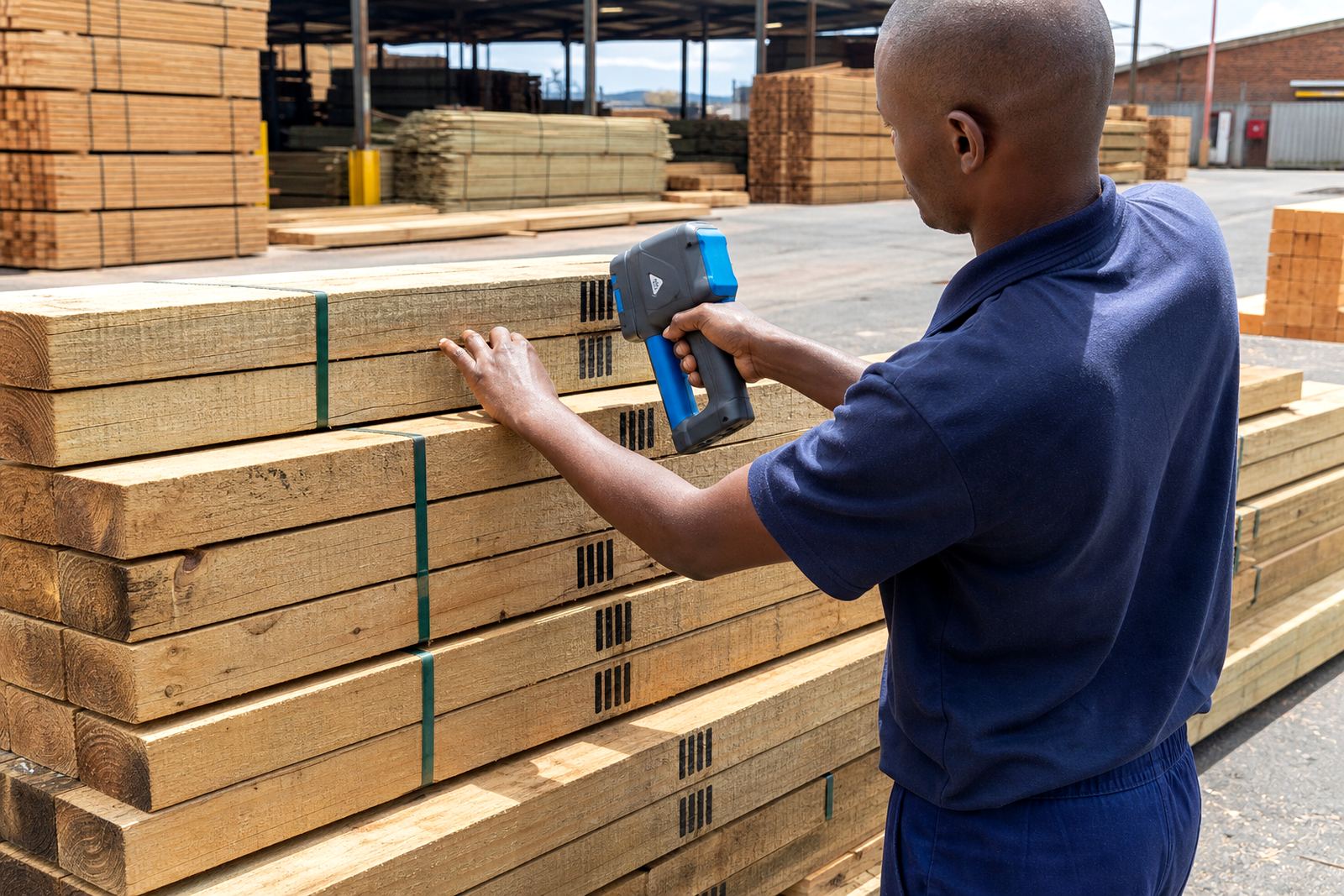
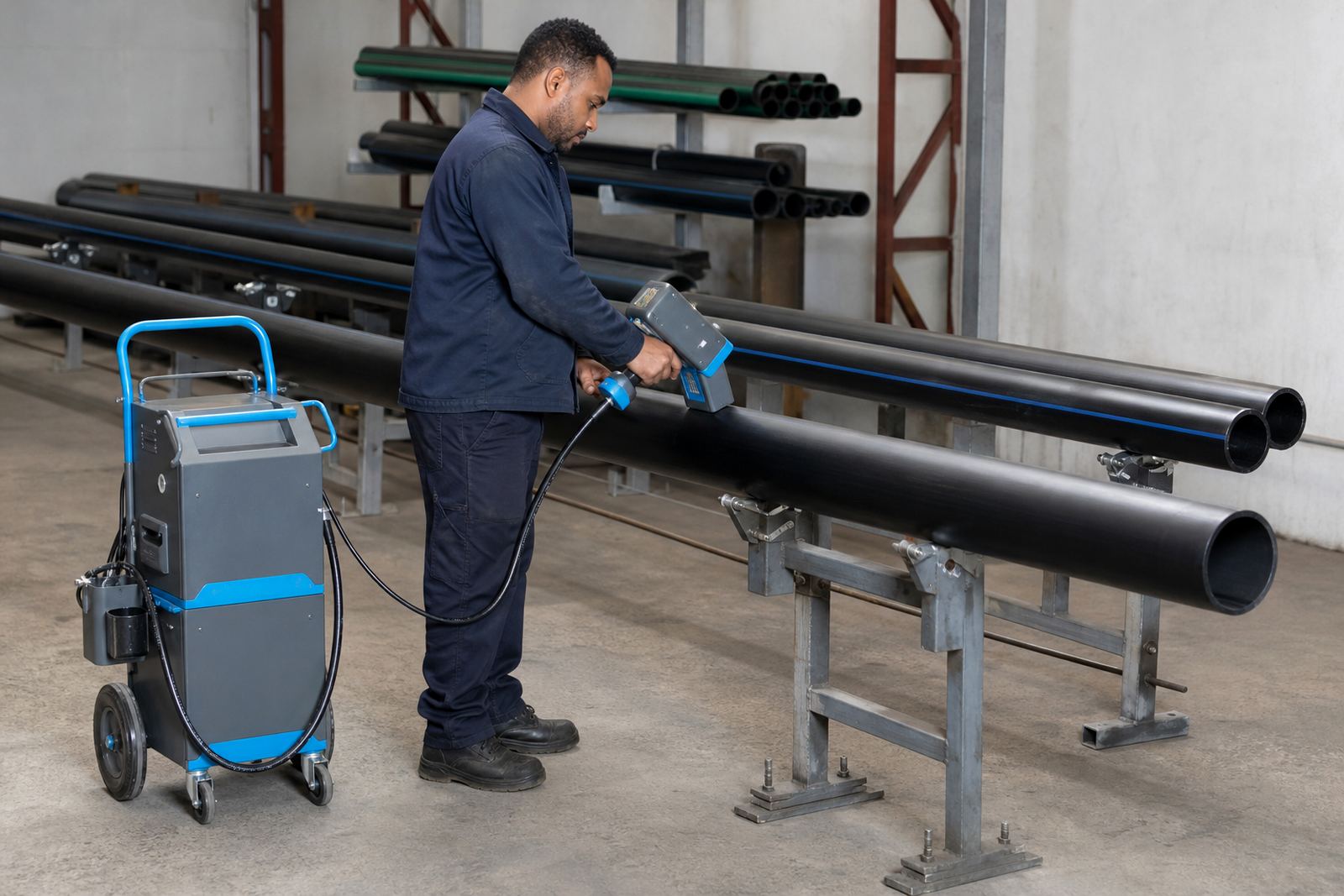
Handheld inkjet coders suit this work because the operator can move along the pipe length and place the mark where it will still be visible after packing. For bigger outside diameter pipe, a wider print area is useful. For small bore pipe or tight bundles, a compact line of text is usually better than trying to force too much detail into one spot.
The usual kit for pipe jobs
Pipe coding jobs often use a handheld printer, a suitable ink cartridge and a simple text layout loaded before the shift starts. Depending on the pipe finish, solvent ink, water-based ink or quick-dry ink may be the better fit. Smooth coated pipe and steel often call for quicker drying ink, while absorbent cartons or timber offcuts can take a different formula altogether.
- Print height is often set between 12 mm and 50 mm, depending on the amount of detail needed.
- Two-line or three-line layouts work well for date, size and lot information.
- Barcode printing helps where bundles are scanned at storage or dispatch.
- Logo marks can be added for internal control or product identity.
- Test prints are worth doing on an offcut before the real run starts.
A careful setup saves wasted labels and reduces rework on the line. It also helps the operator keep the text straight when pipes are rolling, stacked unevenly or moving on roller supports.
Planning the mark before the truck leaves
Pipe size coding works best when the print layout is planned around the way the pipe is handled. If the bundle is wrapped, strapped or lifted with slings, the mark should sit clear of those contact points. If the pipe is long and the ends are cut on site, the mark may need to sit closer to the middle so it survives trimming and handling.
It helps to decide early whether the print must be read by eye only or by scanner as well. Barcode size, print contrast and placement all matter. Dark ink on a pale surface usually shows best, while high gloss finishes may need extra care so the mark does not feather or smear. In coastal conditions around Durban and Richards Bay, choosing ink for humidity and surface type matters as much as the text itself.
For jobs moving between Pinetown, Johannesburg, Cape Town and Pietermaritzburg, the same printer can be sent with a standard message set or a custom pipe list, depending on what the dispatch team needs that week.
Common mistakes on pipe bundles
The most common problems are practical ones. The message is often too long, the print height is too small, or the ink choice does not suit the surface. A mark that looks fine on a test piece can still fail on actual pipe if the surface carries oil, dust or condensation.
- Printing too near a strap, weld seam or cut edge.
- Using one ink for both glossy steel and porous timber.
- Setting text too small for the distance at which it will be checked.
- Skipping a test print on the actual pipe surface.
- Loading too many fields into one line and crowding the code.
A plain layout with the right spacing usually works better than a packed label style message. The operator should also check that the handset is held steady, especially on curved pipe where a rushed pass can leave a broken line or uneven barcode.
Hire terms that suit short runs and ongoing dispatch
Weekly hire works well for a short production push, project packing or a temporary site setup. Monthly hire suits ongoing pipe dispatch, especially where coding is needed across several shifts or where the same message changes through the month. The hire package can include delivery and collection, on-site setup, remote setup help, operator training and consumables supply.
Some yards only need a printer for a limited run of marked pipe, while others keep one in circulation for repeated batch changes. Backup unit support is useful when the coding line cannot stop for long. Message loading, barcode setup and logo setup can be handled before the printer reaches site, or adjusted once the team sees the pipe finish in front of them.
Budget ranges in rand for pipe coding hire
Pipe coding hire costs vary with the length of the hire term, the amount of setup work, the ink type and whether support is needed on site. A short weekly hire for a straightforward text mark will sit in a different range to a monthly hire with barcode setup, logo loading and extra consumables. The surface also affects the ink choice, and that can shift the overall hire cost.
As a working guide, small pipe coding jobs with a basic handheld printer and standard message setup may sit in the lower end of the budget range, while ongoing monthly hire with training, backup unit support and specialised ink can sit higher. It is normal for the quote to change if the job moves from plain date coding to mixed text, barcode and logo work on several pipe sizes. For planning, teams often look at a range from a few thousand Rand for a short hire to a higher monthly figure for repeated dispatch work, depending on the setup and consumables needed.
Our base in Pinetown supports pipe coding hire across South Africa, with work moving through Durban, Westmead, New Germany, Pietermaritzburg, Johannesburg, Cape Town and Richards Bay. The right setup depends on the pipe, the surface and the way the load moves through the yard.