
Bag material changes the print result
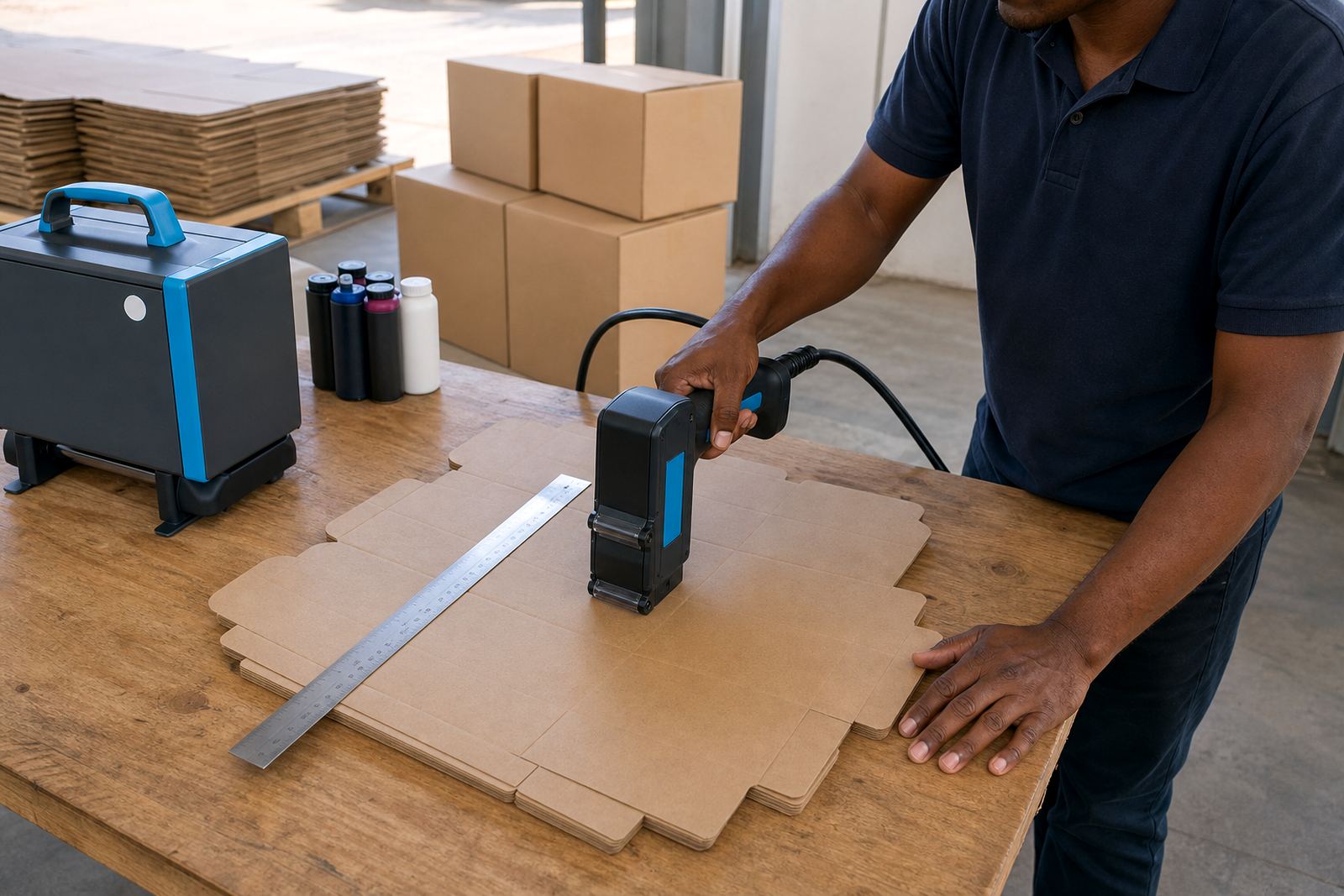
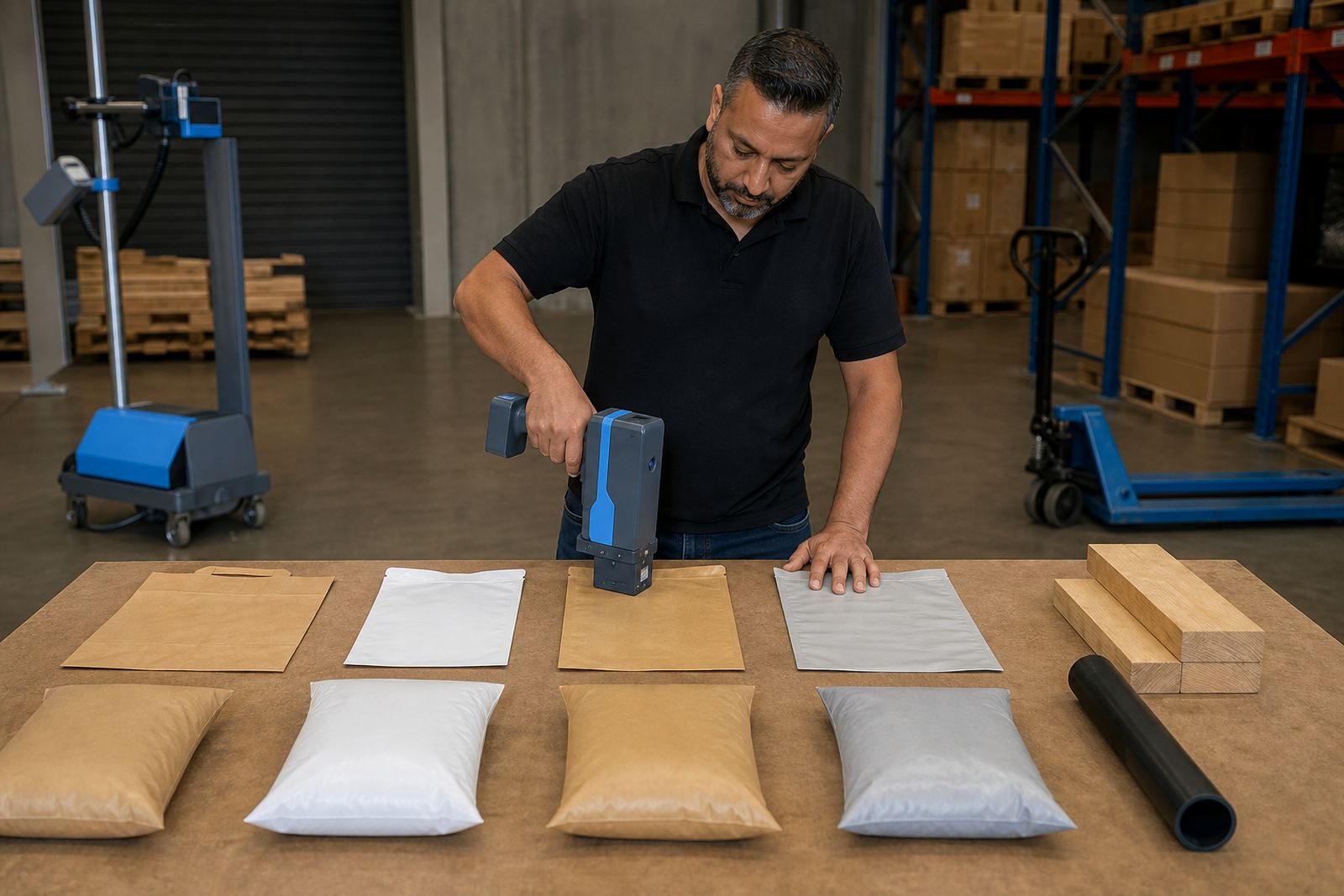
Paper sacks take ink differently from woven polypropylene and from smooth plastic bags. On paper, the surface pulls the ink in a little, which helps with drying, but rough fibres can spread fine detail if the print is too close or the bag moves while marking. Woven bags have texture and open weave lines, so the code often needs a bolder setting to stay readable. On selected plastic bags, the main concern is adhesion, because the surface can hold the ink on top for a short time before it sets.
For that reason, the same handheld printer setting will not suit every bag on the floor. A code that looks clean on a kraft paper bag may feather on a coated sack or smudge on a smooth poly bag if the operator handles it too early. Short test runs help settle the setting before a full batch is marked.
- Paper bags usually suit standard contrast inks with moderate drying time.
- Woven bags often need larger characters and steadier hand movement.
- Smooth plastic bags need quick-dry or adhesion-friendly ink matched to the surface.
Where to place the code on a filled bag
Placement matters because a bag rarely sits flat once it is filled. On paper sacks, the top section near the seam is often easier to mark than the bulged middle. On woven bags, the flatter panel near the upper third gives a cleaner result than a curved, stressed corner. On plastic bags, the code should stay clear of folds, heat seals and handles, because those areas crease and disturb print sharpness.
The printer angle also matters. Hold the unit square to the bag face and keep the print path steady. If the operator drags the printer across a wrinkled section, letters can stretch and barcodes lose their edge. A few trial prints on the same type of bag usually show the best mark position before the batch starts.
- Keep codes away from seams, folds and tape patches.
- Use a flat panel wherever the bag shape allows it.
- Leave enough blank space around barcodes for scanners to read cleanly.
Ink choice for bag surfaces and storage
Ink choice is not only about colour. It is about how the mark sits on the bag and how the finished packs will be handled. Solvent-based inks suit many non-porous and semi-gloss surfaces where drying speed matters. Water-based inks can work well on absorbent paper sacks and some rougher fibre packs. Quick-dry inks help when bags move straight from coding to stacking, bagging or loading.
In coastal areas such as Durban and Richards Bay, humidity can slow drying on certain bag types. That does not mean the job cannot be done, but it does mean the ink and handling method need a closer look. A supplier should also check whether the marked bags will be stored in a warm room, a cool warehouse or in open transport, because each setting affects how soon the print can be handled.
- Solvent inks suit smoother bag surfaces and faster handling.
- Water-based inks work well on paper and other absorbent materials.
- Quick-dry options help when bags are stacked soon after coding.
Print height, text size and barcode shape
Handheld inkjet coders usually give enough flexibility for dates, batch numbers, shift codes, barcodes and short logos, but the print height must match the bag size. Small text can disappear into woven texture, while oversized text may sit awkwardly across a narrow bag panel. For most bag jobs, a modest print height with a clear bold setting gives better legibility than trying to fill too much space.
Barcodes need extra care. The bars should be evenly spaced, not warped by a moving hand or a curved bag face. If the bag surface is too rough or too narrow, a barcode may need a different position or a larger quiet area around it. Logos print better when the artwork stays simple and the print area is wide enough to keep the detail sharp.
In Pinetown, a local packing team may code paper snack sacks in the morning and woven feed bags later in the day. The first job may allow a smaller mark, while the second needs stronger contrast and a slightly larger print height. That kind of change is normal and worth planning for before the hire starts.
Handling bags during coding and stacking
Bags move in the hands, on tables and in stacks, so the coding area should be set up with that movement in mind. Flat support underneath the bag helps a great deal. If the bag is hanging off a bench edge or being held at an angle, the print line may wander. For filled bags, it helps to mark them before the final seal or final stack, depending on the packing line.
Operators should avoid pressing too hard on the printer head. A firm, even pass is better than trying to force the unit into the bag surface. If the bag is soft and compressed by the grip, the print can smear as soon as the bag is released. A short pause before stacking helps on more delicate paper sacks and on smoother plastic bags.
- Use a stable surface when possible.
- Keep the bag face smooth but not crushed.
- Allow printed bags to set before tight stacking or dispatch.
A Durban hire example from the packing floor
A small Durban packing operation sending mixed product in paper and woven bags may need one coder for dates and batch references, then a second setup for a small logo on selected bags. In that sort of job, the team often wants the same unit to move from one bag type to another without much delay. The better route is to plan the ink, message layout and test print before the shift starts.
With weekly or monthly hire, the operator can work through the test prints on the exact bag stock being used, whether it is kraft paper, stitched woven polypropylene or a selected plastic bag with a suitable surface. On-site setup or remote setup help can also sort out the message format, barcode layout and logo placement before production settles into normal work. That saves time later when pallets are already building near the dispatch area.
For bag coding, the real difference is not the printer alone. It is the match between bag surface, ink and handling. Get those three points right and the code stays readable through packing, storage and delivery.
Hire terms that suit changing bag work
Bag coding work is often seasonal, which is why weekly and monthly hire terms are practical for this trade. A small operation may only need a unit for a short production run, while a larger site may keep one in use across several product lines. Delivery and collection help reduce the fuss of moving equipment between sites, and backup unit support matters when a line cannot sit idle.
It also helps when consumables supply, message loading and troubleshooting support sit with the hire service. That keeps the printer ready for date codes, batch numbers, logos and barcodes without sending the job to a separate supplier each time. In and around Pinetown, New Germany and Westmead, that kind of support suits packing teams that work with changing bag sizes and different sealing styles.
- Weekly hire suits short production runs and trials.
- Monthly hire works well for ongoing bag coding.
- Training and setup support help operators keep the print consistent.