
A test print shows the surface, not just the machine
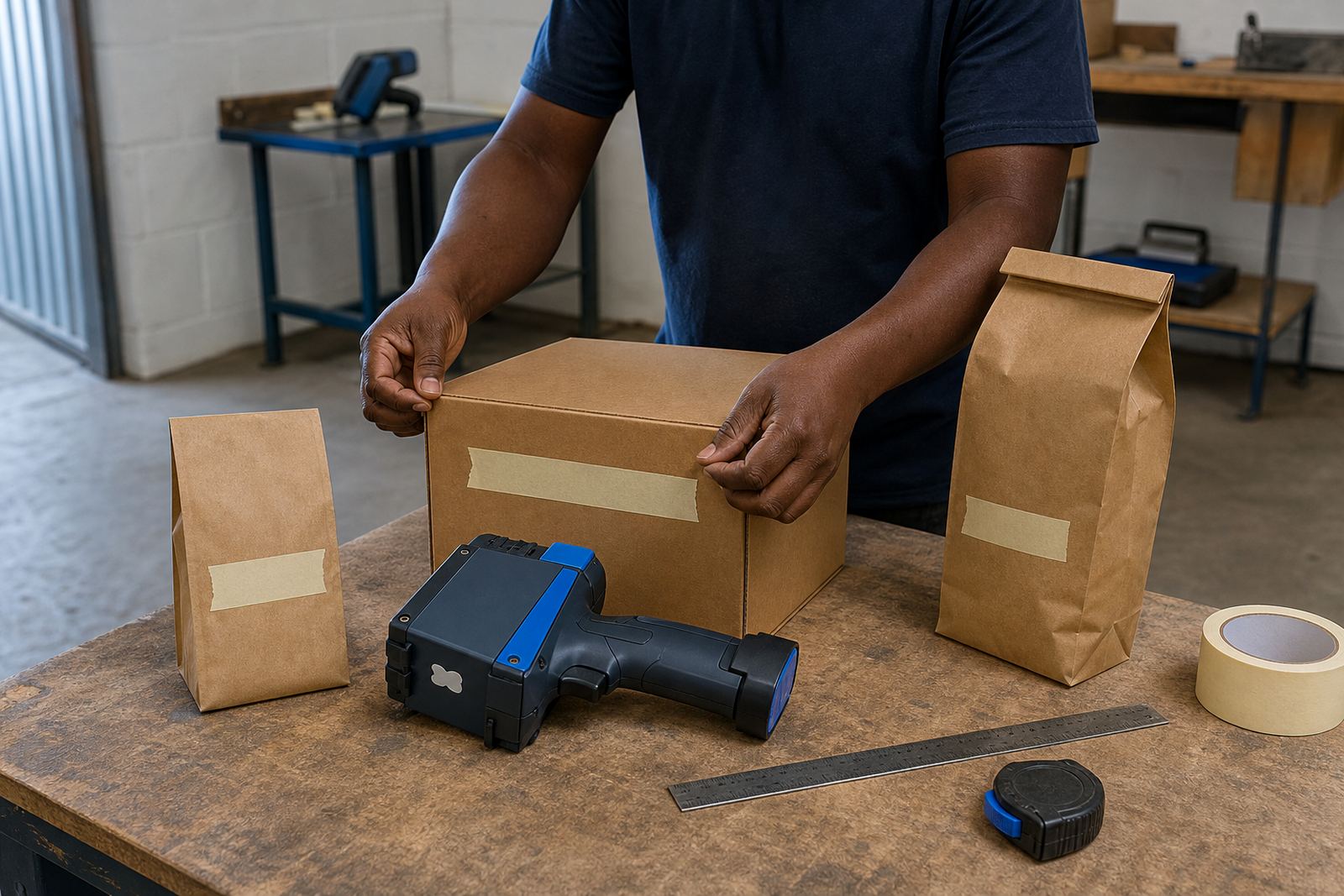
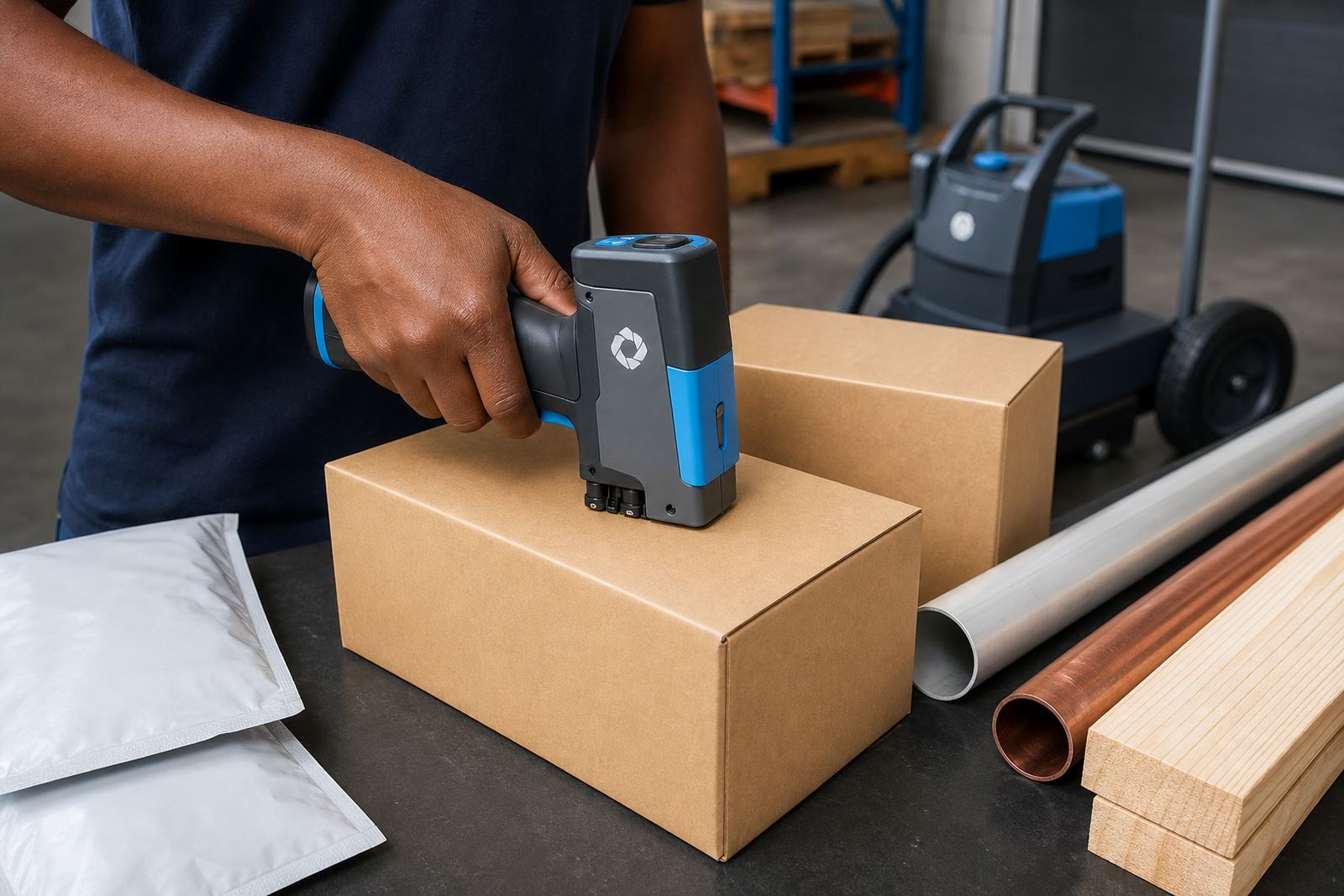
Handheld inkjet coders behave differently on corrugated cartons, woven bags, painted steel, bare timber and plastic pipe. A message that looks sharp on a smooth sample can spread, bead or fade on a dusty or textured surface, so the test has to be done on the real material, not a spare offcut that feels similar.
That first print tells you more than a brochure ever will. It shows whether the ink grips well, whether the nozzle height is right and whether the message stays readable once the carton is folded or the pipe is handled at the yard.
Print height, message size and the space on the pack
Most handheld units are used for small to medium marks, often just enough for a date, batch number, shift code, barcode or logo. The useful print height depends on the job and the surface, so a sample helps the operator judge if the code is too tall for the available panel or too small for scanning.
- Check how much flat space is available on the carton or bag
- Confirm the readable height for the barcode or batch line
- See whether the logo sits clear of folds, seams or welds
- Test the spacing between lines before live production starts
Ink choice changes the result on site
Testing is the point where solvent, water-based and quick-dry inks stop being general options and become practical choices. On a porous timber surface, one ink may sink in too fast. On coated cartons or smooth pipe, another may sit on top and need a little more drying time. Coastal humidity around Durban and Richards Bay can make that difference easier to spot.
A sample run also shows whether the ink suits the handling speed at the packing table. If a packer stacks cartons straight after printing, a quick-dry option may be the cleaner fit. If the mark needs to survive outdoor handling at a yard in Pinetown or New Germany, the test should be done in the same conditions as the job.
Barcodes need scanning, not just looking neat
A barcode can look tidy and still fail on a scanner. The test print is where line thickness, contrast and placement get checked against the actual reader used in the store or dispatch area. That matters on cartons leaving Johannesburg or Cape Town, where one unclear symbol can slow the whole pallet.
- Print the barcode at the real size needed for scanning
- Use the surface that will carry the live code
- Scan the sample from the normal working distance
- Repeat the test if glare, dust or colour makes reading difficult
It is better to adjust the code before the run starts than to sort out unreadable packs after loading. A small change in spray angle, print speed or message length can make the difference.
Local handling on cartons, pipes and timber
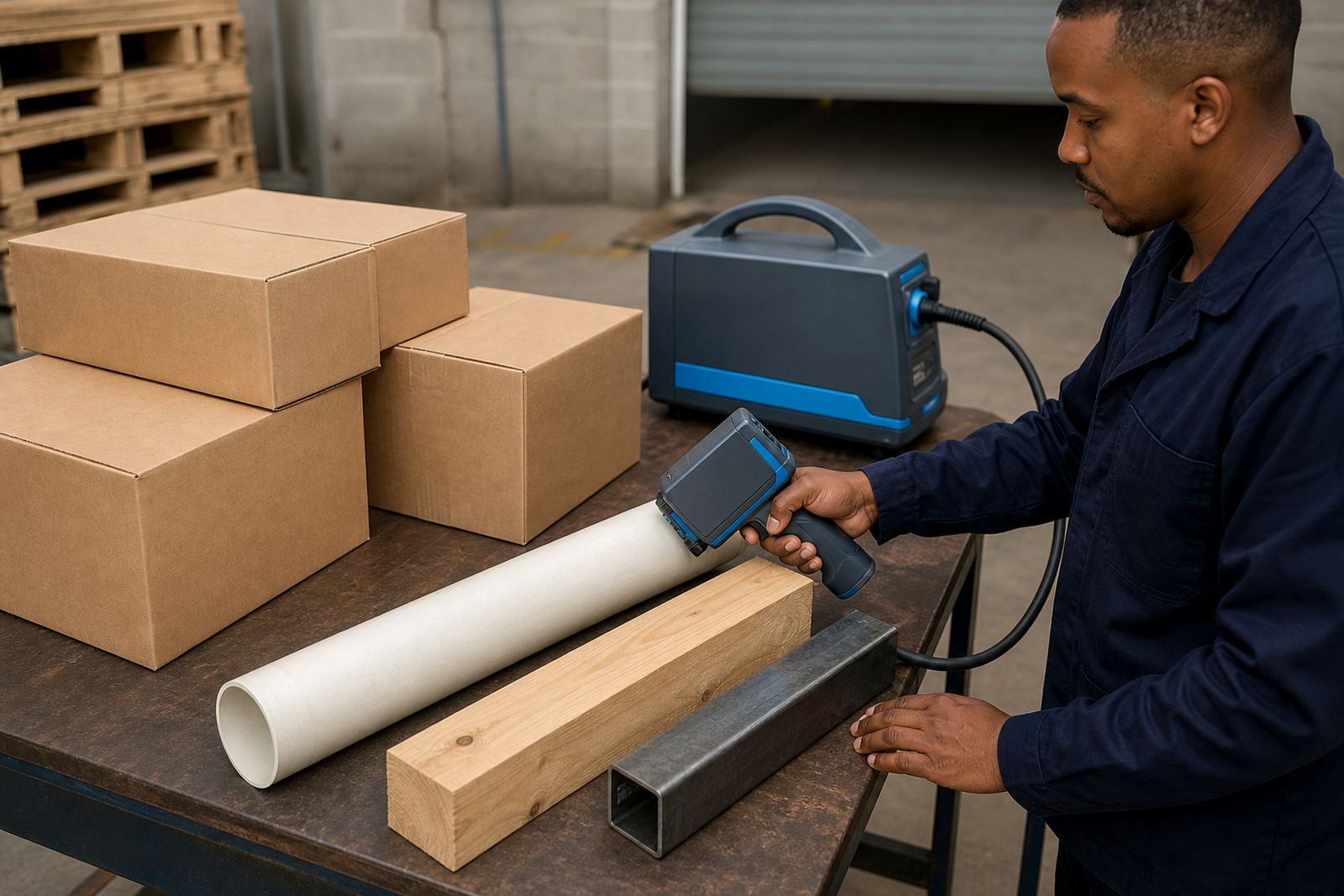
In Durban warehouses and Pietermaritzburg packing rooms, operators often move between mixed stock in one shift. A carton line may need a date mark, while the next job wants a logo on timber or a batch code on pipe. Sample testing shows how the handheld printer behaves when the hand position changes and the surface moves from flat to curved.
For pipes and timber, the sample should cover the same diameter, grain or coating used in production. If the print looks strong on a straight board but breaks on a round pipe, the setup needs adjustment before hire stock is placed into daily use.
What a proper sample run usually covers
A useful test is more than one quick mark. It should include the actual message, the final print height and the surface that will carry the code. If the job includes a logo, the sample should show whether the image holds detail at the chosen size.
When a team takes time for this step, the live run is steadier and there is less stop-start correction at the line. That is useful for weekly and monthly hire jobs where the printer may move between branches, depots or field sites.
- Date and batch format confirmed on the real product
- Ink tested for adhesion and drying behaviour
- Barcode checked with the intended scanner
- Logo checked for clarity at the final size
- Operator shown the right angle and distance for the print head
A Pinetown example from a busy hire week
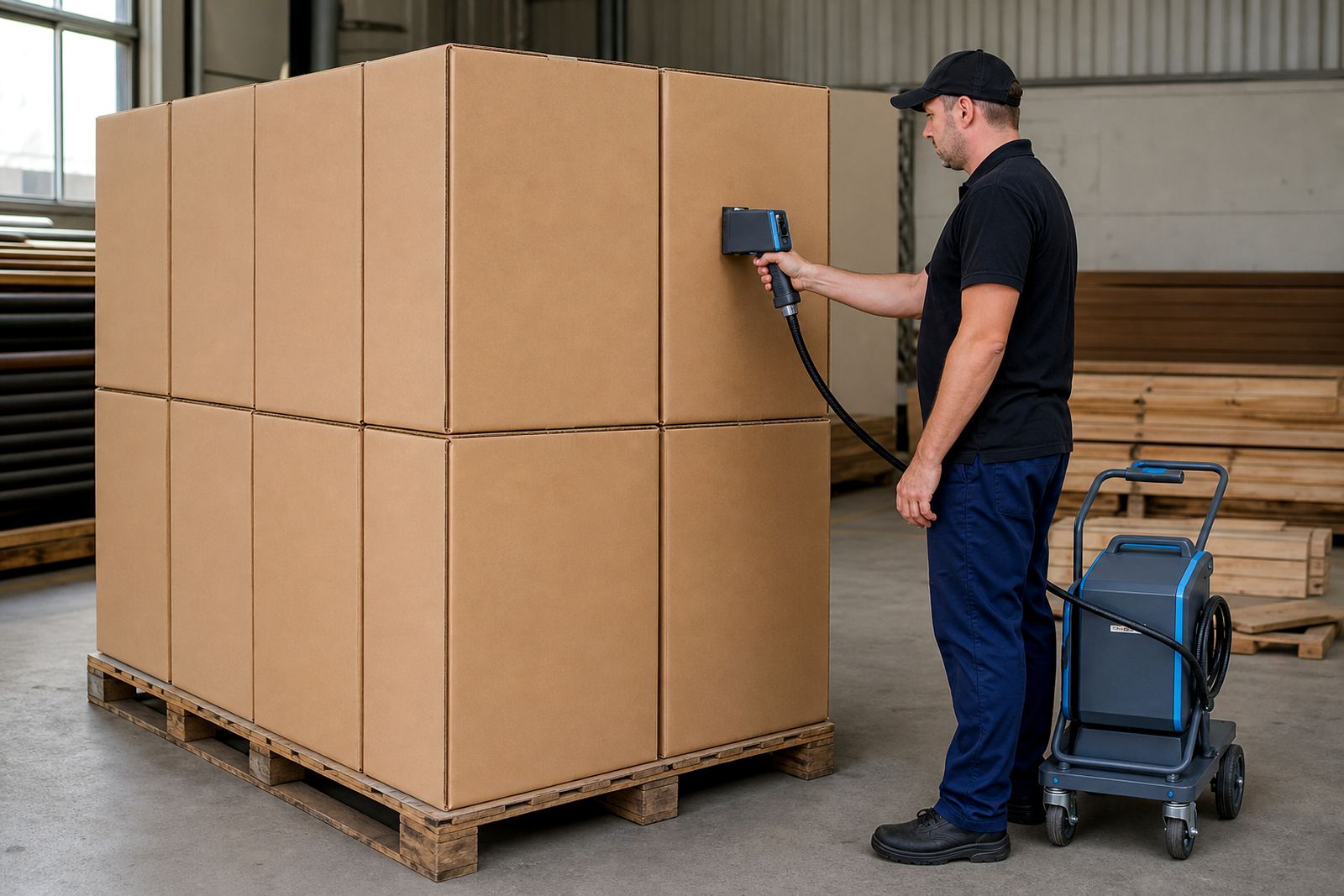
A packaging team in Pinetown may hire a handheld printer for cartons heading to multiple sites. The first sample can look fine on the workbench, then shift once the operator starts working at pace beside a pallet stack. A short test on the exact carton stock, with the exact message loaded, usually settles the job before the main run begins.
That same approach helps when the printer is moving between Westmead, New Germany and a dispatch floor in Durban. The team can confirm the mark on each material before the longer production block starts, which keeps the coding more consistent and reduces scrap from unreadable packs.