
Start with the carton surface, not the code
Corrugated cartons can take ink well, but the finish changes the result. A plain kraft box, a coated carton and a recycled board with open fibres all absorb and dry at different rates. If the surface is dusty or slightly damp from a warehouse floor or a coastal store room, the print can feather at the edges or look patchy.
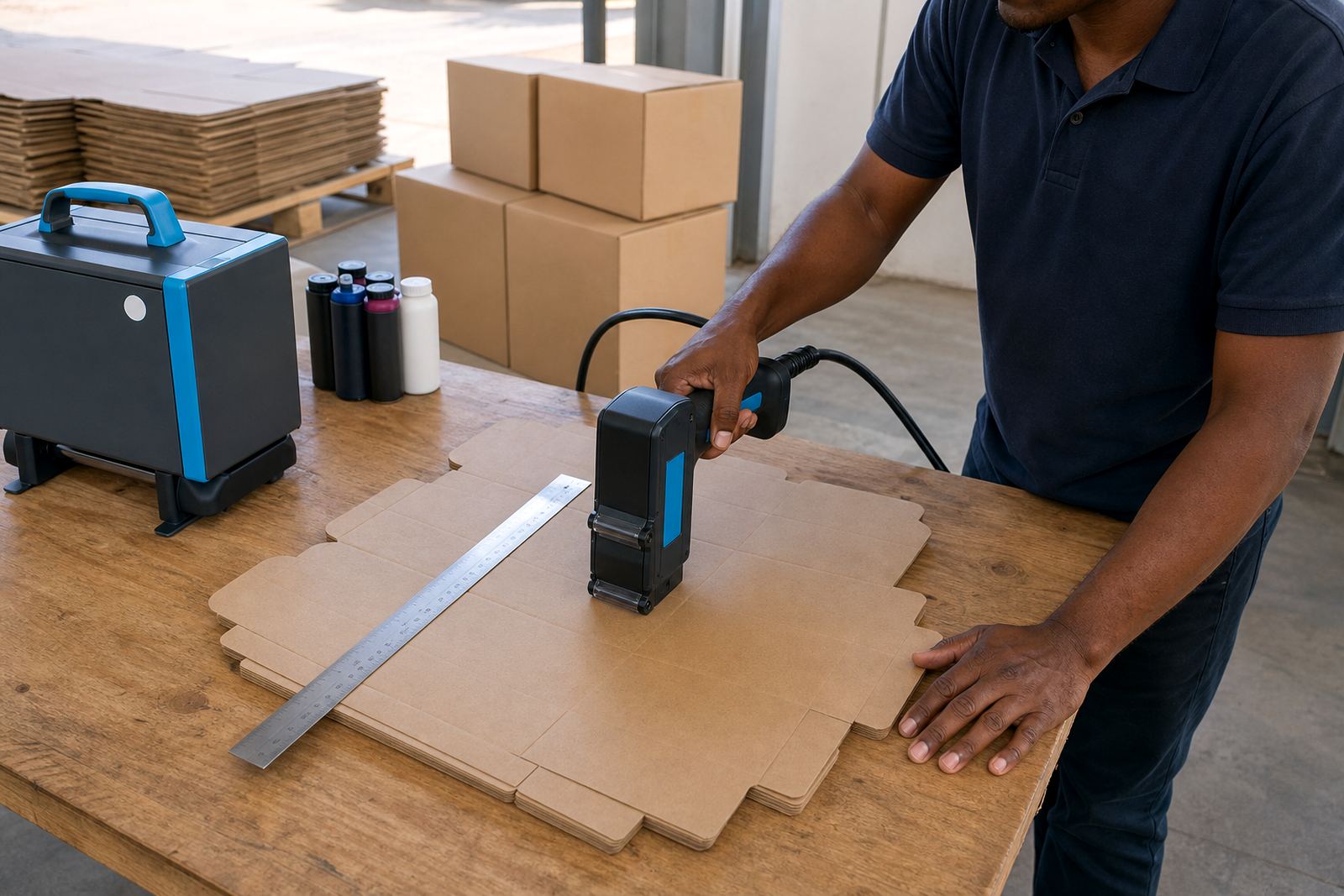
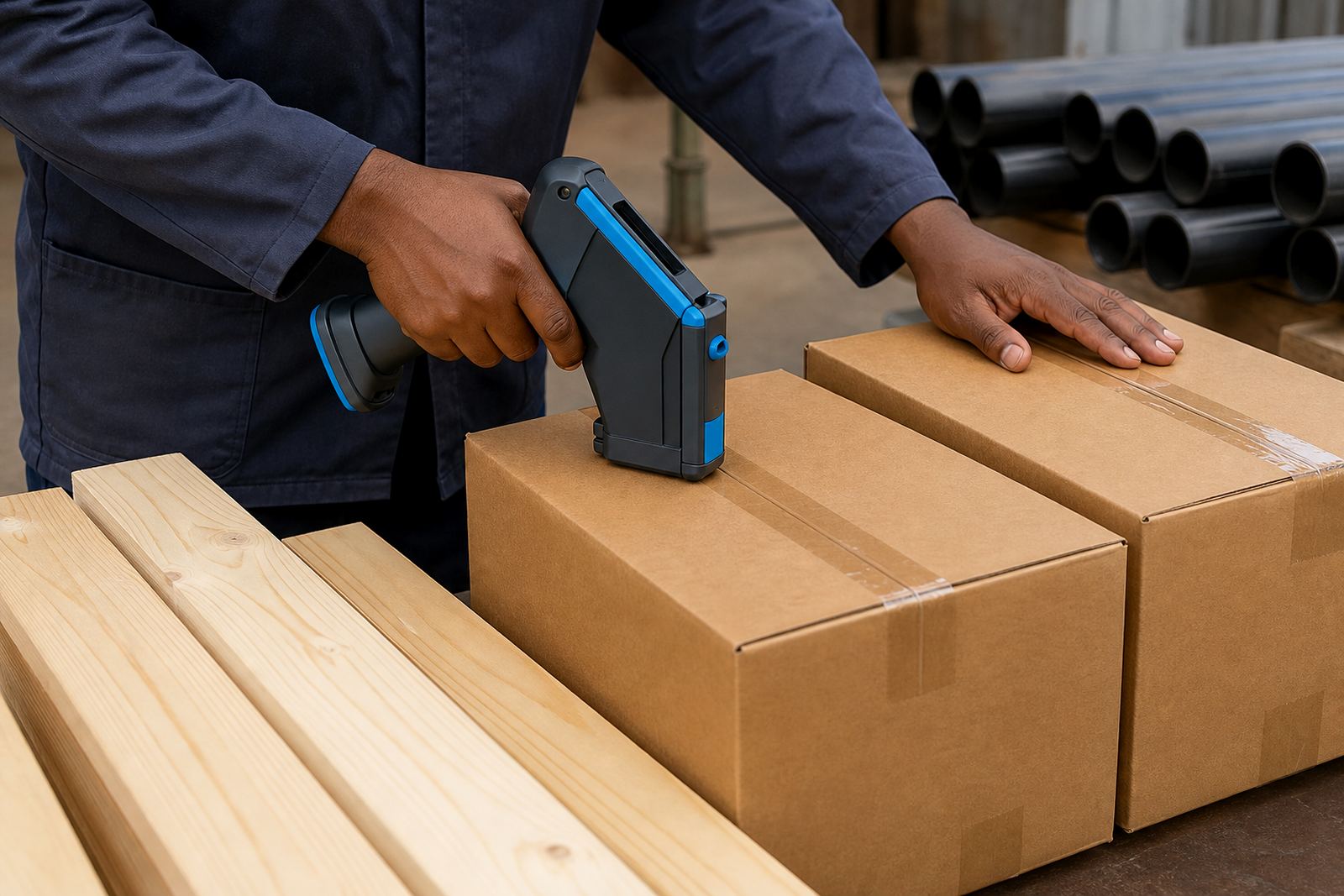
Folded cartons also create corners, seams and flaps that affect where the code lands. The cleanest spot is usually a flat panel with enough space for the print head to travel in a straight line. On a carton that will be stacked tightly, keep the code away from folds and tape joins so the mark stays visible after handling.
In Pinetown and Durban, humidity can slow drying on some boards, so the ink choice matters. Quick-dry inks suit many carton jobs, while water-based inks can work on more absorbent surfaces when the handling time is gentler. Solvent inks are often used where the carton surface is less absorbent or where faster drying helps.
Print height, message length and placement
Handheld inkjet coders are useful because the print height can be kept small for neat batch codes or set taller for a logo and short product line. On cartons, a height around 10 mm to 25 mm is common for dates and traceability text, while larger marks are better for branding or handling instructions. The message should fit the panel without crowding the edges.
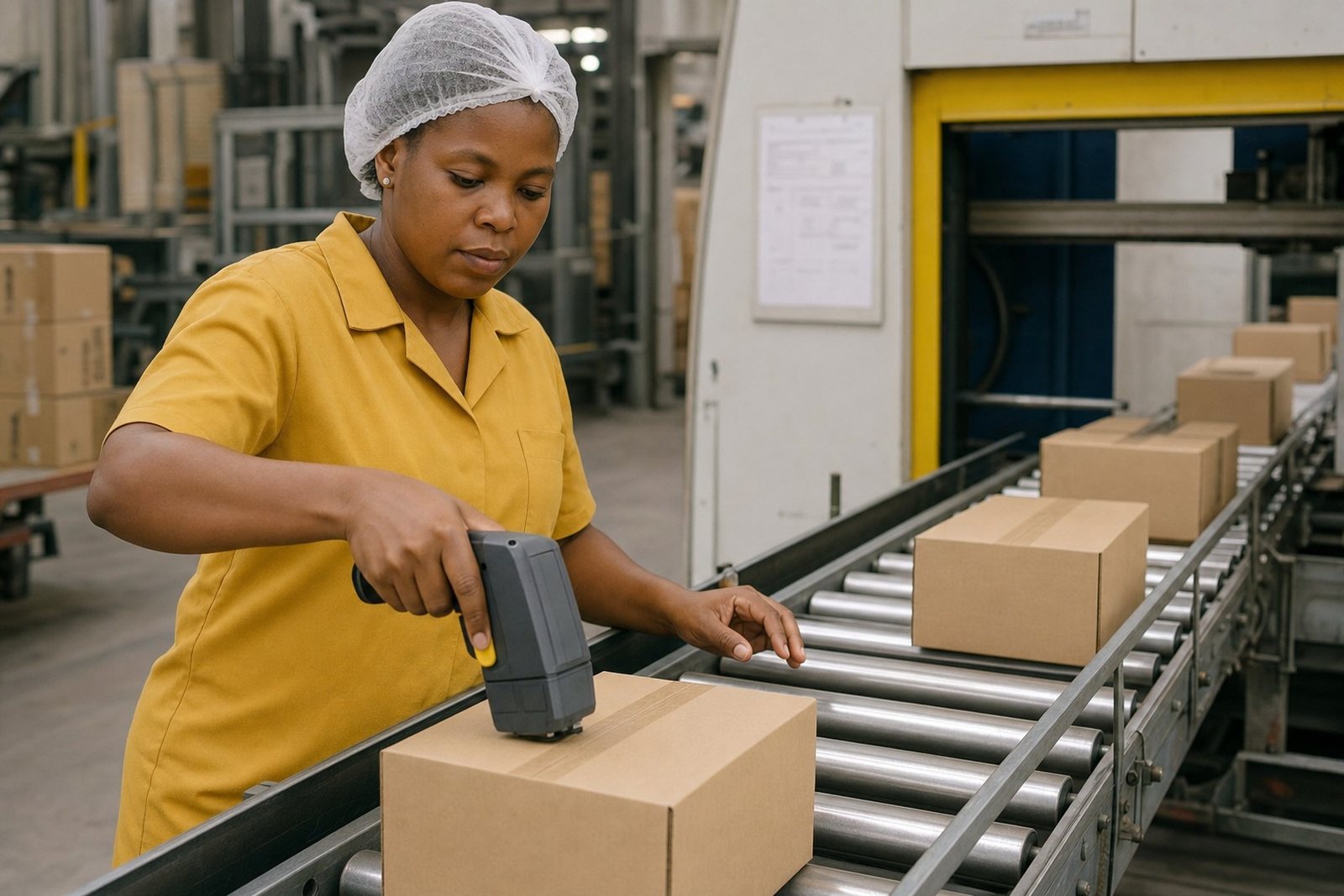
Keep the message short if the carton line is moving by hand. A clear date, batch code and a simple identifier usually scan and read better than a long block of text. For barcodes, the module size and quiet space around the code matter more than making it very large. A rushed barcode that touches the carton seam is a poor match for scanners.
- Leave a dry, flat zone for the code.
- Set the print height to match the carton panel size.
- Avoid corners, tape and fold lines.
- Check that the message still reads after stacking.
Ink choice for cartons moving through warehouses
Ink selection should match the carton stock and the way it will be handled. Water-based ink can suit absorbent cartons where the print can sink in a little. Quick-dry ink is often preferred for faster handling, especially when cartons are moved straight to packing or palletising. Solvent ink is useful where adhesion is needed on less porous surfaces or where the carton may be exposed to moisture in transit.
For exports or long storage, the mark must stay legible after abrasion, light rubbing and changes in temperature. A code that smudges on the first lift is a problem on a shipping run through Durban Harbour or a warehouse in Johannesburg. The aim is not only to print, but to leave a code that stays readable when the box is stacked, moved and opened later.
Testing a few cartons first helps the operator see drying speed, line sharpness and how the ink behaves on the board. That small check saves time when the line is already moving and the cartons are being sealed in batches.
Barcodes and batch codes need more discipline than logos
Logos are forgiving if the style is bold and the panel is clean. Barcodes and batch codes are less forgiving. A barcode needs consistent line width, decent contrast and enough quiet space around it for a scanner to read it. Batch codes must stay legible even when the carton is slightly scuffed during loading.
When printing barcodes on cartons, keep the print head steady and the movement smooth. A wobble during a fast pass can distort narrow bars, which makes the code unreliable. Logos are better kept simple on handheld jobs, with strong outlines and enough spacing between elements. Fine detail often disappears on rough board.
- Use the largest barcode that fits the panel.
- Keep quiet space around the code clear.
- Test scan a few cartons before release.
- Use bold logo artwork rather than thin detail.
On mixed carton stocks, it helps to set one message for each board type. A recycled carton may need a slightly heavier setting than a smooth folded box. The operator can then keep each pack tidy instead of adjusting the unit for every single carton.
Handling cartons in humid or dusty conditions
Cartons spend time in stores, dispatch areas and trucks, so the coding has to survive ordinary handling. Dust can sit on the board and weaken adhesion. A quick wipe with a dry cloth may be enough before marking, but wet cleaning should be avoided unless the carton is fully dry again. Moisture at the surface can blur the first pass.
In coastal towns such as Richards Bay or Durban, humidity can stretch drying times a little. In drier inland places such as Johannesburg or Pietermaritzburg, the ink may set differently on the same board. That is why one setting does not suit every site. The best practical habit is to print a few cartons, inspect the edge of the mark and check whether the ink smears when the box is lifted.
If cartons are folded after printing, allow the code to dry before sealing. A neat mark on a flat panel can still transfer if the flaps are closed too soon. That small pause is often the difference between a clean delivery box and a smudged one.
Hiring a handheld coder for a carton run
A weekly or monthly rental works well when carton coding is needed for a project, a seasonal order or a short production change. A rental unit can be set up with the right message, the correct print height and the ink type suited to the carton stock. Delivery and collection, on-site setup, remote setup help and operator training all make sense when the team needs the machine moving through the first batch with confidence.
For a carton run, the useful extras are message loading, barcode setup, logo setup and test printing. Consumables supply matters too, because the inks need to match the job and the stock on hand. If the carton line cannot pause for long, a backup unit can keep the work moving while the main coder is cleaned or adjusted.
A local example helps. A Durban packer sending folded cartons to branches in Cape Town and Johannesburg may use one short batch code for traceability and a clean logo on the side panel. With the right ink and a tidy panel, the same handheld printer can handle both jobs without changing the carton line layout.