What steel accepts well, and what gives trouble
Steel is not one surface. Bare metal, painted panels, powder coated parts and galvanised sections all take ink a little differently. A handheld coder can work on many of them, but the result depends on the finish, the handling marks and whether oil or dust is still sitting on the part.
On coated steel, the code usually lands best on a flat, clean zone with a steady pass. Glossy paint and oily residue can cause beading or patchy edges. Rough profiles, weld seams and curved tube need a slower hand and a clear test print before the main run.
- Painted steel often accepts quick-dry ink better than slower drying blends.
- Galvanised surfaces may need extra checking because the finish can vary.
- Freshly coated parts should be tested before a full production run.
- Oil, cutting fluid and dust reduce print sharpness fast.
Print height, message length and the way the hand moves
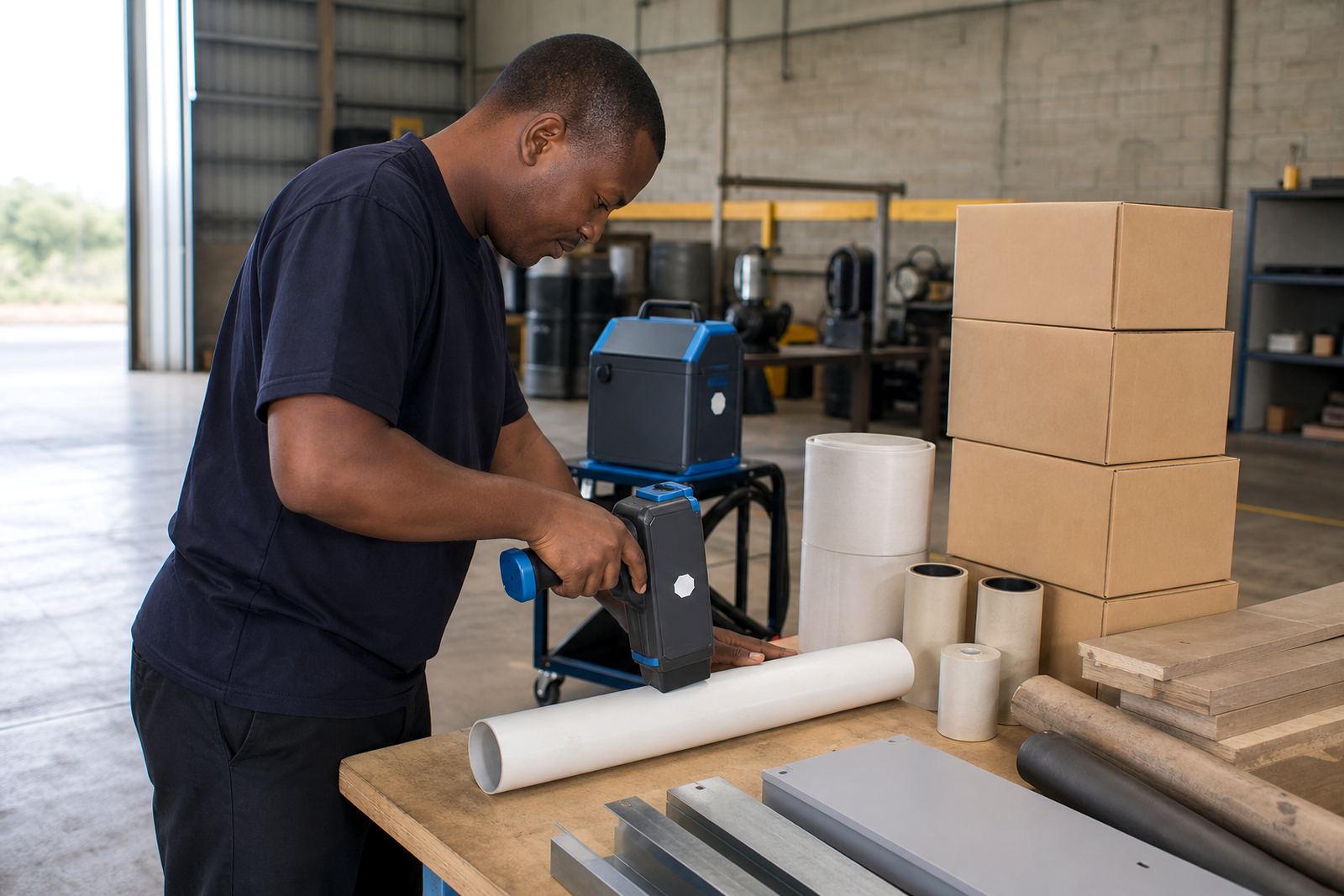
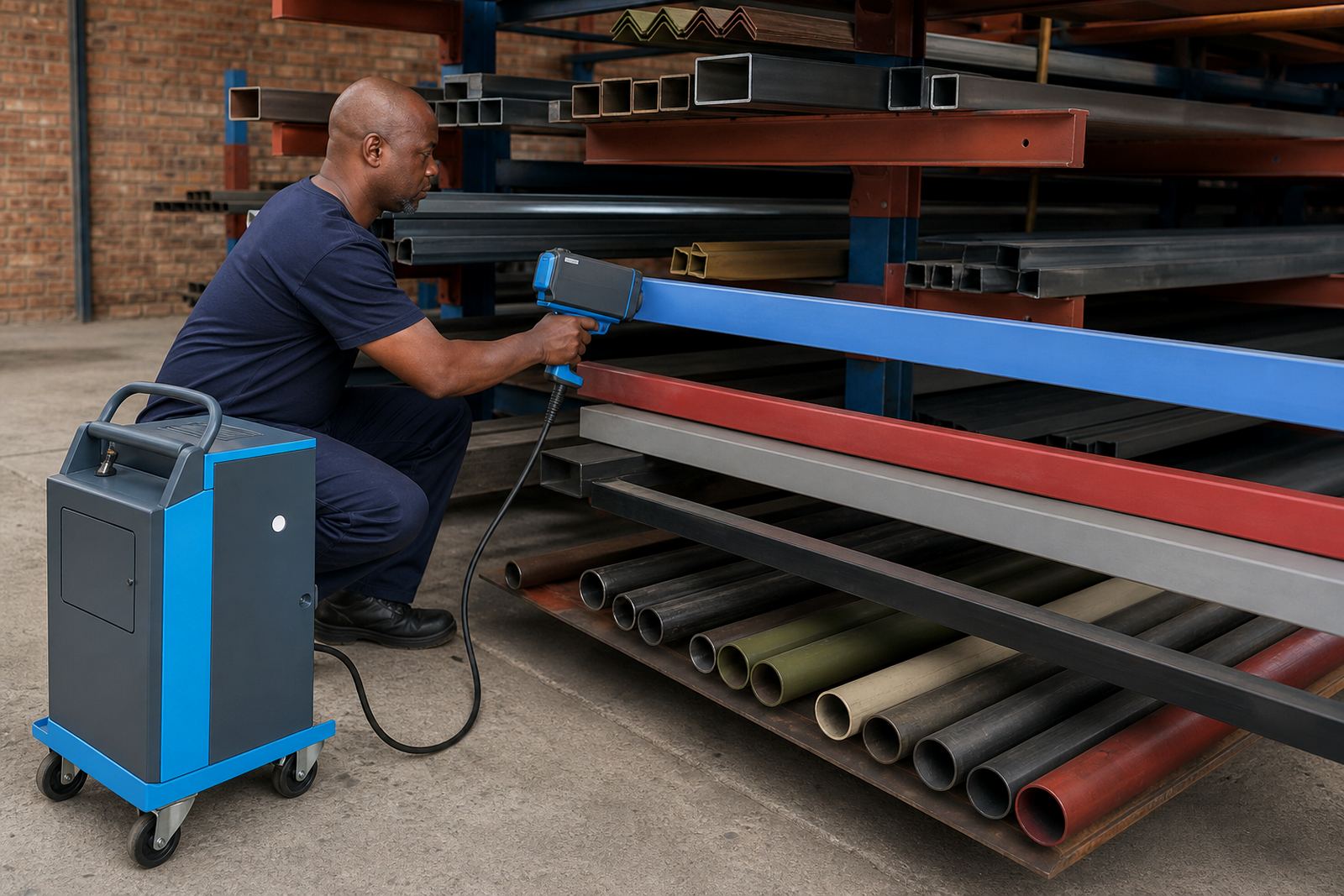
Handheld inkjet printers are useful on steel because the operator can work along edges, beams and boxed sections without moving the item through a fixed line. Print height matters here. Small text can fit onto tight flange areas, while larger characters are easier to read from a distance on crates or structural members.
A practical message for steel usually stays short. Date codes, batch numbers and short product names print more cleanly than long sentences. When a logo is added, the file must be set up with enough contrast and space, or it will lose detail on a coated surface.
- Small codes suit narrow trim, angle iron and short label zones.
- Medium heights help on cartons and steel packs that need quick reading.
- Larger characters work better on flat panels and shipping frames.
- Barcodes need space around them to scan properly after printing.
Ink choice for coated steel in coastal and inland conditions
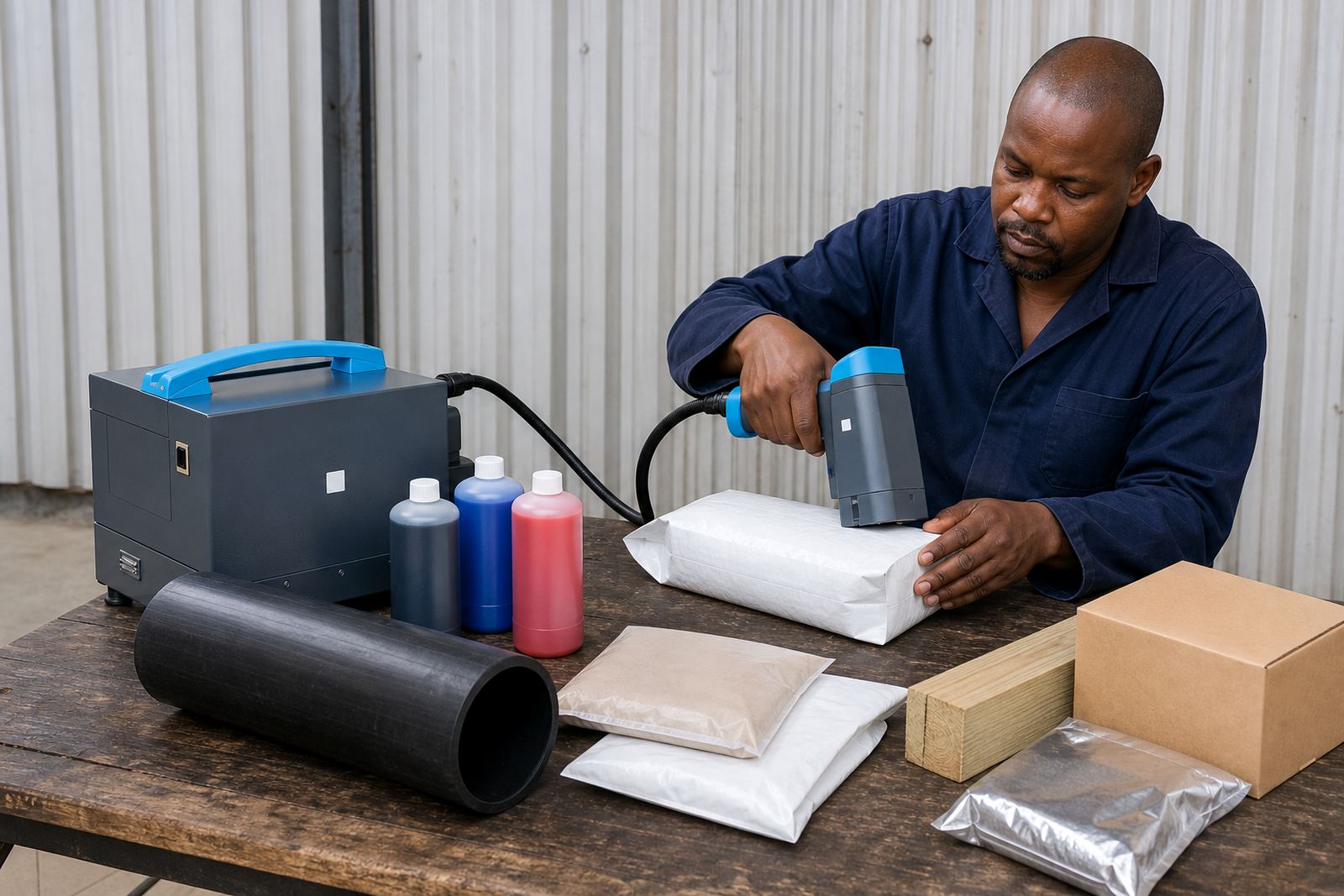
Ink selection changes the result more than many people expect. On painted or coated steel, solvent-based ink is often chosen when the surface is slick or handled soon after marking. Water-based ink can work on more absorbent materials, but on steel it is usually less forgiving unless the finish has some texture. Quick-dry ink is often the safest starting point for mixed steel work.
In Durban and Richards Bay, coastal humidity can slow drying on some coatings, especially if the parts are stacked too closely after printing. Inland yards around Johannesburg may deal more with dust and handling marks than moisture, so the issue becomes rub resistance and clean placement rather than air movement.
- Solvent ink suits tougher, less absorbent steel finishes.
- Quick-dry ink helps when parts must be stacked or moved soon after coding.
- Water-based ink is better kept for surfaces that can actually take it.
- Test prints show whether the finish smudges, beads or holds detail.
A Durban fabrication yard example
A steel fabricator in the Pinetown area may need codes on powder coated brackets, boxed sections and finished frames before dispatch. The job is usually mixed. One part needs a date, another needs a batch reference and a third needs a small logo for identification. A handheld printer lets the operator move from item to item without retooling the line.
For work like this, the message is loaded once, checked on a test piece and then kept consistent across the batch. If the print face is curved, the hand speed must stay even. If the coated surface is still warm from processing, the print should be tested first because finish behaviour can change with heat.
- Keep one clean test panel beside the job for checks.
- Mark a repeatable spot on every item before starting.
- Separate fresh coating from fully cured coating where possible.
- Use clear batch wording so the crew can read it in the yard.
Barcodes, logos and the limits of a moving hand
Barcodes on steel are possible, but they need more care than plain text. A scan-friendly code needs clean edges, enough contrast and a quiet background. If the surface is textured or the operator is moving too quickly, the scan quality drops. Logos face the same issue, especially when small lines or thin type are packed into a tight print area.
For this reason, many steel yards keep barcodes for secondary identification and use plain text for the main line reference. Logos work best when they are simple, bold and already set up for the print size being used.
- Use larger barcodes where the surface allows it.
- Keep logos simple so small details do not disappear.
- Leave room around the code for scanning equipment.
- Do not crowd the print near welds, bolts or seam lines.
Hire terms that suit steel work on shifting schedules
Steel jobs often move in batches, so weekly and monthly hire terms make practical sense. A short hire can suit a dispatch run, while a longer period helps when the yard has steady output across several product lines. Delivery and collection support is useful when the printer needs to move between sites in Durban, Pietermaritzburg, Johannesburg, Cape Town or Richards Bay.
Setup help, operator training and backup unit support are important on steel work because the printer may be used by different teams in the same month. When the machine changes hands, the message, ink type and print height should all be checked again before the next run starts. That keeps the marks readable and the job moving without confusion.
- Hiring for a week suits short production bursts and project work.
- Monthly hire fits repeat coding across regular steel output.
- Training helps new operators keep spacing and alignment steady.
- Backup units matter when a job cannot stop for long.