

What a date code must do on the floor
A date field is usually the shortest part of the message, yet it carries real weight. On cartons, bags and wrapped packs it can show a production date, packing date, use by date or best before date. On timber, steel and pipe bundles it often sits beside a batch number so stock can be traced when material is cut, stored or loaded for a site in Durban or further inland.
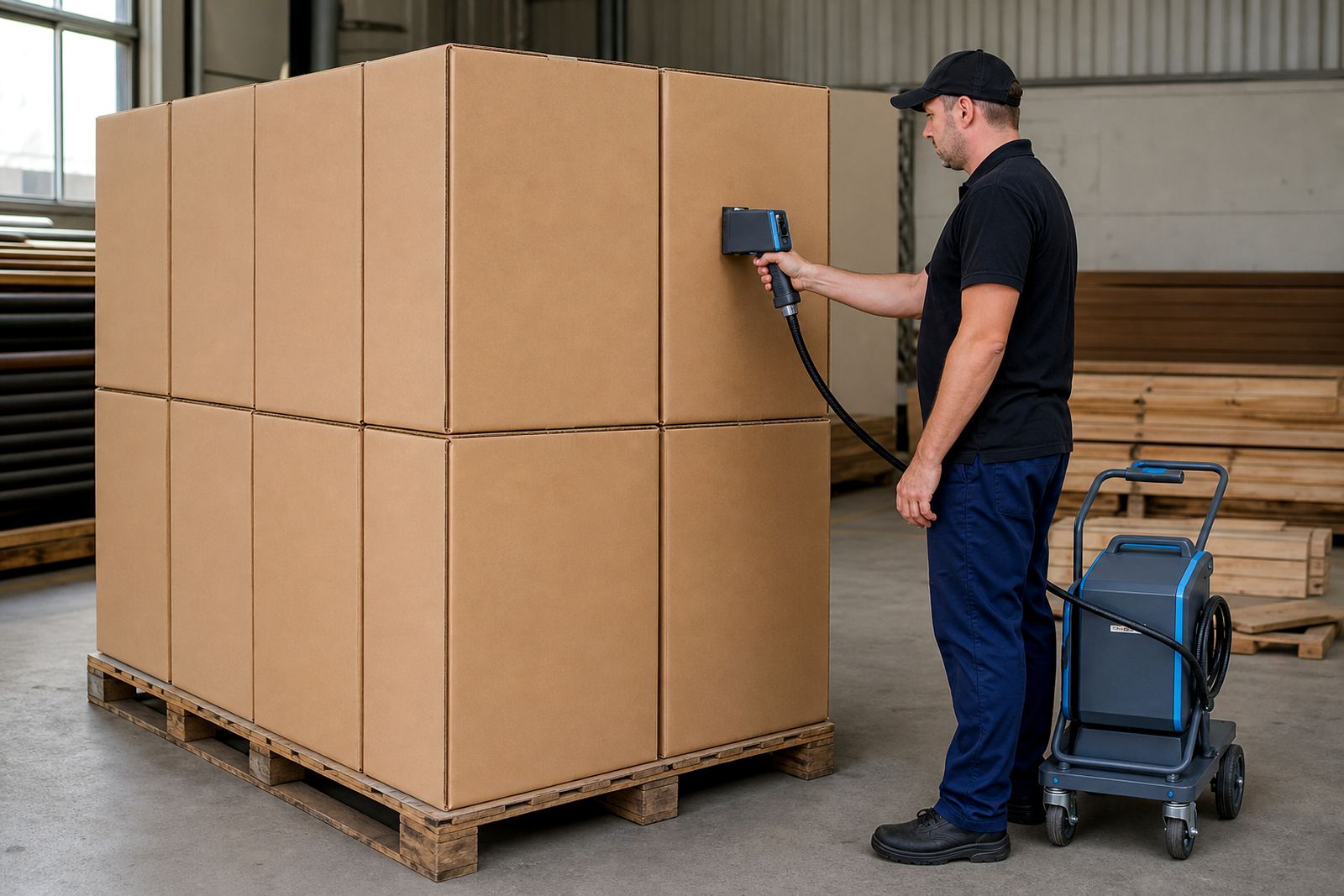
Handheld inkjet coders are often used where the item is too large, too awkward, or too varied for a fixed print station. They let an operator mark a flat panel, a curved pipe, a rough timber face or the side of a carton without moving the whole line around. The message has to stay readable after stacking, handling and transport, because a smeared date can slow down receiving, dispatch and customer checks.
In practice the code should match the way the goods are handled. If cartons are taped and stacked tightly, the print area needs to sit clear of seams. If timber is still a little damp from outdoor storage, the ink choice and the surface texture matter more than the wording itself.
Fields that work best in a short message
Date codes are strongest when they stay plain and direct. Long sentences waste space, and small print can vanish on a rough surface. Most teams use a compact message that carries the needed trace detail without crowding the panel.
- Production date or pack date for stock control
- Best before or use by date for retail packs
- Batch number beside the date for traceability
- Shift code when a line has more than one run in a day
- Site or project code for pipes, steel and timber bundles
If the message needs to sit on a carton flap or a narrow timber edge, the layout has to be planned around the available space. A clean date line with the month written clearly is often better than squeezing in every detail at once. For many teams, that means choosing what the code must prove, then trimming away anything that does not help at receiving or audit stage.
A date field also works best when it is consistent. If one pallet uses DD MM YYYY and the next uses a different order, confusion follows fast. A stable format cuts down on errors at handover and makes records easier to read later.
Surface choice changes the result
Not every surface accepts ink in the same way. Smooth cartons usually print more cleanly than coarse timber, while powder-coated steel and some plastics need a more careful match between surface and ink. In coastal areas like Durban and Richards Bay, humidity can also affect drying behaviour, so the same message may need a different setup from a dry inland warehouse.
Water-based ink is often used on porous cartons and paper sacks where fast absorbency helps the mark settle. Solvent-based ink is more suited to non-porous or difficult surfaces, including some plastics, coated materials and metal. Quick-dry options are useful where the item must be handled soon after marking, though the exact choice still depends on the surface finish, temperature and the way the pack is moved after coding.
Print height matters too. A larger character size helps on rough timber or a dark surface where contrast is weak, while smaller text can suit tidy carton panels with limited space. The wrong height can make a date look crowded or faint, which is where test prints save a lot of waste.
Hire setup for a short run or steady stock line
Both weekly and monthly rentals suit different kinds of date coding work. A short run may only need a few cartons marked for a special dispatch, while a longer hire is better for repeat packing, contract work or ongoing stock control across several sites. In Pinetown and Westmead, that often means a unit can move between a warehouse, a packing bay and a loading point without a permanent installation.
We normally see date coding used alongside message loading, barcode setup and logo setup when the pack needs more than one mark. The operator may need a supplier name, a batch field and a date in one pass, or a barcode with a small logo for retail stock. That is where setup help and operator training matter, because a neat message on paper still has to print clearly on a real surface.
- Delivery and collection for hire units
- On-site setup for first use or a new packing point
- Remote setup help for message changes and field layout
- Backup unit support where work cannot pause for a fault
A Durban example from packing to dispatch
A packing team in the Durban area may be sending mixed cartons to stores, with some stock held back for a later dispatch. One carton can need a production date, another a use by date and a third only a batch reference. The difference sounds small, but it affects how the goods are read at intake, on the shop floor and in returns.
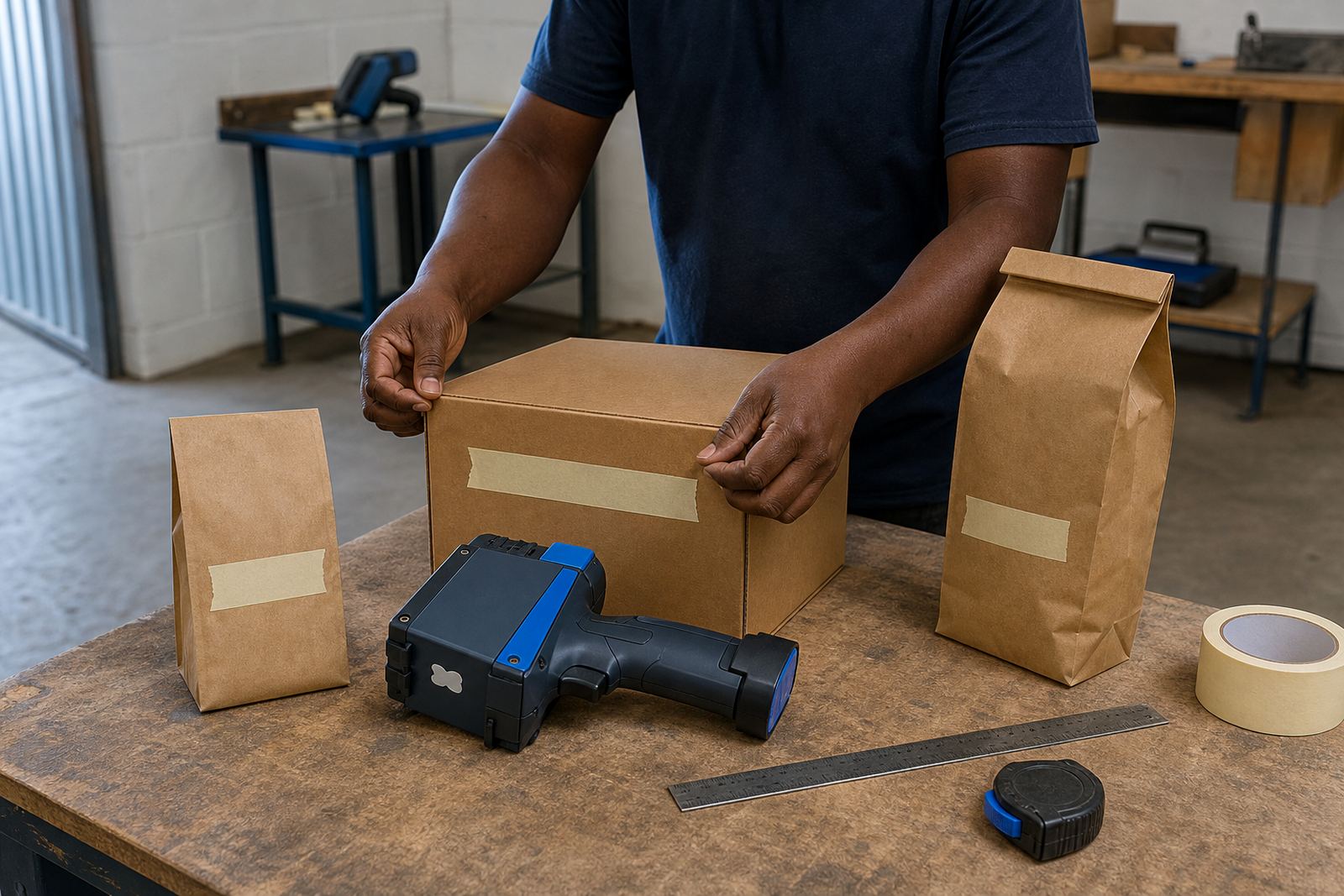
In a real week, the job often starts with test printing on the actual carton stock. If the board is slightly glossy, the print may need a different drying window. If the line is marking timber spacers or pipe bundles, the operator may need to lift the print height so the code sits above the grain or rust texture. A quick check on the real surface is worth more than guessing at the bench.
For Pietermaritzburg or Johannesburg jobs, the same basics still apply, even when the logistics look different. The message has to survive handling, the date format has to stay clear, and the surface has to suit the ink chosen for the day. That is the part that keeps stock readable after it leaves the packing bay.
The small checks that stop a messy code
Date coding usually fails for ordinary reasons, not dramatic ones. The message may be too long, the surface may be dusty, or the print angle may be wrong for the item shape. Those issues are easier to catch before a full run starts, especially when the unit is moving between cartons, pipes and timber during the same hire period.
- Wipe loose dust or surface moisture before test prints
- Match ink type to the material, not to habit
- Keep the date field short enough for the print height used
- Check that the message reads the same way at receiving and dispatch
- Store consumables correctly so the ink stays usable on site
For coastal work in Cape Town or Richards Bay, packaging teams often notice that conditions shift through the day. Morning air, stored stock and the movement of goods around a loading area can all change how a mark settles. A few test prints on the real pack are usually the best way to settle the setup before the full batch starts.
When the code has to travel with stock through several hands, clarity matters more than decoration. A date field should be easy to read in storage, easy to check at dispatch and easy to trace when a batch is pulled for audit or follow-up.