
When outer cases need more than a date stamp
Large pack coding is not only about a production date. On outer cartons and bulky packs, the mark often needs to carry batch numbers, line codes, simple product names, shift details, barcodes or a logo that stays legible after handling. A small code can disappear on a big face, especially on corrugated board with a rough finish or on a bag that flexes when lifted.
Handheld inkjet coders give operators more room to place a wider message without setting up a fixed line. That helps on mixed loads where one run may use cartons, another timber crates and the next sealed sacks. In Pinetown and Durban, where many packing areas are busy and space is tight, a portable unit is often easier to move from one pallet line to the next than a fixed marking station.
- Outer cases with batch and date details
- Bulk bags that need a higher print line
- Timber packs with short handling notes
- Pipes, crates and steel sections with identifier codes
Sizing the message for bigger surfaces
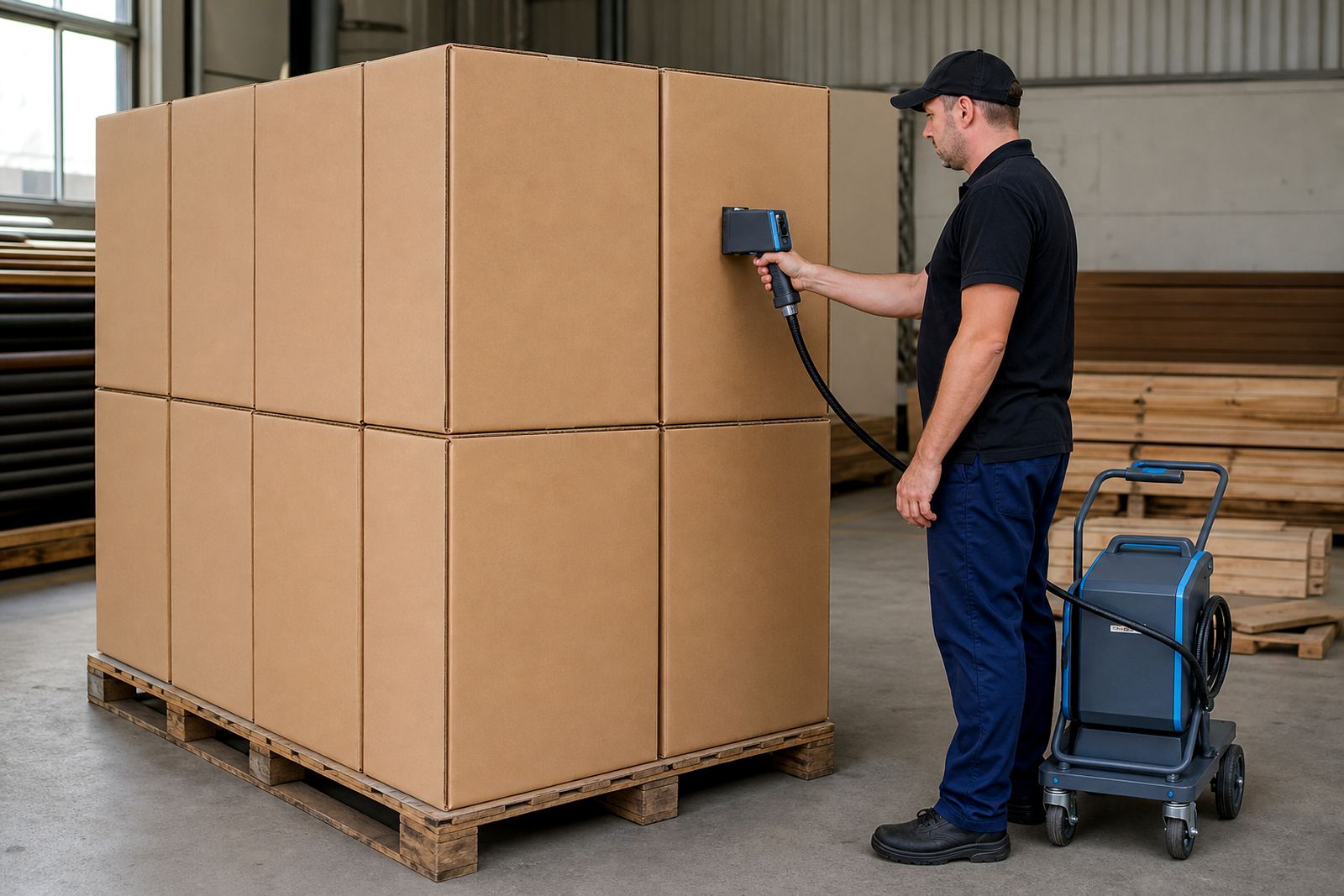
For large pack coding, print height matters. A short date line on a carton face may only need a small character height, but a wider message on a large outer case often reads better with taller characters and a longer print field. That is useful when the pack sits on a warehouse floor, on racking, or at the back of a delivery truck where the code must be seen without turning the pack around.
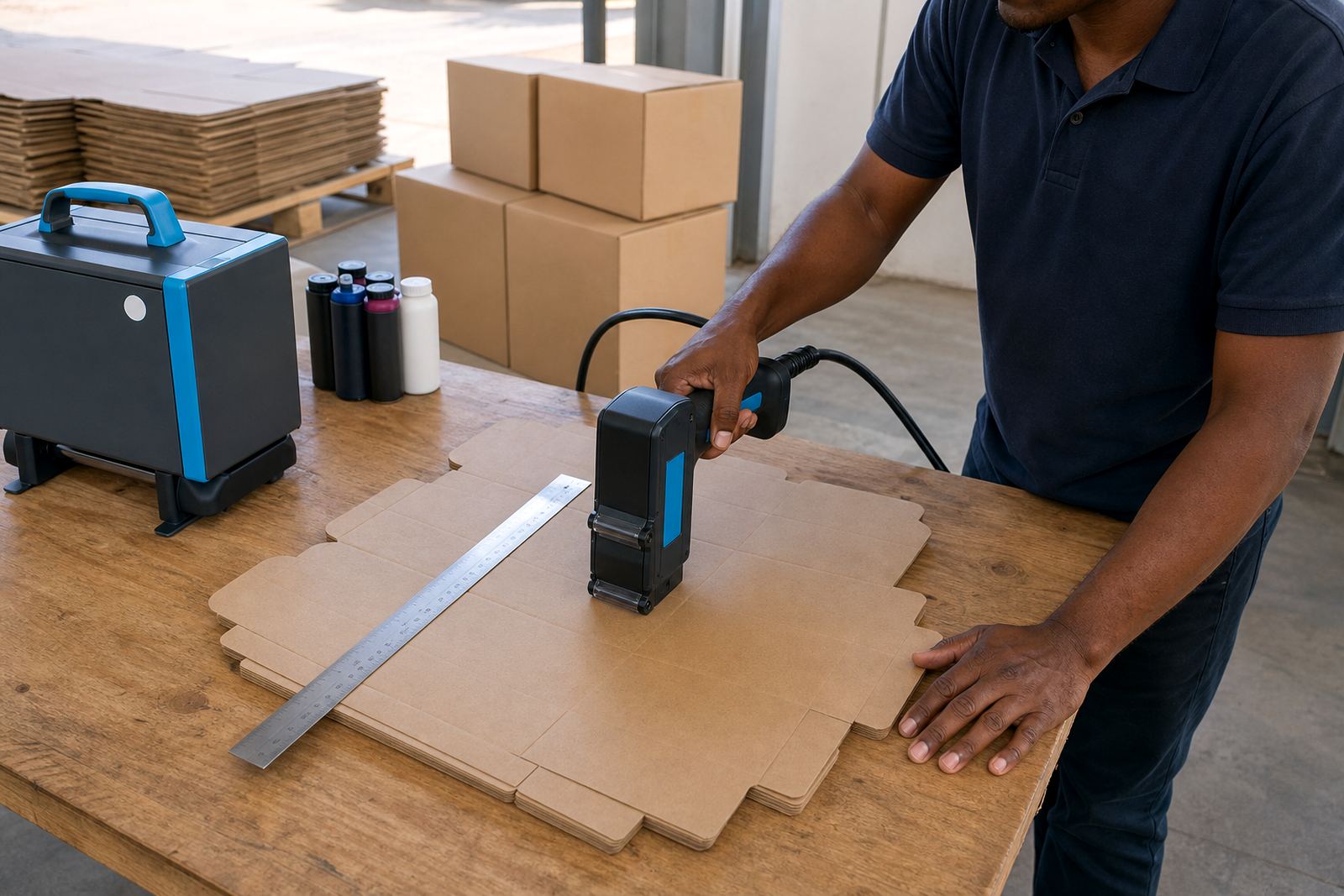
The best setup depends on the surface and the distance from which the mark will be checked. On a smooth carton you can usually place a clean, even line. On rough timber, a slightly larger text style and steady hand speed help keep the message readable. Where barcodes are part of the job, the print needs enough contrast and spacing so scanners can read it without repeated passes.
Our hire team helps load the message, set the print height and test the layout on the actual pack type before the hire goes live. That avoids wasted stock and makes it easier to settle on the right line length for the pack size in front of you.
Ink choices for cartons, timber, pipes and metal
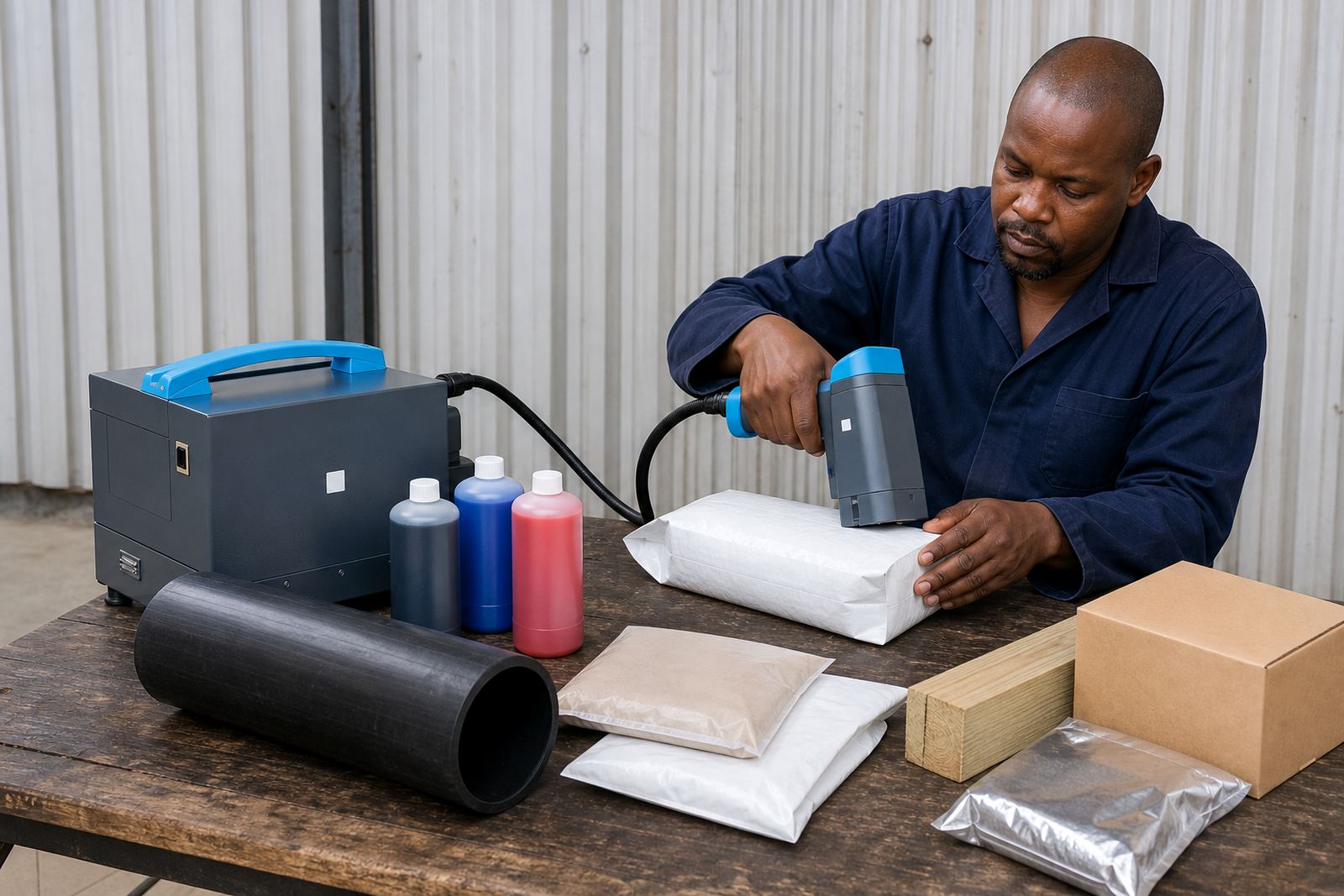
Different surfaces call for different ink behaviour. Cartons and paper-based sacks usually take quick-dry or water-based ink well, while non-porous surfaces such as coated pipes or steel sections often need solvent-based ink for better grip. On timber, the grain and moisture content can change how the mark sits, so a trial print is worth doing before the full batch starts.
In coastal areas such as Durban and Richards Bay, humidity can affect drying and handling. If the pack is moving quickly from coding to stacking, the ink has to dry cleanly enough to avoid smudging on the next case. That is where the right ink selection matters just as much as the printer itself.
- Quick-dry ink for fast moving carton lines
- Water-based ink for porous packaging and paper sacks
- Solvent ink for pipes, steel and coated surfaces
- Test prints to check dryness, contrast and edge sharpness
Weekly and monthly hire for changing pack volumes
Large pack work does not always stay at one volume. A warehouse may need a printer for a weekly dispatch run, then keep it on hire for a monthly production cycle when orders rise. Rental terms suit that pattern because the unit can be matched to the current workload without tying up capital in equipment that stands idle between runs.
Week-long hire suits short contracts, special product lines, seasonal packing and urgent relabelling jobs. Monthly hire is a better fit when the same pack format stays in circulation for longer and the coding task is part of the regular shift routine. Across Durban, Pietermaritzburg, Johannesburg, Cape Town and Richards Bay, the same printer format can be moved into different pack rooms, depots or loading areas as needed.
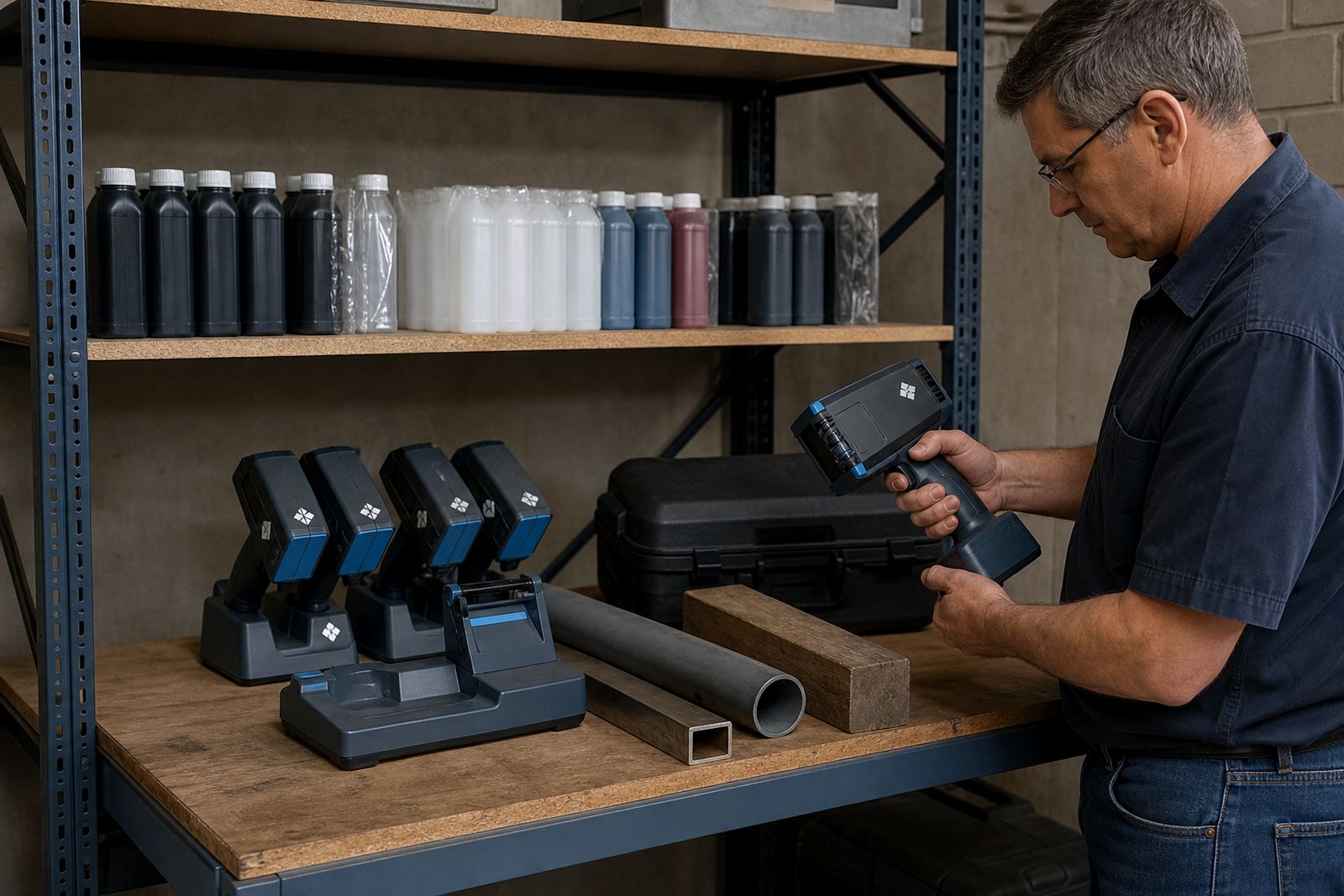
The hire plan can include consumables supply, backup unit support and troubleshooting if the code starts to drift or the surface changes. That keeps the focus on the pack line rather than on machine ownership.
Setup, message loading and barcode checks on site
Large packs often need a setup that matches the real handling line, not a guess from the office. On-site setup helps position the printer, check the print angle and confirm that the message lands where it can still be read after the pack is stacked or wrapped. Remote setup help can work for repeat jobs, but first-time runs benefit from hands-on guidance.
Message loading covers dates, batch numbers, simple product text, barcodes and logos. A barcode that looks fine on screen may need a small adjustment in size or spacing before it scans well on the actual pack. Test printing is the point where the job becomes practical, because it shows whether the ink, the surface and the print path are all working together.
- Operator training for the first shift or handover
- Logo setup for clear mark placement on outer cases
- Barcode setup for readable labels on pack faces
- Troubleshooting support if the line changes mid-run
A Pinetown packing room example
A Pinetown pack room handling mixed cartons and timber crates may need the same coding message across several pack sizes. One run could be outer cartons for retail supply, while the next is timber lengths for a building yard. The team needs a printer that can move between jobs without slowing the line or leaving a code too small to read once the pack is stacked for dispatch.
In that setting, handheld coding gives the operator room to place the message where the pack is cleanest and flattest. A carton might take the code on the side panel, while a timber crate may need the mark near the end face. If the client is sending goods from Durban inland to Johannesburg or north to Richards Bay, legible coding helps with warehouse checks and receiving points along the route.
That is the practical side of large pack coding. The right print height, the right ink and a clear message layout matter more than fancy claims. When the case is big, the code has to work harder to stay visible.
A few packing details that save time later
Large pack coding works best when the pack face is prepared and the message is kept consistent. A dusty carton, a damp timber board or a curved pipe can change the mark. Cleaning the print area and checking the first sample on each pack type keeps the line steadier and avoids rework.
It also helps to keep the message short enough for the surface. Long lines can wrap unevenly on curved stock, while a barcode needs enough clear space around it to scan properly. For bulk packing, less clutter on the print area often gives a better result.
- Keep the print zone clean and dry
- Match the message length to the pack face
- Check barcode spacing before the full run
- Store spare ink and consumables with the line