
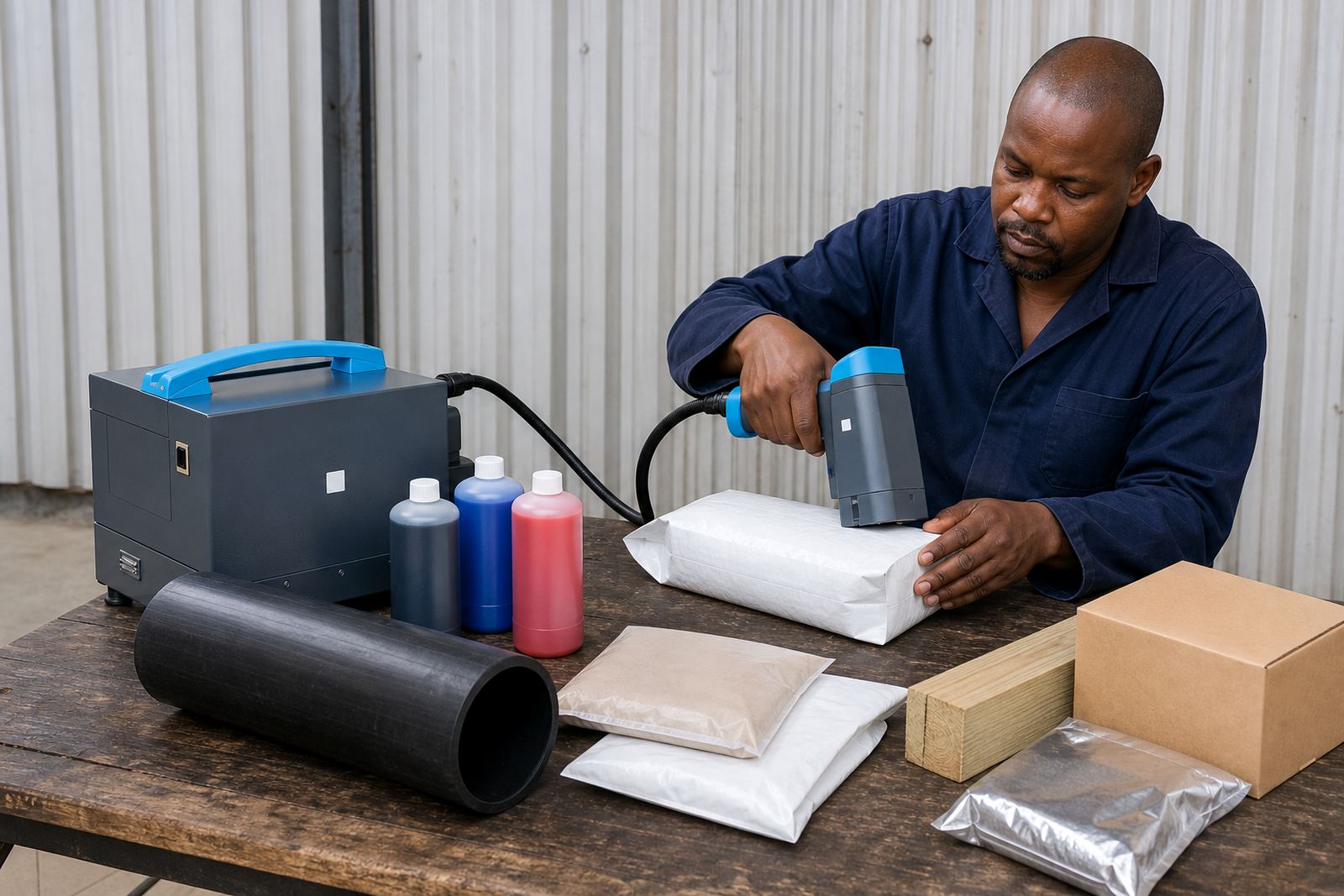
Where solvent ink earns its place
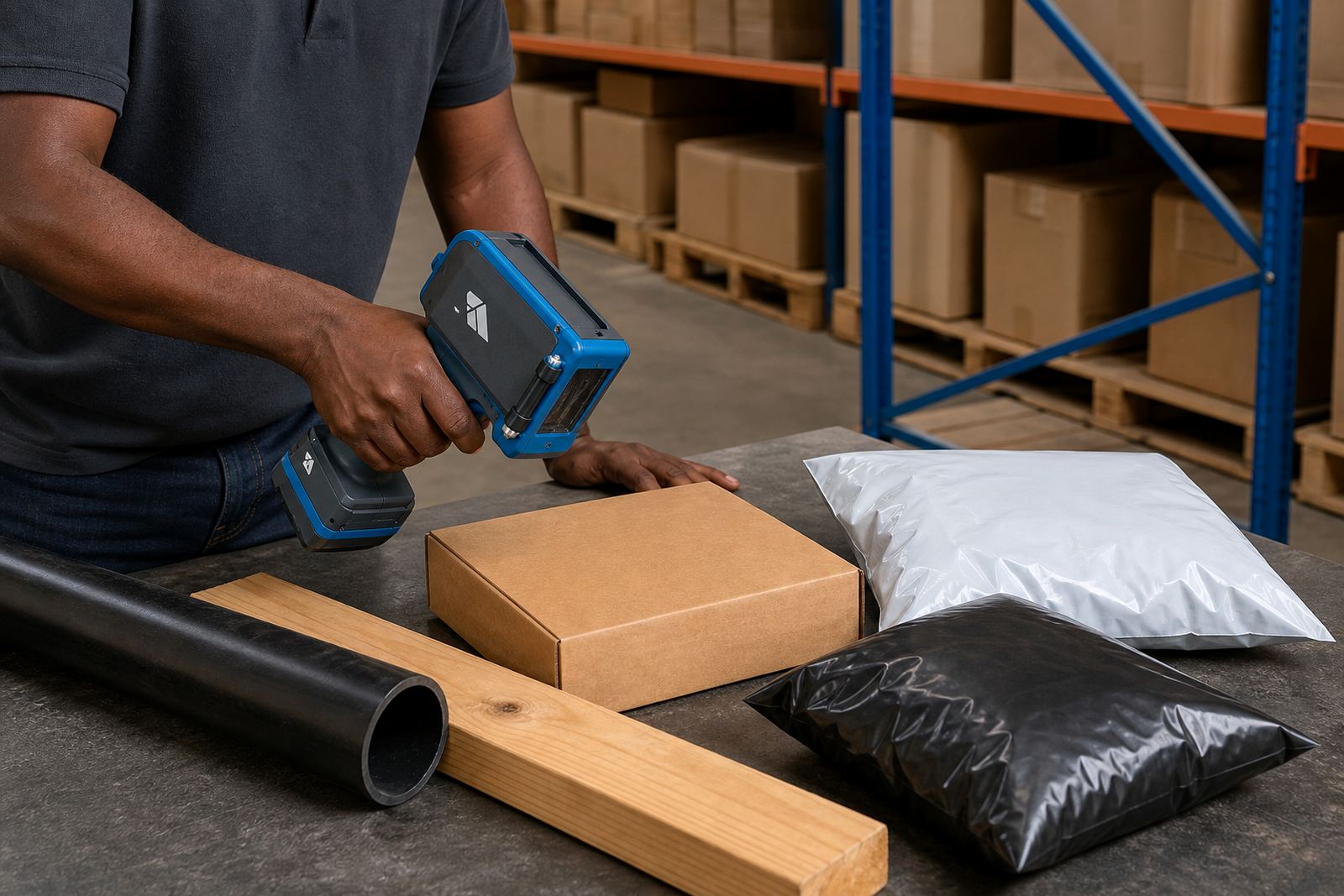
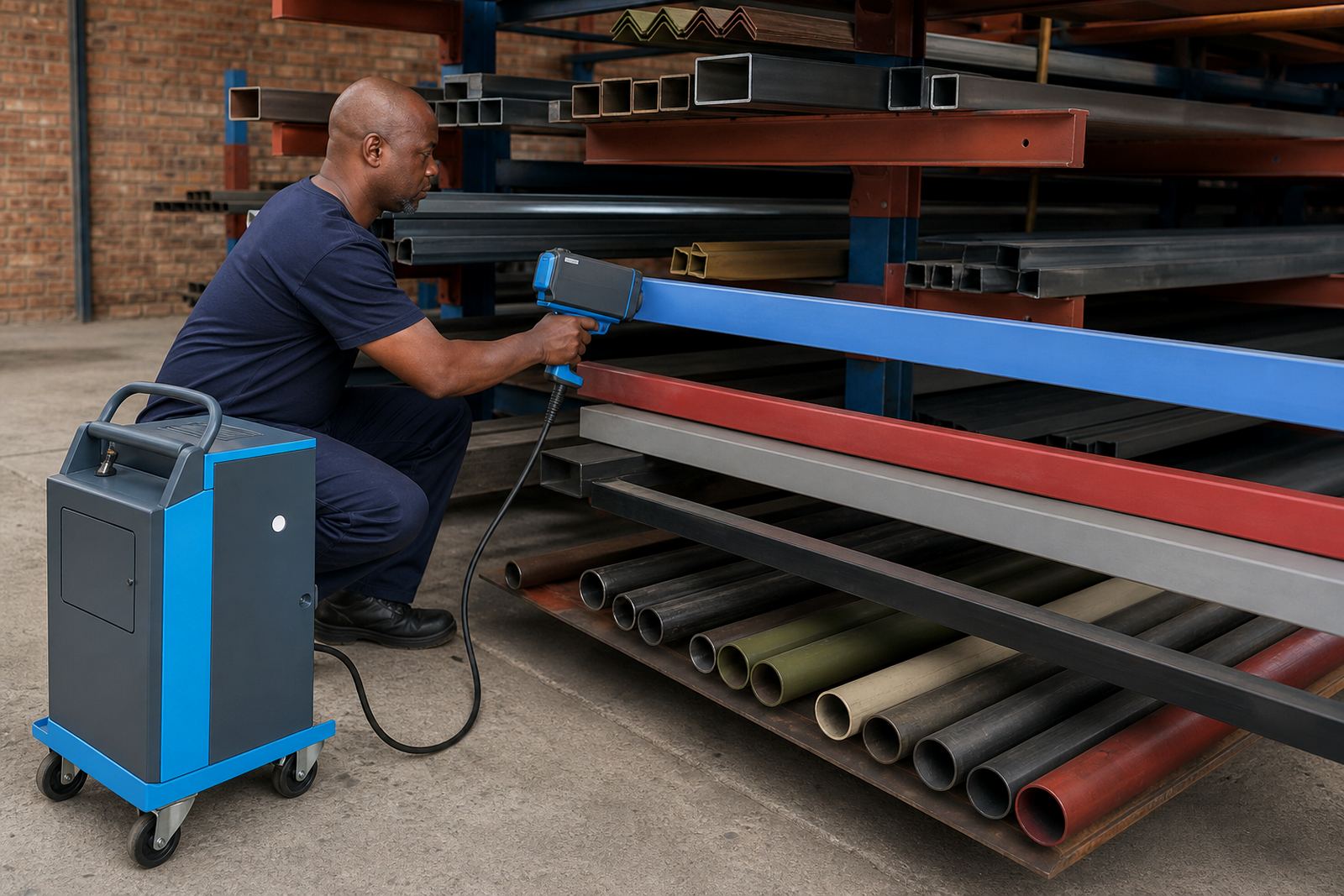
Solvent ink is common on cartons, shrink wrap, coated bags, plastic drums, pipes, timber and painted steel where a water-based mark can smear or fade too easily. It is often picked for batch numbers, production dates, shift codes and simple logos where the surface may have dust, texture or a light oily film.
For hire work, that matters because the same printer may move from a warehouse in Pinetown to a timber yard in Pietermaritzburg or a packing line in Johannesburg. The ink has to cope with mixed surfaces, different temperatures and the way staff actually handle goods after marking.
- Good on many non-porous or lightly porous surfaces
- Useful where handling starts soon after coding
- Often used for short production runs and mixed stock
Drying speed changes the whole job
Drying speed is not a small detail. If the ink stays wet too long, cartons can pick up smudges, stacked bags can transfer the print, and pipes or steel sections can carry marks where they should not.
Quick-dry solvent inks are often selected for fast moving packing areas and dispatch points. In Durban, where humidity can hang around, drying can feel slower than it does in a drier inland store room, so the wrong ink choice shows up fast. On timber, the grain can pull in some inks unevenly, while on coated cartons the surface can hold the mark on top and leave less room for mistakes.
- Fast drying helps when packs are stacked straight away
- Cleaner handling reduces smears and rework
- Humidity can affect how a code settles on the surface
Print height, nozzle care and code clarity
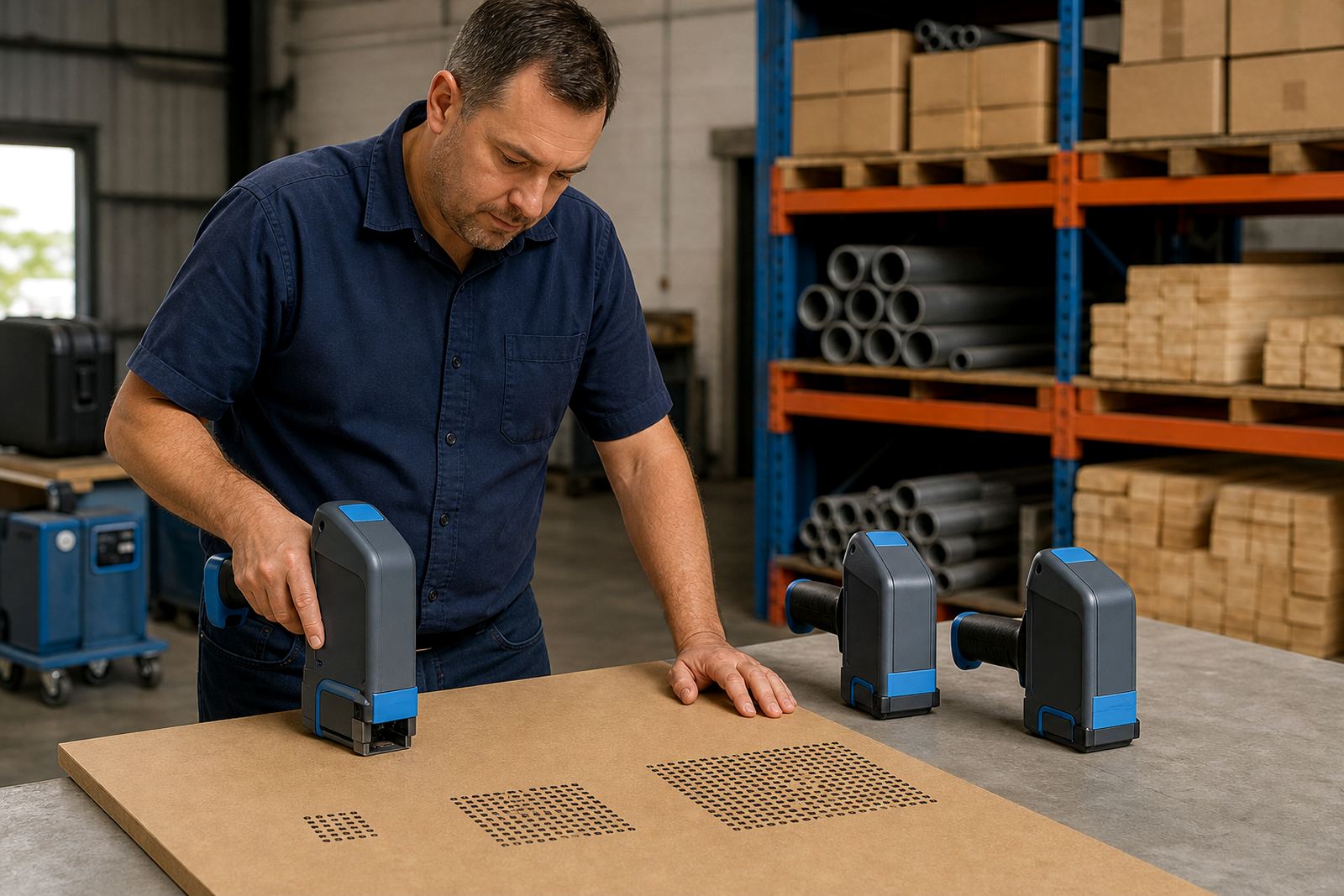
Handheld inkjet printers usually work with a set print height that suits the message you need to place. Smaller text fits date codes and batch numbers neatly, while taller print can suit larger logos or better visibility on wide cartons and timber lengths.
Solvent ink is also linked to nozzle care. If the machine stands unused or the cap is left exposed, the ink can thicken faster than water-based options and that can affect the first test print. A short clean, a proper shutdown and a quick check on the sample surface help keep the code sharp instead of fuzzy.
- Smaller print suits dates, times and batch codes
- Taller print helps with logos and bold product marks
- Clean test prints save time before full production starts
Choosing between solvent, water-based and quick-dry blends
The right ink depends on the surface, the handling and the finish expected on the product. Water-based ink can work well on porous cartons and some timber, while solvent ink is often preferred where the surface is coated, less porous or likely to be touched soon after printing. Quick-dry blends are useful where speed matters more than a slower, softer finish.
There is no one ink that suits every job. A packing room in Richards Bay may need a different setup from a timber stack in Cape Town or steel pipe marking in Westmead. The same handheld coder can behave very differently once the ink and the surface change.
- Water-based ink suits absorbent surfaces
- Solvent ink suits tougher or less porous surfaces
- Quick-dry blends help on lines with rapid handling
A Durban example from the shop floor
Think of a packing team in Pinetown marking corrugated cartons for palletised freight. The cartons are moving through the line, the labels sit on the outside, and the staff need a clear batch code that does not smear when the box is lifted. Solvent ink gives a practical margin there, especially where the carton surface has a coated finish or light dust from storage.
The same printer may later be used on timber offcuts or painted steel bundles. That flexibility is part of the appeal of hiring handheld inkjet printers, because the setup can be matched to the job instead of forcing one ink choice across every surface. In many yards, that saves a fair bit of trial and error.
Hire terms and setup support that keep the ink usable
Weekly and monthly hire terms suit sites that need the printer for a short production run, a seasonal contract or a one-off marking job. Delivery and collection, on-site setup, remote setup help, operator training and message loading all matter because solvent ink performs best when the machine is set up properly from the start.
Ink selection help, barcode setup, logo setup, test printing, consumables supply, troubleshooting support and backup unit support are useful when a job cannot wait for guesswork. For teams in Durban, Pietermaritzburg, Johannesburg, Cape Town and Richards Bay, the main goal is the same: get the right ink on the right surface and keep the code readable through handling, transport and storage.
- Weekly or monthly hire suits changing production demands
- Setup support reduces wasted prints and messy starts
- Backup units help keep marking work moving