What a handheld coder does on site
A handheld inkjet coder prints variable information directly onto a product or pack surface. In practice that means dates, batch numbers, shift marks, barcodes, expiry details and simple logos on items that are already stacked, wrapped or too awkward for a fixed line printer.
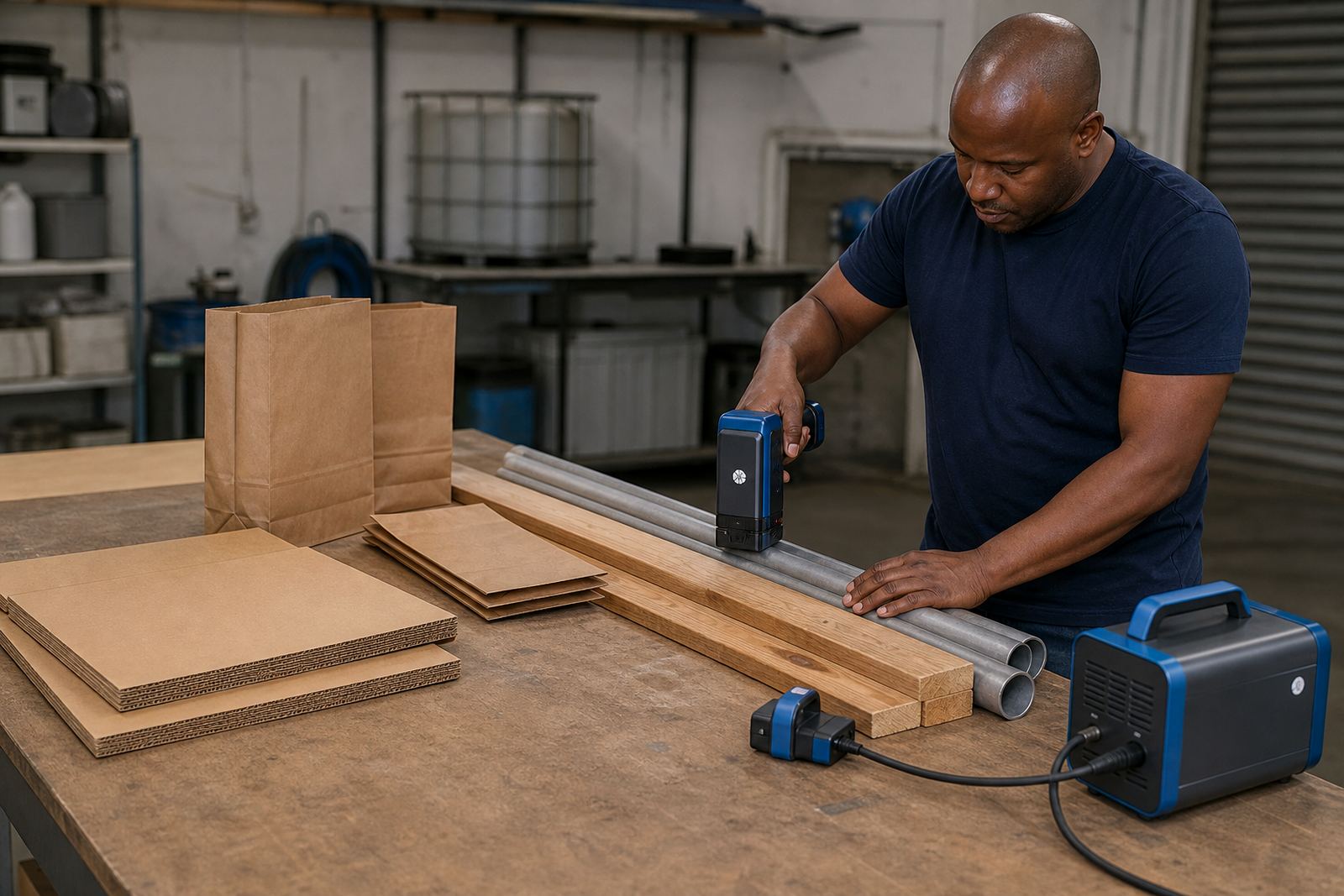
The unit is moved by hand along the surface while the print head sprays tiny droplets of ink. The message is set before printing, then adjusted as the job changes. That makes it useful on short runs, mixed stock and work areas where cartons, tubes and timber lengths do not sit still for long.
Surfaces that usually carry a clean mark
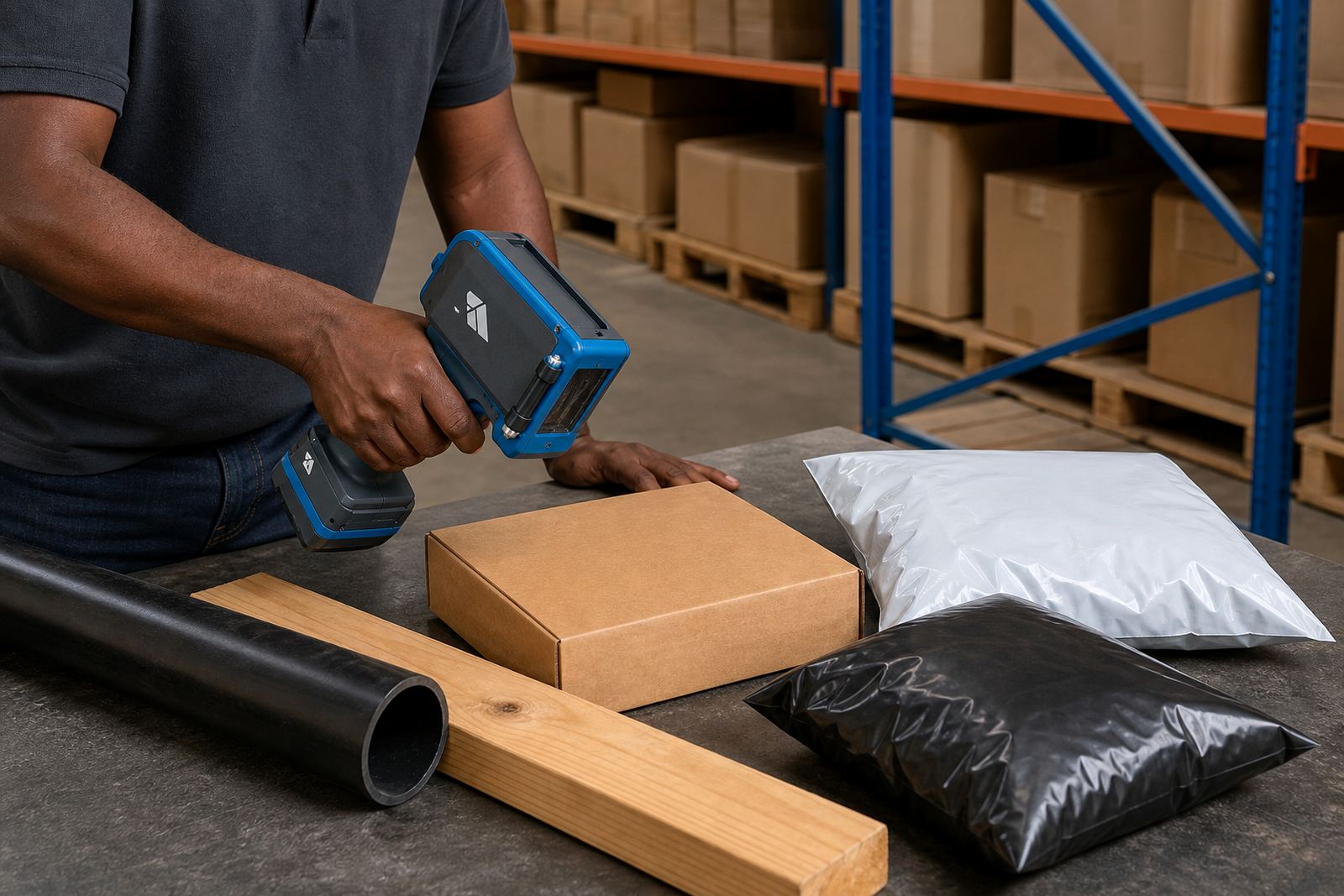
Different surfaces behave differently. Porous board takes ink fast, while smooth plastic or coated packs need a faster drying ink and steadier handling. Metal and painted steel can print well too, but the surface should be dry, clean and free of heavy oil or dust.
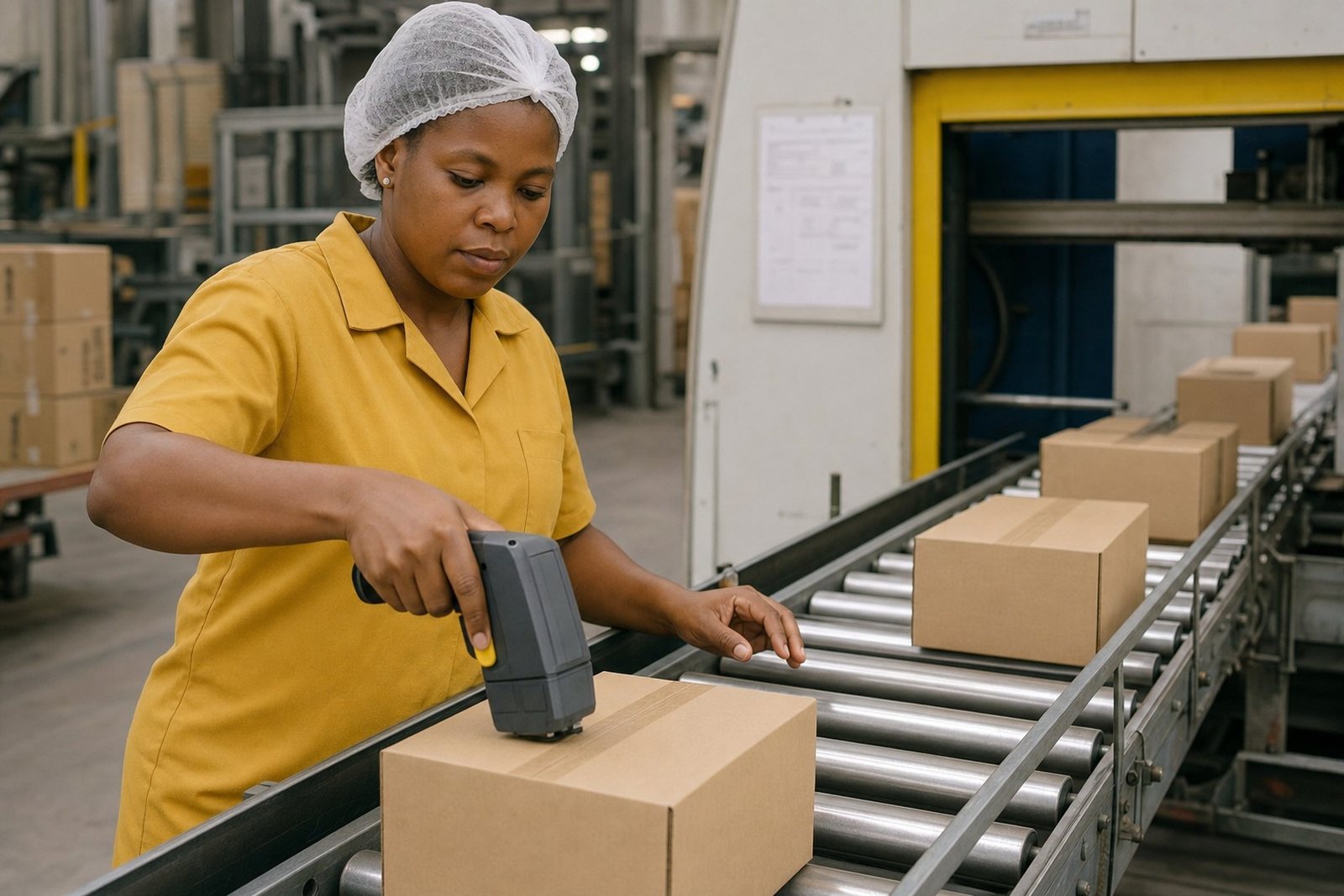
- Cartons and corrugated boxes for dispatch labels, batch codes and dates
- Woven or laminated bags where the print area needs careful placement
- PVC, pipe and conduit where curved surfaces need controlled hand movement
- Timber, plywood and treated boards for grading or trace marks
- Steel sections and components where quick-dry ink helps reduce smudging
On damp coastal stock, especially around Durban and Richards Bay, the surface condition matters just as much as the ink. A print that looks sharp on a dry sample can smear if the pack has picked up moisture or the operator moves too slowly.
Ink choice changes the result more than people expect
Ink selection depends on the substrate, drying speed and how the item is handled after printing. Solvent-based inks are often used where adhesion matters on non-porous surfaces. Water-based inks can suit absorbent cartons and timber. Quick-dry inks help when the coded item must be moved or stacked soon after marking.
The print height also matters. Smaller characters suit batch codes and compact dates, while larger print heights help with logos or barcode fields that must be easy to read from a distance. A barcode that scans well on one pack size may need a wider quiet zone or a different print layout on another.
Good ink selection is not guesswork. A test print on the actual surface usually shows whether the ink bites into the material, stays legible and dries at a practical pace. If the job includes mixed materials, one ink may not suit every item and that needs to be checked before the run starts.
How setup works when the printer arrives
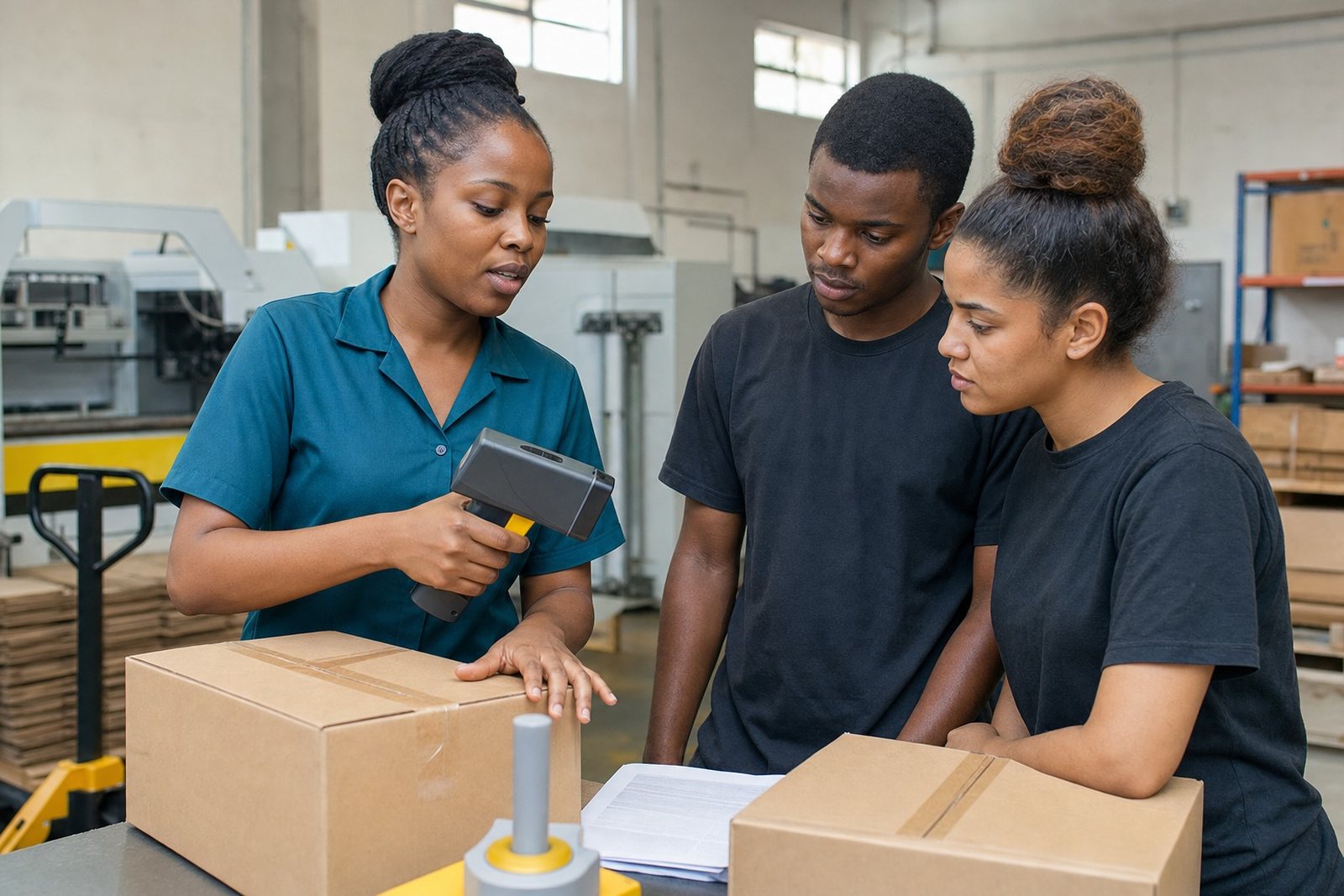
Handheld coding works best when the message is set properly before the first production batch. That includes the date format, batch sequence, character height, barcode data and logo position. The operator also needs a clear idea of print direction, where the hand will start, and how close the unit should sit to the surface.
- Message loading for dates, codes and repeat text
- Barcode setup where the code must scan at the end point
- Logo setup for simple marks, symbols or company identifiers
- Test printing on the actual carton, pipe or board
- Operator training so the same print looks consistent across the shift
Field setup can be done on site or with remote setup help, depending on the work area and the material. When the job is in Westmead, New Germany or across the wider Durban side, the practical issue is usually not the machine itself but getting the print position to sit straight on uneven packs or round pipes.
A local job tells the story better than a brochure
A packing line in Pinetown may need to mark a date, a batch number and a barcode on cartons moving to Johannesburg and Cape Town. The cartons are often different sizes, and some have a glossy outer face while others are plain corrugated board. A handheld coder lets the team mark each carton where it stands, instead of shifting stock to a fixed printer.
In a timber yard, the need is different. Boards may be long, dusty and stacked in mixed lengths. The operator may need a large enough print height to keep the code readable, but not so large that it bleeds across the grain. On pipes, the same unit has to move with a steady wrist and a sensible gap from the curved face, otherwise the mark can stretch or break up.
That is where weekly and monthly hire terms suit many South African users. Some jobs are seasonal, some are project based, and some need a unit for a short production window only. A rented coder gives room to match the equipment to the work without carrying a machine that sits idle later.
What to expect from a hired unit during production
A hired handheld coder is only useful if the consumables and support are matched to the task. The main items are the printer body, the correct ink, a charged power source or battery system where relevant, and enough confidence from the operator to keep the mark even. Backup unit support also matters when the work cannot pause for long.
- Weekly hire for short production runs or one-off dispatch work
- Monthly hire for ongoing batch coding and packing output
- Consumables supply for ink and job-specific marking needs
- Troubleshooting support when print quality shifts during a run
- Delivery and collection for Durban, Pietermaritzburg, Johannesburg, Cape Town and Richards Bay
For many customers, the value is in keeping the print readable across the whole job. A blurred date or a barcode that fails to scan can slow down dispatch and create avoidable sorting work later. Handheld coding keeps the marking close to the product, which suits yards, stores and packing areas where items are handled in batches rather than on a single conveyor.
Where this equipment fits into South African work
In Durban and Pinetown, many packing and fabrication jobs need marking that can travel with the product. In Johannesburg, the pressure is often on mixed stock and varied carton sizes. In Cape Town, windy loading areas and coastal conditions can make print cleanliness important. In Pietermaritzburg and Richards Bay, the challenge is often the same: keep the code legible, keep the ink right for the surface, and keep the workflow moving without a fixed line.
Handheld coding is not about fancy presentation. It is about making sure the date, code or logo is visible where people expect to find it. When the message is set right and the ink matches the surface, the result is a clean mark that does its job without slowing the packout team down.
For rental users, that makes the equipment practical. The unit can be brought in for the job, set up for the right surface, and used only for the period that makes sense for the workload.