Start with the surface, not the printer
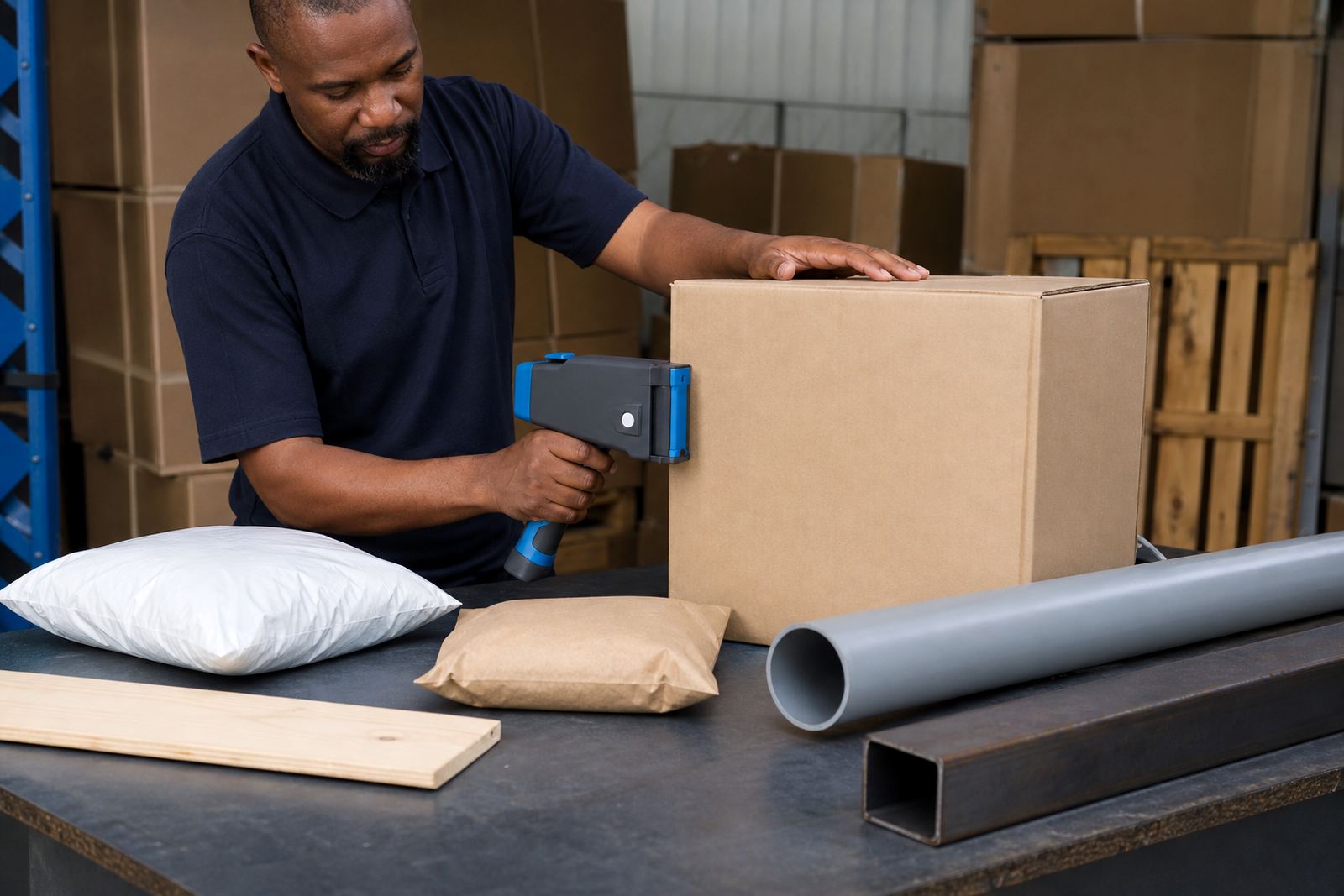
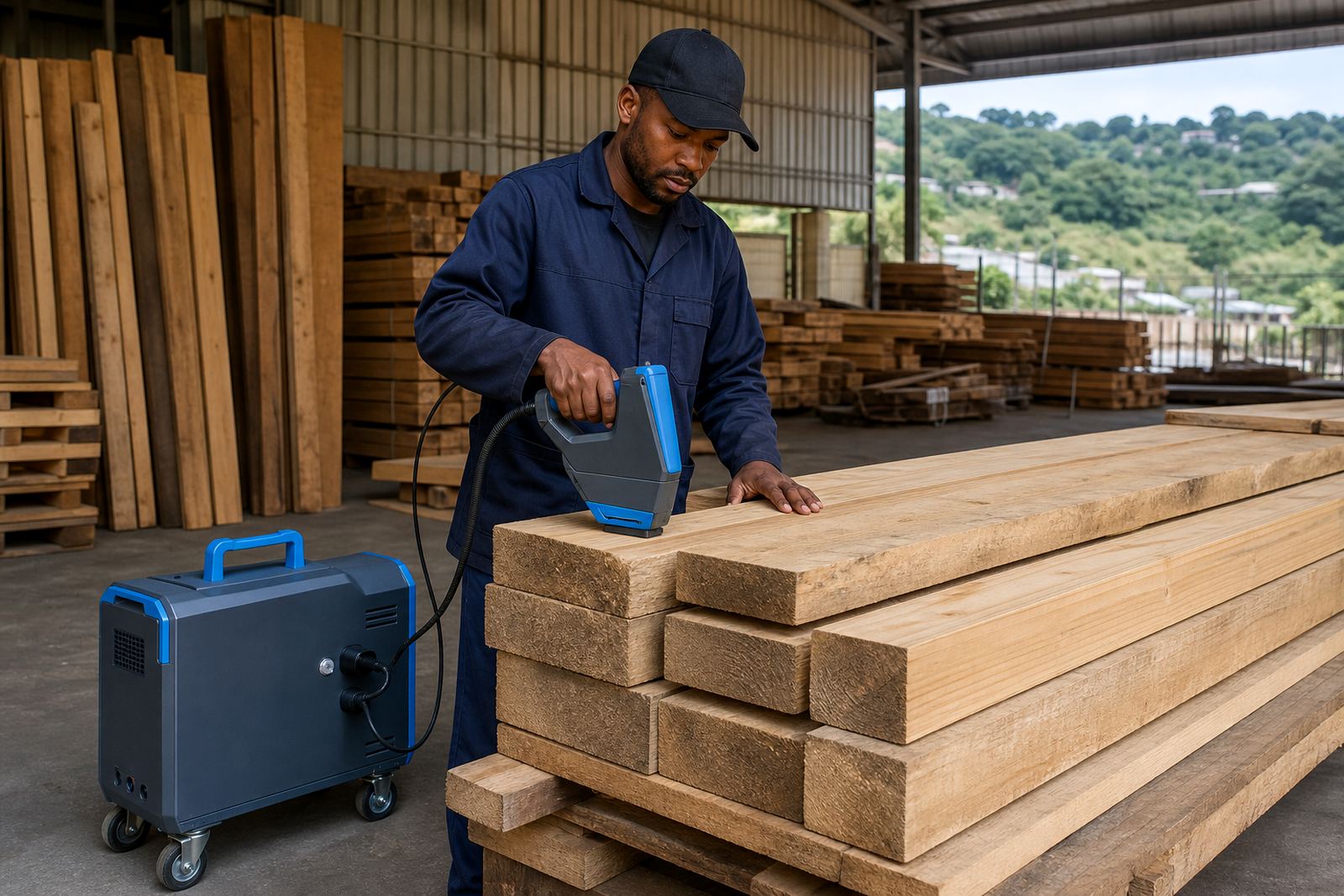
The first check is always the surface. Smooth cartons, rough timber, galvanised steel, plastic pipe and woven bags each take ink in a different way, and that changes the code quality, drying time and how much handling the item can take after marking.
On porous board, a water-based ink may work well where the print can dry without being rubbed straight away. On slick film, coated bags, steel or pipes, a quick-dry or solvent-based ink is often the better fit because the mark needs to grip fast and stay readable through handling, stacking and transport.
- Confirm whether the product is porous, coated, dusty or oily.
- Check if the item is flat, curved or uneven.
- Note whether the code must stay readable outdoors.
- Look at how soon items are handled after printing.
Match the code size to the real marking space
Handheld inkjet coders are useful because the print height can usually be adjusted to suit the job. A small date line on a carton does not need the same height as a logo on a timber pack or a barcode on a pipe, and pushing a large mark into a narrow strip can waste ink and blur the edges.
Before a monthly hire starts, it helps to count the exact marks needed per item. A batch code with six characters, a date, a shift letter and a barcode each place different demands on the print head and the operator's hand movement. If the mark is too tall for the space, the result looks untidy and slows production.
- Measure the clear print area on the product.
- List every line of text that must appear.
- Decide whether the barcode sits beside or below the text.
- Check if the logo needs one line or two lines of print.
Plan the ink around humidity and handling
In Durban and the coastal areas, humidity can change how fast a mark dries, especially on packed cartons and coated materials. Inland sites in Johannesburg or Pietermaritzburg may have drier air, while Richards Bay often brings its own moisture and handling challenges. That does not mean the same ink fails everywhere, it means the ink choice should suit the actual conditions.
Solvent inks are often used where quick bonding is needed and the surface is less absorbent. Water-based options suit some cartons and timber surfaces where the print has time to settle. Quick-dry inks are useful where items move straight to stacking, bagging or palletising, and that happens often in busy packing rooms.
For monthly hire, ask for the ink type that fits the surface, the climate and the time between printing and handling. A test print on the real material is worth far more than guessing.
Set the hire term around the job cycle
Weekly hire works for short runs, while monthly hire suits repeat jobs that stretch across shifts or move through more than one site. If the same code format is going onto cartons on Monday and timber on Thursday, a longer hire can be easier to manage than booking the unit in and out for every batch.
Longer hire also helps when a site is learning the printer, changing operators or adding barcode and logo work. There is time to settle the print layout, test the message height and sort the ink before the routine becomes fixed. That makes the equipment feel less stop-start and gives the team room to work properly.
- Estimate how many production days need coding each month.
- Check if the format stays the same or changes per batch.
- Allow time for training a second operator.
- Include setup, test prints and any spare consumables in the plan.
Keep the message list tight and readable
Longer hires run better when the print content is kept tidy. A date, batch number, expiry line, logo and barcode are useful, but piling too much into one small mark can make the code hard to scan or read. On handheld units, message balance matters because the operator is guiding the print by hand, not feeding product through a fixed line.
For cartons and bags, a clear message with the right spacing is usually better than a crowded block. On pipes and steel, the same applies even more because the curved surface can distort the image if the print is too wide or the hand movement is uneven. A short test on the actual item catches that before the main run starts.
A Durban hire example from a packing floor
A packaging team in the Pinetown and Westmead area may need monthly handheld printer hire for cartons leaving a humid store room, then moving to pallets and vehicles. The mark has to hold its shape on board, stay readable after stacking and carry a barcode that scans without fuss. In that kind of job, the printer choice is only one part of the picture.
The practical steps are usually plain enough: test the carton surface, load the message in the right size, choose an ink that dries properly, and train the operator on steady passes across the box face. If the cartons are swapped for timber pieces during the month, the surface may need a different ink or a slight print height change. That is normal, and it is easier to manage when the hire term is long enough to deal with the real production pattern.
Monthly hire works best with a small support routine
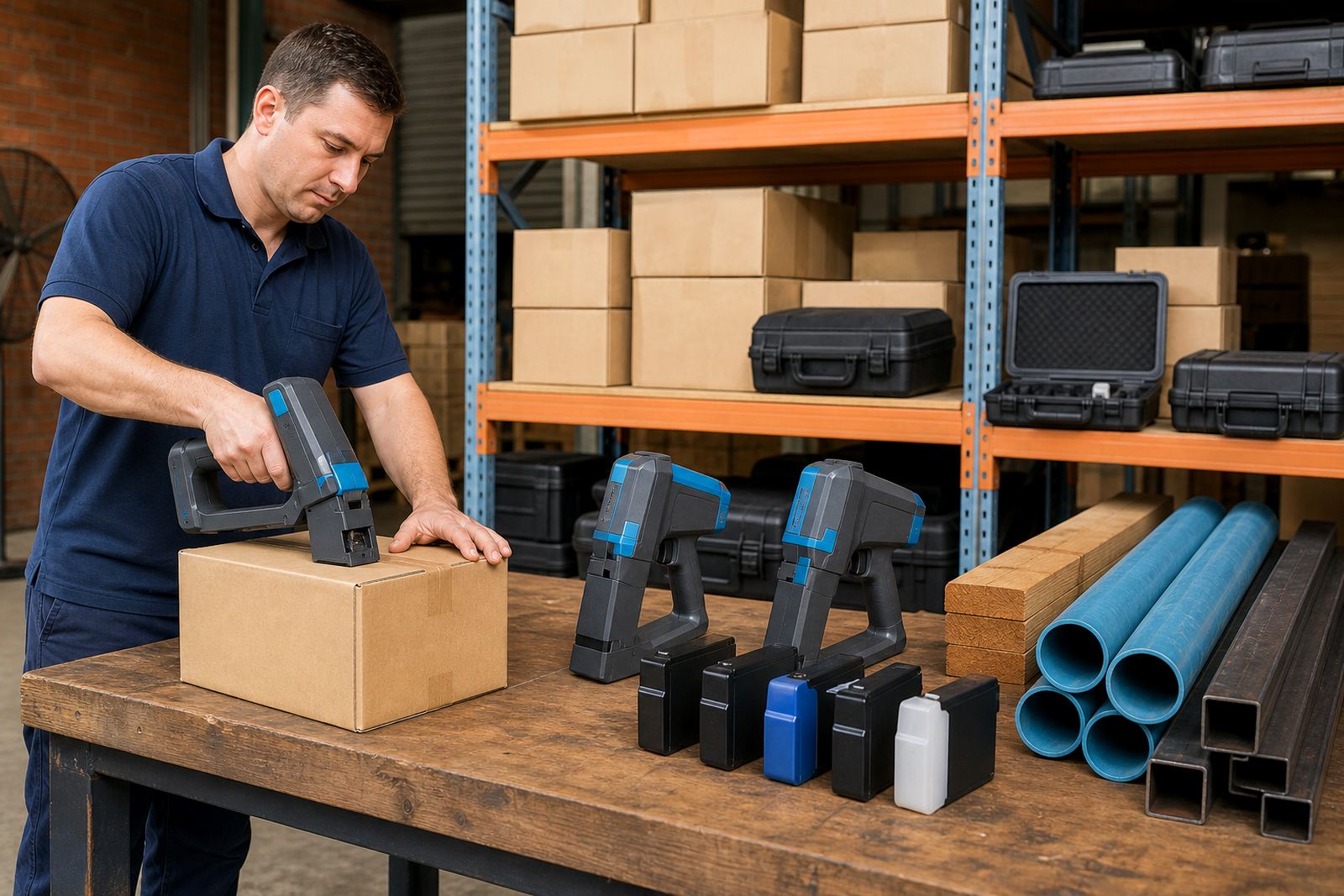
A longer rental should still be treated as an active working tool, not something that can be dropped into the line and forgotten. Keep a spare ink bottle ready, protect the print head from dust and check that the chosen message is still correct when batch numbers change. For barcode work, one clean test print can save a lot of wasted packaging.
The support side matters too. Delivery and collection, on-site setup, remote setup help, operator training, message loading, barcode setup, logo setup, test printing, consumables supply, troubleshooting support and backup unit support all become more useful when the hire is planned around actual production. That way the printer fits the job instead of the job bending around the printer.