
When Grain Starts To Show Through The Code
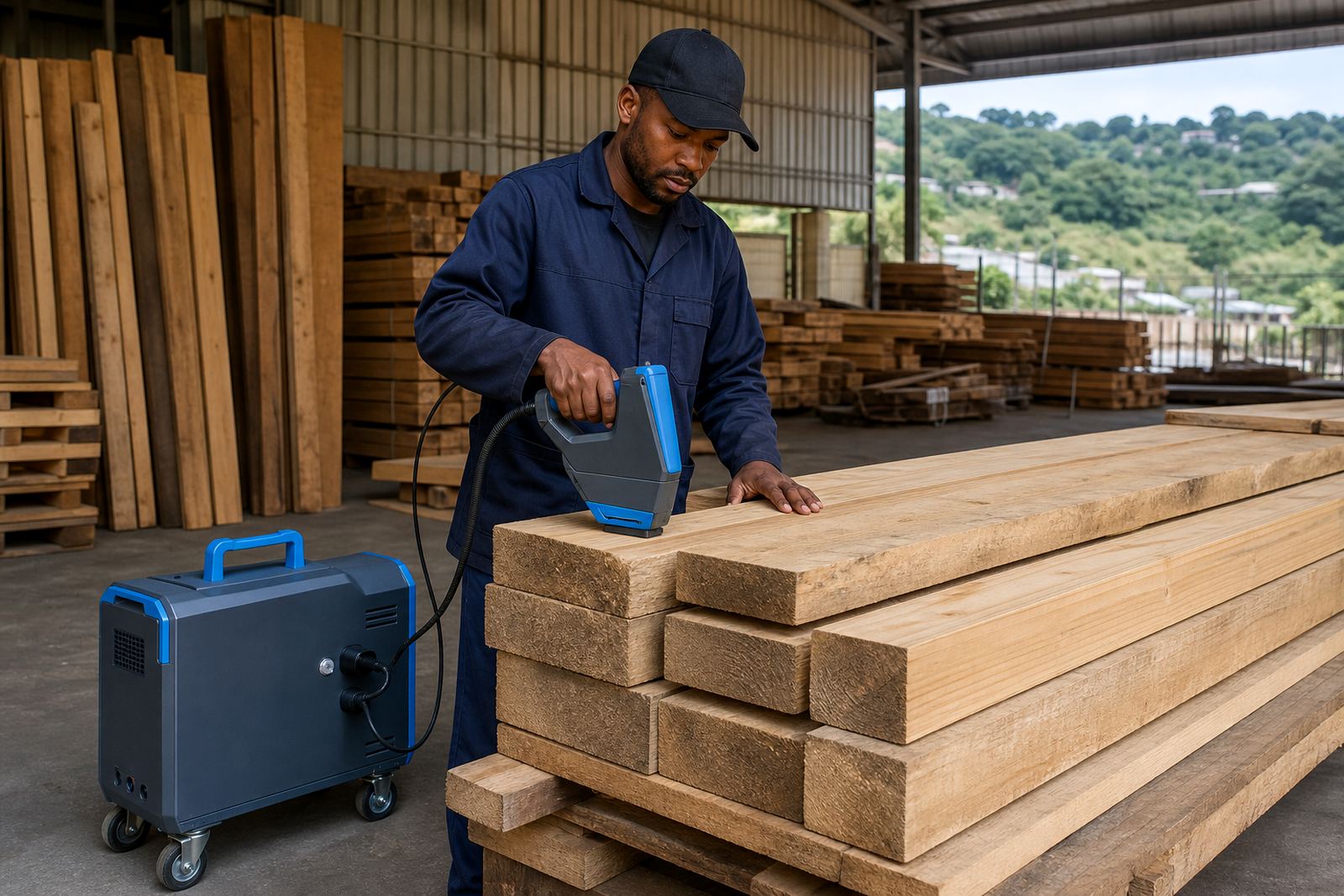
Wood is absorbent in some spots and sealed in others, so the same handheld printer can leave different results on the same bundle. A rough pine board, a planed hardwood face and a dusty pallet slat will each take ink in their own way.
On fresh timber, the grain can pull solvent or water-based ink into the surface and make thin strokes spread slightly. On older stock that has dried out or picked up dust in the yard, the code may sit on top of the fibres instead, which can leave it looking lighter or patchy if the head is held too far from the board.
Dust, Sawdust And Loose Fibres Change The Finish
Timber yards around Pinetown and Westmead often move fast, so a board may be coded after sawing, stacking or strapping. That is where dust becomes a real issue. Fine sawdust can sit in the grain and break up the print edge, especially on rough timber with a lot of open texture.
If the surface is brushed off first, the code usually lands more evenly and barcode bars stay easier to read. A quick wipe is not only for appearance, it also cuts down on blocked nozzles and the kind of speckling that makes a batch mark look tired.
- Brush off loose dust before printing.
- Keep the head at a steady distance from the board.
- Test one board from the batch before marking the full stack.
- Check whether the timber is dry, damp or resin-heavy.
Ink Choice Depends On The Board In Front Of You
Not every timber surface takes the same ink well. Solvent ink is often used where the code must grip quickly on less porous surfaces or where the board carries a bit of surface contamination. Water-based ink can work on cleaner, more absorbent timber, but it may need better drying conditions and a steadier hand on rough boards. Quick-dry ink helps when bundles are moving through a busy packing area and the marks must resist light rubbing soon after printing.
The right mix depends on the timber finish, the handling that follows and whether the mark needs to sit on the face, edge or end grain. End grain can swallow ink faster than a smooth face, so the print may need a little more attention to height and speed.
Print Height Matters More Than Most People Expect
A handheld coder can print small text or larger marks, but the height must suit the timber and the message. If the text is too small on a rough board, the letters can fill in with fibre or dust. If the mark is too large for the space on a narrow batten, the code may drift over knots or cut ends and lose clarity.
For batch numbers and dates on timber packs, a taller character height is often easier to read from a distance. For logos, the outline needs enough clean surface around it so the image does not break up where the grain opens. That matters in storage yards, export packing and busy dispatch areas where the board may be seen only once before wrapping.
A Durban Yard Example That Shows The Difference
In a coastal timber yard near Durban, humid air can leave freshly cut stock with a slightly different surface feel from one stack to the next. One pile may be clean and dry enough for a crisp date mark, while another has picked up sawdust and moisture from the ground. The result is not about the printer alone, it is about the timber arriving at the print point in different condition.
When the boards are wiped first and the message is tested on a scrap piece, the final code usually reads cleaner. On export packs moving through Pietermaritzburg, Johannesburg or Richards Bay, that kind of check helps keep the mark consistent across mixed loads.
Hire Terms That Suit Timber Runs And Short Projects
A weekly or monthly rental suits timber jobs where the coding work changes with the order book. A short run of treated boards may need a different setting from untreated timber, while a longer contract can call for regular consumables, message changes and backup support.
Our rental setup includes handheld inkjet printers, ink selection help, message loading, barcode setup and test printing. The point is to get the code right on the surface that is actually in front of you, not just the one on the sample bench.
- Delivery and collection for timber yards and packing sites.
- On-site setup for the first run or a new product line.
- Remote setup help for message changes and basic adjustments.
- Operator training for staff who handle daily coding.
- Consumables supply for ongoing hire periods.
A Small Checklist Before Timber Leaves The Yard
Before a batch leaves Pinetown or heads out to another province, it helps to check the code on the actual timber type being shipped. Rough grain, knots, dust and moisture can all change how the mark sits. A quick test on the same board style saves trouble later when the pack is opened at the other end.
If the mark must hold through stacking, wrapping or light rubbing, the operator should choose the ink and print height with that handling in mind. Timber coding is not only about putting words on wood, it is about making sure the mark stays legible through the work that follows.