
Why porous surfaces need a different print approach
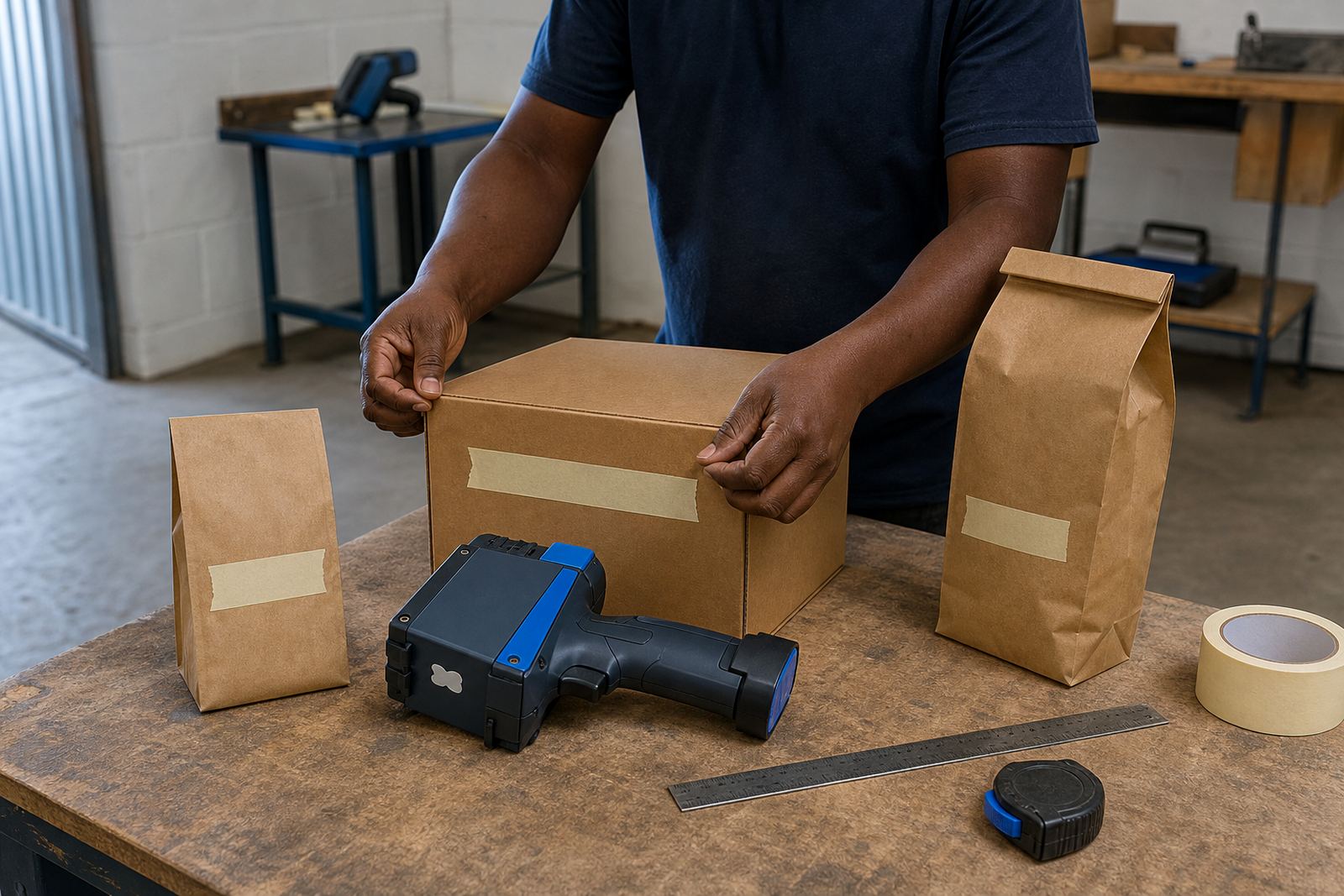
Cartons, paper and raw timber absorb ink into the fibres, so the mark can spread if the drop size is too heavy or the surface is dusty. A handheld inkjet coder works well here when the setting matches the material and the operator keeps the unit steady across the pass.
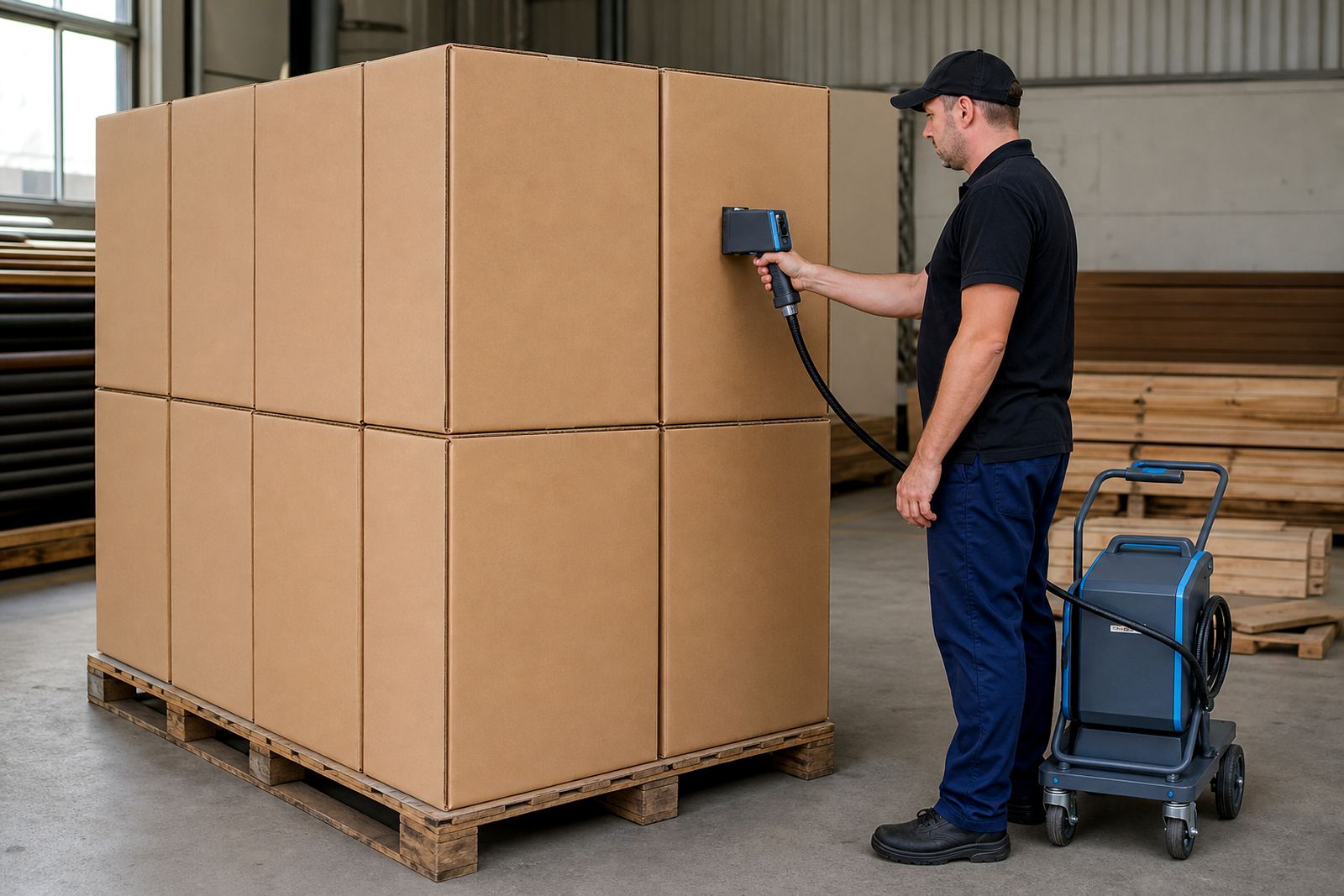
On plain corrugated cartons, the best result usually comes from a dry, even surface with a clear head-to-surface distance. Untreated timber can be uneven and slightly rough, so the print needs enough contrast to stay readable without bleeding into the grain. Paper sacks and wraps need the same careful handling, especially where the weave or fibre open up the image.
For date codes, batch numbers and product names, the mark should stay legible after stacking, handling and transport. That means checking the surface first, then matching the ink to the pore level and drying behaviour.
Matching ink to cartons, sacks and timber
Ink choice changes the whole result on porous material. Solvent inks dry fast and work well where handling starts soon after marking, while water-based inks suit some paper and timber jobs where deeper absorption is fine. Quick-dry inks help when cartons move down a packing line or into secondary packing not long after coding.
We also look at the shade of the surface. Brown carton needs stronger contrast than a pale paper label, and dark timber may need a different message layout to keep the code visible. If the print includes a logo, the line thickness and fill need to stay simple or the image can lose shape in the fibres.
- Use solvent ink where handling starts early and smudging is a risk.
- Use water-based ink where the surface takes ink well and dries evenly.
- Choose quick-dry ink for busy packing areas and short dwell times.
- Keep logos bold, with fewer fine lines on rough timber.
Print height, message length and surface texture
Handheld printers usually handle a useful range of print heights, which helps when the code must sit on a small box flap one day and a timber batten the next. Short codes are easier to keep crisp on porous material, especially when the surface has open fibre or a coarse weave.
A line of text that is too long can lose clarity on a rough carton face. It is better to split the message into two lines than to crowd the characters into one narrow strip. That also helps with barcodes, because a barcode needs enough quiet space around it to scan cleanly after the ink has settled.
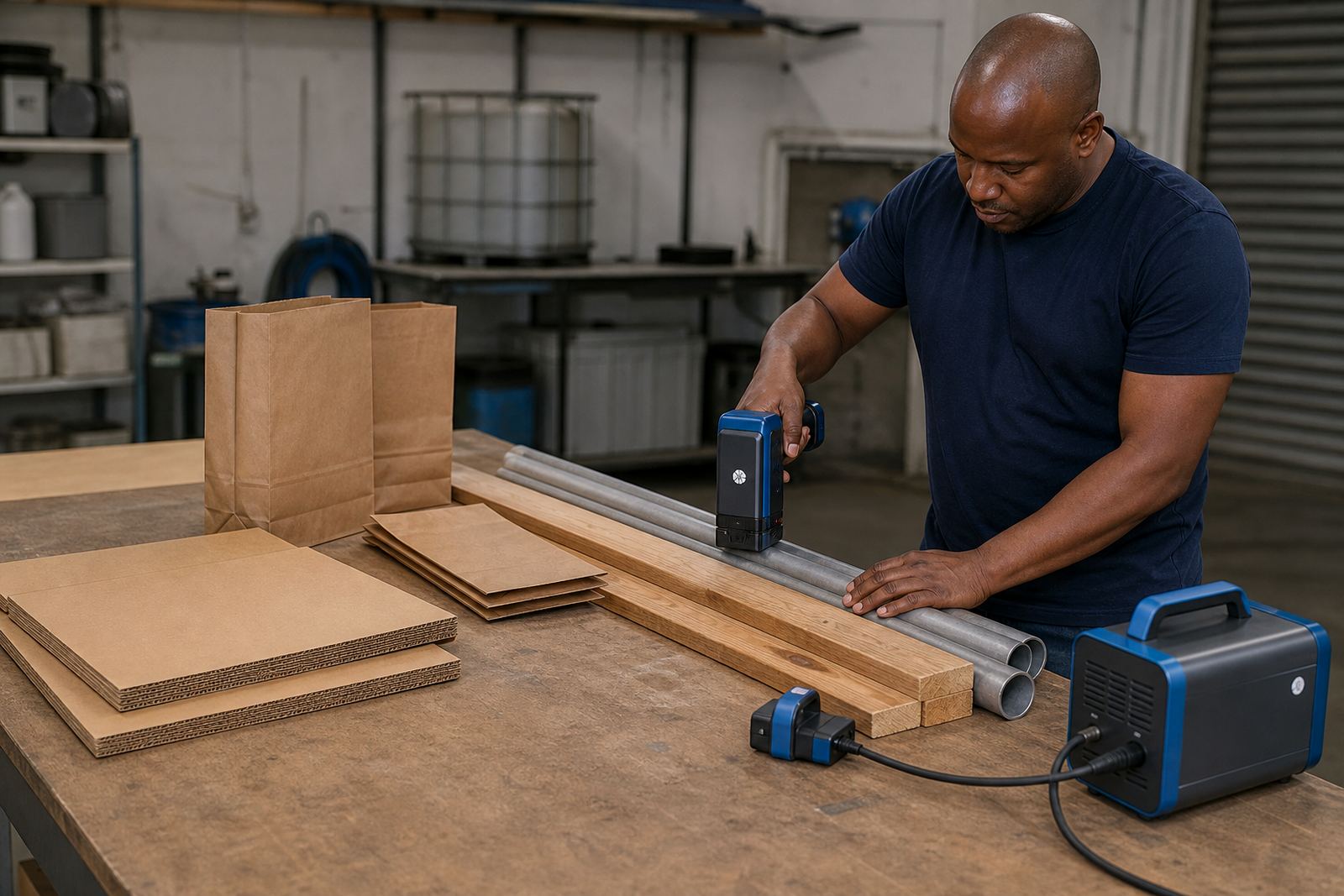
On timber, knot marks and grain pull attention away from the code. Place the print area on the flattest part of the board or batten, so our coder stays level. A slight tilt can distort barcode bars and make the code harder to read at dispatch.
Setting up a hire unit for porous stock
A rented handheld coder is often sent out with ink guidance, message loading help and test printing support, so the first trials can happen on the real stock. That matters on porous surfaces because a code that looks fine on one carton grade can blur on another grade with a softer face.
For weekly or monthly hire, the setup should match the packing pattern on site. Some teams need a simple date and batch line, while others need a barcode with a logo below it. The technician checks spacing, print direction and the best wipe point for the head before the unit goes into use.
- Test on the same carton grade or timber finish used in production.
- Check print darkness before moving to full pack runs.
- Keep spare ink ready where porosity varies from batch to batch.
- Use the same hand speed for each pass to avoid light patches.
Local example from a Durban packing floor
A packing team in Pinetown handling cartons for regional distribution often needs codes that stay clear after stacking and courier handling. On a humid day, the carton face may feel slightly soft, so a quick-dry solvent ink can help keep the mark readable when the boxes move off the bench and into the van.
In the same job, untreated timber slips used for crate support may need a larger character height than the cartons. The team can keep one message for the boxes and a second, larger layout for the timber, rather than forcing one setting to do both. That gives cleaner marks and fewer reworks at loading.
For operations sending stock to Durban, Pietermaritzburg, Johannesburg, Cape Town or Richards Bay, the point is not fancy print effects. It is a code that survives movement, dust and fibre pull without extra handling.
Hire terms that suit changing coding work
A one-week rental suits short packing runs, project work and trial periods. Monthly hire is useful when the same carton line or timber batch runs all month and the team wants a steady unit on hand. Delivery and collection can be arranged, along with on-site setup, remote setup help and operator training where needed.
Consumables supply, troubleshooting support and backup unit support help keep the job moving when surface type changes or a message needs adjusting. A practical hire plan should also cover barcode setup, logo setup and test printing, because porous stock often needs a little tuning before the first full run.
From the Pinetown base, handheld printers are hired out across Durban, Westmead, New Germany, Pietermaritzburg, Johannesburg, Cape Town and Richards Bay. That reach matters when carton grades, timber texture and packing speed differ from one site to the next.