
When the mark has to survive the next touch
Quick-dry ink is made for jobs where the printed surface gets moved, stacked or wrapped soon after coding. On a busy packing line in Pinetown, a carton may be lifted, turned and taped within minutes, so the ink has to bite fast enough to stay legible when hands, stretch wrap and straps start moving across it.
That matters on handled packs, smooth paperboard, painted timber and some coated surfaces where ordinary ink can sit wet for too long. If the mark smears, the date code may still be there, but it is no help when the pallet reaches a customer in Durban or Richards Bay and the batch line has turned into a blur.
Where quick-dry ink earns its keep
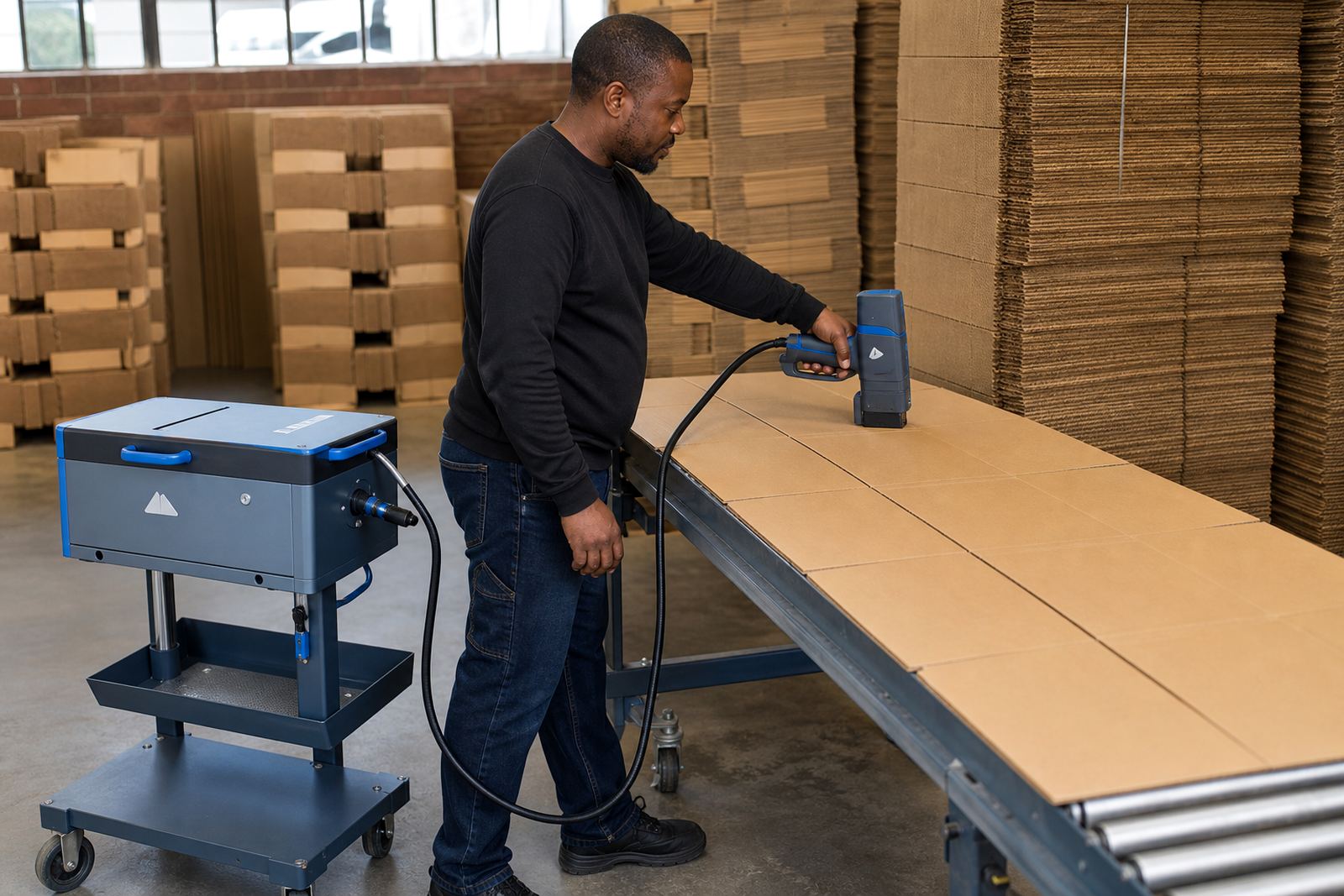
The best results usually show up on surfaces that do not drink in ink quickly. Smooth cartons, shrink-wrapped packs, light timber, treated boards and some plastics are common examples. On these jobs, a quick-dry formula helps the print dry on the surface instead of sinking in and spreading.
- Cartons that are packed and stacked within a short time
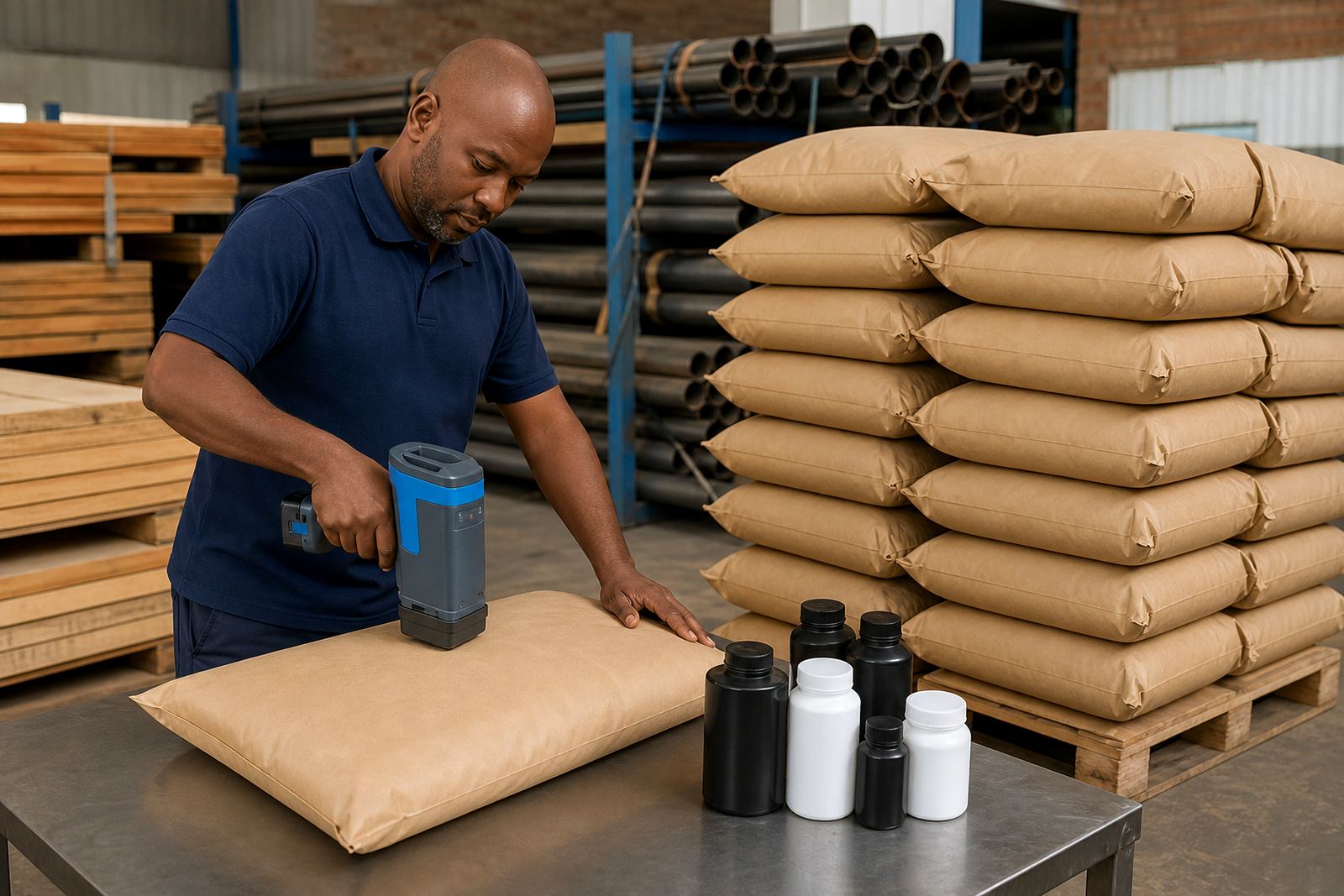
- Bags with a smooth outer layer or coating
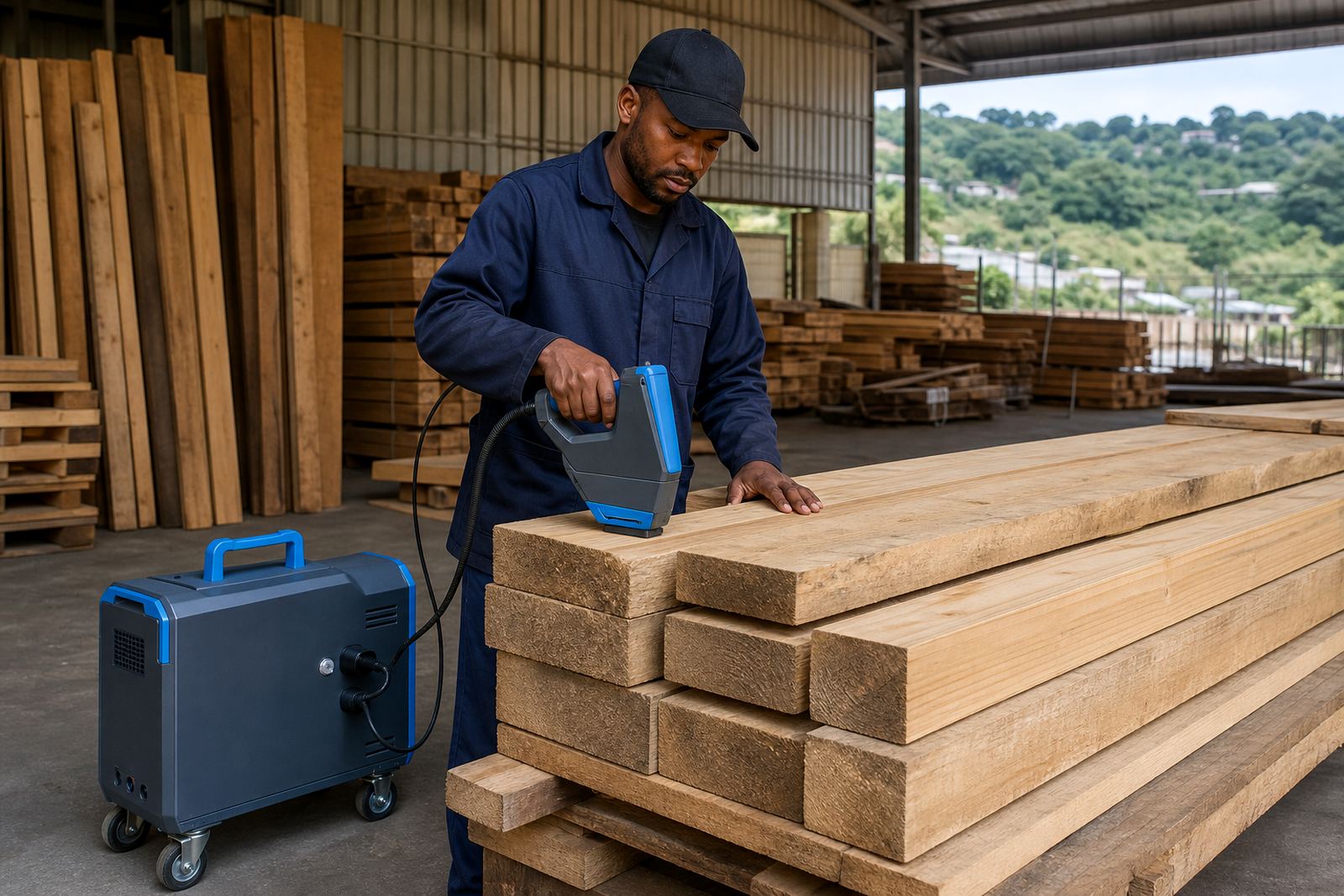
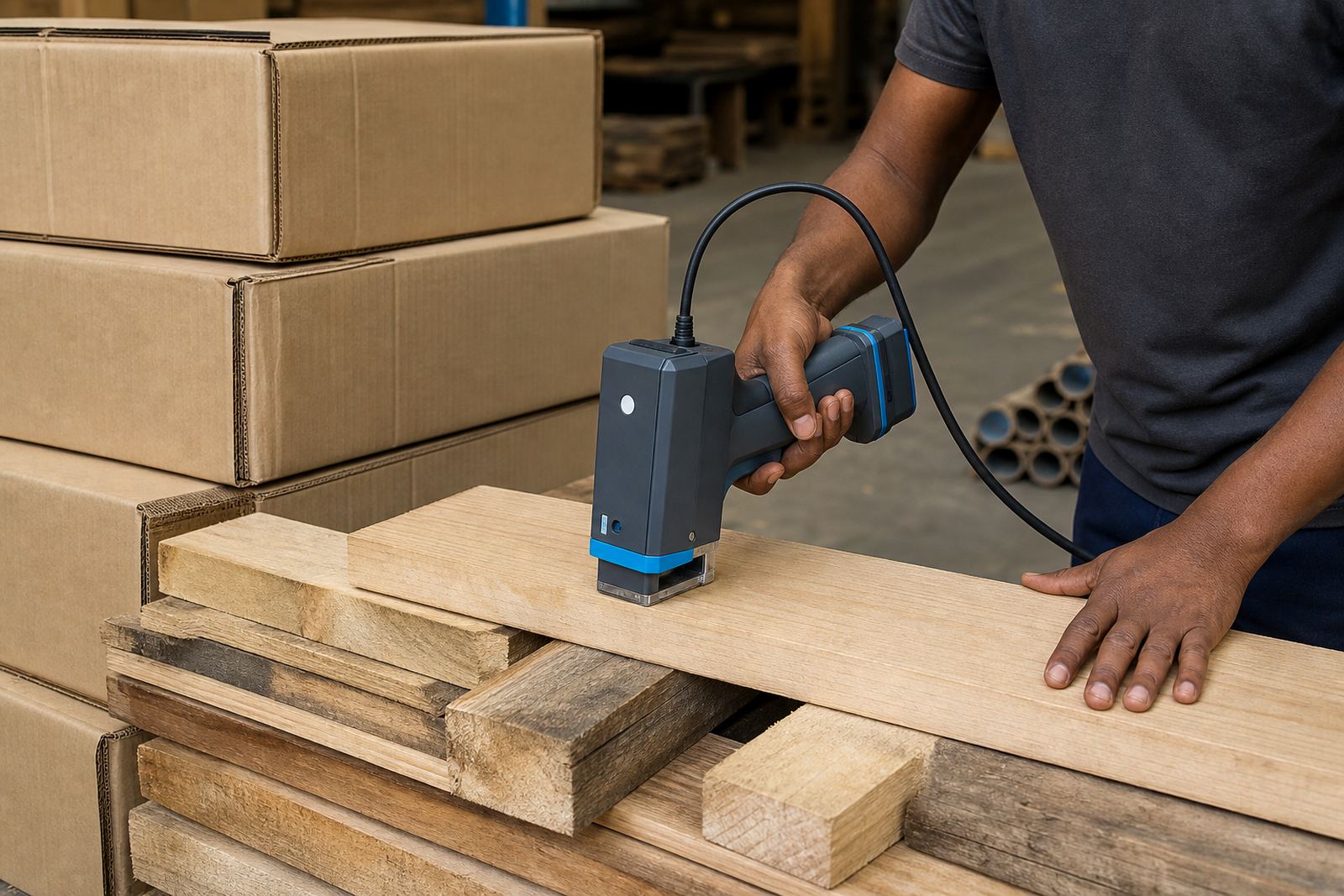
- Timber that is dry, planed or lightly sealed
- Pipe sections that need clear batch and size marks
- Steel parts where the surface must stay readable after handling
Quick-dry ink is not one-size-fits-all. The right choice depends on the material, the print height and how much handling the item gets after coding. A label-like mark on a smooth carton needs a different ink behaviour from a code on rough timber in a yard near Westmead.
Print height and surface texture need to match
Handheld inkjet coders are often used for print heights around 12 mm, 18 mm or 25 mm, depending on the model and the job. Smaller text works well for dates and short batch lines. Larger heights help when a logo, product name or bigger identifier must be seen from a little distance.
The surface matters as much as the height. Rough timber can take a broader, more forgiving mark, while very smooth cartons may need lighter passes and the right ink thickness. If the print is too heavy on a slick surface, it can pool at the edges and lose its shape. If it is too light on a dark pipe, the code may look faint once the item leaves the packhouse.
Our setup work usually starts with a test print on the actual material, because a code that looks clean on a sample can behave differently once the carton is curved or the board is slightly dusty. That is often the point where quick-dry ink earns its place.
Solvent, water-based and quick-dry are not the same thing
People often group all coding inks together, but the chemistry behind them changes how they behave on the job. Solvent-based inks are commonly used where faster surface drying and stronger adhesion are needed. Water-based inks can suit more absorbent materials and cleaner indoor handling. Quick-dry inks sit in the middle of the conversation for many short-cycle packing jobs, where the print needs to hold quickly without turning the area into a smudged mess.
For handled packs, the main question is not which ink sounds better. It is which one dries fast enough on that exact surface and still keeps the code readable after contact, stacking and transport. A carton leaving Cape Town for inland distribution may face a different handling pattern from a timber load staying within a local yard in Durban, so the ink choice should follow the movement, not a guess.
- Use solvent-based ink where the surface needs faster set and firmer hold
- Use water-based ink where absorbency helps the mark settle in
- Use quick-dry ink where handling starts soon after printing
- Test before full run when the surface is coated, dusty or uneven
What quick-dry ink changes on a real packing floor
In practice, quick-dry ink reduces the gap between printing and handling. That gives operators more confidence when cartons are moved off the bench, when pipes are bundled for dispatch, or when timber lengths are stacked before loading. The code stays clearer, and there is less need to wipe off failed marks and reprint the same section.
For businesses working with weekly or monthly hire, this matters because the machine may be used across mixed jobs. One day it is carton dates, the next day it is batch numbers on steel tubing. A good quick-dry setup helps keep the coding process steady even when the surface changes from one load to the next.
On the ground in Pinetown, we often see quick-dry ink make the biggest difference where packs are picked up by hand soon after coding. That can be a warehouse line, a timber yard, or a dispatch area where the clock is not the only pressure, the handling is too.
Getting the ink choice right before a hire starts
Before a handheld printer goes out on hire, the ink should be matched to the material, the print size and the way the item will be handled. A shallow code on a glossy carton may need a different mix from a bold batch mark on rough timber. The aim is to get a clear print that holds through the next stage of work, not just on the first test panel.
Our hire team can help with ink selection, message loading, barcode setup, logo setup, test printing and on-site setup where needed. If the job needs a backup unit or consumables supply, that can be arranged as part of the hire. For clients in Durban, Pietermaritzburg, Johannesburg, Cape Town and Richards Bay, the practical detail is the same: the ink must suit the surface, the handling and the way the goods move through the site.
- Share the surface type, such as carton, pipe, timber or steel
- Confirm the code length, barcode size or logo layout
- Say how soon the item will be handled after printing
- Check whether the surface is coated, smooth or absorbent
- Ask for a test print on the actual material before full use
A Durban example where fast-drying made the difference
A packing team in the Durban area may print batch numbers onto cartons and stack them for collection within a short window. If the ink dries slowly, the top carton can pick up marks from the one above it, and the outer corners are usually the first places where rubbing shows. Quick-dry ink cuts that risk down, which is useful when the cartons are handled by several people before they leave the yard.
The same thinking applies to timber and pipe work in coastal conditions, where surfaces can carry moisture from the air and handling starts early. A code that holds well in dry storage may behave differently near the coast, so the test print should happen in the same sort of space where the hire unit will actually be used. That is the practical difference quick-dry ink makes. It is not about sounding technical, it is about keeping the mark visible after the work starts moving.