
When the pack gives you very little room
Compact packaging leaves little margin for error. A date line that sits too low can fold into a seam, while a batch code that is too large can blur into the edge or touch a gusset. On small cartons and pouches, the print often has to share space with a logo, barcode or product note, so layout matters as much as the coder itself.
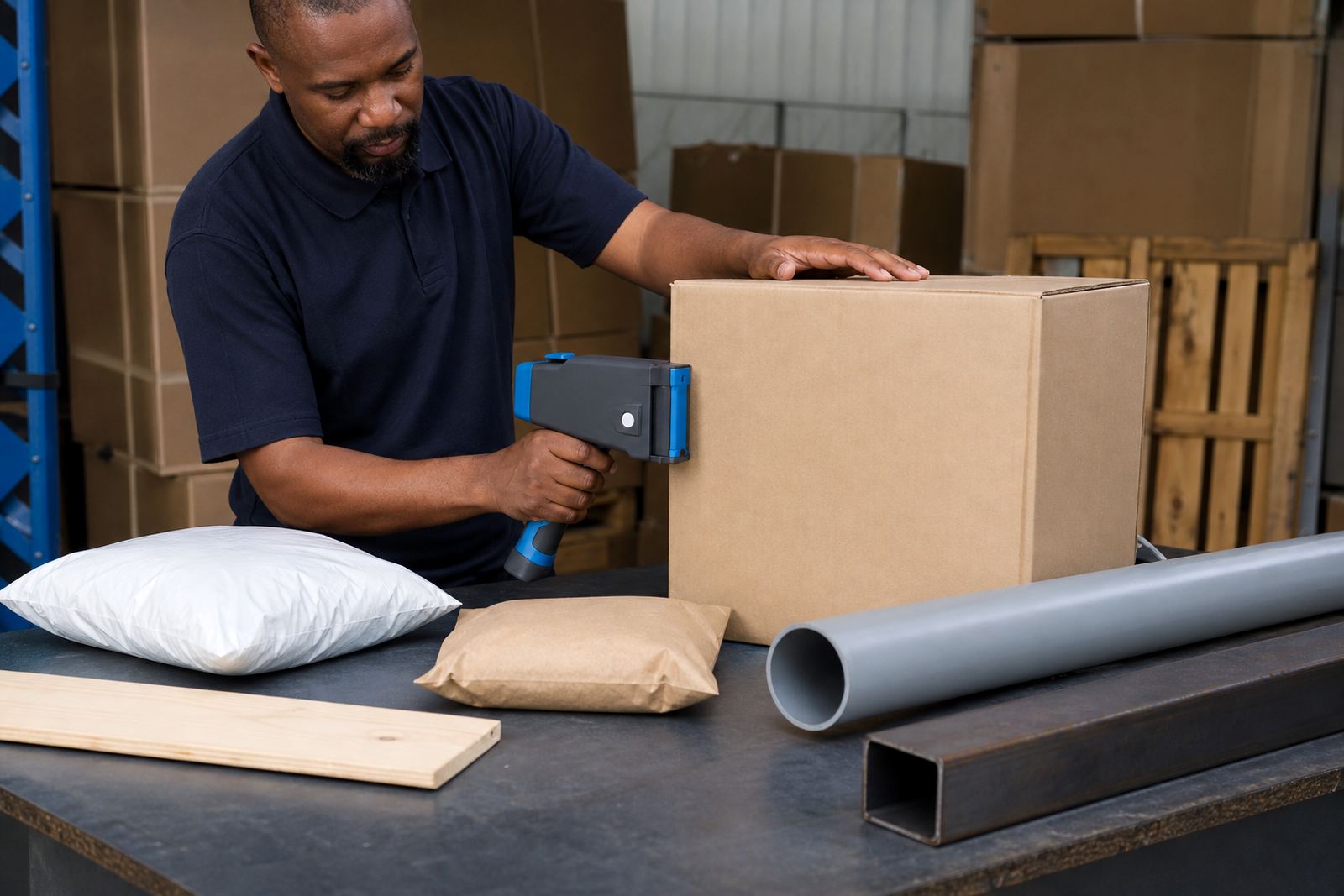
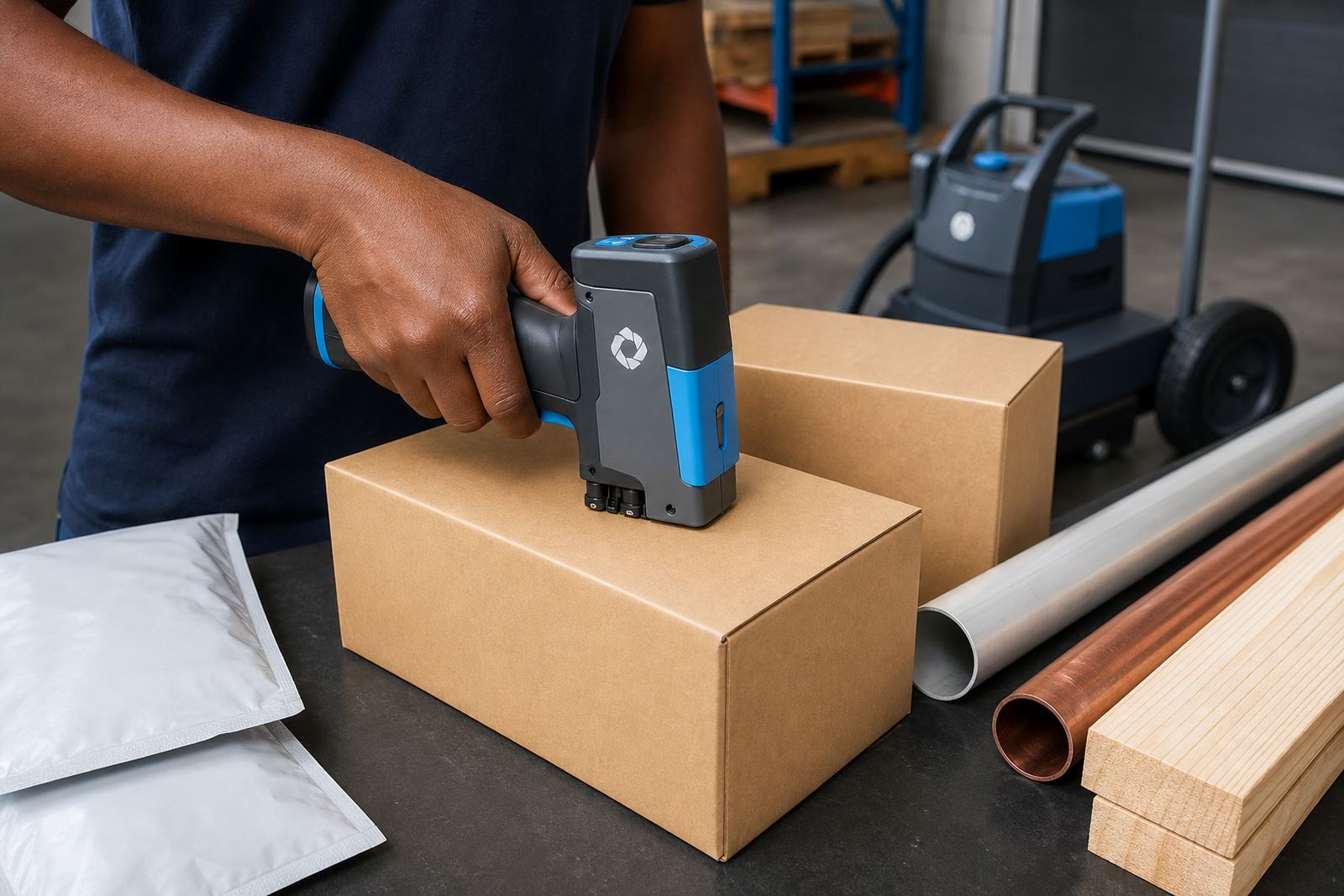
Handheld inkjet coders suit this kind of work because the operator can move the unit to the pack rather than forcing the pack through a fixed line. That helps on short runs, sample packs and mixed cartons where the artwork changes often.
Print height that suits a narrow panel
For small packs, print height is usually the first thing to check. A coder that can handle a compact message without crowding the surface gives cleaner results on slim cartons, small foil bags and narrow labels. Where the pack face is tiny, a shorter message often prints better than a dense block of text.
- Use a date line that stays readable at arm’s length.
- Keep batch numbers short enough to avoid wraparound on curved packs.
- Leave a clear gap between the message and any seal line.
- Match the print size to the panel, not the other way around.
On tins, sleeves and small pouches, a test print helps settle the spacing before the job starts in full.
Choosing ink for cartons, plastics and coated sleeves
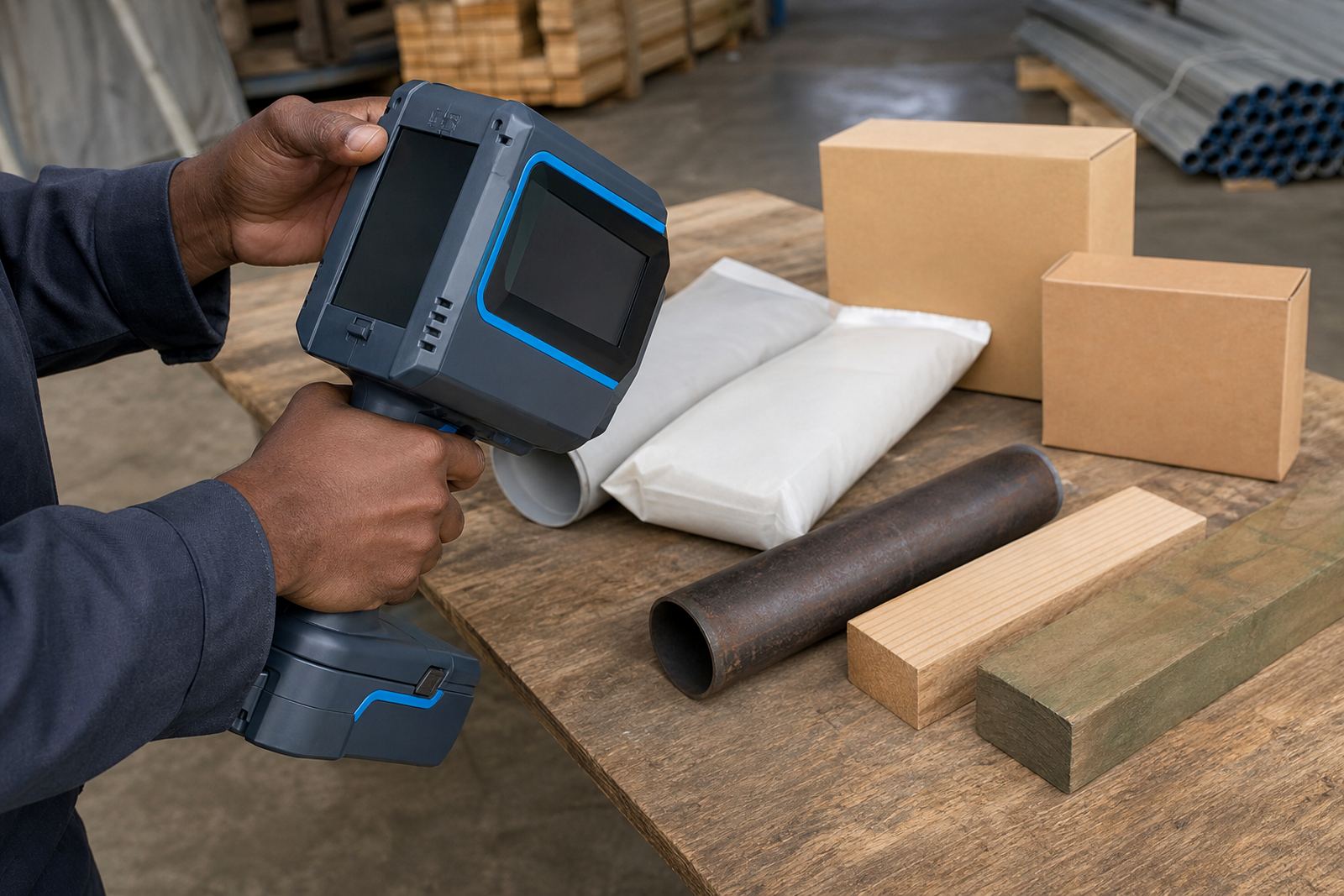
Ink choice matters more on compact packs because there is less room for smudging or rework. Solvent-based ink is often used on non-porous surfaces such as plastic sleeves, coated cartons and some laminated packs. Water-based ink suits absorbent surfaces like plain paper cartons and timber. Quick-dry ink can help where handling starts soon after printing.
Humidity along the coast can slow curing on some materials, especially on coated stock and wrapped packs. That is worth checking before the run begins, particularly in Durban and Richards Bay where storage rooms can hold moisture. A clean, dry surface helps the mark settle properly.
Barcodes and logos on a small face
Barcode setup on small packaging needs a careful balance between scan quality and available space. If the code is squeezed too tightly, scanners may struggle. A logo can sit neatly beside a batch line, but only if the spacing is planned around the actual print field.
For compact packs, it helps to treat each element as part of one layout rather than separate items. That keeps the date, code and logo legible without crowding the panel.
- Test the barcode at the same size used on the live pack.
- Place logos where curved edges will not distort them.
- Keep important text away from folds, heat seals and corners.
- Check the pack under normal warehouse light, not only in bright office light.
Hire by the week or month for changing pack lines
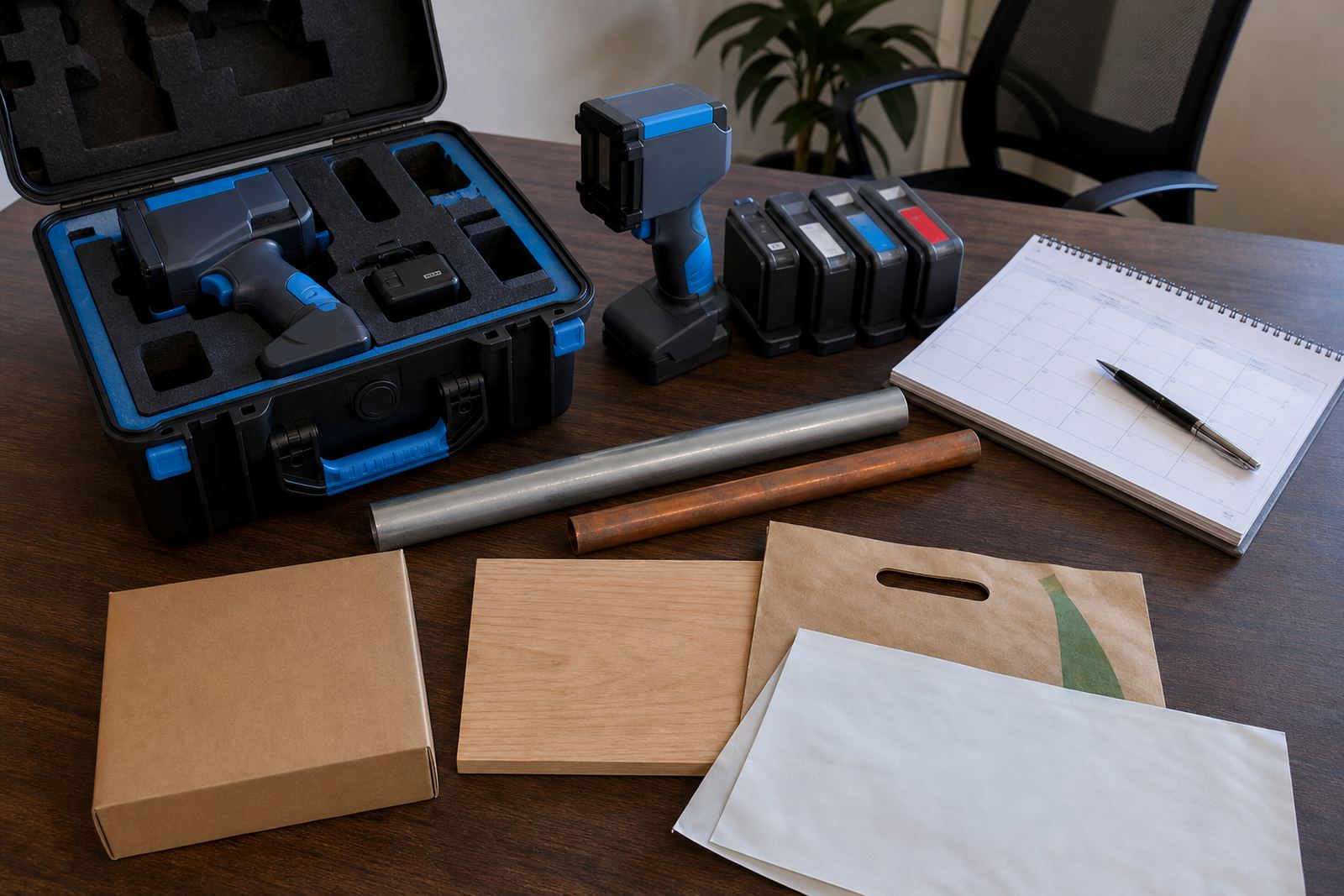
Short hire terms suit businesses that run limited pack jobs, seasonal lines or a one-off contract. Weekly hire works well for trial runs, while monthly hire suits regular coding across cartons, pipes, timber offcuts and mixed packaging. The right setup depends on how often the pack changes and how much coding is needed each day.
We hire handheld inkjet printers from Pinetown, Durban across South Africa, including Pietermaritzburg, Johannesburg, Cape Town and Richards Bay. Delivery and collection, on-site setup, remote setup help, operator training, message loading, barcode setup and logo setup all support the first run, while consumables supply and backup unit support keep the job moving when the pack list changes.
A Durban line with tight cartons and mixed labels
On a recent Durban packing line, the job involved small cartons for export stock and a narrow label panel on each box. The team needed a date line, a batch code and a small logo, all within a tight print area. The cartons were handled by different operators through the week, so the setup had to stay easy to repeat.
After a test print, the message was shortened and shifted slightly higher on the face. That left the barcode clear, kept the logo away from the flap and reduced touch-up work during packing. On jobs like that, the difference is not the machine alone, it is the way the print layout fits the pack.