
Marks that survive yard handling
In a working yard, coding is not about neat office labels. Boards are lifted, pipes roll, cartons get stacked and moved, and steel often carries dust or surface oils. A handheld inkjet coder needs a steady hand, the right gap to the surface and ink that suits the material. On timber, the mark must hold through rough handling and a bit of weather. On pipes and steel, the print has to sit cleanly without smearing on contact.
For yards around Pinetown and Westmead, the usual marks are date codes, batch numbers, product references and short logos. Barcodes can be added too, provided the print is sized to scan well and the surface is clean enough. The job is usually less about speed and more about consistency, because a crooked code on a pipe bundle causes more trouble than a slower, clear one.
- Use a bold message for rough timber grain
- Keep the print area dry and free of loose dust
- Test the mark on a real offcut or spare pipe first
- Match the code size to the width of the surface
Ink choice depends on the material
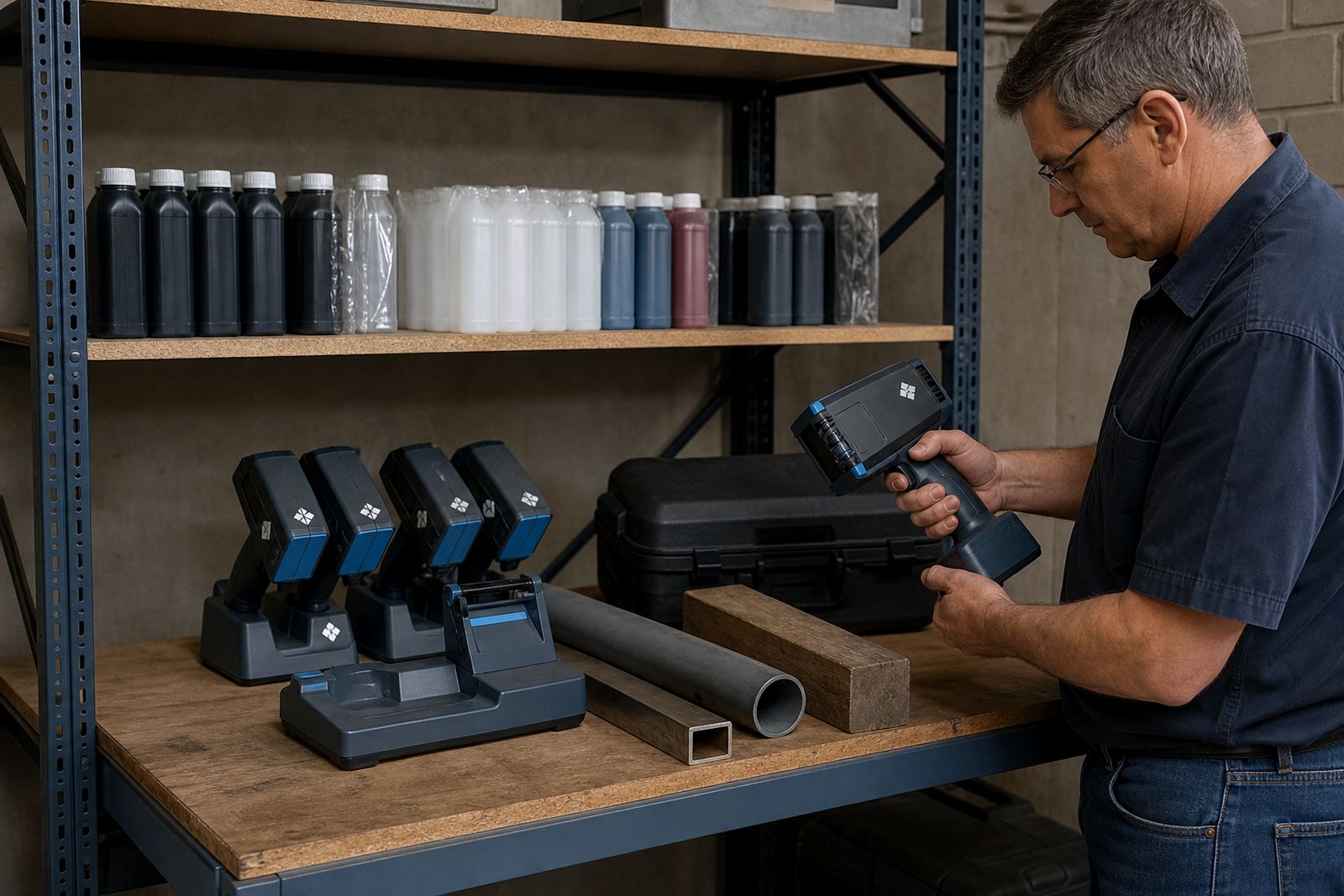
Different surfaces call for different inks. Solvent-based ink is often used where the surface has low absorbency or a slight residue, because it dries fast and grips well on many plastics, coated cartons and some metals. Water-based ink can work on porous timber, untreated paper sacks and cartons that drink in the ink. Quick-dry inks are handy when the marked stock is handled straight after printing, especially on busy packing lines or moving yard stock.
The first question is not the message, it is the surface. A timber pack with coarse sawn faces needs another approach from smooth galvanised pipe. Some pipe yard teams mark directly on metal, while others print on tags, sleeves or wrapped bundles. In both cases, the ink has to suit the finish and the handling pattern. If the print rubs off on gloves or strapping, the system is not matched to the job.
- Solvent ink for faster dry on less absorbent surfaces
- Water-based ink for porous cartons and timber faces
- Quick-dry ink for short handling gaps after coding
- Test adhesion before starting a full batch
Print height and legibility on mixed stock
Handheld coders are measured by print height, and that matters in the yard. A small code may look tidy on a carton but disappear on a rough board or a wide pipe bundle. Larger characters are easier to read from a distance, though they use more ink and need a steadier pass. For most timber and pipe work, the message should stay plain: one or two lines, a clear date, a batch reference and a barcode if needed.
It helps to think about the person reading the mark at the other end of the process. Forklift drivers, dispatch staff and receiving teams should be able to spot the code without turning the item around twice. If the yard sends product to Durban harbour, inland depots or directly to job sites, readable coding cuts down on sorting mistakes and rework.
- Smaller text suits cartons and tight label spaces
- Mid-size text is often best for timber packs
- Bigger characters help on pipes and steel bundles
- Keep barcode width generous enough for scanning
A Pinetown yard example with timber and pipe stock
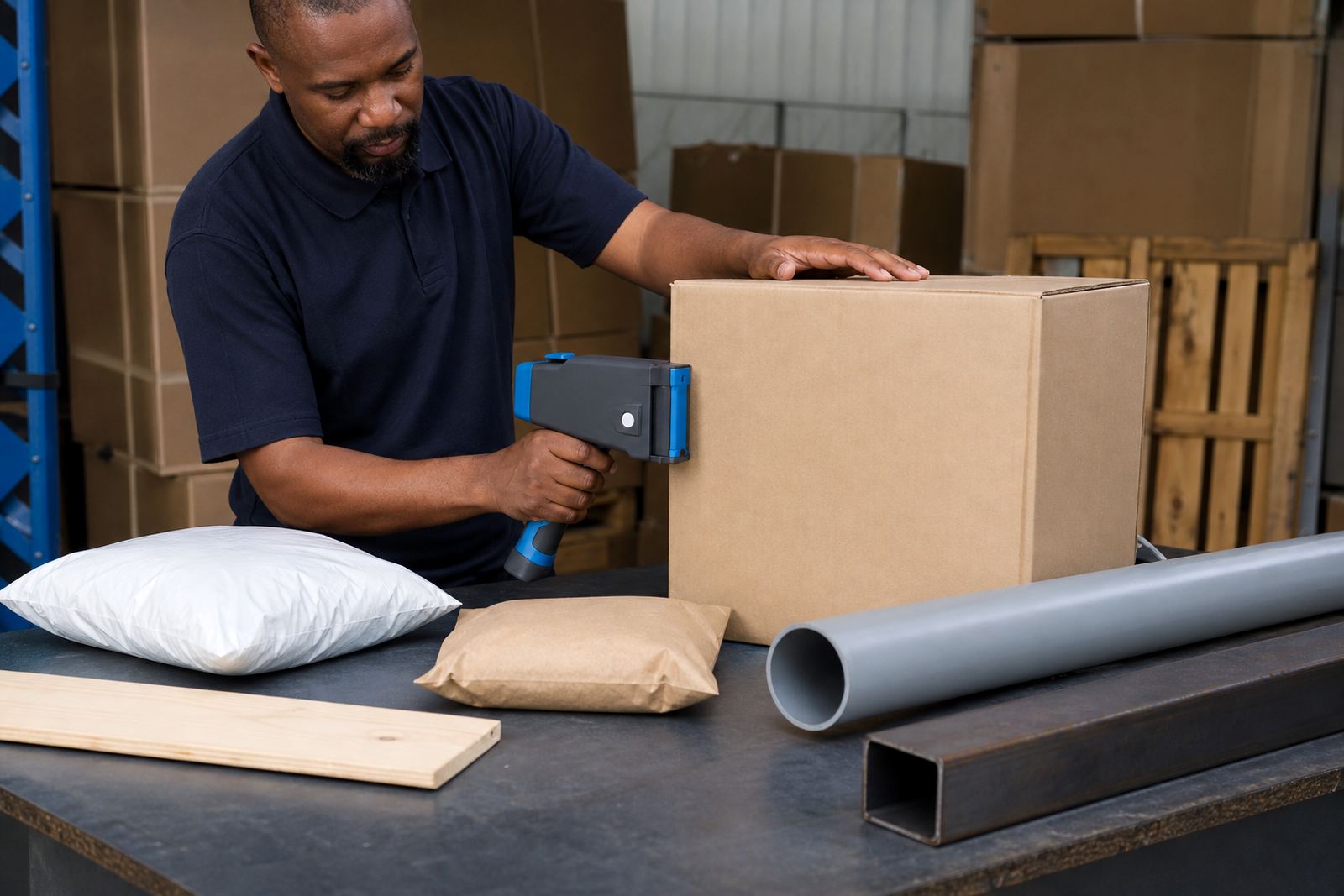
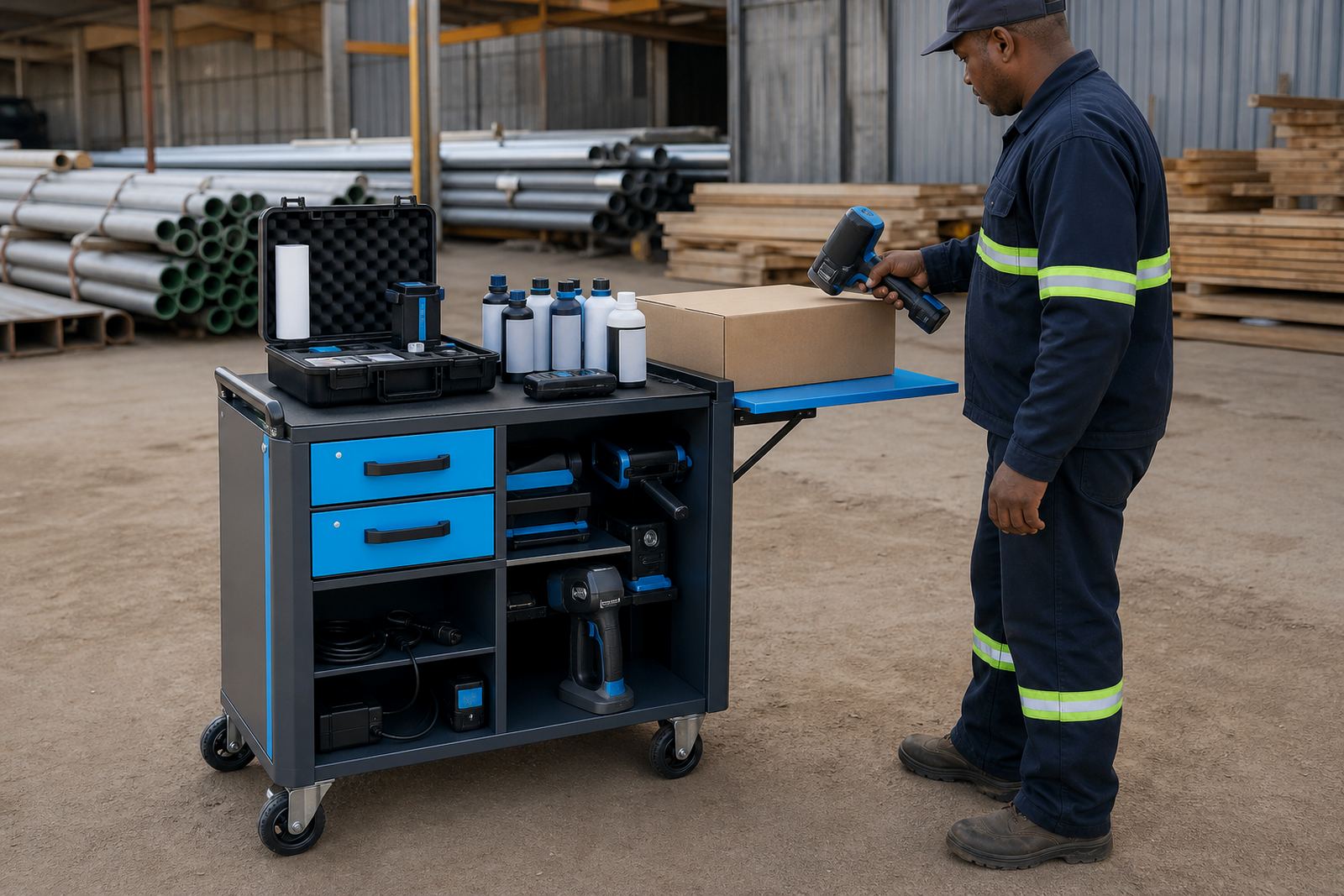
A practical yard in Pinetown may handle timber for building supply in the morning and steel pipe for fabrication later in the day. The stock moves between outside storage, covered bays and loading areas, so the coding setup has to travel with it. A handheld unit can mark boards at the stacking point, pipes before bundling or cartons at packing tables without waiting for fixed-line equipment.
In Durban humidity, especially near the coast, handling conditions change through the day. Boards can pick up moisture, cartons may soften at the edges and metal can carry fine condensation. That means the operator has to check the surface before printing and keep spare ink and cleaning cloths close by. A short test line on a scrap piece saves a lot of wasted stock when the yard is busy.
The same job can look different in Pietermaritzburg, where the air is often drier, or in Richards Bay, where moisture and salt in the air ask for more care on metal surfaces. The yard process stays the same, but the ink choice and surface prep can shift with the location.
Hire terms that suit project work and seasonal peaks
Renting by the week or month works well when the coding need is tied to a contract, a seasonal rush or a new product run. A timber merchant may need a coder for a strong order period, then only use it for repeats and stock changes. A pipe yard may need a unit on site while a batch is being cut, marked and dispatched, then scale back once the run is complete. That is where hire is practical: it keeps the gear matched to the task without tying the yard to equipment it does not need all year.
Delivery and collection, on-site setup, remote setup help and operator training all matter because handheld coders still need correct message loading and a steady print routine. Backup unit support can be useful when a yard cannot stop a dispatch schedule for a fault. Consumables supply also matters, because the right ink and the right cleaning routine keep the marks readable over the hire period.
- A one-week rental suits short production runs
- Monthly hire suits ongoing yard coding work
- Backup units help when a job cannot pause
- Training matters for barcodes and logo placement
A sensible checklist before the first run
Before a yard starts printing, the message layout should be checked against the stock size and the reading distance. Barcodes that scan on cartons can fail on curved pipes, and logos that look right on screen may need a different size for printing onto timber grain. Test printing should be done on the real surface, not only on a smooth sample sheet, because timber texture and pipe curvature change the result.
It also helps to confirm the sequence of work. Some yards print after cutting, some after bundling and some before final wrap. The best point depends on how the stock is moved and whether the mark must stay visible through transport. Message loading, ink selection help and troubleshooting support are more useful when the team already knows where the marking point sits in the process.
- Check the actual surface, not just a sample card
- Confirm where the mark must sit on the item
- Keep cleaning material near the printing point
- Load the message in the format the yard uses daily
South African yards and local handling pressure
Yards in Durban, Johannesburg, Cape Town and Richards Bay do not handle stock in the same way. Coastal sites deal with damp air and salt, inland yards deal more with dust and temperature shifts. Pietermaritzburg often brings a mix of cool mornings and warm afternoons, which affects how quickly some inks settle on the surface. None of that stops handheld coding, but it does shape the choice of ink and the way the operator moves across the stock.
For mobile coding on timber and pipe stock, the useful habit is to keep the process plain. Load the correct message, test the first mark, check readability and keep an eye on the finish as the yard changes through the day. That approach works whether the job is a few cartons in New Germany or a full pipe bundle in Westmead.
When the marks stay clear, the rest of the yard process gets easier: dispatch notes match the stock, bundles are easier to trace and the team spends less time sorting out unclear codes.