
Start with the timber surface, not the message
Timber looks straightforward until you have to print on it every day. Smooth planed boards, rough sawn packs, treated timber and dusty bundles all take ink differently, and the grain can pull a line off course if the print head sits too close or the board is damp.
For good legibility, the surface needs a dry contact area and a clear print zone. On rough timber, a larger character height helps the code stay readable from a short distance. On tighter bundles, a compact layout works better, especially where straps, labels or end marks already take up space.
- Check whether the timber is dry, sealed, treated or freshly cut.
- Leave enough flat space for the date, batch number and any barcode.
- Avoid knot-heavy patches where ink can break up.
- Plan the code position before the bundle is strapped or wrapped.
Picking the right ink for boards and bundles
Handheld inkjet coders can work with solvent, water-based and quick-dry inks, but the surface decides which one makes sense. Solvent-based inks are useful on less porous and coated timber surfaces where fast drying helps keep the mark sharp. Water-based inks can suit absorbent boards, while quick-dry options help reduce smudging when boards are moved soon after printing.
Humidity near the coast can change how timber behaves, especially when packs sit under cover but still pull in moisture from the air. A print that looks fine on one morning may feather later in the day if the board is damp or dusty. That is where sample prints matter, because a small change in ink or print height can make the code easier to read.
- Use solvent ink where the surface dries slowly or feels slick.
- Use water-based ink on absorbent timber that takes the mark cleanly.
- Use quick-dry ink when bundles are handled soon after marking.
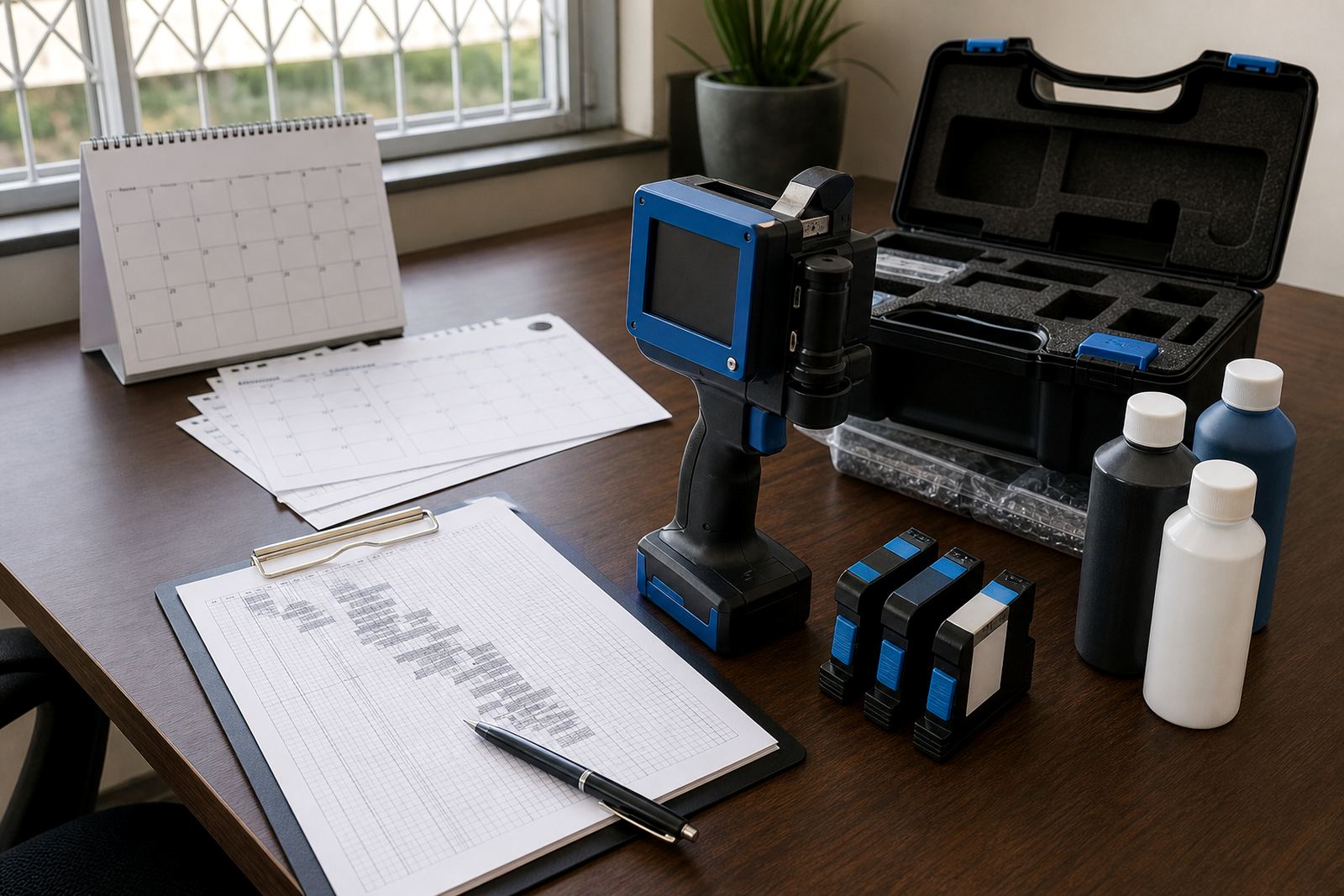
- Keep spare cartridges or ink containers ready for longer hire periods.
Print height and character size on timber stock
Readable stock codes on timber usually need more height than a carton label. A small mark can disappear once the bundle is strapped, shrink-wrapped or stacked in a yard. If the board is long and the code must be seen from a forklift lane, a taller character height is easier to work with than a tight line of tiny text.
Most timber jobs need a balance between space and legibility. Dates, batch codes, supplier references and short logos can sit in one line, but the print area must match the board width and the space left after trimming. Barcode setup needs extra care, because barcodes that are too small or too close to the grain can scan badly or look uneven.
For mixed timber loads, test printing on one board from each group helps settle the print height before the rest of the batch is marked.
Set-up checks that save timber batches from messy marks
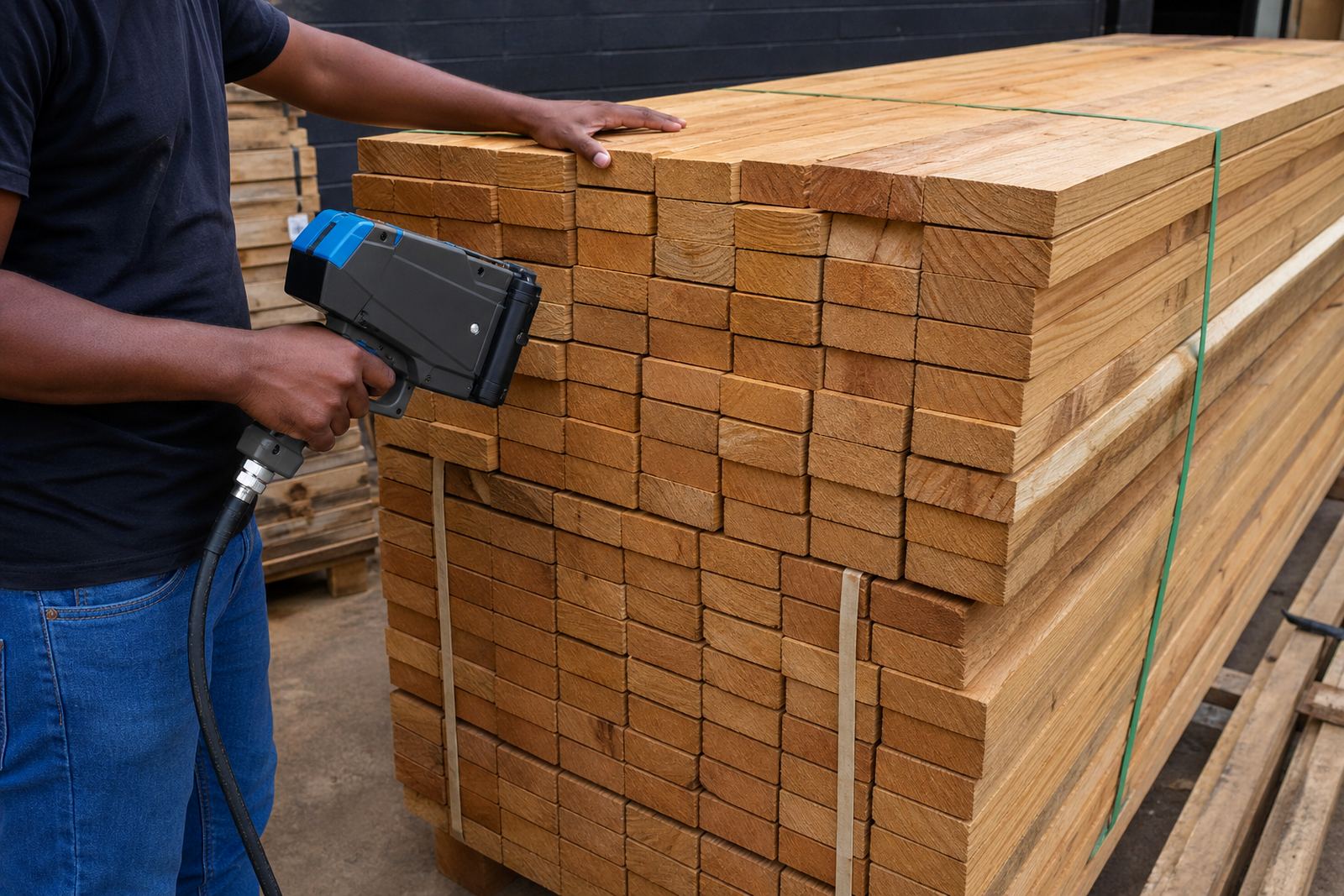
Setup is more than turning the coder on and filling the message. The nozzle height, print direction, surface speed and hand movement all affect the final mark. On longer boards, a steady pass matters more than speed. On bundled timber, the print path needs to avoid straps, corners and any wet patches that have picked up from rain or washing.
Our hire work in Pinetown, Durban and the wider branches in Pietermaritzburg, Johannesburg, Cape Town and Richards Bay often includes setup help, message loading and test printing before a unit leaves the yard or site. That is useful when the team has a mixed load of boards and posts, or when the timber grade changes during the shift.
- Load the product name, date, batch number and any short reference code.
- Run a test print on an offcut or spare board first.
- Check that the print sits straight across the grain.
- Confirm barcode size before marking the full stack.
- Keep the print head clean so dust does not mark the next board.
Hire terms that suit timber yards and mill runs
Short weekly or longer monthly terms work well for timber operations that need coding for a fixed run, a seasonal order or a busy production stretch. Some yards only need a unit for a short project, while others need it through repeated loading, grading and dispatch. Delivery and collection can be arranged, with on-site setup, remote setup help and operator training available for teams that want the coder ready for work without extra delays on the floor.
Consumables supply, backup unit support and troubleshooting support matter when a yard has no spare machine sitting in the store room. Timber dust, repeated handling and outdoor work can put pressure on any handheld coder, so the hire package has to cover the practical side too. That includes ink selection help, message loading and logo setup where a short mark or company symbol is part of the stock identification.
A plain timber coding checklist for the yard
Before boards or bundles move into dispatch, run through a plain timber coding checklist for the yard. This keeps the marking consistent from one pack to the next and reduces the chance of a code being hidden by straps or blown over by surface dust. The points below are practical for mills, yards and timber merchants working with mixed stock.
- Board surface dry enough for clean ink transfer.
- Code text sized for the viewing distance in the yard.
- Date and batch number loaded exactly as required.
- Barcode tested for scan quality where used.
- Ink chosen for the timber type and handling speed.
- Print zone clear of knots, straps and rough edges.
- Backup unit available for longer hire runs.
If the timber moves through Durban humidity, inland dust or coastal storage, keep a close eye on how the first few marks look after handling. Small changes to ink, print height or board dryness usually show up quickly, and they are easier to fix at the start of the run.