Choosing ink for the surface in front of you
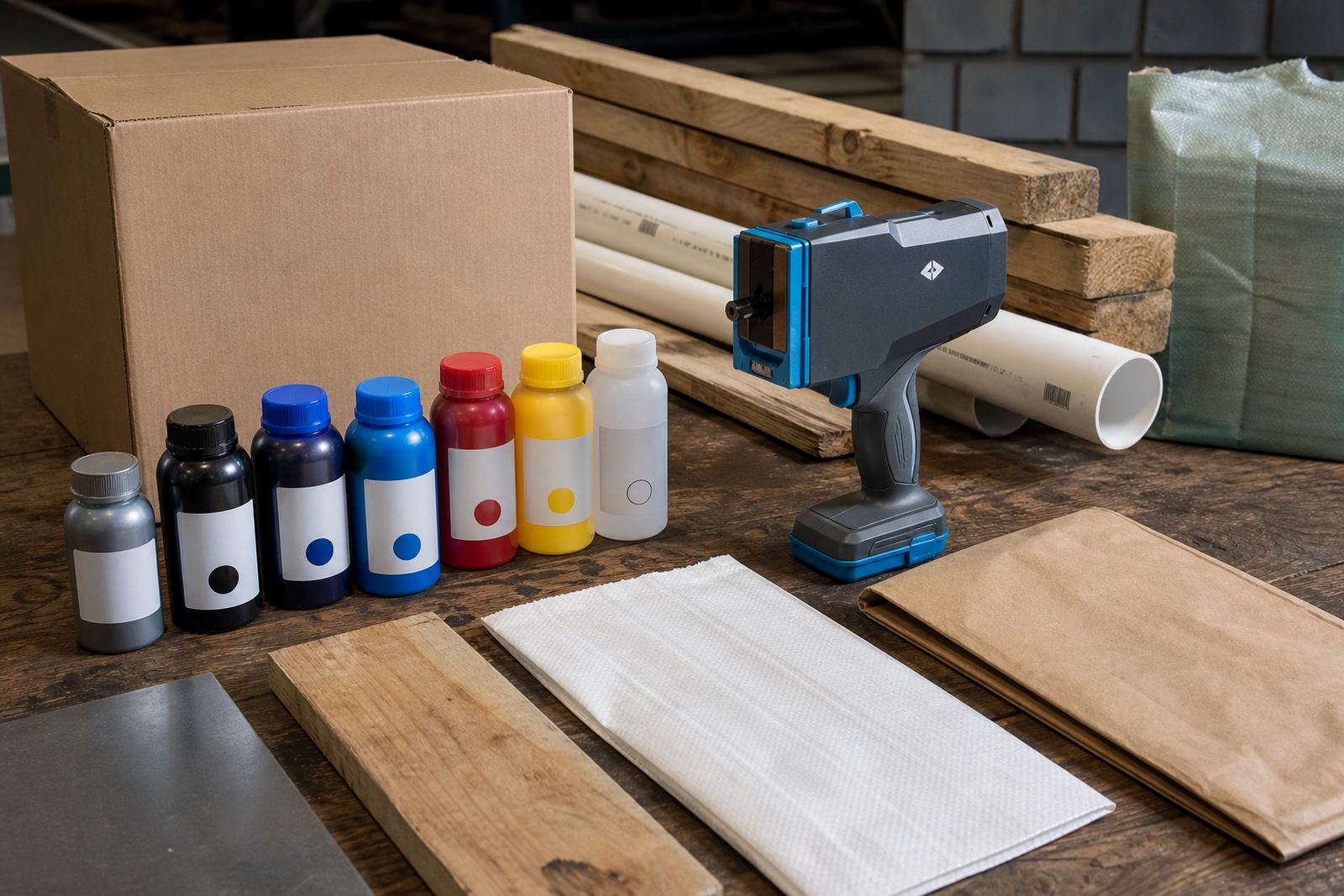
Different surfaces take ink in different ways. A smooth coated carton can carry a clean code with a water-based or quick-dry mix, while a porous box or untreated timber may need a faster-setting formulation to stop the image from spreading. On steel, especially if there is condensation or oil from handling, solvent-based ink is often the practical pick because it bites better and holds its edge more cleanly.
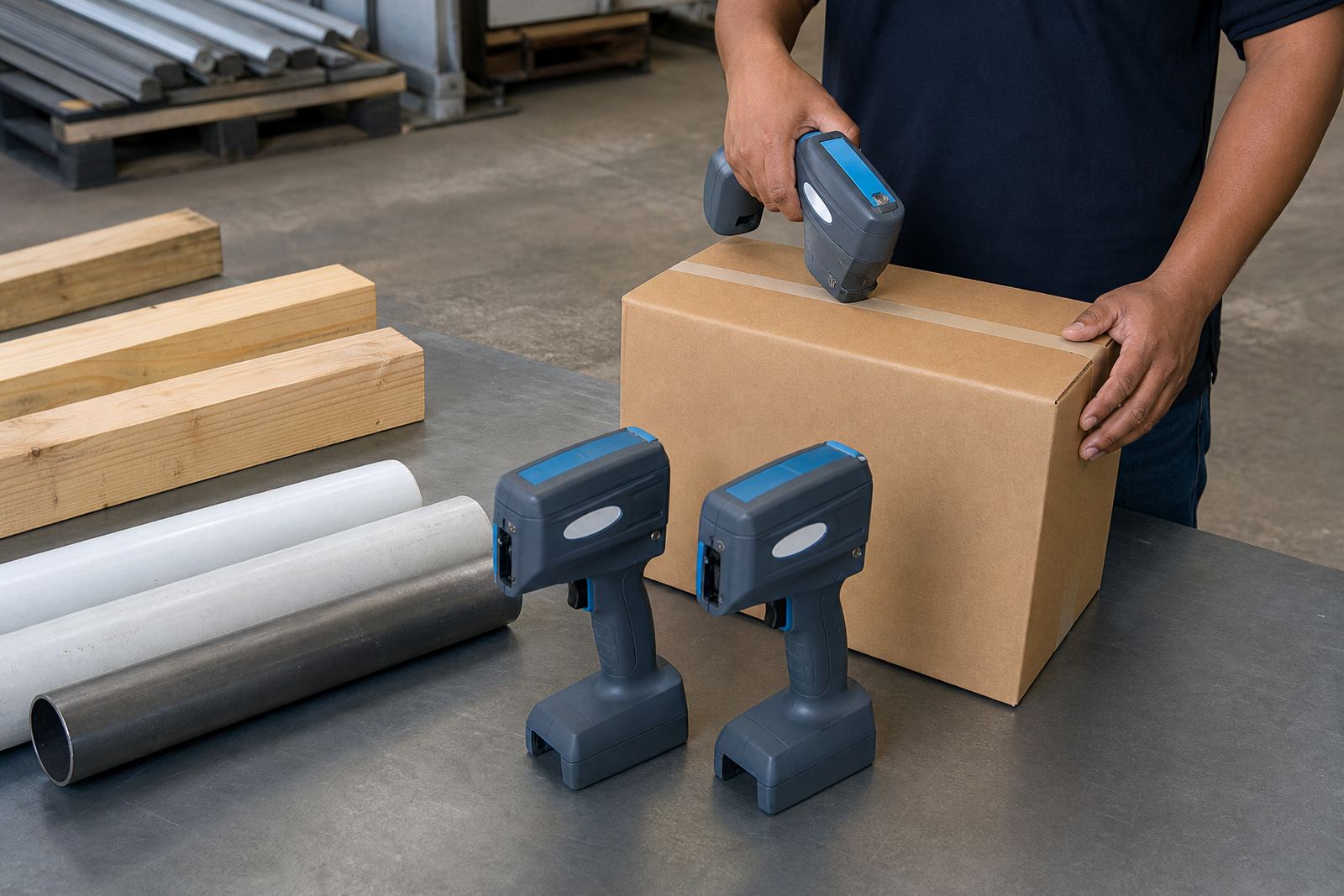
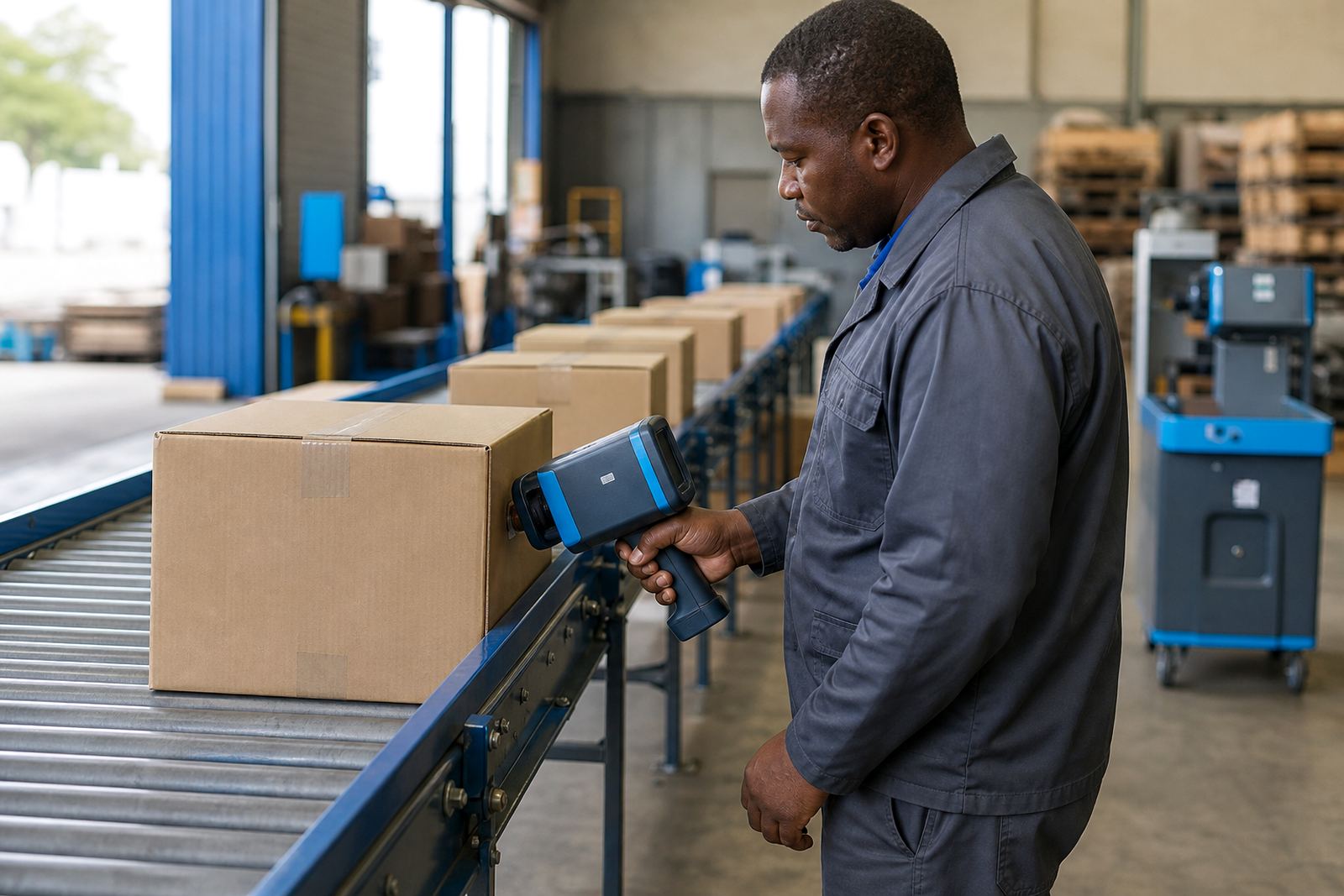
We look at the actual substrate before any hire is confirmed. That includes whether the surface is dusty, slightly damp, rough, sealed, glossy or curved. A pipe in a factory yard is not the same as a carton on a packing line, and a timber length moving through a yard can need very different ink behaviour from a printed bag in a warehouse.
Ink types we set up for handheld coders
Handheld inkjet printers can run different ink families, each with its own place. Our aim is not to force one fluid into every job, but to match the mark to the product surface and the handling that follows. That keeps codes readable and helps reduce rubbing, smearing and fading during packing or transport.
- Solvent ink for steel, coated plastics and harder surfaces where fast grab and stronger adhesion are needed.
- Water-based ink for cartons, paper sacks and absorbent substrates where clean edges matter more than harsh drying behaviour.
- Quick-dry ink for work that needs faster handling after printing, especially when items move straight into stacking or wrapping.
We also help with colour choice where a darker or lighter background changes legibility. Black is common, but white, red and other options can matter on darker surfaces. The important part is that the mark stays easy to read under depot lighting, yard light and normal transport wear.
Print height, spacing and readable codes
Handheld coders are useful because they can print in a range of heights without needing full line changeovers. Typical print heights for these units can sit around 12.7 mm, 25.4 mm or higher with multi-line layouts, depending on the printer setup and the job. That gives room for a date, batch number and a logo in one pass, or for a barcode set out on a single clear line.
We check the message width, the number of characters and the surface size before setting the job. Barcodes need clean spacing, consistent contrast and enough quiet space around the code so scanners can read them properly. Logos need solid edges and the right size for the carton, pipe or timber face being marked, not a squeezed image that looks fine up close but fails in handling.
What is covered in the ink selection help
The service covers more than just handing over a bottle of ink. It starts with substrate advice, then moves into message testing, print density checks and a practical choice of fluid for the hire term. If the item surface changes during the job, such as from raw timber to sealed timber or from dry carton to slightly damp carton, the ink plan can be adjusted with it.
- Surface matching for cartons, bags, pipes, timber and steel.
- Advice on solvent, water-based and quick-dry options.
- Help with barcodes, batch codes, dates and logo marks.
- Test printing on the actual surface where possible.
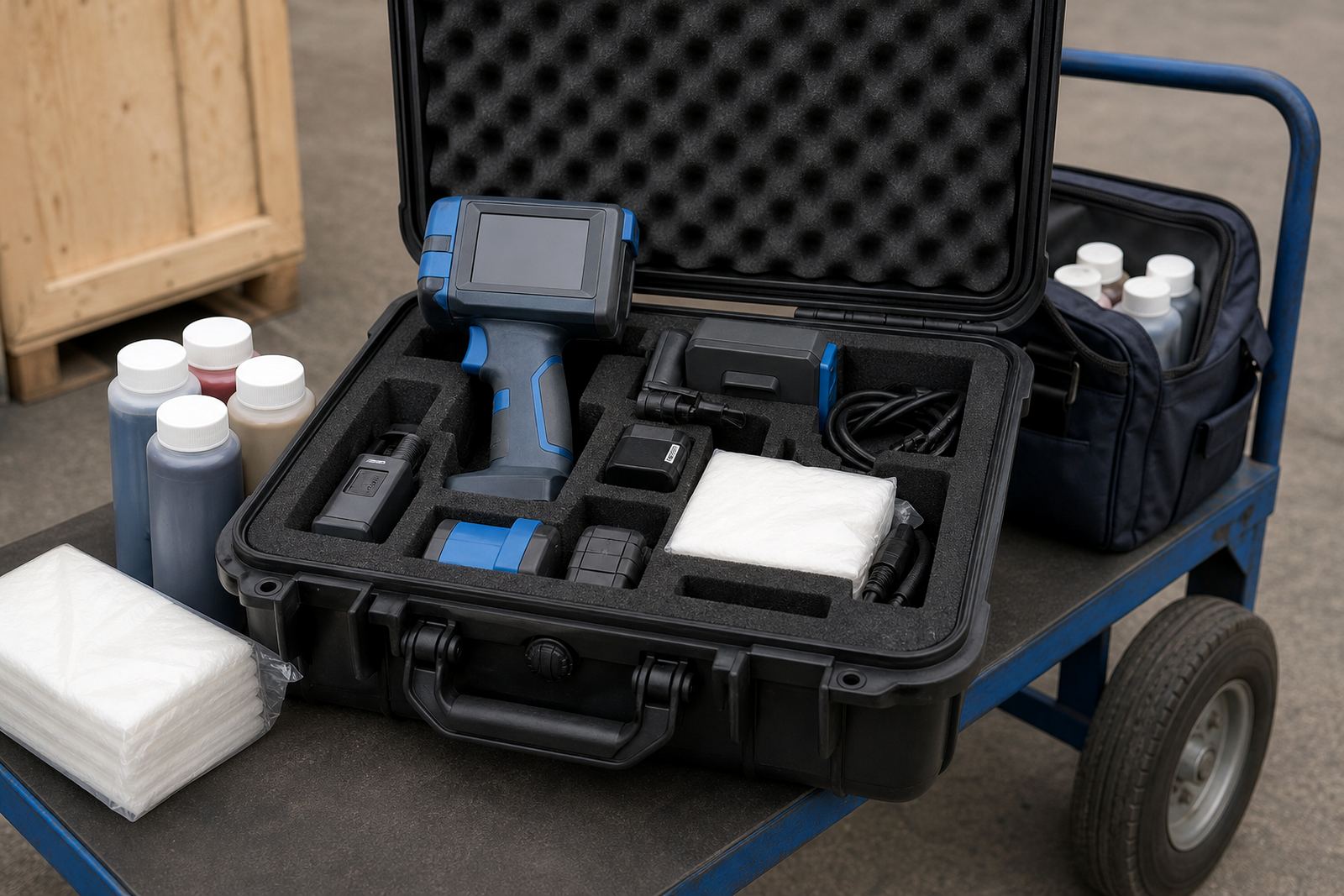
- Consumables supply matched to the printer and the job length.
For clients in Durban, Pietermaritzburg, Johannesburg, Cape Town and Richards Bay, the same practical approach applies. Coastal humidity in Durban or Richards Bay can change drying behaviour, while indoor warehouse work in Johannesburg may call for a different balance between speed and adhesion.
How the setup process runs
The process usually begins with the surface type, the message content and the number of units to be marked. From there, we look at whether the job needs batch coding only, a logo plus date, or a barcode with fixed text. That tells us which ink family is suitable and whether a quick-dry option is better for handling after print.
Once the plan is set, the handheld printer is loaded, the message is prepared and a test print is done on a sample or live item. If the first test shows feathering, poor contrast or slow drying, the ink choice or print settings are adjusted before the hire moves into regular use. This keeps surprises down once the items are moving through packing and dispatch.
Hire terms, pricing approach and aftercare
Ink selection help sits inside weekly and monthly hire terms, so the consumables match the period you need rather than a one-size-fits-all pack. Pricing depends on the printer model, the ink family, the message complexity and whether consumables, setup help and backup support are included for the hire period. Shorter runs may suit a weekly hire, while ongoing production often works better on a monthly basis.
Aftercare is practical and hands-on. If a print starts to fade, smudge or shift in quality, we look at the ink, the surface condition and the printer settings. That can mean changing the fluid type, adjusting density or revisiting the barcode layout. The point is to keep the mark legible through packing, stacking and delivery without making the process more complicated than it needs to be.
- Weekly hire for short production runs and project work.
- Monthly hire for repeat coding on a steady schedule.
- Consumables supplied to suit the chosen ink family.
- Support for setup, testing and field use in South Africa.
Key facts
| Printer type | Handheld inkjet coder |
|---|---|
| Typical print heights | 12.7 mm, 25.4 mm and multi-line layouts depending on setup |
| Ink families | Solvent, water-based and quick-dry |
| Common surfaces | Cartons, bags, pipes, timber and steel |
| Mark types | Dates, batch numbers, barcodes and logos |
| Hire terms | Rental by the week or month across South Africa |