
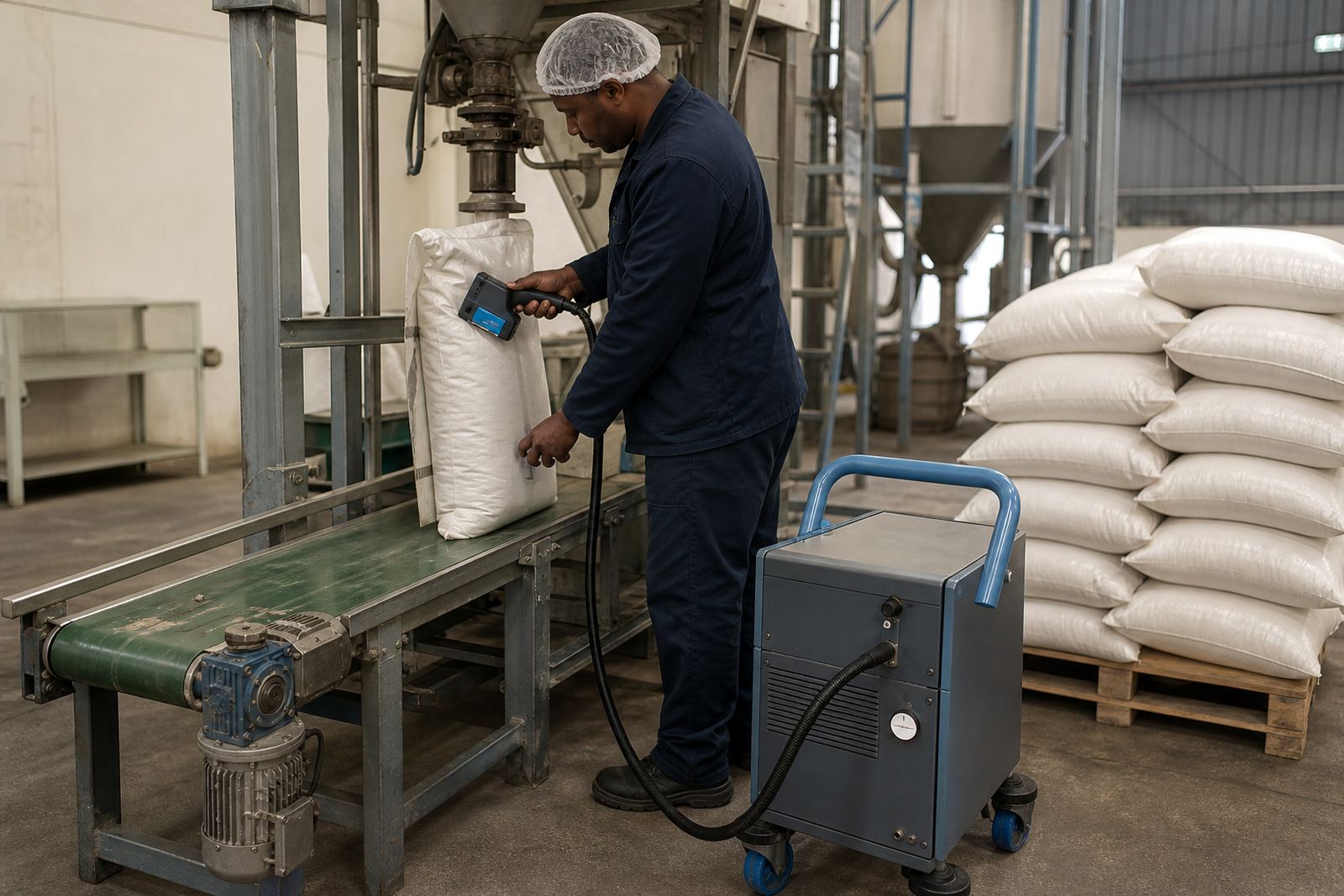
Bellville packing room brief
The job came from a bagging operation in Bellville that needed clean coding on stacked sacks and retail packs moving through a short production run. The marking had to carry date fields, batch numbers and a small logo, with print placement kept consistent across each bag face.
Space around the filling line was tight, so the coder had to be handled by operators with different levels of experience. The bags included woven and coated surfaces, which meant ink choice and nozzle setup mattered more than usual. We also had to plan for replacement ink supply during the run, because the client did not want the team stopping to search for the right cartridge or refill mix.
- Client type: bagging and packing operation
- Town: Bellville, Cape Town metro
- Marking: dates, batch numbers and a small logo
- Surface mix: woven sacks and coated bags
Coder setup for mixed bag surfaces
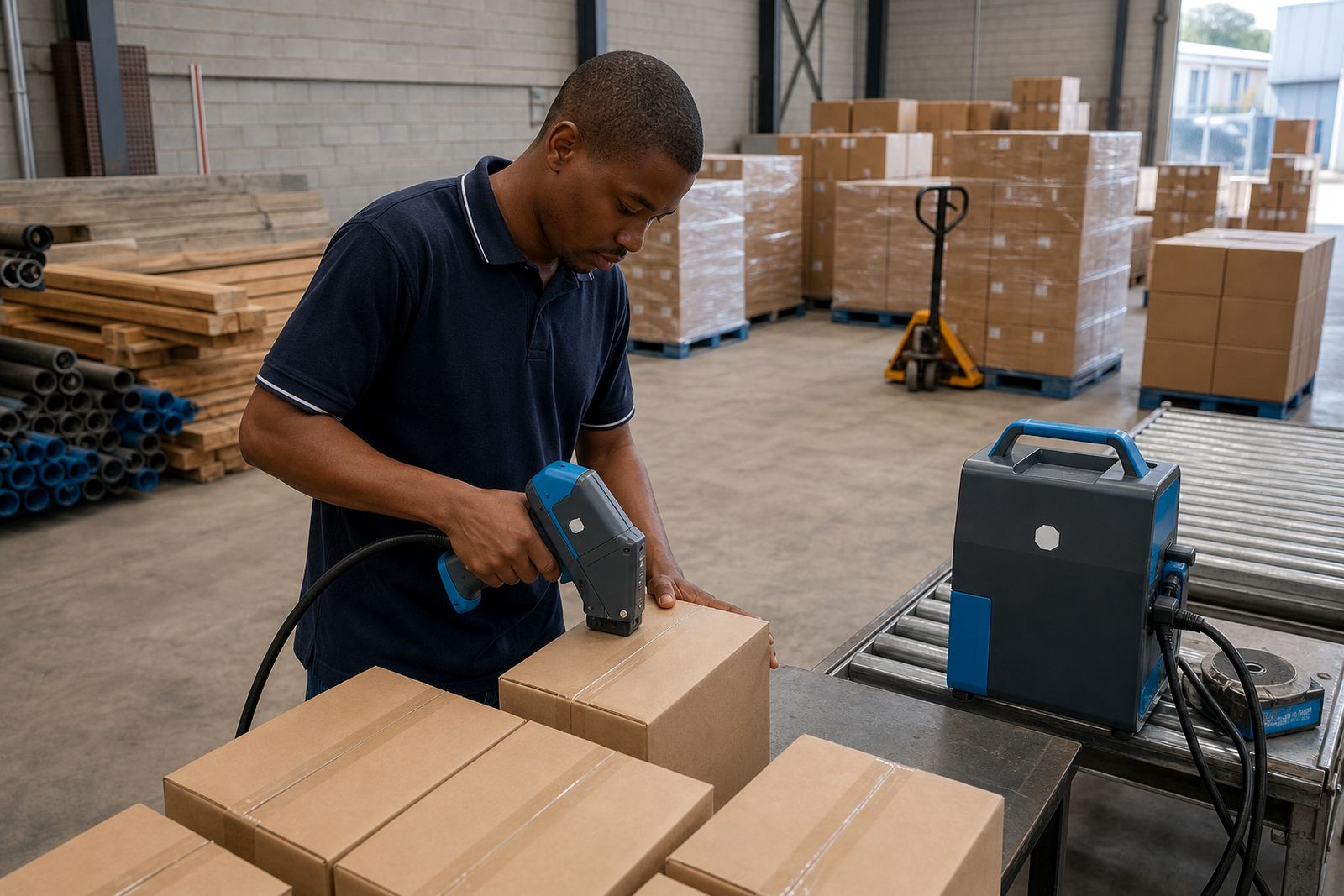
We supplied a handheld inkjet coder suited to short-run bag work, with print heights that could be adjusted for compact text or a wider mark where the logo needed more room. The client wanted the code easy to read from normal handling distance, but not so large that it clashed with the printed packaging artwork.
For the woven sacks, a quick-dry solvent-based ink was the better fit because the surface took handling and stacking straight after marking. On the coated bags, we checked how the ink sat on the outer layer and made sure the line stayed crisp instead of spreading. Where the pack finish changed across a bundle, we kept the message layout simple so operators could hold the unit at the same angle each time, which reduced variation.
- Handheld inkjet coder for portable bag marking
- Adjustable print height for date fields and logos
- Quick-dry ink selected for handling and stacking
- Test prints used to balance density and legibility
Setup help and message loading on site
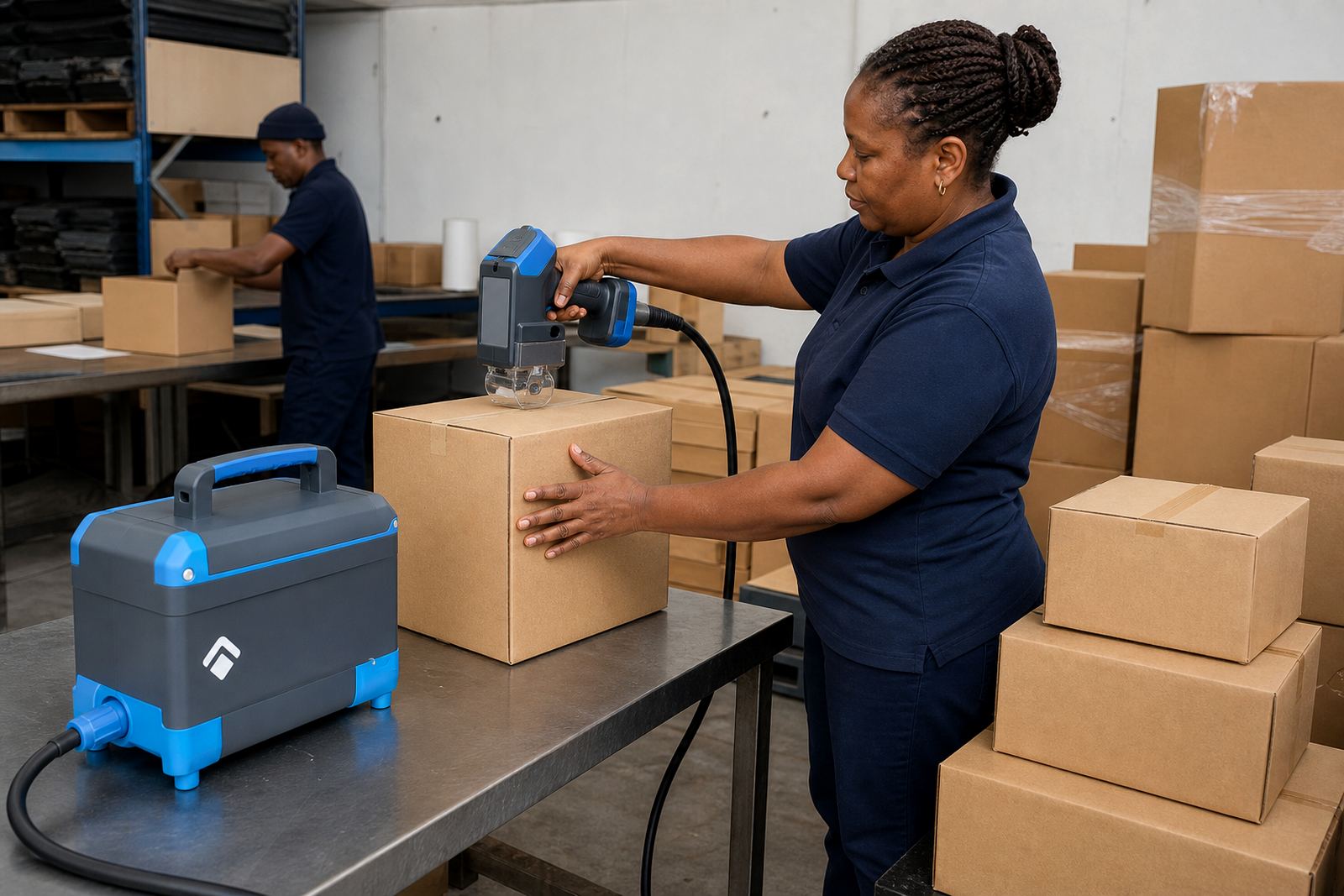
The first task was loading the date format, batch field and logo into the coder memory, then checking spacing against the actual bag print area. We showed the operators how to hold the unit square to the surface, how to keep the print head clean, and how to avoid smudging on the first pass after a pause in the line.
Once the first samples were approved, we ran a few live test prints and adjusted the message height so the code sat comfortably above the seal line. The logo needed a little repositioning to keep it away from the stitched edge on the woven sacks, while the batch code had to stay readable on both lighter and darker pack colours. That part of the work saved the client from trial and error during production.
- Message loading for dates, batches and logo placement
- Operator training for handheld use and cleaning
- Test printing on actual bag stock before release
- Layout adjusted for seams, folds and seal lines
Ink supply for the full run
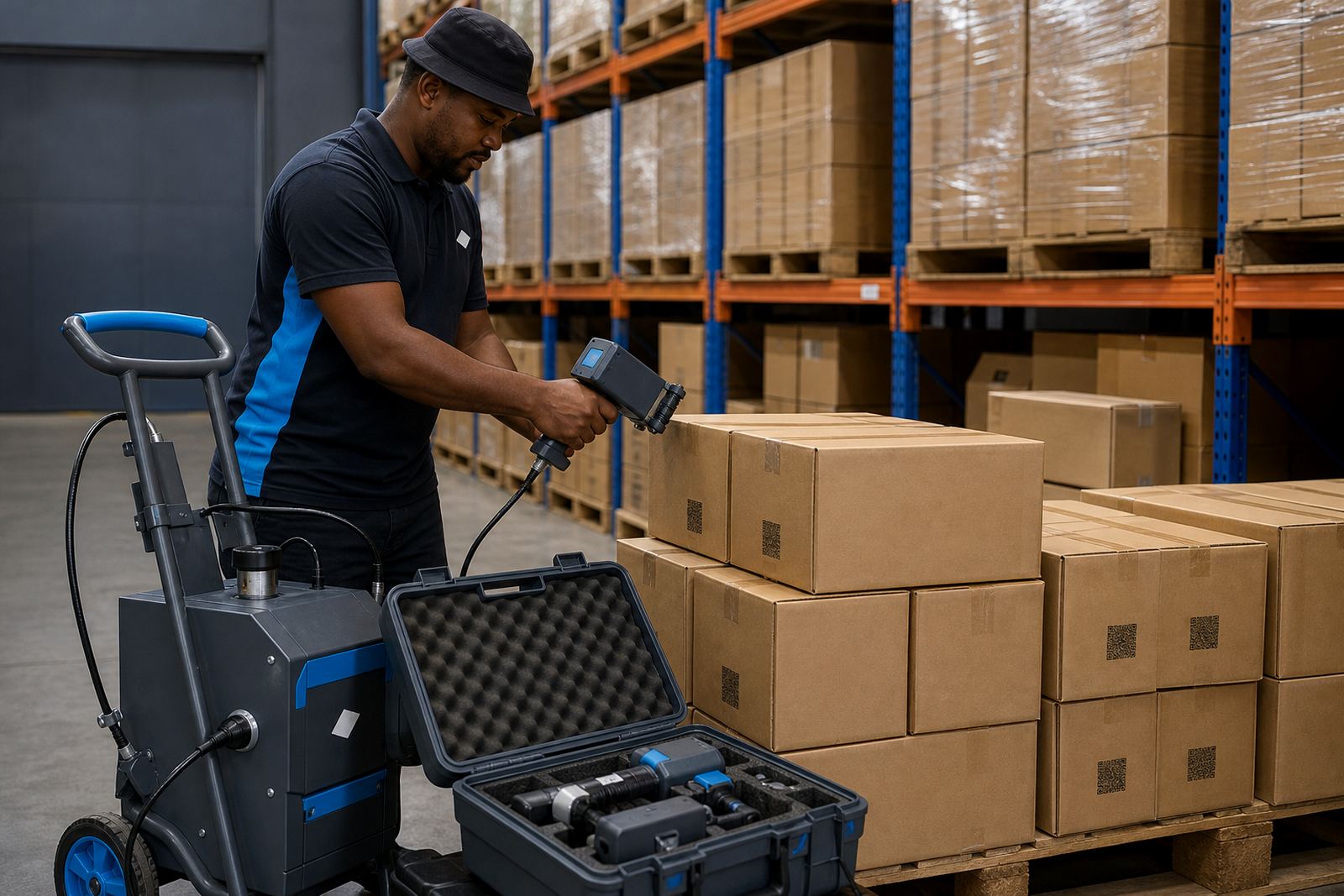
Replacement ink was part of the hire from the outset. The bags were moving quickly enough that the client needed a practical supply arrangement rather than a one-off cartridge only. We supplied spare ink in the format matched to the coder and the surface, with enough on hand for the planned run and a buffer for rework or extra packing.
On the stronger fibre bags, solvent-based ink gave the best adhesion. Where the packaging surface was smoother, we could keep to the same code layout and use the ink that dried fastest without losing contrast. The team also asked about water-based options for future work on more absorbent materials, so we spoke through when each type makes sense and when a quicker drying mix is the safer choice.
- Replacement ink supplied with the hire
- Solvent-based option used on fibre and woven sacks
- Water-based guidance provided for absorbent stock
- Quick-dry handling reduced smearing during stacking
Run timing and hire terms
The project ran over a short hire period with a clear start, a live coding phase, and a wrap-up check once the bagging order was complete. The client moved on a weekly hire structure for the active job, with the option to extend into monthly hire if the packing schedule carried over. That gave the team room to deal with an extra order without having to restart the whole setup.
We managed delivery and collection, together with remote setup guidance after the first on-site visit. For a busy Bellville packing room, that arrangement works well because the operator can use the same layout while spare ink and support stay aligned to the run. There was no need for a drawn-out learning curve, only enough guidance to keep the codes steady across shifts and bag sizes.
- Hire term: weekly with monthly extension available
- Delivery and collection arranged for the project
- Remote setup help available after first install
- Support stayed aligned to the packing schedule
What the Bellville team ended up with
By the end of the run, the bags were carrying clear date and batch marks with the logo sitting neatly in the chosen space. The team had a setup that was easy to repeat, and the spare ink supply meant they did not have to interrupt packing to chase consumables. The finished codes stayed legible on both the woven and coated materials, which mattered because the order moved through more than one pack type.
For another bagging line, our approach would be to keep the message plain, test on the actual stock before full release, and match the ink to each surface instead of forcing one mix across all bags. We would also keep a spare unit ready for a heavy production day, because a backup coder protects the schedule when a nozzle needs cleaning or the first unit needs a reset.
- Clear, repeatable coding across mixed bag stock
- Ink matched to surface rather than forced across all packs
- Backup unit support available for heavier runs
- Consistent print quality through the full short run
Key facts
| Project | Bellville bag coding run |
|---|---|
| Location | Bellville, Cape Town |
| Application | Date, batch number and logo coding |
| Equipment | Handheld inkjet coder |
| Ink types | Solvent-based, water-based and quick-dry |
| Hire term | Week or month hire |